Chemical pumps live a hard life: corrosive media, solids, pressure pulses, temperature swings and never-ending operating hours. When something fails, it is often the mechanical seal. Repeated seal failures do not just waste spare parts; they drive unplanned downtime, cleaning work and safety risks.
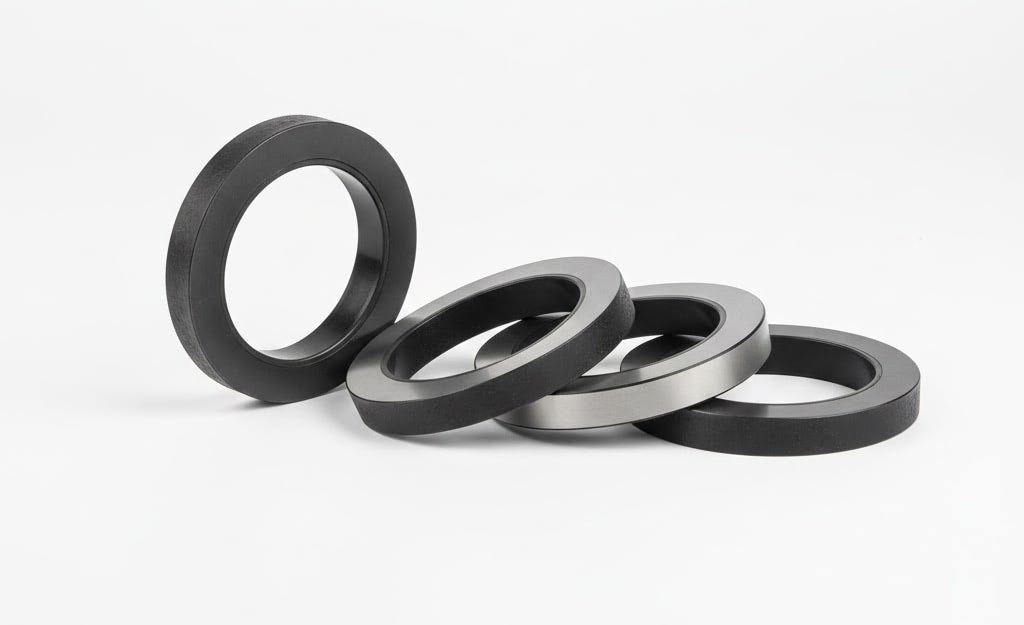
Silicon carbide seal rings have become a key tool for extending chemical pump life in such conditions. With high hardness and excellent corrosion resistance, they outperform many conventional seal face materials in aggressive media. This article explains how silicon carbide seal rings help chemical pumps survive longer and what you should consider when using them.
Why Mechanical Seals Fail in Chemical Pumps
To understand how silicon carbide helps, start with the common failure modes of mechanical seals in chemical service. General background on mechanical seals is covered in mechanical seal, but in daily plant life you mostly see:
- Corrosion of seal faces and metal parts from aggressive acids, alkalis or solvents.
- Abrasion from solid particles in slurries, crystallising media or dirty process streams.
- Thermal damage when lubrication fails and seal faces run dry or overheat.
- Distortion and misalignment from pressure and temperature changes or poor installation.
When soft or marginally resistant materials are used for seal faces, these failure modes appear faster and more often. Each failure usually means leakage, emergency intervention and lost production.
Why Silicon Carbide Seal Rings Work Better
Silicon carbide, described in more detail in silicon carbide, offers a property combination that fits chemical pump seals particularly well:
- Very high hardness: excellent resistance to abrasion from hard particles and crystals.
- Excellent chemical resistance: compatible with many acids, alkalis and solvents.
- High temperature capability: seal faces tolerate elevated temperatures better than many polymers.
- Good thermal conductivity: helps remove heat from the sealing interface, reducing thermal damage.
- Dimensional stability: seal geometry remains stable under load and temperature.
Zirsec supplies precision silicon carbide seal rings for chemical pump manufacturers and end users who need to control leakage and extend seal life in aggressive services.
Where Silicon Carbide Seal Rings Add the Most Value
Upgrading to silicon carbide is most attractive where seal failures are frequent and costly:
- Aggressive acids and alkalis where metals and carbons suffer corrosion or rapid wear.
- Abrasive or crystallising media such as slurries, sludges and saturated solutions.
- High-temperature chemical streams where polymers cannot maintain stiffness and strength.
- Critical pumps whose failure leads to full unit shutdown or environmental / safety risk.
In these cases, silicon carbide seal rings do not just “last longer.” They stabilise pump behaviour and make seal performance more predictable over time.
SiC-vs-SiC vs SiC-vs-Carbon: Choosing the Sliding Pair
Silicon carbide seal rings can run against another SiC ring or against a softer material such as carbon. Each pairing has its role:
- SiC vs. SiC
Two silicon carbide faces running against each other. Excellent wear and corrosion resistance, suitable for very abrasive or chemically harsh media. Requires proper lubrication conditions and good alignment to avoid damage during dry running. - SiC vs. carbon
One silicon carbide ring running against a carbon or resin-bonded carbon ring. The carbon provides some conformability and emergency running behaviour, while SiC provides hardness and corrosion resistance. Often used where occasional dry running risk exists.
Choice depends on media, operating risk and the plant’s experience. In highly abrasive chemical services, SiC-vs-SiC is often preferred for maximum wear resistance. In services with less abrasion but higher dry-running risk, SiC-vs-carbon can be a pragmatic compromise.
Key Design and Selection Factors for Silicon Carbide Seal Rings
1. Pump Type and Operating Conditions
For each pump, clarify:
- Type: single-stage, multistage, canned motor, magnetic drive, etc. (often based on centrifugal pump designs).
- Operating temperature and pressure of the pumped fluid.
- Media composition: chemical species, pH, presence of solids or gases.
- Speed and duty: continuous operation, frequent starts, variable speed.
These parameters influence seal size, face loading, flushing and choice of SiC grade (sintered vs reaction-bonded, etc.).
2. Silicon Carbide Grade
For seal rings, dense, high-quality silicon carbide is essential. Typical choices include:
- SSiC – Sintered silicon carbide: dense, high-purity, very low porosity. Excellent corrosion resistance; widely used for high-end seal faces.
- RBSiC / SiSiC – Reaction-bonded silicon carbide: very good mechanical strength and wear resistance; used in some seal and structural parts where cost/performance balance is important.
In critical chemical services, SSiC is frequently preferred for primary seal faces because of its corrosion resistance and low porosity.
3. Seal Face Geometry and Surface Finish
Geometry and surface quality are as important as material choice:
- Flatness: seal faces must be machined and lapped to tight flatness tolerances.
- Surface roughness: controlled Ra values ensure proper fluid film and leakage control.
- Face profiles: any grooves or special patterns must be compatible with media and pressure.
Silicon carbide can be ground and lapped to high precision, but tolerances and finish requirements should be clearly defined on drawings and in specifications.
How Silicon Carbide Seal Rings Extend Pump Life
When correctly selected and applied, silicon carbide seal rings extend chemical pump life in several ways:
- Reduced wear: high hardness slows down face wear from solid particles and crystallised media.
- Improved corrosion resistance: SiC faces resist chemical attack that would quickly damage metallic or low-grade ceramic faces.
- More stable leakage behaviour: good flatness and stiffness maintain consistent sealing performance.
- Lower risk of catastrophic failure: robust faces withstand transient conditions better when lubrication momentarily degrades.
As a result, seal lifetimes increase, and pump overhauls can be planned rather than triggered by sudden leaks.
System Considerations: More Than Just the Seal Ring
Changing seal faces to silicon carbide is a strong step, but overall pump reliability still depends on the whole system:
- Flush and barrier plans: clean, appropriate flush or barrier fluids help protect the seal faces.
- Pump alignment and foundations: misalignment and vibration can overload even the best seal faces.
- Process stability: frequent cavitation, dry running or strong process swings will reduce any seal’s life.
- Other SiC components: using SiC shaft sleeves and bearings along with seal rings can further stabilise the wet end.
Zirsec can supply matching silicon carbide components around the seal – rings, sleeves and related parts – as part of a coherent reliability upgrade.
Case Example: Upgrading Chemical Pump Seals with Silicon Carbide Rings
Background
A chemical plant handling corrosive, particle-laden media experienced frequent seal failures on several process pumps. Seal faces showed combined corrosion and abrasion, and leakage events caused unplanned shutdowns and cleaning work.
Approach
- Replace existing seal faces with SSiC silicon carbide seal rings on both rotating and stationary sides.
- Optimise surface finish and face loading for the specific media and pressure.
- Improve flush arrangements to reduce particle concentration in the seal gap.
Result
- Seal life increased significantly, with fewer unplanned seal replacements.
- Leakage incidents decreased, improving safety and environmental performance.
- Pump maintenance intervals became more predictable, reducing total lifecycle cost.
FAQ – Silicon Carbide Seal Rings in Chemical Pumps
Q1. Do silicon carbide seal rings always last longer than other materials?
In many chemically aggressive and abrasive services, yes, silicon carbide seal rings last longer than common alternatives like metal or basic ceramics. However, lifetime still depends on correct material grade, face pairing, lubrication, alignment and process stability.
Q2. Can I simply swap existing seal rings to SiC without changing anything else?
Sometimes you can, especially if the seal design already supports hard-face materials. However, it is wise to review flush plans, alignment and operating conditions. A material upgrade fixes many problems, but not all installation or process issues.
Q3. Are silicon carbide seal rings compatible with standard mechanical seal cartridges?
Yes, many cartridge seal designs already use or can accept silicon carbide faces. In some cases, only the face material is changed while keeping the same cartridge hardware, provided dimensions and design are compatible.
Q4. What information should I provide when requesting silicon carbide seal rings from Zirsec?
Provide pump type, operating conditions (temperature, pressure, speed), fluid composition, presence of solids, current seal design, face materials and typical failure modes. Drawings or part dimensions of existing rings are very helpful.
Q5. How does Zirsec support chemical plants with seal ring upgrades?
Zirsec offers precision-machined silicon carbide seal rings, application review and material grade selection for chemical pump services. By combining seal rings with related SiC components and practical experience in harsh media, Zirsec helps plants extend pump life and reduce seal-related downtime.
Struggling with repeated seal failures in chemical pumps? Upgrading to silicon carbide seal rings, combined with proper support and operating practices, can turn seals from a chronic problem into a stable, predictable part of your reliability strategy.