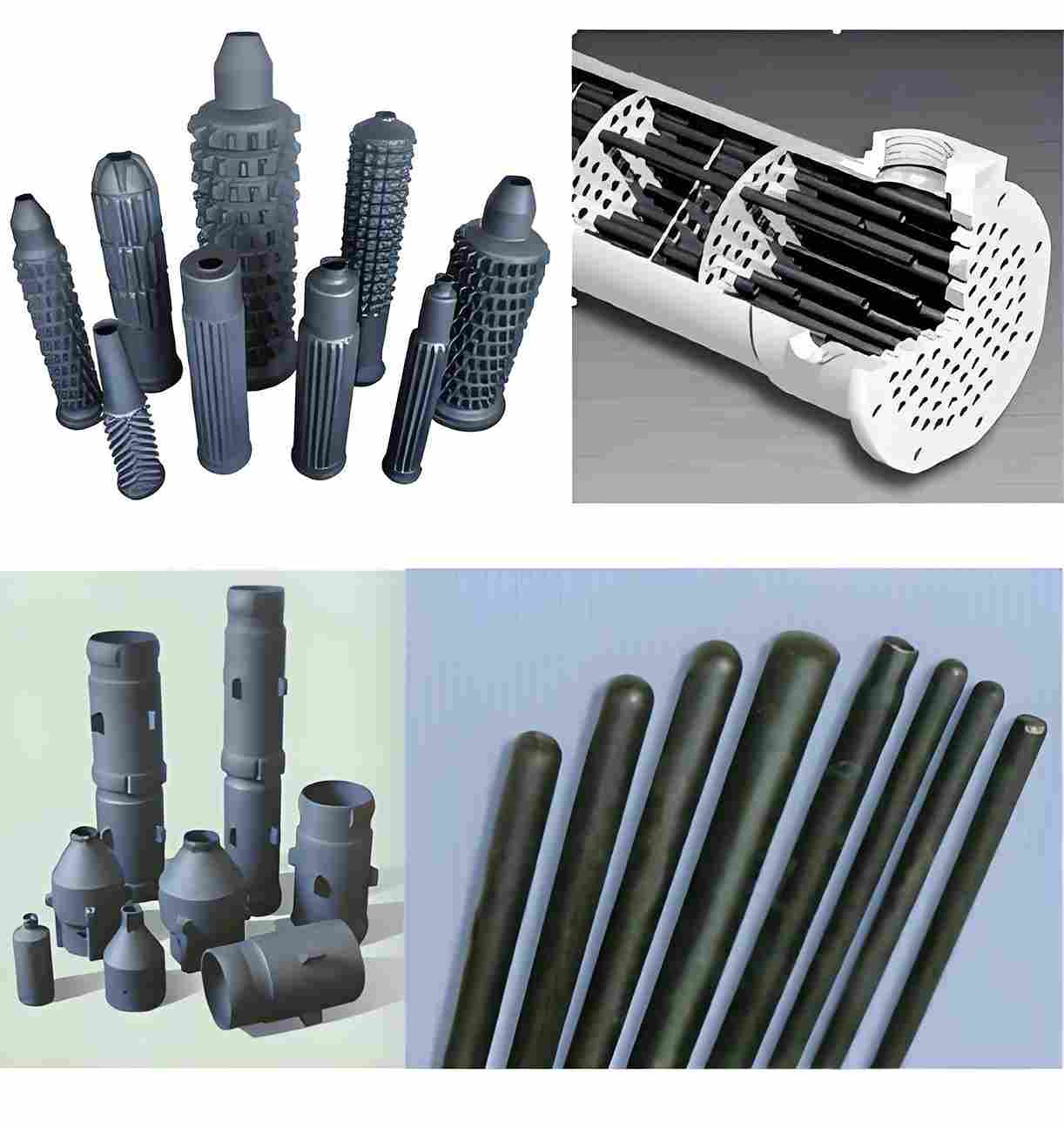
When pump seals fail, nobody cares whether the catalog said “advanced materials” – they care about leakage, downtime and repair costs. Two of the most common hard face materials for mechanical seals in industrial pumps are silicon carbide (SiC) and tungsten carbide (WC). Both have strong reputations, but they behave differently in real process conditions.
Choosing between silicon carbide and tungsten carbide for mechanical seal faces is not just a question of hardness. Corrosion, lubrication, temperature, solids content and system design all influence which material delivers longer, more predictable seal life.
This guide compares silicon carbide vs tungsten carbide seals for pump applications and shows where Zirsec silicon carbide seal rings are usually the more robust choice.
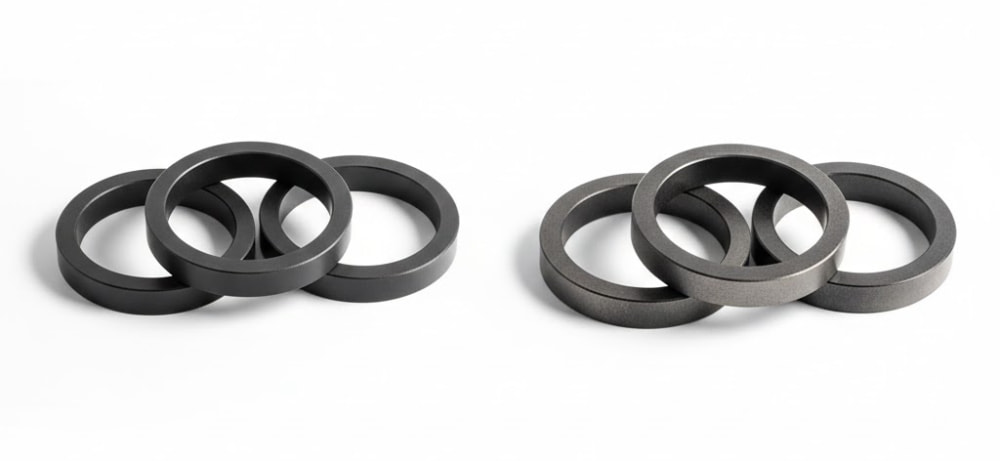
Silicon Carbide and Tungsten Carbide – What Are We Using?
Silicon Carbide Seal Faces
Silicon carbide seal faces are typically supplied as:
- Sintered SiC (SSiC): high-purity, high-hardness, excellent corrosion resistance, low porosity.
- Reaction-bonded SiC (RBSiC/SiSiC): good strength, very good thermal shock resistance, widely used in structural and wear parts.
Zirsec manufactures high-precision silicon carbide seal rings, sleeves and custom mechanical parts for pumps operating in abrasive, corrosive and high-temperature environments.
Tungsten Carbide Seal Faces
Tungsten carbide seal faces are usually cemented carbides: tungsten carbide grains bound with a metallic binder (often cobalt or nickel). Typical features:
- Very high hardness and compressive strength.
- Good wear resistance in clean or moderately dirty fluids.
- Binder phase that can be sensitive to certain chemicals and corrosion mechanisms.
Tungsten carbide is common in oil & gas, general industry and services where mechanical loading is high and the fluid chemistry is not extremely aggressive to the binder.
Key Property Comparison: Silicon Carbide vs Tungsten Carbide Seals
The table below summarises typical trends for seal faces (exact values depend on grade and manufacturer):
| Property | Silicon Carbide (SiC) | Tungsten Carbide (WC) | Impact in Pump Seals |
|---|---|---|---|
| Composition | Ceramic, no metallic binder | Cemented carbide with metal binder (Co, Ni, etc.) | SiC is fully ceramic; WC behaviour depends on binder chemistry. |
| Hardness | Very high | Very high | Both suitable for hard faces; SiC often slightly better in abrasion. |
| Corrosion resistance | Excellent in many acids, alkalis and corrosive media | Good in neutral lubricating fluids; binder can corrode in some chemicals | SiC preferred in aggressive chemical or mixed-service pumps. |
| Thermal conductivity | High | Moderate to high | SiC removes heat effectively from the seal face pair. |
| Thermal shock resistance | Excellent | Good | SiC handles rapid temperature changes well, useful in start–stop and transient duty. |
| Density | Approx. 3.0–3.2 g/cm³ | Approx. 14–15 g/cm³ | WC is much heavier; SiC helps reduce rotating mass in large seals. |
| Toughness | Moderate | Higher fracture toughness | WC can be more tolerant of impact and misalignment in some cases. |
| Typical counterfaces | SiC vs SiC, SiC vs carbon | WC vs WC, WC vs carbon | Both follow similar pairing logic; SiC vs SiC very common in chemicals. |
| Cost | High, but stable for high-performance seals | High, often comparable | Selection is driven by service conditions rather than unit price alone. |
In short: both materials are excellent hard faces. Silicon carbide is usually the first choice in chemically aggressive or slurry service, while tungsten carbide is often chosen in lubricated, high-load, mechanically demanding but less corrosive environments.
Where Silicon Carbide Seals Usually Perform Better
Abrasive and Slurry Service
When pumps handle fluids with solids – slurries, dirty process streams, fines in recirculation circuits – wear is a constant threat:
- Mining and mineral processing slurries.
- Chemical slurries with solid catalysts or fillers.
- Wastewater and environmental streams with suspended solids.
Silicon carbide’s high hardness, fine microstructure and ceramic nature mean:
- Slow, predictable wear on seal faces, even with solids present.
- Stable surface finish over longer operating periods.
- Less risk of micro-galling linked to metal binders.
For this reason, many engineers standardise on SiC vs SiC or SiC vs carbon for seals in abrasive, mixed-phase services.
Corrosive Chemical and Mixed-Service Pumps
Tungsten carbide’s metallic binder can be attacked by certain chemicals, especially in:
- Strong acids or alkalis.
- Chloride-containing fluids with oxidising conditions.
- Mixed organic/inorganic streams with variable chemistry.
In contrast, silicon carbide is a fully ceramic material with excellent corrosion resistance in many aggressive environments. Advantages include:
- Reduced risk of binder leaching and pitting.
- More stable behaviour when fluid chemistry changes within a known window.
This makes SiC faces the safer default choice in chemical processing, petrochemical side streams, flue-gas cleaning, and other corrosive duties.
High-Temperature and Thermally Dynamic Operation
Pumps exposed to temperature swings, hot-cold transitions or non-ideal cooling benefit from seal faces that tolerate thermal gradients:
- Start–stop operations with rapid heating and cooling of the seal chamber.
- Hot process streams with intermittent flushing or cooling.
- Services where vaporisation at the seal face can occur.
Silicon carbide’s high thermal conductivity and excellent thermal shock resistance help:
- Remove heat from the contact zone efficiently.
- Reduce thermal stresses that can cause cracking or distortion.
This is particularly useful in high-speed applications or marginal lubrication conditions where face heating is a concern.
Where Tungsten Carbide Can Be Advantageous
Heavily Loaded, Lubricated Services
In well-lubricated services with relatively clean fluids, tungsten carbide’s combination of hardness and fracture toughness can work very well:
- Oil and lubricating fluid pumps with good film formation at the seal faces.
- Certain refinery and petrochemical services where corrosion is controlled.
- Applications with high mechanical loads and pressure but moderate chemistry.
Here, WC vs WC or WC vs carbon can deliver long life, especially when mechanical loading dominates over corrosion or abrasion.
Impact- and Vibration-Sensitive Installations
If the seal is exposed to mechanical shocks during installation, commissioning or operation, tungsten carbide’s higher toughness can sometimes reduce the risk of chipping and brittle fracture. Even then, many users still select SiC and manage handling and alignment carefully, especially where chemistry is demanding.
Practical Considerations in Seal Selection
1. Understand the Real Failure Mode
Before choosing silicon carbide or tungsten carbide, clarify why seals are failing today:
- Are faces worn or grooved? Abrasion and erosive wear → SiC often wins.
- Are there signs of pitting or binder attack? Corrosion issues → SiC is safer.
- Are faces cracked at edges? Thermal or mechanical shock → review mounting and cooling, consider SiC for better thermal behaviour.
A simple failure analysis usually points clearly towards one material or the other.
2. Consider Seal Face Pairing
Hard face material is only one side of the seal pair. Common combinations include:
- SiC vs SiC: maximum chemical and wear resistance in harsh industrial service.
- SiC vs carbon: widely used when dry-running risk exists or when very low friction is needed.
- WC vs WC / WC vs carbon: common in lubricated oil and gas or general industrial duties.
Zirsec focuses on high-precision silicon carbide rings for SiC vs SiC and SiC vs carbon configurations in demanding industrial pumps.
3. Seal Chamber and Cooling Conditions
Even the best material cannot compensate for poor operating conditions:
- Ensure adequate cooling and lubrication at the seal faces.
- Check flush plans are correctly implemented and maintained.
- Minimise dry running and vapour lock conditions that destroy faces quickly.
Silicon carbide tolerates abuse better than many materials, but it is still a precision component – system design and operation matter.
Example: Switching from Tungsten Carbide to Silicon Carbide in a Chemical Slurry Pump
Background
A chemical plant operated several horizontal slurry pumps handling a mixture of process liquid and fine solids. Tungsten carbide seal faces suffered from accelerated wear and occasional pitting, forcing frequent seal replacements and unplanned downtime.
Approach
- Analyse failed seal faces to confirm combined abrasion and corrosion mechanisms.
- Replace WC hard faces with high-purity silicon carbide seal rings in SiC vs SiC configuration.
- Adjust flush conditions to improve cooling and solids removal from the seal chamber.
Results
- Wear rate on seal faces decreased significantly; grooves and pitting were eliminated.
- Mean time between seal failures increased, reducing both direct seal costs and lost production.
- Maintenance engineers standardised silicon carbide seals on similar pumps across the site.
FAQ – Silicon Carbide vs Tungsten Carbide Seals for Pumps
Q1. Is silicon carbide always better than tungsten carbide for pump seals?
No. Silicon carbide is usually better in abrasive, corrosive or thermally demanding services. Tungsten carbide can perform very well in clean, well-lubricated fluids where mechanical loading is high and chemical attack is limited. The “better” material depends on your specific duty.
Q2. When should I definitely consider silicon carbide instead of tungsten carbide?
Consider silicon carbide when you see slurry or solids in the fluid, aggressive chemistry, variable operating conditions, frequent temperature changes or evidence of corrosion/pitting on existing WC faces. In these cases, SiC typically delivers longer and more predictable seal life.
Q3. Can I use silicon carbide seal rings in existing seal designs that were supplied with tungsten carbide?
In many cases, yes, provided dimensions and surface finishes are matched and the seal OEM’s design limits are respected. Zirsec can manufacture silicon carbide rings to your drawings or sample dimensions so that they drop into existing seal hardware.
Q4. Is SiC vs SiC too “hard on hard” and risky for dry running?
SiC vs SiC is robust for properly lubricated service with adequate cooling and flush. Where dry running or poor lubrication is likely, SiC vs carbon is often preferred to reduce face damage risk. The right choice depends on your system’s operating discipline and protection measures.
Q5. What information should I provide when asking Zirsec to recommend a seal face material?
Provide pumped fluid composition, solids content and particle size, temperature and pressure, pump type and speed, existing seal configuration, typical failure modes and target lifetime. With this information, Zirsec can recommend suitable silicon carbide seal rings, sleeves or complementary components for your pump applications.
Bottom line: tungsten carbide has its place, especially in clean, lubricated services. But in the real-world industrial pumps that see slurry, corrosion and thermal abuse, high-grade silicon carbide seal faces are often the safer and more economical long-term choice.