High-temperature and corrosive environments quickly expose the real limits of “advanced ceramics”. Two materials that come up frequently in industrial design discussions are silicon carbide and zirconia ceramics. On spec sheets they both look impressive, but their behaviour under heat and chemical attack is very different.
If you are designing furnace furniture, hot gas ducts, pump parts or chemical equipment, choosing correctly between silicon carbide (SiC) and zirconia (ZrO2) will decide whether your components deliver long, stable service or turn into an unscheduled maintenance project.
This guide focuses on heat and corrosion resistance in real industrial conditions and shows where zirconia’s toughness is useful, and where high-performance silicon carbide parts from Zirsec are the more suitable choice.
Silicon Carbide and Zirconia – Different Ceramics, Different Behaviours
Silicon Carbide Ceramics
Silicon carbide is a covalently bonded ceramic with:
- Very high hardness and wear resistance
- High thermal conductivity compared with most ceramics
- Excellent thermal shock resistance when correctly designed
- Good corrosion resistance in many high-temperature gases and liquids
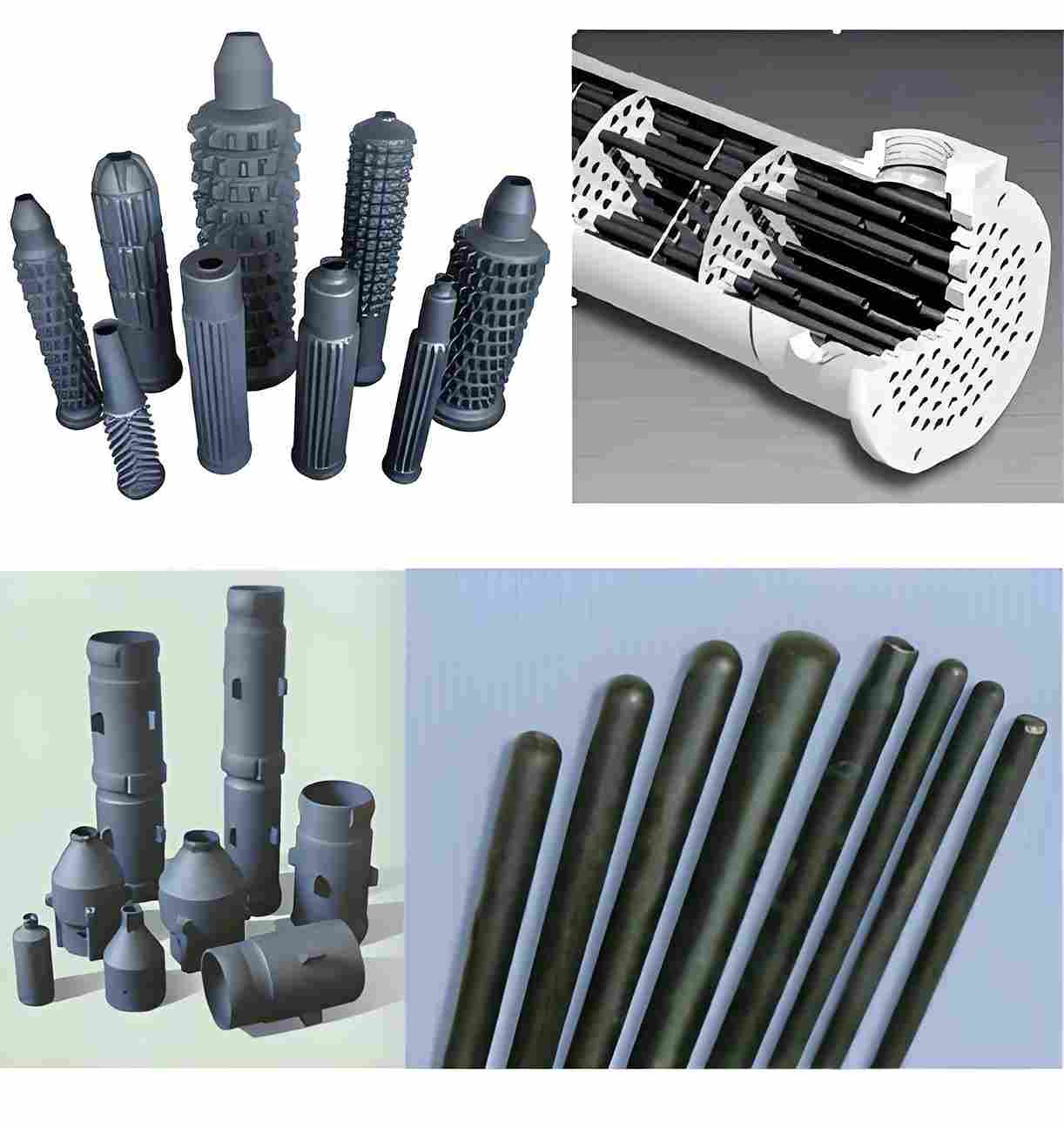
Typical industrial components include silicon carbide tubes, plates, kiln furniture, burner parts and custom mechanical parts used in furnaces, kilns, chemical plants and corrosive fluid handling.
Zirconia Ceramics
Zirconia (zirconium dioxide) is a partially stabilized ceramic known for:
- High fracture toughness (for a ceramic) due to transformation toughening
- Lower thermal conductivity than SiC – behaves more like a thermal barrier
- Good chemical and corrosion resistance in many environments
- High temperature capability, but with different thermal shock behaviour
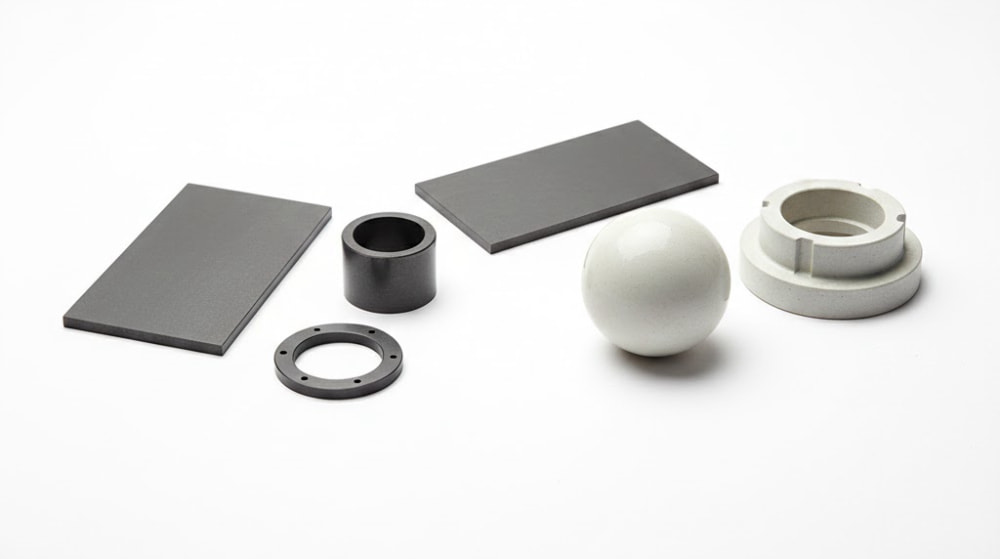
Zirconia ceramics are often used in wear parts, dental and medical components, thermal barrier applications, valve balls and certain pump components where toughness and thermal insulation matter more than extreme thermal shock resistance.
Heat & Corrosion Resistance Compared: SiC vs Zirconia
The table below summarises typical trends; exact values depend on grade and manufacturer, but the tendencies are consistent across industrial practice.
| Property | Silicon Carbide (SiC) | Zirconia Ceramics (ZrO2) | Impact in Heat & Corrosion Applications |
|---|---|---|---|
| Max service temperature (air, °C) | Approx. 1,600–1,800 (grade-dependent) | Approx. 1,000–1,400 (grade-dependent) | Both handle high temperature; SiC dominates very hot structural and gas-contact roles. |
| Thermal conductivity | High (often 80–120 W/m·K) | Low to moderate (typically 2–3 W/m·K) | SiC spreads heat quickly; zirconia acts as a thermal insulator. |
| Thermal shock resistance | Excellent when designed correctly | Moderate; sensitive to steep gradients | SiC better in fast heating/cooling and cycling. |
| Heat storage (thermal mass effect) | Lower for same stiffness (thinner parts possible) | Higher; thicker parts for same stiffness | SiC helps reduce cycle time and energy in kilns and furnaces. |
| Corrosion resistance – hot gases | Excellent in many combustion and process gases | Good, but more often used as an insulator or coating | SiC is widely used directly in gas paths, burners and hot ducts. |
| Corrosion resistance – liquids | Excellent resistance in many acids, alkalis and salt solutions | Very good in many aqueous environments | Both can perform well; SiC is often preferred in highly aggressive chemical service. |
| Fracture toughness | Moderate | High for a ceramic | Zirconia tolerates local stress concentrations and impact better. |
| Hardness / wear resistance | Very high | High | SiC slightly ahead in pure abrasion and erosive flow. |
| Thermal expansion | Relatively low | Higher | SiC generates lower thermal stresses for a given gradient. |
| Role in assemblies | Structural parts, wear parts, hot-face components | Thermal barriers, wear parts, balls, inserts | SiC carries heat and load; zirconia more often insulates and toughens. |
In short: if the main challenge is very high temperature + thermal cycling + corrosive gases or liquids, silicon carbide is usually the more reliable backbone material. Zirconia is more specialised – attractive where toughness and thermal insulation are critical in defined temperature ranges.
Heat Resistance in Real Equipment
High-Temperature Structural Parts
For beams, plates and supports that sit in the hot zone of furnaces and kilns, the priority is:
- Carry mechanical load at high temperature
- Resist creep, sagging and distortion
- Survive thermal cycling between cold and hot conditions
Silicon carbide is strongly favoured here. Reaction-bonded and recrystallized SiC are widely used in:
- Furnace beams and supports
- Kiln furniture (setters, plates, posts)
- High-temperature tubes and radiant components
Zirconia, with its lower thermal conductivity and higher expansion, is more sensitive to steep temperature gradients in large, thick structural components. It is more often used as a coating, barrier layer or smaller insert rather than a full structural framework in very hot zones.
Thermal Shock and Cycling
Steep temperature ramps and frequent hot–cold cycles are where many ceramics fail. Typical situations:
- Rapid start-up and shutdown of industrial furnaces
- Burner regions with pulsed firing
- Components near doors, openings or quench zones
Silicon carbide’s combination of high thermal conductivity and relatively low thermal expansion allows it to handle these conditions far better than zirconia in most structural applications. Zirconia can be used successfully under controlled thermal gradients, but it is not the first choice where temperature changes are sharp and frequent.
Corrosion Resistance in Industrial Environments
Hot Gas and Combustion Atmospheres
In flue-gas ducting, incinerators, furnaces and kilns, materials face hot combustion gases, particulates and occasionally aggressive species such as chlorides and sulphur compounds. Silicon carbide is widely used here as:
- Hot-face linings and tiles
- Burner blocks and nozzles
- Impact plates and wear surfaces in gas and solids flow paths
Properly selected SiC grades show high resistance to oxidation, slagging and gas corrosion in these conditions. Zirconia is more often used as a thermal barrier coating or thin layer on top of other materials, not as the full structural hot-face component.
Liquid Corrosion and Chemical Exposure
In pumps, valves, heat exchangers and reactors, components face corrosive liquids and slurries. Both silicon carbide and zirconia offer strong chemical resistance when the environment is correctly understood.
Silicon carbide is commonly used for:
- Mechanical seal rings in corrosive pumps
- Sleeves, bushings and wear parts in chemical processing
- Plates and tiles exposed to aggressive liquids or slurries
Zirconia elements may be selected for valve balls, seats or small inserts where:
- Toughness matters (impact, seating forces)
- Temperatures are high but within the stable zirconia regime
- The environment is chemically compatible with the chosen zirconia grade
For mixed or only partially defined chemistries, engineers often prefer silicon carbide because its corrosion behaviour is well understood in a wide range of industrial liquids.
Design Implications: Heat & Corrosion in Practice
Thermal Management and Energy Use
Silicon carbide’s high thermal conductivity makes it useful wherever you want to move heat efficiently:
- Reducing temperature gradients across plates and beams
- Stabilising tube wall temperatures in heat-exposed equipment
- Lowering energy consumption and cycle time in kilns thanks to thinner, lighter furniture
Zirconia’s low thermal conductivity is an advantage when you need a thermal barrier or insulation effect:
- Protecting underlying structures from heat
- Localised hot zones with cool support behind
In many designs, silicon carbide carries the structural and wear load, while zirconia (if used) appears as a thin barrier or coating in selected areas.
Component Thickness and Lifetime
Because silicon carbide retains strength at temperature and conducts heat well, designers can often:
- Use thinner sections for shelves, beams and plates
- Reduce thermal mass and therefore energy input per cycle
Zirconia designs tend to be thicker if used structurally, which increases thermal mass and can raise thermal stress in the component if gradients are steep. That is one reason zirconia is rarely seen as the main structural material in large furnace furniture.
When to Choose Silicon Carbide vs Zirconia
Silicon Carbide is Usually the Better Choice When:
- Operating temperatures are very high (hot gas zones, furnace interiors, kilns)
- Thermal cycling is frequent or ramps are deliberately fast
- Hot gases, slags or aggressive liquids create combined wear and corrosion conditions
- Structural parts must carry load in the hot zone while keeping distortion low
These are exactly the environments where Zirsec’s SiC tubes, plates and custom components are used to replace or upgrade traditional refractory and metal solutions.
Zirconia Ceramics Make More Sense When:
- Toughness and impact resistance are a priority in a defined temperature window
- Thermal insulation or local temperature management is more important than fast heat transfer
- Components are relatively small (balls, inserts, seats) and heavily loaded
- Thermal gradients are controlled and not extremely steep
Examples include valve balls, small wear parts in mechanically aggressive but thermally moderate environments, and barrier layers where a tough ceramic is needed behind a hot surface.
Example: Upgrading Furnace Furniture from Mixed Refractories to Silicon Carbide
Background
A heat-treatment furnace used conventional refractory plates and a mix of ceramic supports, including some zirconia-based parts, in the hot zone. As production demands increased, firing curves were accelerated and operating temperatures pushed higher. Cracking, distortion and premature failure became more frequent.
Approach
- Replace key load-bearing shelves and beams with reaction-bonded silicon carbide plates and supports.
- Redesign furniture layout to take advantage of thinner, lighter SiC sections.
- Keep zirconia only in small barrier roles where local insulation was required.
Results
- Thermal shock failures in the hot zone dropped significantly.
- Cycle times were reduced thanks to lower thermal mass and improved heat transfer.
- Overall campaign life of the furniture increased, with more predictable maintenance planning.
FAQ – Silicon Carbide vs Zirconia Ceramics
Q1. Is zirconia always more “advanced” than silicon carbide?
No. Zirconia is tougher and has interesting transformation toughening behaviour, but this does not automatically make it better in high-temperature and corrosive industrial environments. In many such cases, silicon carbide offers superior thermal shock resistance, heat handling and corrosion behaviour.
Q2. If I need both heat resistance and toughness, which should I choose?
If the environment involves very high temperatures, thermal cycling and aggressive gases or liquids, silicon carbide is usually the safer structural choice. Zirconia may be added in small elements where its toughness is valuable and temperatures and gradients are well controlled.
Q3. Can zirconia replace SiC in furnace beams or kiln furniture?
In most cases, no. The thermal conductivity and thermal shock behaviour of zirconia make it a poor candidate for large structural roles in fast-cycling hot zones. Silicon carbide remains the preferred option for beams, plates and supports carrying load at high temperature.
Q4. How do I decide which material to use for a specific component?
Define the real operating window: maximum and minimum temperature, heating/cooling rates, atmosphere, corrosion risk, mechanical loads and failure history of any previous materials. With this information, you can map your needs to the strengths of silicon carbide or zirconia – or a combination of both.
Q5. What information should I provide when asking Zirsec for a SiC solution?
Provide temperature profile (including ramps and cycles), atmosphere (gases or liquids, including contaminants), mechanical loads, required lifetime, geometry constraints and any current failure modes. Zirsec can then propose silicon carbide tubes, plates or custom shapes that match your heat and corrosion requirements and indicate where zirconia, if used at all, would fit only as a secondary material.
Summary: Use silicon carbide</strong as the main structural and wear material in high-temperature, thermally cycled and corrosive industrial environments. Use zirconia ceramics selectively where local toughness and thermal insulation are needed inside a controlled temperature window, not as a universal replacement for SiC in hot, aggressive service.