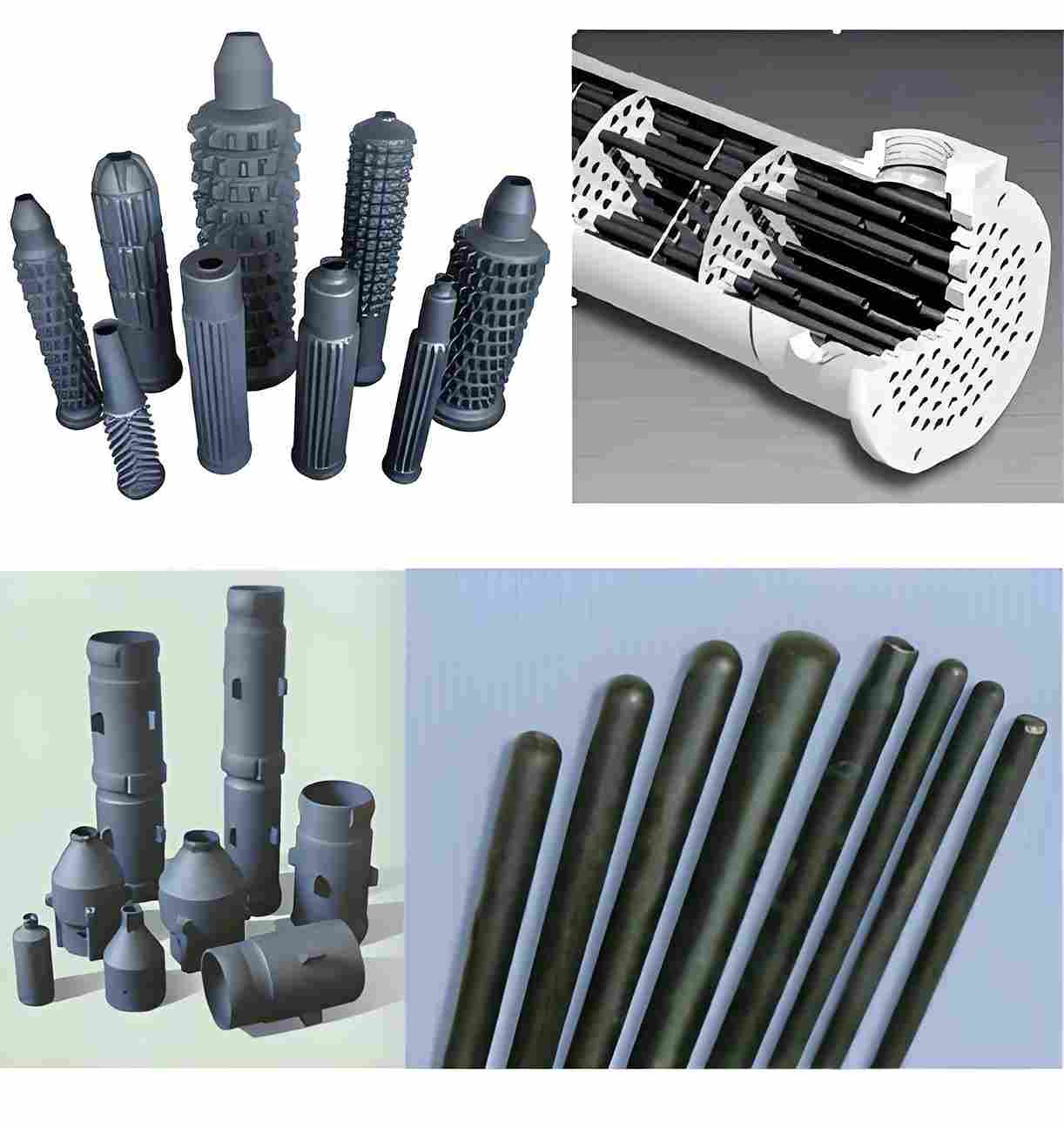
In most plants, steel is still the default material for structural and wear parts. It is familiar, easy to machine, weldable, and relatively low cost. However, as operating conditions move toward higher temperatures, more aggressive media, and severe wear, silicon carbide (SiC) ceramics can outperform steel by a wide margin in lifetime and stability.
This article explains where silicon carbide vs steel is not a fair fight anymore, and when it makes business sense to replace metal parts with SiC components such as tubes, plates, seals, and nozzles.
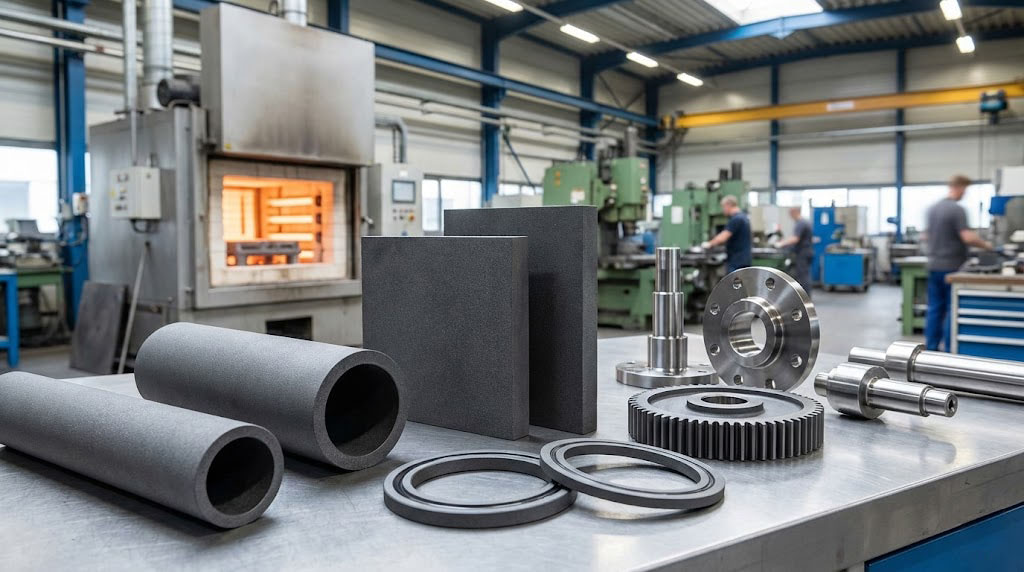
Silicon Carbide and Steel: Two Very Different Materials
Silicon carbide is a covalently bonded ceramic with very high hardness, high temperature strength, and excellent thermal shock resistance. It keeps its mechanical properties at temperatures where steels are already soft or creeping.
Steel is a metallic alloy based on iron, valued for its toughness, ductility, and ease of fabrication. It performs well in many structural applications, but its wear, oxidation, and high-temperature limits are fundamentally different from SiC.
Key Property Comparison: SiC Ceramics vs Steel
| Property | Silicon Carbide (SiC) | Typical Steel (structural / alloy) | Practical Impact |
|---|---|---|---|
| Hardness | Extremely high (Vickers ~2,000–2,800 HV) | Moderate (typically ~150–600 HV) | SiC has far better abrasion and slurry wear resistance. |
| Max. service temperature | Up to ~1,600 °C (grade-dependent) with strength retention | Typically < 700–800 °C for long-term strength | SiC works where steels creep, soften, or oxidize rapidly. |
| Thermal conductivity | High | Medium | SiC spreads heat efficiently, improving thermal shock resistance. |
| Thermal expansion | Low | Higher | SiC sees lower thermal stresses in rapid temperature changes. |
| Wear resistance | Excellent in abrasion, slurry, and sliding contact | Moderate to good, but degrades faster in harsh wear | SiC parts typically last several times longer in erosive flows. |
| Corrosion resistance | Very high in many acids, hot gases, and aggressive media | Dependent on alloy; often needs coatings or linings | SiC tolerates mixed corrosion + temperature better. |
| Toughness | Lower, brittle fracture behavior | High toughness, ductile failure | Steel handles impact and overload better than SiC. |
| Manufacturing / joining | Cast / sintered / machined; joining via brazing or mechanical design | Weldable, formable, easily machined | Steel is still better for large welded structures and frames. |
| Unit cost | Higher per kilogram | Lower | SiC wins on lifecycle cost where downtime or wear is critical. |
In short: steel is more forgiving, SiC is more durable. The key question is whether your application values toughness and easy fabrication, or maximum wear and temperature resistance.
Where Steel Still Makes More Sense
There is no need to force ceramics everywhere. Steel is still the rational choice when:
- You need high impact resistance and can’t avoid shocks or heavy mechanical abuse.
- You are building large frameworks, supports, or pressure vessels that must be welded and adjusted on site.
- Operating temperatures are moderate and well below steel softening or creep limits.
- Components are easy to access and cheap to replace during planned stops.
- The system is cost-driven and downtime is relatively cheap.
For beams, brackets, outer shells, and low-wear housings, steel is often the best and simplest solution.
When Silicon Carbide Starts to Outperform Steel
Silicon carbide becomes a serious alternative to steel once you enter the “harsh conditions” zone: high temperature, corrosion, and abrasion. Typical triggers for switching from steel to SiC are below.
1. High Temperature + Oxidation Where Steel Loses Strength
At elevated temperature, many steels rapidly lose mechanical strength, creep, or oxidize. Even heat-resistant alloys have limits. SiC ceramics retain strength and stiffness at much higher temperatures and form a protective silica layer in oxidizing atmospheres.
You should consider SiC instead of steel when:
- Component temperature is regularly above 800 °C and approaching 1,200–1,500 °C.
- Parts are exposed directly to burner flames, hot flue gas, or radiant zones.
- Steel tubes, pipes, or supports deform or oxidize faster than expected.
In such conditions, silicon carbide tubes and ceramic furnace components will generally outperform steel beams or pipes in lifetime and dimensional stability.
2. Severe Abrasive Wear and Slurry Erosion
Hard particles in slurry or gas flow turn steel surfaces into consumables. Even hardened or coated steels suffer from:
- Groove wear and wall thinning in a short time.
- Frequent replacement of bends, tees, and nozzles.
- Unpredictable failures due to localized erosion.
Silicon carbide’s very high hardness and wear resistance make it ideal for:
- Wear liners and plates in high-speed particle flows.
- Nozzles and orifices used for sandblasting, desulfurization, or abrasive slurries.
- Slurry transport sections where steel pipes are replaced too often.
Wherever you already use thick-walled steel or hardfacing to survive abrasion, SiC often delivers a longer, more stable service life.
3. Corrosive + High-Temperature Environments
In many real systems, components see both heat and aggressive chemistry: hot acids, chlorides, sulfur-containing gases, or mixed combustion products. Steel in those conditions often needs expensive alloys or complex coatings, which can still fail at interfaces or defects.
Silicon carbide offers:
- High resistance to many acids, alkalis, and chlorides at elevated temperature.
- Stable performance in aggressive flue gas and chemical process atmospheres.
- Lower risk of under-deposit corrosion and pitting in mixed media.
For critical paths in chemical processing, metallurgical gas handling, and flue gas lines, switching from steel to SiC can stabilize performance and reduce unexpected leaks.
4. Tight Tolerances and Dimensional Stability at Temperature
Many modern systems require precise alignment and clearances under thermal load. Steel components may warp, bow, or change dimensions as they heat up and cool down repeatedly.
SiC ceramics provide:
- Low thermal expansion and high stiffness at elevated temperature.
- Excellent straightness retention in long tubes, rollers, and supports.
- Stable fits and clearances over many heat-up and cool-down cycles.
For high-precision heater tubes, support beams, or guiding structures in furnaces and reactors, SiC often offers better geometry control than steel.
5. When Downtime Is More Expensive Than Materials
Steel looks cheaper per kilogram, but in high-value production lines, the real cost is downtime. If a steel part forces an unscheduled shutdown, the cost of lost production and restart can dwarf the saving on materials.
SiC is worth considering when:
- Any single failure can stop an entire line or reactor.
- Access for replacement is difficult or requires cooling the whole system.
- You need components to reliably reach a specific lifetime between planned outages.
In these cases, the higher purchase price of SiC often pays back quickly through fewer failures and more predictable maintenance.
Typical Components to Convert from Steel to SiC
Zirsec frequently supports customers who start with steel components and gradually convert the critical ones to SiC. Common upgrade candidates include:
- Tubes and protection components: Switching steel tubes or radiant pipes in hot zones to silicon carbide tubes for better temperature and oxidation resistance.
- Wear liners and plates: Replacing steel liners and wear plates in high-abrasion zones with SiC ceramic plates and tiles.
- Nozzles and burner parts: Using SiC nozzles instead of steel for abrasive slurries, sandblasting, or burner tips in desulfurization and firing systems.
- Seal rings and bearing components: Upgrading steel or hard-coated steel seals and sleeves to SiC seal rings and ceramic sleeves in pumps and rotating equipment.
Most plants do not change everything at once. They start with one or two chronic problem components, quantify lifetime improvement, then roll out the solution to similar equipment.
Decision Checklist: Steel or Silicon Carbide?
Use the checklist below as a quick decision tool for your next project or retrofit:
- Operating temperature consistently above 700–800 °C? Consider SiC.
- Frequent high-temperature cycling or rapid heating and cooling? SiC has an advantage.
- Severe abrasion or slurry erosion causing fast steel wear? SiC is usually superior.
- Corrosive gases or liquids at high temperature? SiC can reduce corrosion risk.
- Parts must keep precise geometry while hot? SiC offers better stability.
- Downtime costs far more than the material itself? SiC often wins on lifecycle cost.
If you answer “yes” to several of these points, it is worth running a detailed comparison using actual lifetime, replacement cost, and downtime data.
Example Scenario: From Steel Tube to SiC Tube
Consider a high-temperature furnace line where steel tubes carry hot gas or support load in a burner zone:
- Steel tubes gradually deform at the hottest point and oxidize on the surface.
- Warping causes misalignment, sealing problems, or uneven heating.
- Each replacement requires cooling, mechanical work, and a full restart.
Upgrading those positions to silicon carbide tubes shifts the failure mode:
- Tubes maintain straightness and load capacity over much longer cycles.
- Surface oxidation is slower and mainly forms a protective layer.
- Failures become rare and predictable, aligning with planned shutdowns.
Although each SiC tube costs more than a steel tube, the reduction in emergency stops and tube changes can easily justify the upgrade in one or two maintenance cycles.
How Zirsec Supports the Transition from Steel to SiC
Switching from steel to silicon carbide is not just a material swap; it usually requires rethinking geometry, supports, and tolerances. Zirsec helps by:
- Reviewing current steel part drawings, operating conditions, and failure history.
- Selecting suitable SiC grades and geometries for tubes, plates, nozzles, or seal rings.
- Providing prototype and small-batch runs so you can validate performance in real equipment.
- Scaling to regular production once the design is proven in your process.
If you are facing repeated failures or short lifetimes with steel components in harsh service, it is a strong sign that silicon carbide ceramics should be evaluated as a replacement. Starting with one critical component and measuring the impact is often the most efficient path.
To discuss a specific application, you can share your drawings and working conditions with Zirsec’s engineering team and explore how SiC components can reduce wear, improve reliability, and stabilize your operating costs.