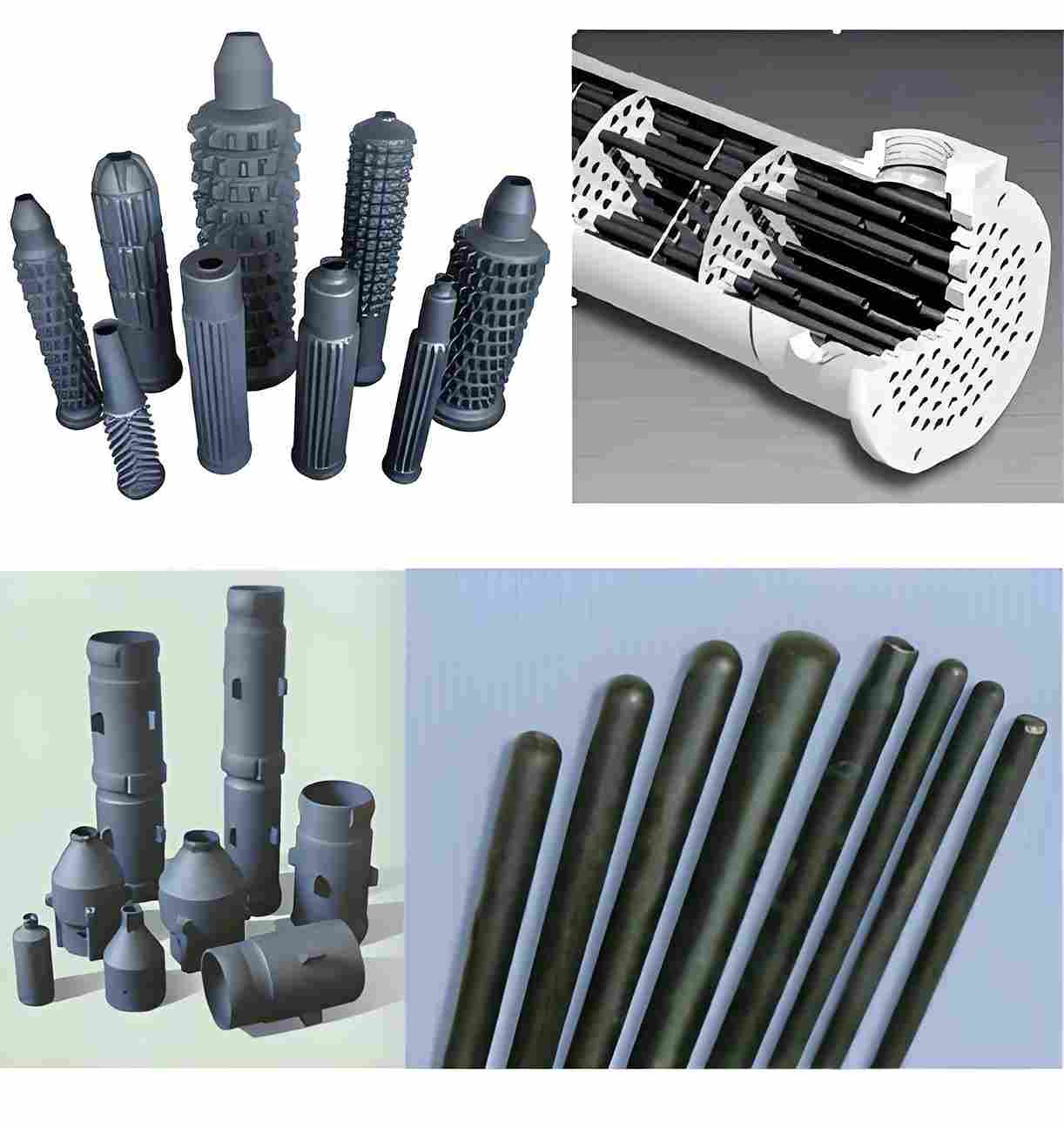
Silicon carbide (SiC) burner tubes are critical components in modern industrial furnaces and kilns. Correct installation not only improves temperature uniformity and combustion efficiency, but also prevents premature cracking, thermal shock damage, and unplanned shutdowns.
This guide provides practical installation tips for SiC burner tubes used as flame tubes, radiant tubes, and burner nozzles in gas- or oil-fired furnaces.
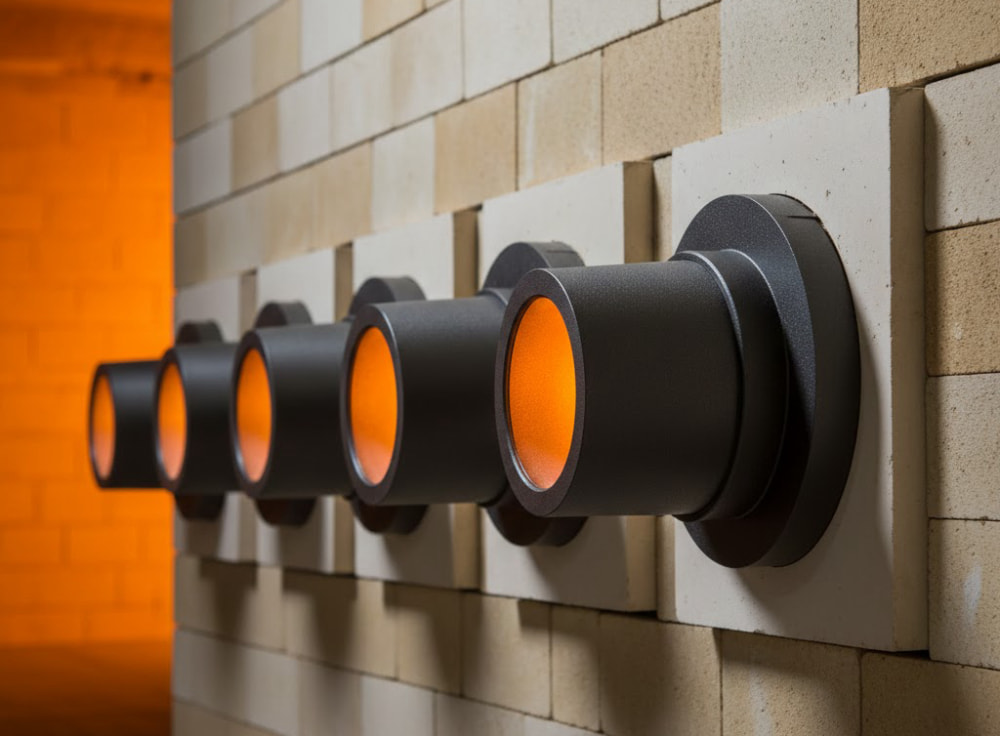
Understand the role of silicon carbide burner tubes
Before installation, it helps to be clear on what the burner tube is doing in your system:
- It forms a controlled combustion chamber so most of the flame burns inside the tube instead of directly on the load.
- It acts as a radiant tube, transferring heat evenly to the furnace interior.
- It protects the refractory lining near the burner from hot spots and flame impingement.
- It stabilizes the flame and improves mixing of fuel and combustion air.
Because it sits at the hottest and most stressed location, small installation errors quickly turn into cracks, deformation, or tube failure.
Pre-installation checks
Before mounting the silicon carbide burner tube, carry out a few basic checks:
- Verify dimensions and drawing: Length, outer diameter, inner diameter, shoulder details, and flange geometry must match the burner and wall opening.
- Check straightness: Roll the tube on a flat surface or use a straightedge to confirm there is no serious bowing that will cause misalignment.
- Inspect for transport damage: Look for chips at the ends, circumferential cracks, or impact marks.
- Confirm material grade: Make sure the SiC grade (RBSiC/SiSiC, SSiC, RSiC) is appropriate for the design temperature and atmosphere.
Handle tubes with clean gloves and use soft supports; avoid metal-to-ceramic impacts that create microcracks before the tube even sees heat.
Mounting and support in the furnace wall
How the burner tube is supported and sealed in the furnace wall has a direct impact on lifetime.
Provide proper expansion allowance
- Do not clamp the tube rigidly inside a cold steel sleeve. Allow axial expansion into the furnace interior or outwards, depending on design.
- Use fiber gaskets, ceramic papers, or compressible refractories that can deform with thermal movement instead of locking the tube in place.
- Avoid tight interference fits between the SiC tube and metal parts at room temperature; they will become even tighter when temperatures change.
Centering and alignment
- Align the burner tube with the burner axis so the flame is centered inside the tube, not striking one side wall.
- Use spacers or centering rings where needed to keep the tube straight in the wall opening.
- Check that the tube outlet is pointing toward the designed zone of the furnace, not directly at sensitive product or kiln furniture.
Sealing against hot gas leakage
- Seal the annular gap between the tube and furnace wall with appropriate high-temperature fiber or castable, leaving room for expansion.
- Make sure joints and seals do not create sharp temperature gradients or rigid “hard spots” on the SiC surface.
Connection to the burner and metallic parts
At the cold end, silicon carbide burner tubes are typically connected to metallic burners, recuperators, or mounting plates.
- Use sliding or floating interfaces where possible so the tube can move slightly relative to the steel during heating and cooling.
- Ensure the metal hardware is designed to tolerate the radiation and backface temperature from the SiC tube.
- Do not overtighten clamping bolts against the ceramic; use specified torque values and compressible gaskets.
Where radiant tubes are used, review the design principles in resources on radiant tubes to ensure correct flow direction, recirculation, and flame stability.
Initial heating and bake-out
The first firing is when many tubes are damaged by thermal shock or trapped moisture.
- If the tube or surrounding refractory contains moisture, perform a controlled bake-out at low temperature to drive off water before going to high fire.
- Use stepped temperature ramps (for example: ambient → 200 °C → 600 °C → operating temperature) with hold times so the entire tube can equalize.
- Avoid full burner output on a cold tube; increase firing rate gradually while monitoring tube and furnace wall temperatures.
Once the tube has passed the initial cycles without damage, its risk of early thermal shock failure drops significantly.
Combustion setup and flame tuning
After installation, correct combustion tuning will protect the tube and improve efficiency.
- Adjust the burner so that the flame front stays inside the SiC tube and does not extend far into the furnace chamber.
- Set air–fuel ratio to design values; overly rich or overly lean flames can increase tube skin temperature and oxidation risk.
- Check that the flue gas velocity at the outlet is sufficient to promote good mixing and temperature uniformity in the furnace.
Record the stable operating settings so they can be restored after maintenance or burner changes.
Operating practices to extend tube life
Once in operation, a few disciplines help keep silicon carbide burner tubes in service longer:
- Minimize door openings and cold air inrush directly onto the hot burner tube outlet.
- Avoid rapid swings in setpoint temperature; use controlled ramps instead of large instant changes.
- Keep fuel quality and pressure stable; big fluctuations stress both the tube and the furnace refractories.
- Inspect tubes during scheduled shutdowns for hairline cracks, glaze changes, or distortion near the hot end.
Typical mistakes to avoid
- Rigidly embedding the SiC tube in castable with no expansion allowance.
- Letting the flame impinge on the tube outlet edge instead of burning inside the tube.
- Quenching a hot tube with cold air, water, or cold product near the outlet.
- Ignoring misalignment between the metal burner and the ceramic tube after maintenance.
Integrating burner tube design with the rest of the SiC system
Silicon carbide burner tubes usually work together with other SiC components such as rollers, beams, or kiln furniture. When you review your combustion system, it is often efficient to review the whole SiC package at the same time.
For example, upgrading to optimized silicon carbide tubes together with improved kiln furniture and better start-up procedures can reduce fuel consumption, tube replacement frequency, and unplanned downtime.
Summary: practical installation checklist
- Verify dimensions, grade, and straightness before installation.
- Provide proper axial expansion allowance and flexible seals in the wall.
- Align burner, tube, and furnace opening so the flame burns inside the tube.
- Perform a controlled first heat-up with moisture removal and stepped ramps.
- Tune combustion for stable flames, correct air–fuel ratio, and uniform temperatures.
- Monitor operation for leaks, vibration, and hot spots, and inspect tubes during planned stops.
With correct installation and operating discipline, silicon carbide burner tubes deliver long, predictable service life in demanding high-temperature furnaces and kilns.