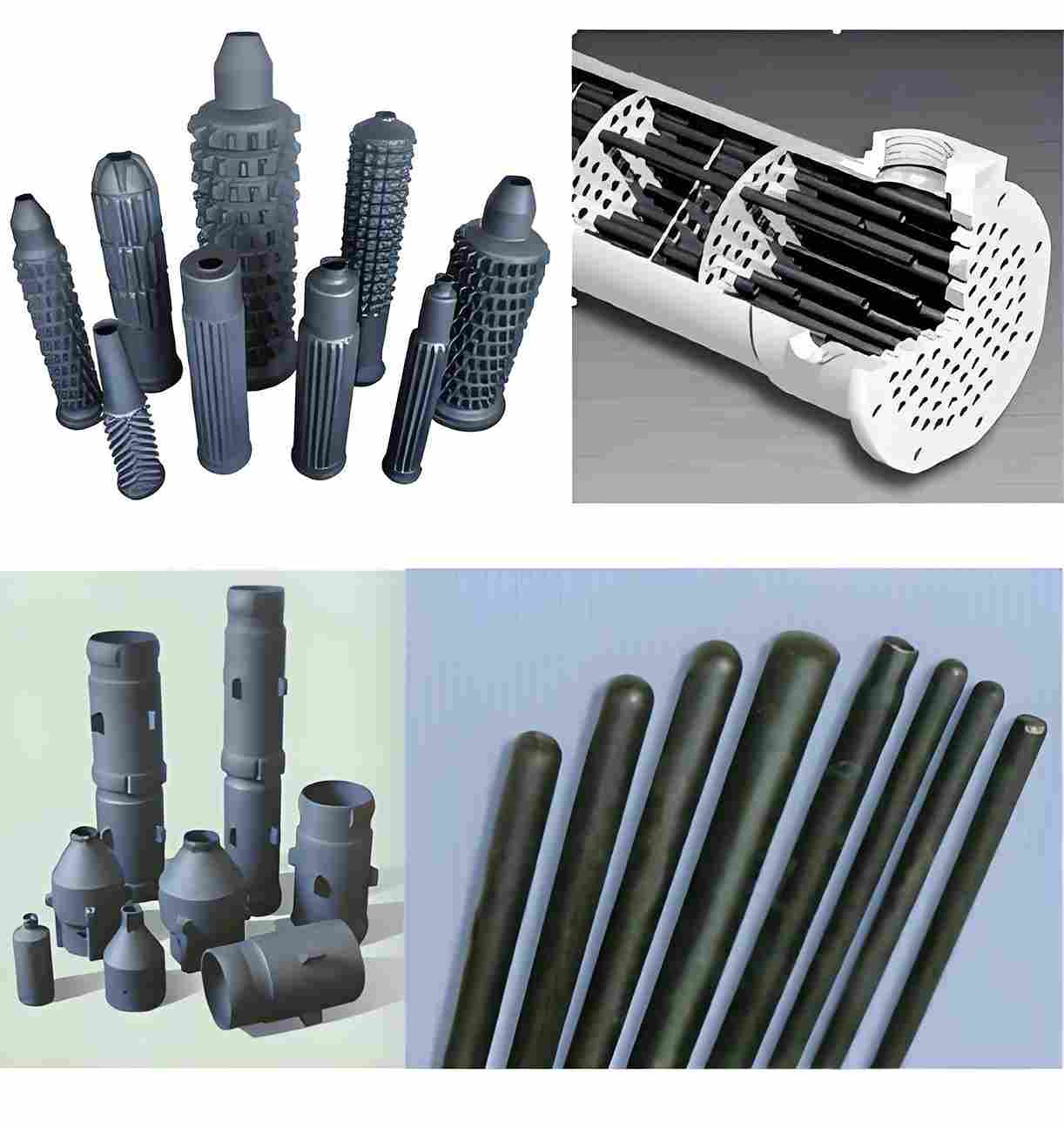
Silicon carbide (SiC) tubes, plates, crucibles, seal rings, and custom parts are engineered to survive extreme temperatures and aggressive media. Ironically, many of them are damaged before they ever see real service – during transport, handling, or storage.
Chips, hairline cracks, and hidden impact damage shorten service life and cause “mysterious” failures in the field. This guide explains proper handling and storage practices for silicon carbide ceramic components so they reach your furnace, pump, or reactor in the same condition they left the factory.
Why proper handling matters for silicon carbide ceramics
SiC is extremely hard and wear-resistant, but like all ceramics it is brittle. It tolerates compressive loads very well, but it does not forgive sharp impacts or point loads.
Typical damage caused by poor handling includes:
- Edge and corner chipping on plates and tiles
- End-face damage on tubes, especially thin-wall designs
- Microcracks from impacts that only show up later as in-service failures
- Surface contamination that affects sealing, bonding, or high-temperature behaviour
Given the cost of components like silicon carbide tubes or silicon carbide crucibles, preventing this kind of early damage is an easy win.
Receiving inspection: first line of defence
Proper handling starts when the parts arrive at your site, not in the furnace hall.
Unpacking safely
- Open crates and boxes carefully; avoid stabbing knives or crowbars near the ceramic surface.
- Support tubes and large plates with both hands or lifting tools before cutting straps or wrapping.
- Remove filler and padding gradually so parts are never left unsupported.
Initial visual inspection
- Check for visible cracks, chips, or impact marks, especially at edges, corners, and tube ends.
- Verify that the quantity, dimensions, and part markings match the packing list.
- For critical parts, use a simple ring test (light tap with a non-metallic tool) to listen for dull sounds that may indicate internal cracks. Do this gently and only where allowed by your procedures.
Documentation
- Photograph any visible damage immediately and record batch numbers.
- Separate questionable parts from the main stock until the supplier confirms whether they are safe to use.
Handling guidelines: how to move SiC without breaking it
The fastest way to kill a good SiC part is casual handling with metal tools and one-hand carries. Treat these components as precision parts, not scrap steel.
Manual handling
- Always use two hands for long or heavy pieces; do not carry big tubes or plates like a broomstick.
- Support long tubes at multiple points; never lift a long tube by one end only.
- Do not knock parts together or against concrete floors, pallets, or steel racks.
- Wear clean gloves to avoid contamination on sealing surfaces and precision faces.
Mechanical lifting
- Use slings, padded yokes, or dedicated lifting fixtures for large components.
- Never hook lifting chains or metal hooks directly onto ceramic surfaces or holes.
- Lift smoothly; avoid sudden starts or stops that cause parts to swing and hit structures.
Temporary placement during work
- Place parts on soft, flat supports: wooden blocks with rubber pads, foam, or fiber board.
- Do not rest tubes on sharp edges or single point supports that concentrate load.
- Keep aisles clear so pallets or carts are not pushed into parked SiC parts “just for a moment”.
Storage conditions: keep ceramics safe while they wait
SiC itself is chemically stable, but what you store around it and on it makes a difference. The goal is simple: no impact, no moisture, no contamination.
Environment
- Store silicon carbide components in a dry, covered, and clean area, not outdoors or directly on concrete.
- Avoid locations with strong vibration or where heavy equipment regularly passes close by.
- Keep away from aggressive chemicals that might attack metal fixtures, labels, or packaging.
Shelving and racking
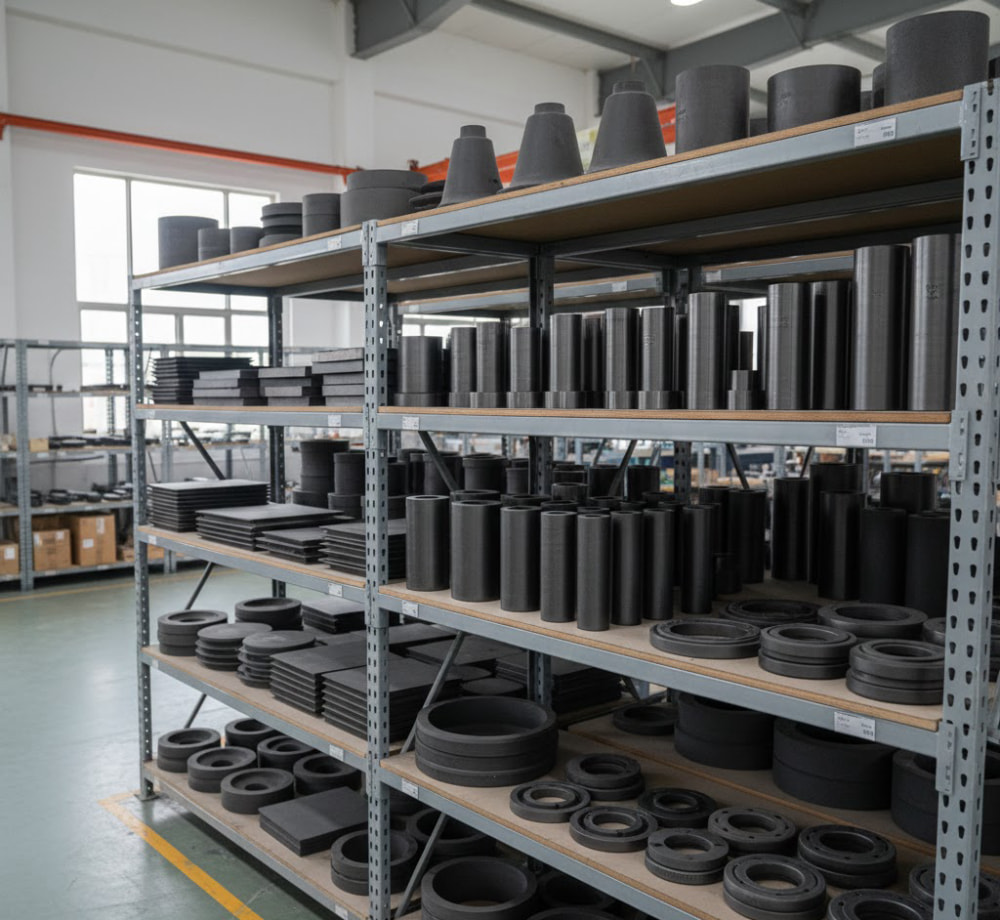
- Use shelves or racks with padded surfaces or non-metallic liners where the ceramics make contact.
- Store plates and tiles flat on supports, with spacers between layers to distribute load and avoid sliding damage.
- For tubes, use multi-point cradle supports rather than two hard supports at the ends.
- Do not stack heavy parts directly on top of thin or delicate parts.
Protection against contamination
- Keep sealing faces, machined surfaces, and precision bores covered with caps, films, or protective sleeves where possible.
- Avoid storing SiC parts under shelves where grinding, welding, or cutting is performed.
- Do not use silicon carbide components as convenient shelves, workbenches, or supports for other items.
Labelling, identification, and traceability
Handling problems often start when people are not sure what a part is or where it should go.
- Clearly label storage locations with part name, drawing number, and orientation notes (e.g. “this side up”).
- Keep batch and heat numbers readable; if original labels might be damaged, add secondary labels to packaging instead of writing directly on critical surfaces.
- Separate new, used, and scrap SiC parts into clearly different zones to avoid accidental re-use of damaged components.
Special handling notes by component type
Tubes and thermocouple protection tubes
- Support the full length of tubes, especially long or thin-wall designs.
- Protect the ends from impact with end caps or foam blocks.
- Avoid twisting tubes while one end is fixed; torsion can initiate cracks at supports.
Plates, tiles, and kiln furniture
- Lift large plates with two or more people or with lifting frames to prevent flexing.
- Do not drag plates across each other; lift and place with spacers.
- Store plates flat, not leaning, to avoid slow bending or accidental falls.
Crucibles
- Store crucibles upright on flat, padded surfaces.
- Do not nest different-size crucibles unless the design specifically allows it and there are pads between them.
- Avoid stacking heavy items inside crucibles; they are not general-purpose containers.
Seal rings and precision mechanical parts
- Keep silicon carbide seal rings and small wear parts in compartmentalized boxes with separators.
- Do not mix sizes or designs in the same bin; this encourages rough searching and handling.
- Ensure faces are protected from contact with metal parts or other ceramics.
Preparing components for installation
Immediately before installation, take a final pass to ensure damage has not occurred in storage.
- Wipe critical surfaces with a clean, lint-free cloth to remove dust before they go into high-temperature or sealing service.
- Check again for visible cracks or chips, especially in areas that will see peak stress or hot spots.
- Verify that parts have not been accidentally swapped; use labels and drawings, not memory.
Training and simple rules for the shop floor
The best handling procedure fails the moment someone in a hurry treats SiC like scrap steel. Keep the rules simple and hard to ignore:
- “No bare concrete” – SiC never rests directly on the floor.
- “No one-handed heroes” – long or heavy parts require two hands or two people.
- “No sharp impacts” – no hammering, no “light tapping” with metal tools on the ceramic.
- “Keep it clean” – faces and sealing surfaces stay covered until installation.
Short, visual work instructions near storage areas and a quick induction for new staff usually pay back fast in fewer broken parts.
FAQ: Handling and storage of silicon carbide components
1. Can silicon carbide components be stored outdoors?
They should not be. While SiC itself is chemically stable, outdoor storage exposes parts to impact, moisture, dirt, and temperature swings. Always store them in a dry, sheltered area with controlled access.
2. Is it safe to stack silicon carbide plates directly on top of each other?
Only if they are properly supported and separated. Use flat supports and spacers between layers. Avoid tall stacks where the weight of upper plates can chip or stress lower ones, especially near corners.
3. Can I write directly on SiC parts with marker pens?
For non-critical surfaces, a permanent marker is usually acceptable, but avoid writing on sealing faces, machined surfaces, or hot-face areas. Where traceability is important, mark packaging or use tags instead.
4. Do silicon carbide components absorb moisture during storage?
Dense engineering-grade SiC has very low open porosity, but moisture can still collect in gaps, packaging, or on surfaces. Parts that have been in a humid environment should be dried gently before high-temperature use to avoid steam-related spalling in the surrounding refractories or interfaces.
5. How can I tell if a part was damaged during handling?
Look for chipped edges, visible cracks, dull sounds on gentle tap tests, or misalignment when parts are placed on a flat reference. If in doubt on a critical component, remove it from the main stock and consult your supplier before use.
6. Are silicon carbide components fragile?
They are mechanically strong but brittle. They tolerate compressive loads and high temperatures extremely well but dislike sharp impacts and point loads. Treated as precision components, they are very robust in service.
7. Can I reuse packaging from Zirsec for long-term storage?
In most cases, yes. Original packaging is designed to protect the specific geometry. If you reuse it, check that all supports and pads are intact and dry, and add extra protection where you see wear or compression.
8. What is the most common handling mistake with SiC parts?
Using them like structural steel: dragging them on concrete, knocking them together, or lifting long pieces by one end. Most avoidable chips and cracks trace back to this type of behaviour.
9. Should I separate used and new silicon carbide parts?
Yes. Always store new and used parts in clearly marked, separate areas. Used components may have hidden damage or reduced life; mixing them with new parts can lead to accidental installation of a component that is already near end-of-life.
10. How does Zirsec support proper handling and storage?
Zirsec supplies silicon carbide tubes, plates, crucibles, seals, and custom parts together with handling and storage recommendations tailored to each geometry. By combining suitable packaging, clear labelling, and the practices described in this guide, you can significantly reduce damage before installation and get the full value from your SiC components.