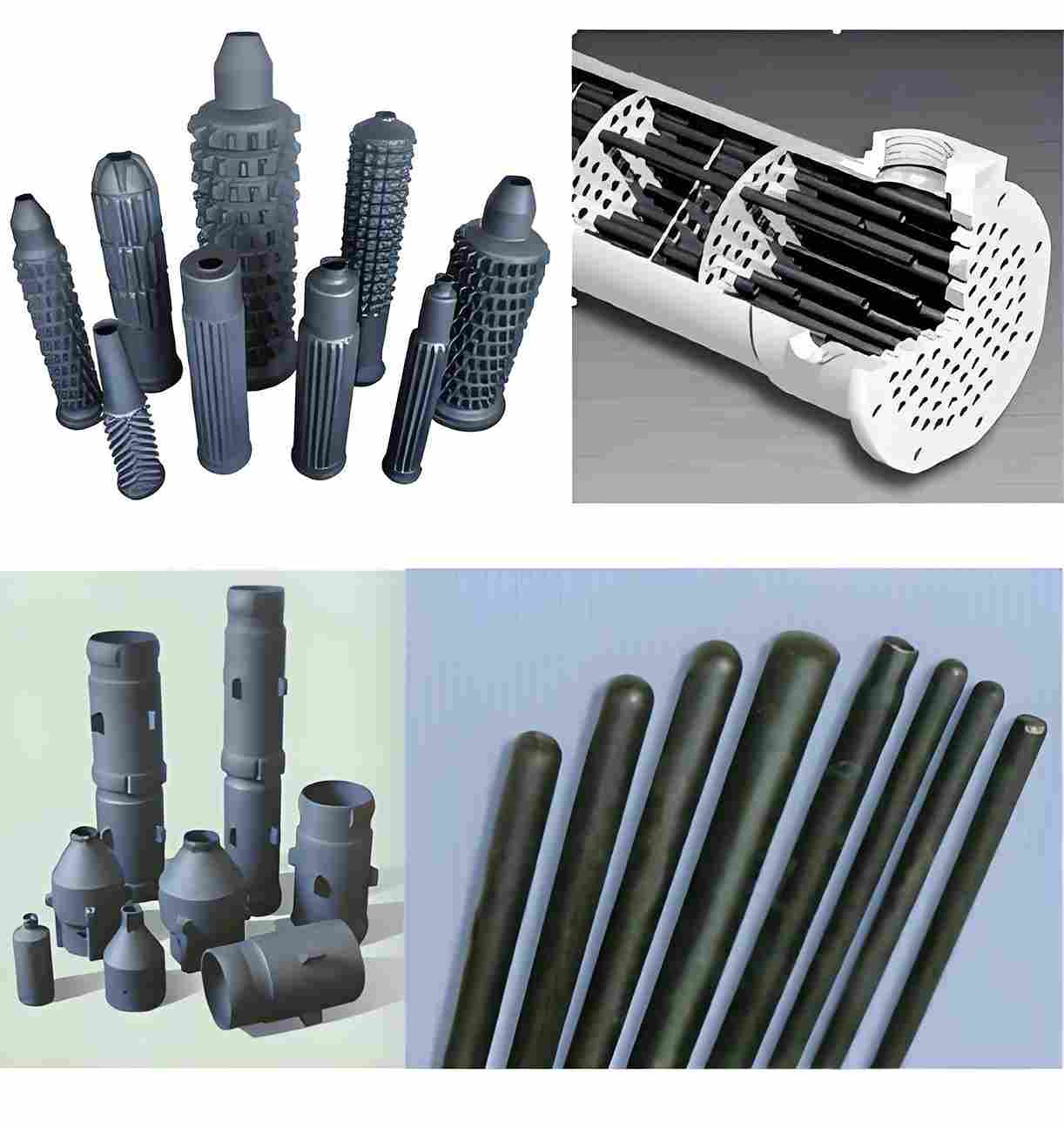
Silicon carbide (SiC) components are designed for extreme temperature, wear, and corrosion, but they are not indestructible. The wrong cleaning method can introduce microcracks, remove protective surface layers, or contaminate critical faces and sealing areas. In other words, poor cleaning can destroy the lifetime advantage you paid for.
This guide summarizes practical do’s and don’ts for cleaning silicon carbide ceramic components such as tubes, plates, crucibles, seal rings, and custom parts used in furnaces, pumps, and process equipment.
Why cleaning matters for silicon carbide
SiC is very hard and chemically resistant, but it is also a ceramic with a brittle structure. Cleaning mistakes typically cause:
- Surface microcracks from mechanical abuse (metal scraping, impact, aggressive blasting)
- Thermal shock from quenching hot parts with cold water or air
- Chemical attack from inappropriate acids, alkalis, or oxidizers
- Contamination that interferes with sealing or high-temperature performance (oil films, metal residues, dust)
Good cleaning keeps surfaces functional while preserving geometry and strength, especially for precision parts like seal rings or dimensional tubes such as silicon carbide tubes and process liners.
General cleaning principles for SiC components
Almost every cleaning situation can be handled by following a few simple rules:
- Use the mildest effective method first (soaking, soft brushing, non-abrasive media)
- Avoid sharp mechanical impact and hard-metal contact with ceramic surfaces
- Control temperature gradients to avoid thermal shock
- Use chemically compatible agents and rinse thoroughly
- Keep critical faces clean and protected before and after cleaning
Do’s: recommended cleaning methods
Use appropriate pre-cleaning steps
- Let components cool down to a safe handling temperature before cleaning; target below 60 °C for manual work.
- Blow off loose dust with oil-free compressed air at moderate pressure, keeping the nozzle at a reasonable distance.
- For parts from chemical or slurry service, drain fluid and remove gross residues before any detail work.
Use soft mechanical cleaning where possible
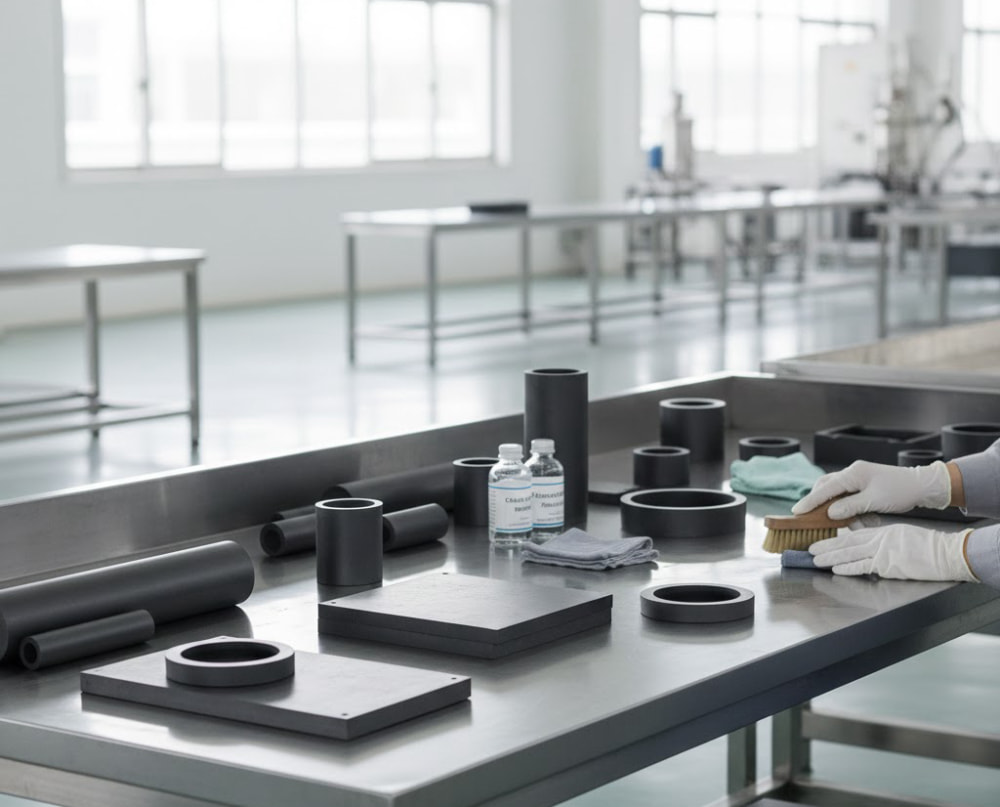
- Apply soft nylon or natural-bristle brushes to remove stuck powder, dust, or scale.
- For delicate surfaces (seal faces, precision bores), use lint-free wipes and compatible solvents instead of scrubbing.
- For kiln furniture and plates, moderate manual brushing is usually enough between cycles.
Use compatible chemical cleaners
Dense SiC has high chemical resistance, but everything around it (coatings, metal hardware, seals) may not. Always consider the complete assembly.
- For general grease and oil removal, use mild alkaline cleaners or industrial detergents compatible with SiC and any metals present.
- For light scaling or oxide removal, you may use suitably diluted acids (e.g. phosphoric, citric), following your plant’s chemical safety procedures.
- For precision components such as mechanical seal parts, an alcohol or hydrocarbon solvent rinse can remove thin oils and machining residues.
Consider controlled wet cleaning or ultrasonic cleaning
- For small parts like seal rings or inserts, ultrasonic cleaning in a compatible bath can remove fine particles from grooves and pores.
- Ensure the ultrasonic power and duration are appropriate; excessively aggressive profiles can damage coatings or bonded interfaces.
- Support parts properly in baskets to avoid them touching and chipping each other during cavitation.
Rinse and dry correctly
- Rinse thoroughly with clean water or demineralized water to remove cleaning agents and loosened contaminants.
- For critical parts, a final rinse with deionized water or solvent helps minimize spots and residues.
- Dry using filtered warm air or clean cabinets; avoid very hot, localized air jets on one region only.
Don’ts: what to avoid when cleaning SiC
Don’t thermally shock components
- Never plunge a hot silicon carbide component directly into cold water or spray it with cold water or compressed air.
- Avoid cleaning hot parts with cool liquids; always allow them to cool gradually before wet cleaning.
- Do not move parts from very cold storage straight into a hot drying oven.
Don’t use aggressive mechanical tools on ceramic surfaces
- Avoid metal scrapers, chisels, wire brushes, and steel hammers directly on SiC surfaces.
- Do not use coarse grinding discs or flap wheels on functional surfaces unless a controlled re-machining process is specified.
- Be careful with sandblasting / grit blasting: if required, use controlled media, pressure, and stand-off, and never on sealing faces or precision surfaces.
Don’t attack SiC with the wrong chemistry
- Do not use hydrofluoric acid (HF) or strong HF-containing blends; HF aggressively attacks many ceramics and glassy phases.
- Avoid very strong oxidizing mixtures or uncontrolled pickling of assemblies that include different materials.
- Consult chemical compatibility charts for silicon carbide and for any metal or elastomer parts connected to it.
Don’t contaminate critical faces
- Do not touch lapped faces of mechanical seal rings or precision contact surfaces with bare hands.
- Do not apply oily rags or shop cloths that leave lint and hydrocarbons behind.
- Keep cleaned parts away from grinding, welding, or cutting operations that deposit metal dust and spatter.
Cleaning by component type
SiC tubes and liners
- For process or furnace tubes (including silicon carbide tubes used in corrosive gas or liquid service), flush the interior with compatible liquids before mechanical brushing.
- Use long, soft brushes sized correctly for the bore; do not bend or jam brushes inside thin-wall tubes.
- For heavy deposits, use chemical soak plus flushing instead of aggressive rod scraping.
SiC plates, tiles, and kiln furniture
- Remove loose kiln wash, slag, or product residues with scrapers that are softer than the ceramic (e.g. wood, plastic, or softer refractory).
- For fused residues, controlled mechanical removal may be necessary, but avoid deep gouges or grinding through protective layers.
- Do not drop plates or knock them against each other while cleaning; edge chipping easily starts here.
SiC crucibles
- After metal melting, let crucibles cool slowly; do not quench in water.
- Remove slag and metal residues using non-metallic tools where possible.
- Do not aggressively chip at the crucible wall; if deposits cannot be safely removed, treat the crucible as near end-of-life rather than trying to “save” it with heavy chiseling.
SiC mechanical seal rings and precision components
- Use solvent cleaning and ultrasonic baths rather than brushing or abrasives.
- Dry with filtered air; avoid wiping across lapped faces with anything that can scratch.
- Store cleaned parts in protected trays or packaging until assembly.
When to clean in-place vs. off-line
Some silicon carbide components can be cleaned in-place; others should be removed and treated as precision parts.
- For in-furnace SiC plates and kiln furniture, light brushing and vacuum cleaning in-place is often acceptable.
- For components in critical flow paths (heat exchangers, high-purity gas systems), plan offline cleaning with controlled methods and full inspection.
- Where contamination could affect product quality (semiconductor, specialty chemicals), treat SiC parts with the same discipline as other process-contact materials.
Integrating cleaning into your maintenance strategy
Cleaning should not be random; it should be part of a documented maintenance routine:
- Define cleaning intervals based on deposits, process hours, and product quality requirements.
- Standardize methods for each component type (tubes, plates, crucibles, seals) so crews do not improvise with damaging tools.
- Log when, how, and why components were cleaned; correlate cleaning methods with lifetime and failure modes.
In many plants, simply replacing uncontrolled scraping and blasting with more controlled cleaning methods increases the life of SiC parts by a factor of 1.5–3×.
FAQ: Cleaning silicon carbide components
1. Can I use high-pressure water jets to clean silicon carbide parts?
High-pressure water can be used on some SiC components, but you must control pressure, stand-off distance, and temperature. Never jet cold water onto very hot components, and avoid direct jet impact on thin sections, sharp corners, or bonded interfaces.
2. Is it safe to use wire brushes on silicon carbide?
Metal wire brushes are not recommended. They can scratch surfaces, leave metallic residues, and initiate microcracks. Use soft-bristle or nylon brushes instead, especially on functional surfaces.
3. Which solvents are generally safe for cleaning SiC parts?
Common industrial solvents such as isopropyl alcohol, ethanol, and many hydrocarbon-based cleaners are generally compatible with dense SiC. Always confirm compatibility with any coatings, elastomers, or adhesives present in the assembly and follow your plant’s safety rules.
4. How do I remove stubborn scale or slag from SiC plates and kiln furniture?
Use a combination of soaking, controlled mechanical removal with softer tools, and, if appropriate, mild chemical treatment. Avoid deep gouging or grinding that alters thickness or flatness. If deposits cannot be removed without severe damage, consider replacing the component.
5. Can I put silicon carbide parts in a standard parts washer?
Yes, if the washer uses moderate temperatures, compatible detergents, and non-aggressive spray pressures. Avoid washers that rely on aggressive mechanical agitation or hard tumbling media. Keep SiC parts separated from metal parts to avoid impact damage.
6. Is abrasive blasting ever acceptable for SiC?
Only in controlled conditions and typically not on sealing faces or precision surfaces. If blasting is necessary, use suitable media, low pressure, and test on non-critical areas first. Always verify that the resulting surface condition is still acceptable for the application.
7. How should I clean silicon carbide crucibles between melts?
Allow the crucible to cool gradually, then remove remaining metal and slag using softer tools and brushing. Avoid thermal shock, aggressive chiseling, and quenching. A light oxide or metal film is often less harmful than wall damage caused by over-cleaning.
8. Do I need to re-condition seal faces after cleaning?
If cleaning was done with non-abrasive methods (solvents, ultrasonic, soft wipes), re-conditioning is usually not necessary. If any abrasive contact occurred, the flatness and roughness of seal faces should be checked, and professional relapping may be required for critical services.
9. How do I prevent re-contamination after cleaning?
Store cleaned parts in protected containers or racks, away from grinding and welding areas. Use covers on critical surfaces, and enforce handling rules (gloves, no oil, no contact with dirty tools) until installation.
10. How can a supplier like Zirsec support our cleaning procedures?
Zirsec not only supplies SiC tubes, plates, crucibles, seals, and custom parts, but can also provide application-specific cleaning and maintenance guidelines for each geometry and service. By aligning cleaning methods with the component design and operating conditions, you can protect your investment and extend the lifetime of your silicon carbide components.