High-purity processes demand tight contamination control. When you introduce silicon carbide (SiC) components into semiconductor tools, specialty chemical reactors, pharmaceutical lines, or ultra-clean thermal processes, you gain excellent thermal and chemical performance – but only if you keep extra particles, metals, and residues out of the system.
This guide explains how to avoid contamination when using silicon carbide components in high-purity processes, from material selection to handling, cleaning, installation, and operation.
Why contamination control matters with silicon carbide
In high-purity environments such as semiconductor manufacturing, precision chemicals, or pharmaceutical production, contaminants from equipment surfaces can lead to:
- Particle defects on wafers, optics, or coated surfaces
- Metal ion contamination in high-purity liquids and slurries
- Unwanted dopants or catalytic effects in chemical reactions
- Batch rejections, yield loss, or out-of-spec product quality
High-grade silicon carbide itself is chemically stable and low-outgassing, which is why it is widely used in wafer carriers, heater components, process tubes, and flow parts. The real contamination risk usually comes from how the SiC is processed, handled, cleaned, and installed, not from the pure material alone.
Step 1: Specify the right silicon carbide grade and finish
Contamination control starts at the purchasing and specification stage, not in the cleanroom.
Choose appropriate SiC grade
- For high-purity gas and thermal processes, specify high-density, low-porosity SiC with minimal free silicon and controlled impurities.
- Ask for chemical composition data and trace-metal analysis, especially for applications in semiconductor and electronic chemicals.
- For components exposed to cleaning chemistries, verify compatibility of the SiC grade with acids, oxidizers, and high-pH cleaners.
Define surface finish requirements
- Specify surface roughness (Ra) suitable for your process: smoother finishes generally trap fewer particles and are easier to clean.
- For seal faces or wafer-contact surfaces, require lapped or polished finishes with documented roughness and flatness.
- For internal flow paths (tubes, channels), aim for surfaces that minimize dead zones where particles can accumulate.
Request cleanliness and packaging standards
- Define target cleanliness level (e.g. particle limits, organic residues) if your quality system requires it.
- Request that components be supplied cleaned and double-bagged in controlled conditions for direct transfer into your pre-clean or cleanroom area.
- For standard industrial-duty products like silicon carbide tubes, agree clear expectations if you will repurpose them in higher-purity duty (e.g. additional in-house cleaning and surface prep).
Step 2: Control handling from dock to clean area
Many contamination problems begin in the warehouse or workshop long before parts reach the process tool.
Segregate high-purity SiC from general stock
- Store high-purity silicon carbide components in a dedicated, clean storage zone, separate from general refractory or structural ceramics.
- Use padded, non-shedding shelves and keep parts in their original bags or protective packaging until pre-cleaning.
- Label shelves clearly to avoid mixing high-purity parts with standard industrial components.
Use clean handling procedures
- Require gloves when touching unpacked SiC parts; bare hands leave oils and ionic residues.
- Use clean carts and trays dedicated to high-purity components. Avoid placing parts directly on steel workbenches, wood, or cardboard.
- Prohibit grinding, welding, or cutting operations near open high-purity components to avoid metal and abrasive dust.
Step 3: Pre-cleaning before installation
Even if components arrive “clean,” a controlled pre-cleaning step tailored to your process is good practice.
Choose compatible cleaning chemistry
- Use particle-removal steps first: filtered DI water, compatible detergents, and non-shedding brushes.
- For removal of machining residues or metal traces, consider mild acid or alkaline cleaning, verified not to damage SiC or any bonded layers.
- For semiconductor and ultra-pure applications, align cleaning solutions with your existing wafer or parts-cleaning chemistries where feasible.
Mechanical cleaning considerations
- Use soft brushes or non-shedding wipes for manual cleaning; avoid metal brushes or abrasive pads on functional surfaces.
- For small components, ultrasonic cleaning in filtered baths can remove fine particles from pores and grooves. Control power and time to avoid damage to coatings or interfaces.
- After wet cleaning, rinse thoroughly with high-purity DI water to remove all traces of chemicals and loosened particles.
Drying and transfer to clean area
- Dry components in a clean, filtered-air environment, not near general workshop activities.
- Use low to moderate temperatures to avoid thermal shock and condensation effects.
- Once dry, double-bag or cover parts in clean packaging before moving into higher-class clean areas.
Step 4: Clean installation in tools and process lines
Installation is a high-risk moment for introducing particles, fibers, or metal debris.
Prepare a clean installation environment
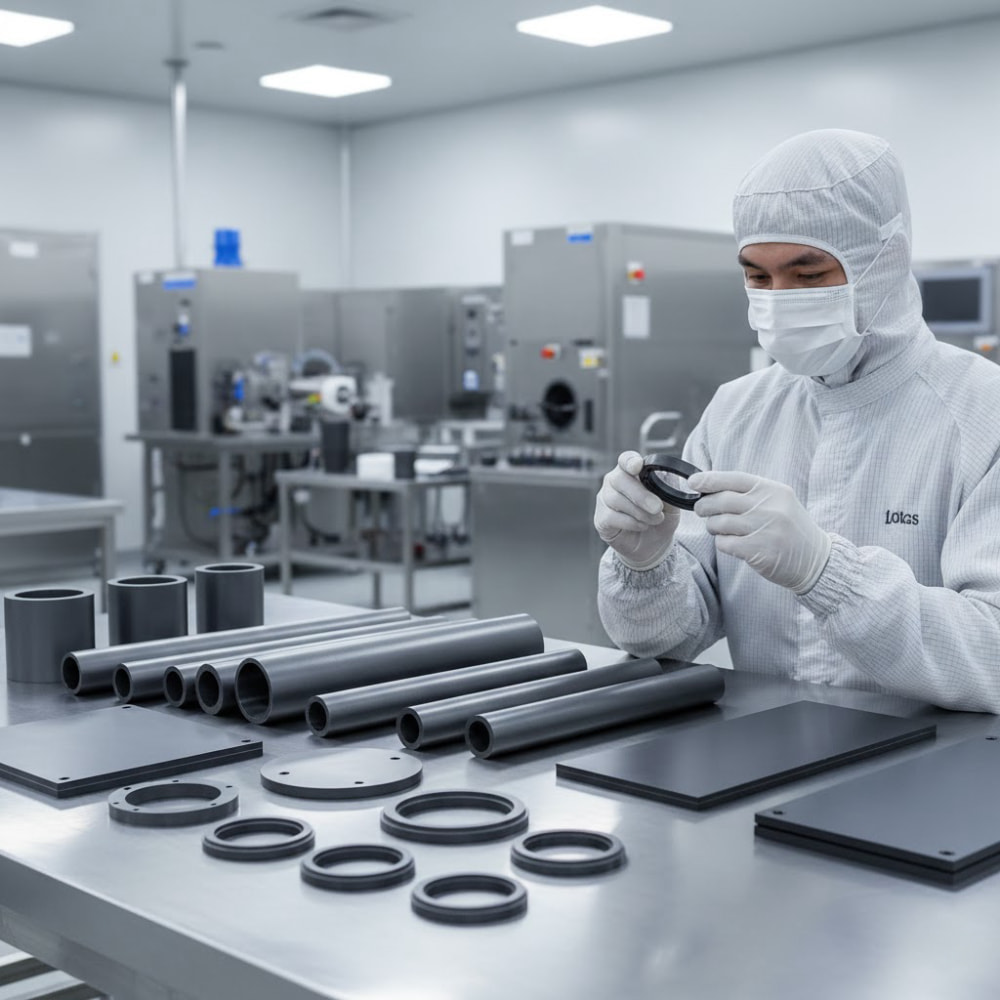
- Perform installation in at least a controlled, low-particle workspace, preferably within your cleanroom or a mini-environment for critical tools.
- Ensure technicians use appropriate garments for the cleanliness level of the area.
- Clean installation fixtures and tools beforehand; avoid rusty or dirty tools around high-purity SiC parts.
Avoid introducing foreign materials
- Use compatible gaskets, O-rings, and sealants that do not outgas or shed particles into the process environment.
- Avoid makeshift shims or packing with tape, cardboard, or unqualified materials.
- Do not apply general-purpose lubricants on surfaces that are exposed to high-purity gas or liquid streams.
Final wipe-down and system clean
- Once installed, perform a final wipe-down of exposed surfaces with lint-free wipes and compatible solvents or DI water.
- Follow with your standard tool or line conditioning sequence (e.g. purge, bake-out, or chemical conditioning) before running product.
Step 5: Operating practices that prevent re-contamination
Even with perfect installation, poor operation can generate contaminants from wear, corrosion, or condensate.
Stay within recommended operating envelope
- Keep temperatures, flows, and pressures within the specified limits for your SiC components to avoid abnormal wear or microcracking.
- Avoid rapid thermal cycling where not required; thermal stress can create fine cracks that become particle sources.
- Monitor atmospheres (oxidizing, reducing, inert) against material specifications, especially for long high-temperature soaks.
Control mechanical contact and abrasion
- In fluid systems, manage velocities and solid loadings to minimize abrasive wear on SiC surfaces.
- For wafer handling, carriers, or fixtures, ensure smooth, controlled motion to prevent surface scuffing.
- Inspect for unexpected contact with metal parts or misaligned components that could generate particles.
Monitor cleanliness of process media
- Use filtration and monitoring of gases, liquids, and slurries where they contact SiC surfaces.
- If particle counts rise after introducing new SiC parts, review cleaning and conditioning steps rather than assuming material incompatibility.
Step 6: Inspection, replacement, and feedback loop
Contamination control is an ongoing process. Regular inspection and data capture turn “mystery” problems into manageable engineering tasks.
Routine inspection
- Inspect SiC components at planned intervals for surface changes, pitting, scaling, or wear that could become particle sources.
- In batch processes, compare defect or contamination trends with the age and condition of SiC components.
- Document any visible residues or stains; correlate them with chemistry and operating conditions.
Replacement strategy
- Do not run SiC components until failure in high-purity tools. Replace them based on condition and risk, not only maximum lifetime.
- When parts are removed, keep them clean for failure analysis; do not throw them into general scrap piles if you need to learn from them.
Feedback to design and supply
- Share contamination-related findings with your component supplier to refine surface finish, geometry, or cleaning steps at the factory.
- Consider whether standard industrial parts should be upgraded to higher-purity variants or additional finishing when moved into more demanding processes.
Example: Using SiC tubes in high-purity thermal processes
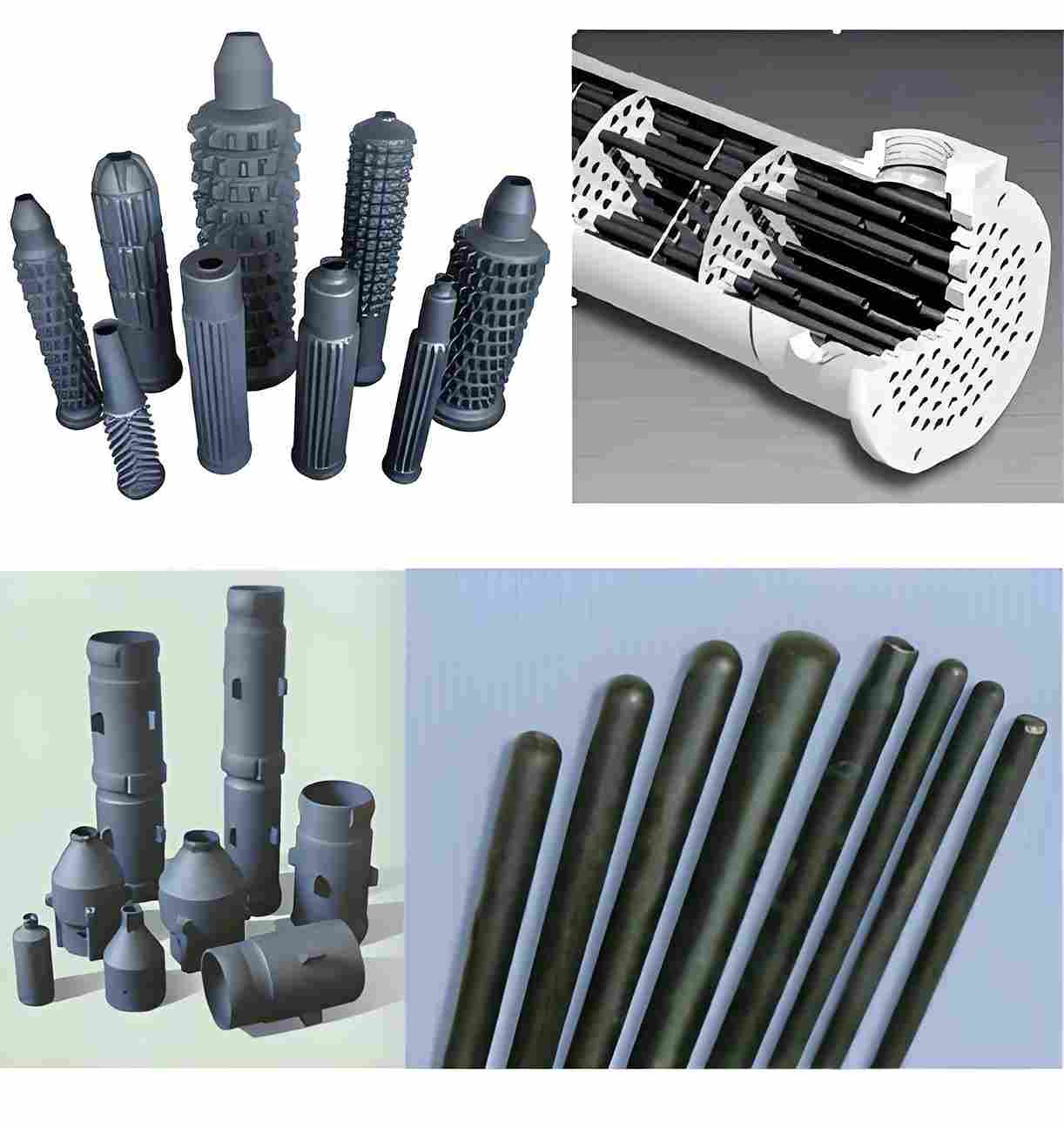
As a practical example, consider high-purity process tubes used in thermal treatment or corrosive gas handling. Components similar to silicon carbide tubes can be used in applications where cleanliness and stability are critical, provided that:
- The SiC grade and microstructure are specified for low outgassing and impurity content.
- All machining residues are removed via controlled cleaning steps.
- Installation is done in a clean environment with compatible gaskets and supports.
- Start-up and operation avoid thermal shock and abnormal wear.
When all these elements are aligned, silicon carbide offers stable, predictable performance for high-purity gas and thermal systems.
FAQ: Avoiding contamination with silicon carbide in high-purity processes
1. Is silicon carbide itself a contamination risk in high-purity applications?
High-quality, dense SiC is generally well suited for high-purity environments. The main risks come from residual machining debris, metallic contamination, binders, coatings, and poor handling rather than from the silicon carbide lattice itself. Specifying grade, finish, and cleaning properly mitigates this risk.
2. Do I need cleanroom-grade packaging for all SiC components?
Not necessarily. But for components going directly into cleanroom tools or high-purity lines, it is good practice to receive them in clean, sealed packaging that protects them between final cleaning and your pre-installation steps. Less critical upstream components can often use standard industrial packaging with additional in-house cleaning.
3. Can silicon carbide shed particles during normal operation?
Yes, if subjected to excessive abrasion, thermal shock, or chemical attack, SiC surfaces can generate particles like any other material. Keeping operations within the specified envelope and inspecting surfaces regularly is key to preventing this.
4. What is the best way to verify cleanliness of SiC parts before installation?
Depending on your industry, common approaches include particle counts in rinse water, surface wipe tests, TOC (total organic carbon) measurements, or ICP analysis for metallic residues. The method should match your process risk and quality standards.
5. Are coatings on silicon carbide components a contamination risk?
Coatings can be very helpful for corrosion resistance or emissivity control, but they must be qualified for your purity level. Poorly bonded or incompatible coatings can flake or outgas. Any coated SiC part used in high-purity service should be validated with the same rigor as the base material.
6. How often should high-purity SiC components be replaced?
There is no universal interval. Replacement should be based on observed wear, surface condition, process sensitivity, and historical failure data. Many plants adopt conservative replacement schedules for critical tools and rely on condition-based replacement for less sensitive equipment.
7. Can I use the same cleaning process for SiC as for stainless steel parts?
Sometimes, but not always. Many stainless-steel cleaning sequences are compatible with SiC, yet some steps (e.g. certain passivation acids or mechanical treatments) are optimized for metals, not ceramics. Review chemistry and mechanical methods to ensure they are suitable for SiC surfaces.
8. What should I do if particle counts rise after installing new SiC components?
First, verify that cleaning and conditioning steps were followed. Check installation procedures, flow rates, and thermal ramps. If issues persist, review the SiC grade, surface finish, and possible interactions with process media. Involving your supplier early usually shortens the investigation.
9. Are there specific standards for silicon carbide cleanliness?
There is no single universal standard for all industries, but many users map SiC component cleanliness to existing semiconductor, pharmaceutical, or chemical equipment standards within their quality systems. Work with your supplier to align documentation and testing with your internal requirements.
10. How can a supplier like Zirsec help with contamination control?
A specialized supplier can support you by providing appropriate SiC grades, documented material data, tailored finishing and cleaning, and stable component designs for high-purity service. Combined with disciplined handling and operation on your side, this partnership helps keep contamination under control while leveraging the performance benefits of silicon carbide.