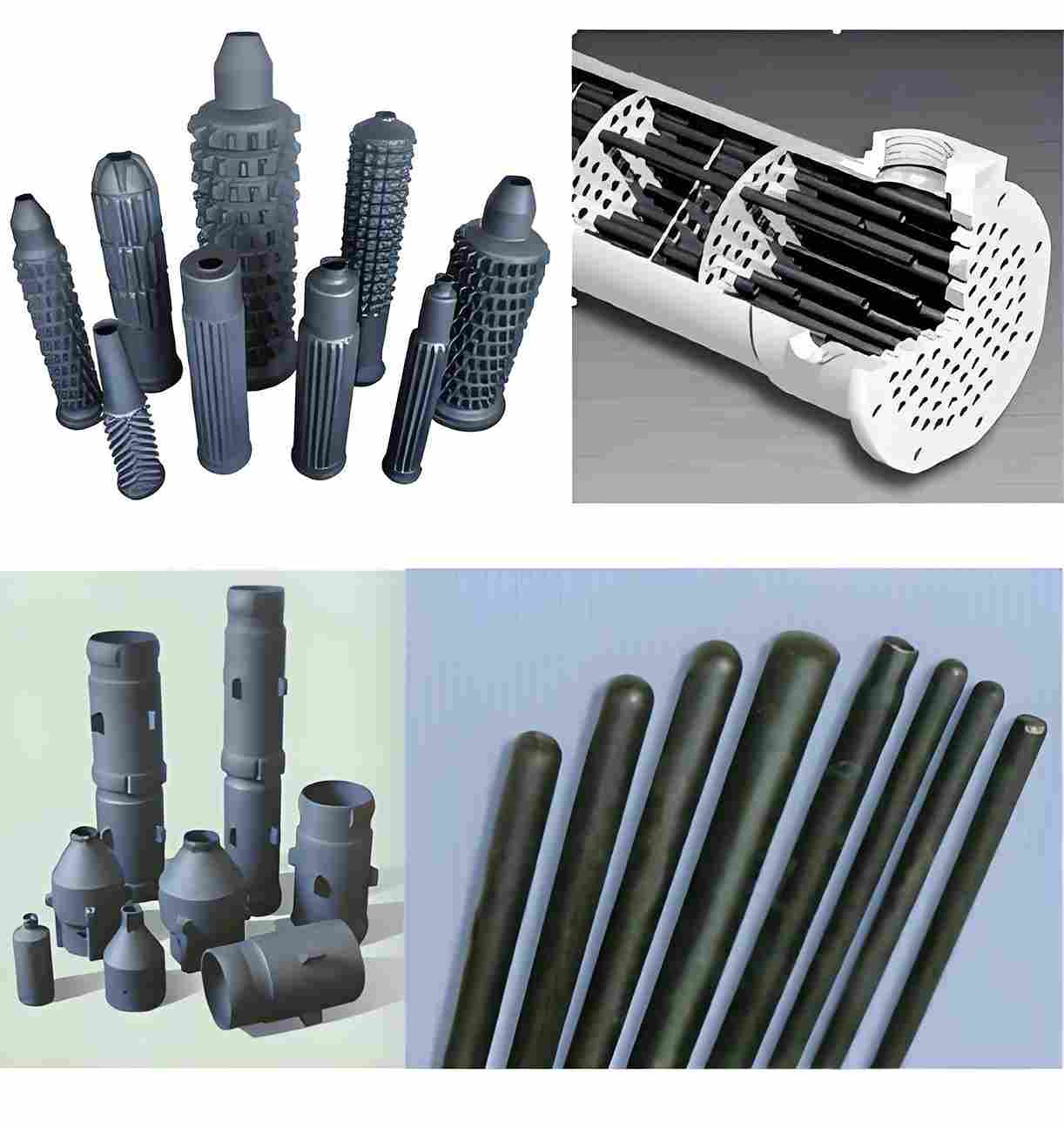
Short answer: no, silicon carbide ceramics are not “easily machined” like steel or aluminum. Once they are fully sintered, you cannot just drill, tap, or mill them with normal tools. But the longer answer is more useful: with the right process and planning, silicon carbide parts can be customized very effectively – you just need to respect how ceramics behave.
This FAQ walks through what is realistically possible, what is expensive, and how to design or order custom SiC components without burning your budget or your schedule.
1. Why machining silicon carbide is not like machining metal
Silicon carbide is an extremely hard, brittle ceramic. It has:
- Very high hardness (much higher than most steels).
- High elastic modulus and low fracture toughness.
- Excellent wear and corrosion resistance.
Those are great in service, but they also mean:
- Standard HSS or carbide tools do essentially nothing to finished SiC.
- Conventional drilling and milling cause cracks, chipping, or tool destruction.
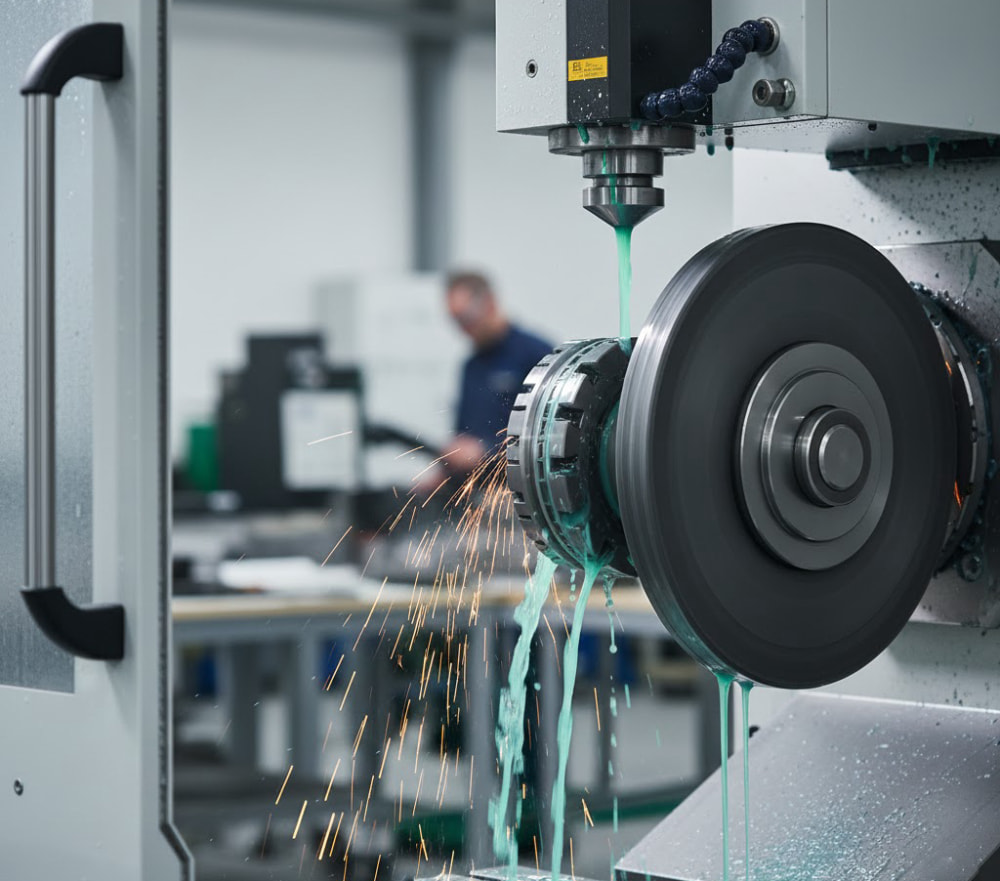
- All “real” machining has to be done with diamond tools, grinding, lapping, or special processes.
So, yes, custom shapes and tight tolerances are possible – but every extra surface, groove, or hole has a cost.
2. Green machining vs finished machining
Most silicon carbide components are not carved from a solid sintered block. Instead, the manufacturer uses two basic stages:
Green machining (before sintering)
“Green” parts are compacted bodies before full sintering, often relatively soft and much easier to shape. In this stage, the manufacturer can:
- Turn, mill, and drill the green body with special tools.
- Create complex outer shapes, holes, and recesses.
- Prepare features that would be very expensive to grind afterwards.
After green machining, the parts are sintered. They shrink and densify, so the manufacturer must compensate for shrinkage in the green dimensions.
Finished machining (after sintering)
Once sintered, machining is limited to:
- Diamond grinding of diameters, faces, and simple profiles.
- Lapping and polishing for seal faces and precision surfaces.
- In some cases, EDM-like or laser processes for very specific features (still slow and costly).
This is where tolerances and surface finishes are achieved for components such as mechanical seal rings, sleeves, and precision bores.
Design rule: put as much geometry as possible into the green stage, and use finished machining mainly for final sizing, flatness, and surface quality.
3. Which silicon carbide types are more “machinable”?
“Machinable” is relative. No SiC is friendly like graphite, but some structures are more cooperative than others.
- SSiC (pressureless sintered SiC) – very dense and hard; excellent in service, but grinding is slower and tool wear is higher. Ideal for seal rings, bearings, and wear parts where performance matters more than easy machining.
- RBSiC / SiSiC (reaction-bonded) – contains some residual silicon; generally a bit easier to grind than fully dense SSiC, and often used for larger shapes like tubes and plates.
- RSIC (recrystallized SiC) – lower density; behaviour depends strongly on microstructure. Used for some kiln and furnace components.
For large structural parts – silicon carbide tubes, plates, beams – RBSiC is often chosen partly because it balances shape complexity, cost, and machinability.
4. What kinds of customization are realistic?
Most industrial customization falls into a few categories. Here is the realistic view.
Dimensions and tolerances
Very common, and usually straightforward for an experienced SiC factory:
- Custom outer and inner diameters for rings, sleeves, and tubes.
- Custom thickness for plates, tiles, and crucible walls.
- Specific overall lengths for tubes, rods, and rollers.
Typical achievable ranges (indicative, not contract values):
- Standard industrial tolerances: ±0.1 to ±0.3 mm on general dimensions.
<liPrecision tolerances: ±0.01 to ±0.05 mm for critical fits and seal faces (with appropriate process and cost).
Translation: if all you need is a tube or plate size that is not in the catalogue, that is normal, not “exotic”.
Holes, slots, and special profiles
This is where cost and difficulty rise:
- Simple through-holes and slots can be designed into the green body and then cleaned up after sintering.
- Multiple small holes, deep narrow grooves, or sharp internal corners are possible but expensive.
- Long, thin features or “fins” are high risk for cracking during manufacture and in service.
Rule of thumb: the more your CAD model looks like a piece of art, the more it will cost in SiC.
Surface finishes
Common surface options include:
- Ground surfaces with moderate roughness (typical for structural parts).
- Lapped and polished surfaces for mechanical seal faces.
- Controlled roughness for sliding or lubricated contacts.
Smoother is not always better; extremely polished surfaces are only needed where sealing or specific tribological behaviour is critical.
5. How “easy” is it to change a drawing after production starts?
If you want to change a metal part in production, you often just tweak a CNC program. For silicon carbide, changes can mean:
- New tooling or forming process for the green body.
- Adjusted allowances for sintering shrinkage.
- New grinding setups and inspection plans.
Small changes (e.g. +0.1 mm on a diameter, slightly looser tolerance) can be absorbed. Big changes (new holes, new slots, big geometry shifts) are basically a new project.
So, no, SiC is not friendly to late, frequent design changes. It pays to involve the SiC supplier early so obvious problems are fixed before tools and processes are locked.
6. How to design SiC parts that are customizable without burning money
If you want custom silicon carbide and you also like your budget, follow these practical rules:
- Stay close to standard shapes: rings, tubes, plates, blocks, simple cones, and basic nozzles are the most cost-effective.
- Use generous radii and fillets: avoid sharp internal corners; they are stress concentrators and machining headaches.
- Avoid unnecessary thin sections: they break more easily during production and use.
- Concentrate tight tolerances where they matter: seal faces, bearing fits, and locating surfaces – not on every edge.
- Minimize deep narrow features: if possible, solve with assembly (SiC + metal fixture) rather than extreme one-piece SiC geometry.
Think of SiC as a high-performance structural material, not as a block of steel you can reshape endlessly.
7. Typical questions buyers ask (and honest answers)
Q1: Can I drill or machine silicon carbide ceramics in my own workshop?
A: Realistically, no. You would need diamond tools, proper fixturing, coolant, and experience with brittle ceramics. Most users should treat SiC as a finished part: you specify, the manufacturer machines. Trying to modify sintered SiC with general workshop tools usually ends with cracks and scrap.
Q2: Can silicon carbide be customized to my drawing?
A: Yes, as long as the geometry respects ceramic rules. Suppliers routinely make custom tubes, plates, seal rings, wear inserts, and burner parts. The key is to share your drawing, operating conditions, and priority requirements so the design can be adjusted for manufacturability.
Q3: Is it cheaper to buy a standard part and then machine it to size?
A: Usually not. Grinding a finished SiC part down to new dimensions can be more expensive than producing it correctly from the start. It is better to order the dimensions you need directly, unless you only require very minor grinding adjustments.
Q4: How tight can tolerances be on custom SiC components?
A: For critical features, tolerances like ±0.01–0.02 mm are possible on rings, seal faces, and precision diameters with the right process. However, holding this level of precision everywhere is unnecessary and costly. Most structural dimensions are specified in the ±0.1–0.3 mm range.
Q5: Are complex 3D shapes practical in silicon carbide?
A: It depends. Some complex shapes can be achieved via smart green forming and targeted grinding, but every extra pocket, hole, or thin section increases risk and cost. If your design looks like a 3D lattice or an ornate bracket, expect high tooling cost and limited yield.
Q6: Is reaction-bonded SiC easier to machine than sintered SiC?
A: Generally, yes – but “easier” is relative. RBSiC often grinds a bit faster than dense SSiC, which helps for large tubes, plates, and beams. Both still require diamond grinding and proper ceramic machining practices.
Q7: Can I get one or two customized pieces for testing?
A: Many suppliers, including small and mid-size factories, can support small-batch or prototype orders. The piece price will be higher than in mass production, but this is often the best way to validate a design before committing to larger quantities.
Q8: What information should I send to get a realistic quote for custom SiC?
A: At minimum: a drawing (even a clear sketch), main dimensions, tolerances, required surfaces (ground / lapped / as-fired), operating temperature, media (gas, liquid, slurry, etc.), and your target lifetime or failure history of current parts. The more context you share, the more accurate the proposal.
Q9: Can you modify a sintered part if my dimensions were wrong?
A: Sometimes. If the change is removing a small amount of material (e.g. slightly larger bore or smaller OD), the part may be salvageable. If you need to add material, move holes, or change fundamental geometry, it will usually require new parts.
Q10: Is silicon carbide “easily customized” once it’s in service?
A: No. Once installed, SiC ceramics should be treated as finished, fixed components. Customization happens in the design and manufacturing stages, not with improvised machining on-site.
Conclusion
Silicon carbide ceramics are not easy to machine in the everyday sense – they are engineered and finished with specialized processes. But with the right approach, you can absolutely get custom SiC tubes, plates, seal rings, and complex parts that match your equipment and operating conditions.
The key is to:
- Understand the difference between green and finished machining.
- Design for ceramics instead of copying metal parts directly.
- Use tight tolerances only where they matter.
- Work closely with an SiC manufacturer that can translate your requirements into a manufacturable, repeatable design.
Do that, and “Can silicon carbide be customized?” stops being a worry – it becomes one of the most reliable parts of your high-temperature or corrosive-duty system.