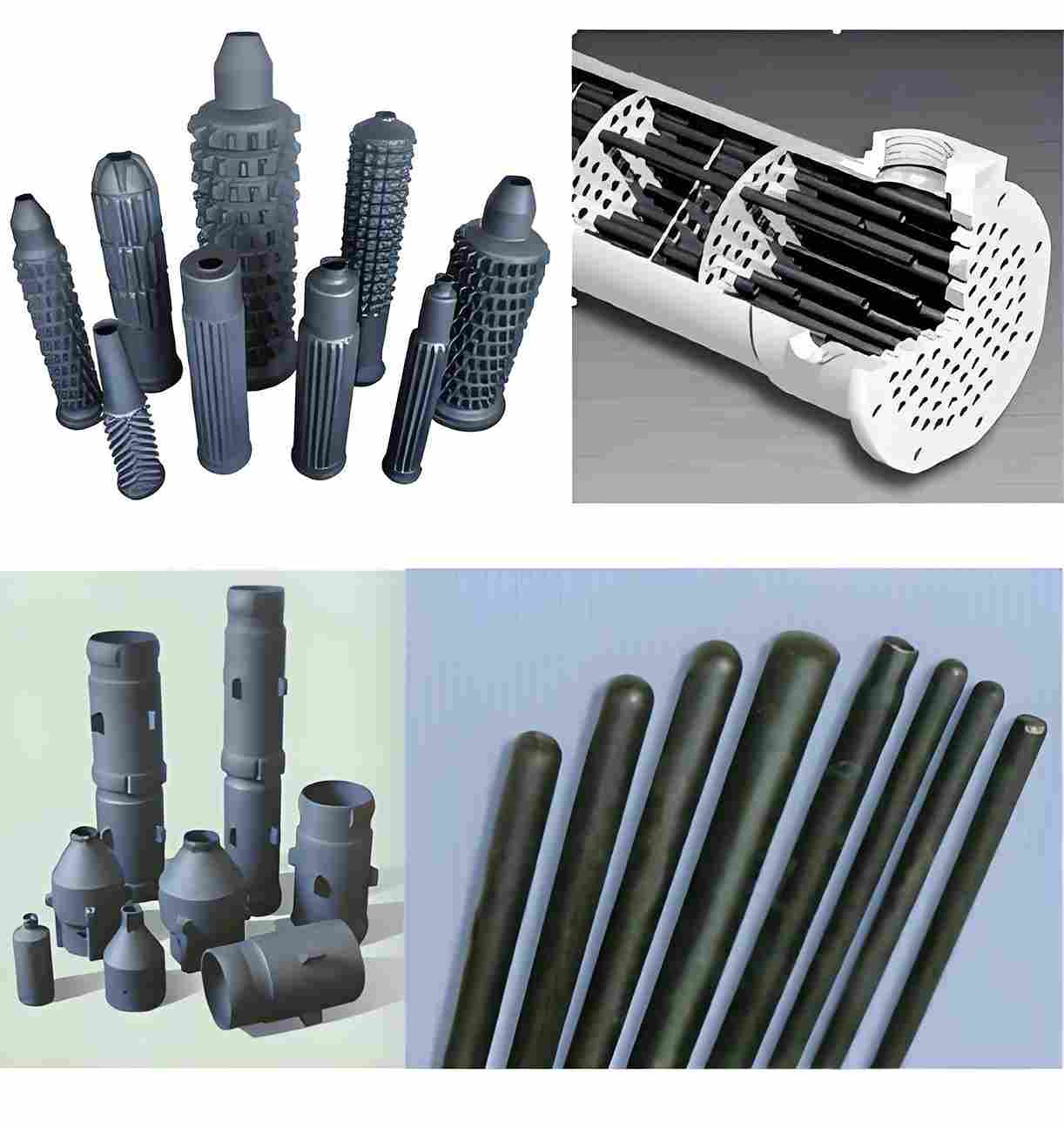
Silicon carbide has a strange story: it started life as a curiosity in a lab furnace, became famous as an abrasive called “carborundum,” and then quietly turned into one of the most important advanced ceramics for high-temperature and corrosive industrial environments.
This overview walks through the history and development of silicon carbide ceramics, focusing on the milestones that matter today if you are specifying SiC tubes, plates, seal rings, or other components for real equipment.
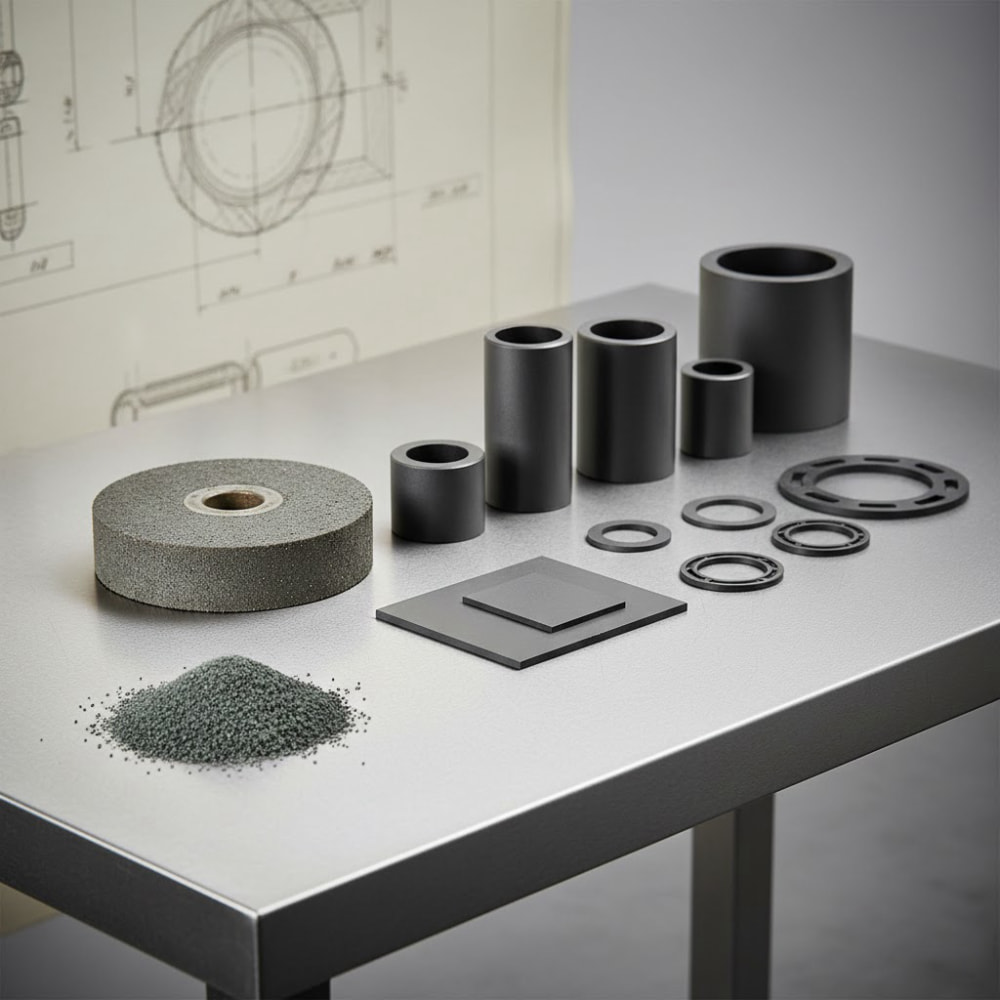
Early days: accidental discovery and abrasives
The story of silicon carbide begins in the late 19th century. In 1891, American inventor Edward Goodrich Acheson accidentally discovered SiC while trying to synthesize artificial diamonds in an electric furnace. He called the new material carborundum, and quickly realized it had exceptional hardness.
At that time, the main value of silicon carbide was simple and powerful:
- It was harder than most natural abrasives.
- It could be produced industrially in large quantities using the Acheson process.
- It could be crushed and graded into abrasive grains for grinding wheels and polishing products.
For decades, silicon carbide was known more as a powdered abrasive than as a structural ceramic. The focus was on consistency of grain size and hardness, not on complex shapes or advanced engineering components.
From powders to refractories and furnace parts
As high-temperature industries grew in the 20th century, engineers started to notice that silicon carbide had other interesting properties beyond hardness:
- It remained strong at temperatures where many metals softened.
- It had good thermal conductivity compared with traditional refractories.
- It resisted many corrosive atmospheres in furnaces and kilns.
These features led to the first generation of silicon carbide refractories: bricks, tiles, and simple shapes used in high-temperature furnaces, kilns, and thermal processing equipment. At this stage, microstructures were relatively coarse, and properties were not as tightly controlled as today, but the direction was clear:
Silicon carbide was evolving from a loose abrasive grain into a shaped refractory material that could carry load at high temperature.
Modern SiC ceramics: sintered, reaction-bonded, and recrystallized
The next big step was the development of modern silicon carbide ceramics, where microstructure, density, and properties are tightly engineered. Several key material families emerged:
- Pressureless sintered silicon carbide (SSiC) – very high density, very low open porosity, and excellent chemical resistance. Ideal for mechanical seal rings, bearings, sleeves, and precision wear parts.
- Reaction-bonded silicon carbide (RBSiC / SiSiC) – a silicon-infiltrated material used for larger and more complex shapes such as tubes, beams, and kiln furniture.
- Recrystallized silicon carbide (RSIC) – produced at very high temperatures, used in some extreme furnace applications where thermal shock behaviour and gas flow through the body are important.
Instead of being “just silicon carbide,” the material became a family of engineered ceramics. Each type offered a different balance of:
- Strength and toughness.
- Porosity and gas tightness.
- Cost and manufacturability of large shapes.
- Thermal shock and corrosion resistance.
Evolution of forming and machining: from blocks to precision parts
Parallel to material development, manufacturing technology also advanced. Early SiC parts were simple bricks and plates. Over time, factories learned how to:
- Use isostatic pressing and advanced forming methods to produce long tubes, thick plates, and near-net-shape parts.
- Design green machining steps (before sintering) to add holes, recesses, and complex shapes in a more efficient way.
- Apply diamond grinding, lapping, and polishing to sintered pieces to achieve fine tolerances and very smooth sealing surfaces.
These advances turned silicon carbide into a realistic option for precision-engineered components such as:
- Mechanical seal rings and faces.
- Pump sleeves and bearings.
- High-temperature silicon carbide tubes and radiant elements.
- Engineered silicon carbide plates, tiles, and structural supports.
Silicon carbide in power electronics and advanced industries
While structural ceramics were evolving, another revolution took place in electronics. Silicon carbide became a critical material in wide-bandgap power semiconductors, enabling more efficient inverters, converters, and power devices.
This semiconductor wave did two important things for SiC ceramics in general:
- It drove improvements in powder purity and process control, which also benefitted structural ceramics.
- It pushed SiC into more industries that were previously unfamiliar with ceramics, increasing overall awareness and acceptance.
Today, advanced silicon carbide ceramics are found in sectors such as:
- Chemical and petrochemical processing.
- Metallurgy and foundries.
- Power generation and energy recovery.
- Environmental systems and waste treatment.
- Heat-treatment and technical ceramics kilns.
Quality systems, standards, and global supply chains
As silicon carbide components moved into more critical applications, the focus shifted from “can we make it?” to “can we make it reliably and repeatedly?” That pushed the development of:
- Formal quality systems (such as ISO 9001) in SiC factories.
- Standardized material specifications and test methods for density, porosity, strength, and thermal properties.
- Better traceability from powder lots through sintering and machining to finished parts.
For buyers and engineers, this means modern silicon carbide is not just a material, but part of a controlled, documented production system. That is why you can specify SiC tubes, plates, seal rings, or crucibles with defined properties and expect consistent performance over many batches.
Current trends: customization, energy efficiency, and “designed lifetime”
By 2025, several clear trends can be seen in the development of silicon carbide ceramics:
- More customization: instead of forcing equipment to fit catalog parts, SiC components are customized to drawings and real operating conditions.
- Focus on energy efficiency: SiC’s high-temperature stability and thermal conductivity are used to improve fuel efficiency and heat recovery in furnaces and process lines.
- Longer designed lifetimes: geometry and grade selection are optimized for extended campaign times, fewer shutdowns, and lower total cost of ownership.
- Cleaner production: manufacturers are upgrading kilns, recycling scrap where possible, and integrating environmental considerations into their processes.
In other words, modern SiC development is less about exotic lab properties and more about solving specific industrial problems better and longer.
What this history means for today’s engineers and buyers
Understanding the history and development of silicon carbide ceramics is not just academic. It explains why:
- There are different SiC families (SSiC, RBSiC, RSIC) with different strengths and weaknesses.
- Some parts are affordable and widely available, while others require careful design and tooling.
- Reliable SiC components come from factories that have invested in process control, not just raw material.
When you specify silicon carbide today, you are benefiting from more than a century of development – from Acheson’s early abrasive grains to the highly engineered ceramics now used in pumps, furnaces, and high-performance process equipment.
FAQ – The history and development of silicon carbide ceramics
Q1: When was silicon carbide first discovered?
A: Silicon carbide was first observed in nature as the rare mineral moissanite, but its industrial history began in 1891 when Edward Acheson synthesized it in an electric furnace while trying to make artificial diamonds. He named the new material carborundum and developed it as an industrial abrasive.
Q2: How did silicon carbide evolve from abrasives to structural ceramics?
A: Initially, SiC was used mainly as abrasive grains in grinding wheels and polishing products. Over time, industries recognized its high-temperature strength and corrosion resistance, leading to shaped refractories and furnace parts. With better forming, sintering, and machining, SiC evolved into precise structural ceramics such as tubes, plates, and mechanical seals.
Q3: Why are there different types like SSiC, RBSiC, and RSIC?
A: Different manufacturing routes create different microstructures and property profiles. Pressureless sintered SiC (SSiC) is very dense and ideal for precision and chemical resistance. Reaction-bonded SiC (RBSiC/SiSiC) is suited to large, complex shapes. Recrystallized SiC (RSIC) is used in specific extreme-temperature furnace applications. Each evolved to meet different industrial needs.
Q4: When did silicon carbide become important in electronics?
A: SiC’s role in electronics grew significantly in the late 20th and early 21st century with the development of wide-bandgap power semiconductors. These devices are now widely used in electric vehicles, power supplies, and renewable energy systems, pushing SiC processing and quality standards even higher.
Q5: What are the main directions of SiC ceramic development today?
A: Current development focuses on tighter control of material properties, more efficient forming for complex shapes, improved surface engineering, stronger quality systems, and greener production. At the application level, the emphasis is on longer lifetime, improved energy efficiency, and reliable performance in more demanding processes.