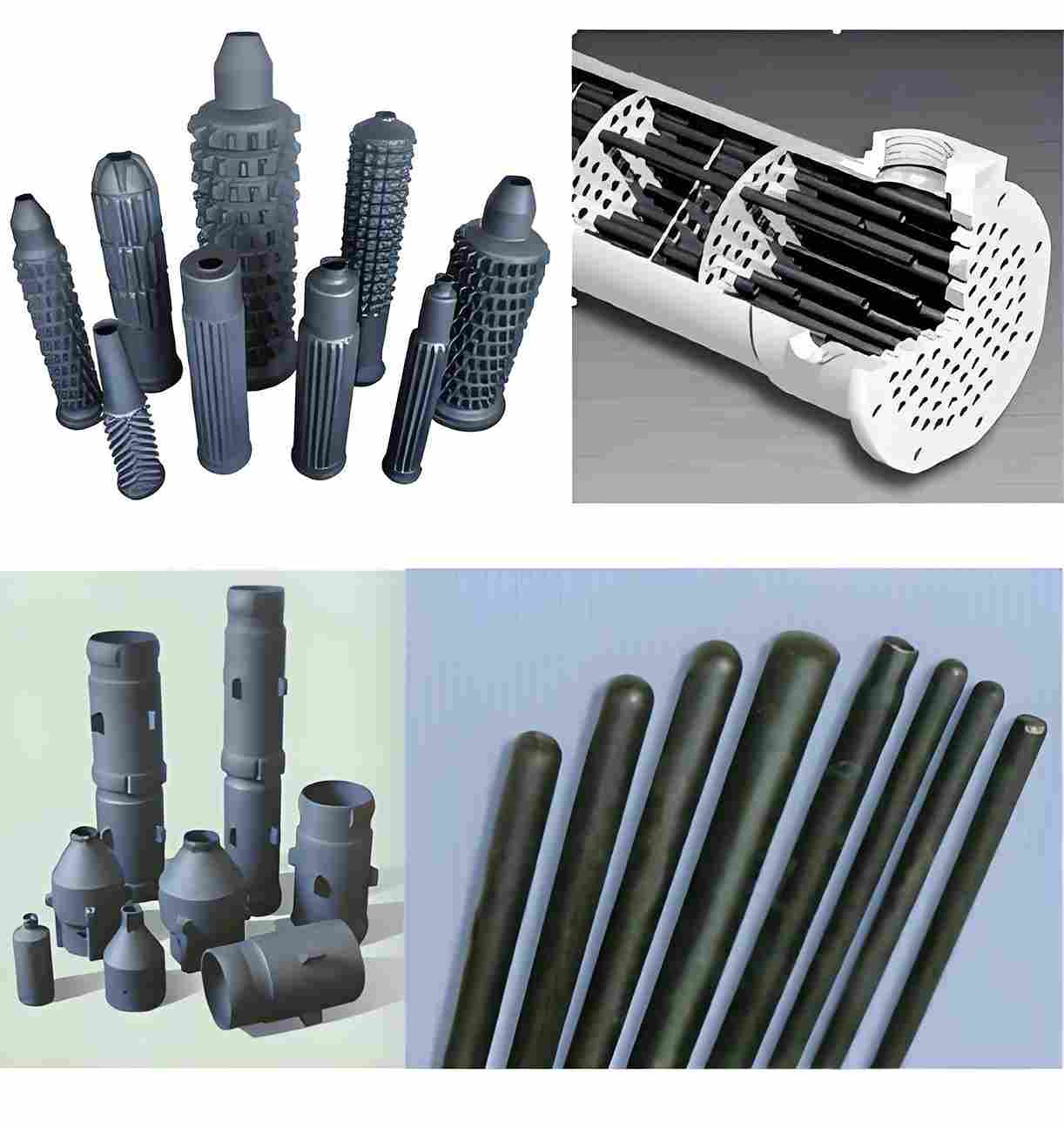
Acidic media and high temperatures are a brutal combination. Metals corrode, basic refractories crack, and “cheap but good enough” materials usually turn into unplanned downtime. This is precisely where silicon carbide ceramics stand out: they keep their strength and integrity where many other materials rapidly fail.
This guide explains how silicon carbide handles acidic and high-heat environments, what actually protects it, where the limits are, and how to use SiC components intelligently in real industrial systems.
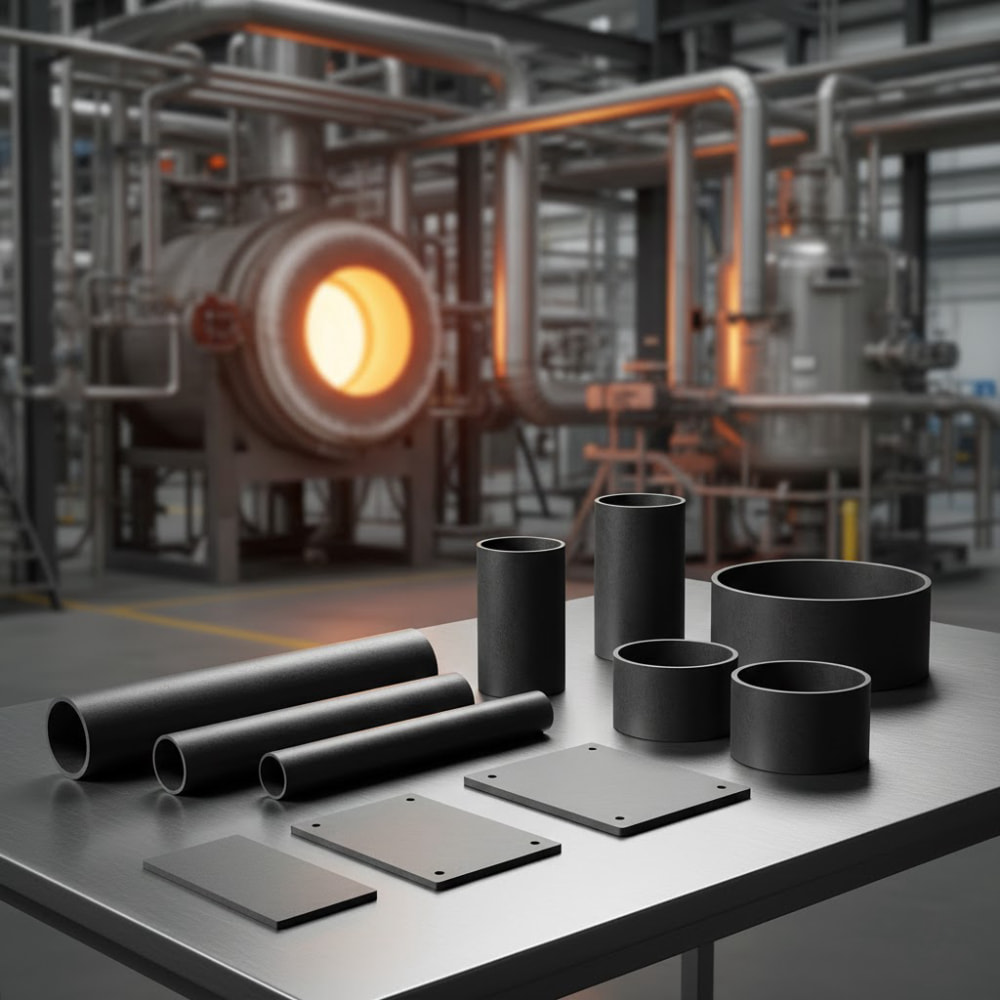
Why silicon carbide survives where other materials fail
Silicon carbide is a covalently bonded ceramic with a strong crystal structure and a set of properties that fit harsh environments extremely well:
- High-temperature strength: it keeps mechanical integrity at temperatures where many alloys creep or soften.
- Excellent hardness and wear resistance: ideal for erosive flows, slurries, and particulate-laden gases.
- Good thermal conductivity: helps avoid local overheating and temperature gradients inside components.
- Low thermal expansion: supports better thermal shock resistance when the geometry and mounting are well designed.
- Chemical stability: over a wide pH range, particularly in oxidizing acidic environments.
These properties are why silicon carbide is widely used in furnaces, acid-handling equipment, chemical plants, and high-wear zones where other materials simply don’t last long enough.
How silicon carbide behaves in acidic environments
Silicon carbide is not magically “immune” to all acids, but it does have excellent corrosion resistance in many industrial conditions. The key points are:
- In oxidizing acidic media, SiC tends to form a thin, adherent silica-based passive layer on its surface.
- This layer slows further attack, especially when the SiC body has high density and low open porosity.
- For dense sintered SiC (SSiC), corrosion is typically very slow in many acids under moderate-to-high temperatures.
However, details matter:
- Free silicon content: reaction-bonded SiC (RBSiC/SiSiC) contains residual silicon that is more vulnerable to certain acids. In very aggressive chemistries, dense SSiC is usually preferred.
- Temperature and flow conditions: higher temperature and turbulent flow can accelerate corrosion and erosion of the passive layer.
- Specific acids and mixtures: strongly oxidizing or halogen-containing environments may require testing, not guesswork.
For components in direct contact with acidic media – for example, pump seal rings, sleeves, and liners – selecting the right SiC grade and surface finish is critical to long-term performance.
Performance at high temperature: strength, oxidation, and thermal shock
High temperature alone is enough to damage many materials. Silicon carbide handles this in several ways:
- Retained strength: SiC maintains significant flexural strength at elevated temperatures, allowing tubes, beams, and plates to carry load where metals creep.
- Oxidation behaviour: in oxidizing atmospheres, SiC forms a thin silica scale that slows further oxidation. The quality of this layer depends on temperature, gas composition, and SiC grade.
- Thermal shock resistance: relatively low thermal expansion and good thermal conductivity support better resistance to temperature changes when geometry and installation are correct.
That is why silicon carbide is widely used in furnace tubes, kiln furniture, and structural plates. For example:
- Silicon carbide tubes provide stable geometry and long life in high-temperature burners and radiant sections.
- Silicon carbide plates serve as supports, tiles, and kiln furniture elements where flatness and mechanical integrity are essential under load.
Combined attack: hot, acidic, and abrasive – the real-world scenario
Real industrial environments are rarely just “hot” or “acidic.” Very often, you are dealing with:
- High temperature.
- Acidic or corrosive gases and liquids.
- Suspended solids or erosive flows.
- Thermal cycling during start-up, shutdown, or upset conditions.
Silicon carbide remains attractive because it responds well to these combined stresses:
- Its hardness and wear resistance protect against particle erosion that would rapidly remove protective scales from softer materials.
- Its chemical stability reduces risk of pitting and localized corrosion that lead to cracks.
- Its thermal shock behaviour is manageable when designs avoid sharp corners, thin unsupported sections, and severe mechanical constraints.
That said, SiC is still a brittle ceramic. When designing components for such environments, you must consider both mechanical and thermal stress, not only corrosion data.
Where silicon carbide is typically used in harsh environments
Some common high-heat and acidic applications where SiC has proven value include:
- Furnace and kiln components: tubes, beams, tiles, and plates in high-temperature processing lines.
- Chemical and petrochemical plants: pump seal rings, sleeves, nozzles, and liners exposed to aggressive media.
- Metal melting and foundries: silicon carbide crucibles for non-ferrous metals where temperature and chemical interaction are critical.
- Flue gas and exhaust systems: SiC elements in heat recovery, incineration, or gas cleaning units.
- Environmental systems: components in waste treatment, desulfurization, and corrosive effluent handling.
In these zones, the combination of high temperature, corrosive media, and mechanical load makes silicon carbide significantly more durable than many alternatives.
Design and selection tips for acidic and high-heat environments
To get the most from silicon carbide in harsh conditions, use these practical guidelines:
- Choose the right SiC grade: dense SSiC for aggressive acidic media and precision parts; RBSiC/SiSiC where you need large, complex shapes at high temperature with manageable cost.
- Control geometry: avoid sharp corners, sudden thickness changes, and long thin cantilevers that concentrate stress.
- Support and mounting: design supports to allow thermal expansion without clamping the ceramic rigidly in metal structures.
- Consider flow direction: orient parts so that erosion-prone surfaces are smooth, well-supported, and, where possible, shielded from the worst particle impact.
- Check compatibility: for unusual acid mixtures or halogen-containing gases, ask for corrosion testing or references from similar installations.
Comparing SiC with metals and traditional refractories
When deciding whether to upgrade to silicon carbide, engineers usually compare it with:
- Alloy steels and stainless steels: easier to fabricate but often limited by corrosion, scaling, and creep at high temperature.
- Nickel-based alloys: improved temperature and corrosion resistance but higher cost and still subject to creep and local attack in severe media.
- Conventional refractories and bricks: good for bulk lining, but weaker in mechanical strength and less precise geometrically.
Silicon carbide ceramics are not a direct replacement for every part, but they are often the better answer when:
- Equipment failures are frequent in specific hot or acidic zones.
- Thermal cycling and erosion accelerate damage to metals and refractories.
- Dimensional stability and flatness are critical during long campaigns.
8. FAQ – Silicon carbide in acidic and high-heat environments
Q1: Is silicon carbide resistant to all acids?
A: No material is immune to every acid and mixture, but dense silicon carbide generally has excellent resistance to many industrial acids, especially in oxidizing conditions. Performance depends on SiC grade, temperature, concentration, and whether free silicon is present. Critical applications should be evaluated with real testing or proven references.
Q2: How hot can silicon carbide components operate?
A: Depending on grade and atmosphere, SiC ceramics are commonly used up to the 1,300–1,600 °C range. Practical limits are determined by oxidation behaviour, mechanical loading, and thermal cycling. Always keep a safety margin between your maximum operating temperature and the material’s recommended service limit.
Q3: Does silicon carbide suffer from thermal shock?
A: Like all ceramics, SiC can crack if subjected to very rapid temperature changes. However, its low thermal expansion and good thermal conductivity give it better thermal shock resistance than many other ceramics. Good design (smooth transitions, proper support, avoiding extreme gradients) is essential.
Q4: Is SiC better than metals for high-temperature acid service?
A: In many severe conditions, yes. Silicon carbide does not soften like metals and is often more resistant to combined heat, acids, and abrasion. However, it is brittle and must be designed accordingly. In less aggressive conditions, metals may still be preferred for ease of fabrication and impact toughness.
Q5: How do I know if my process justifies switching to silicon carbide?
A: Look at where you suffer the most: frequent failures in specific hot or acidic zones, repeated rebuilds, or high scrap rates caused by unstable temperature control. If those costs are significant, upgrading critical components to silicon carbide often provides a strong return through longer life, fewer shutdowns, and more stable operation.