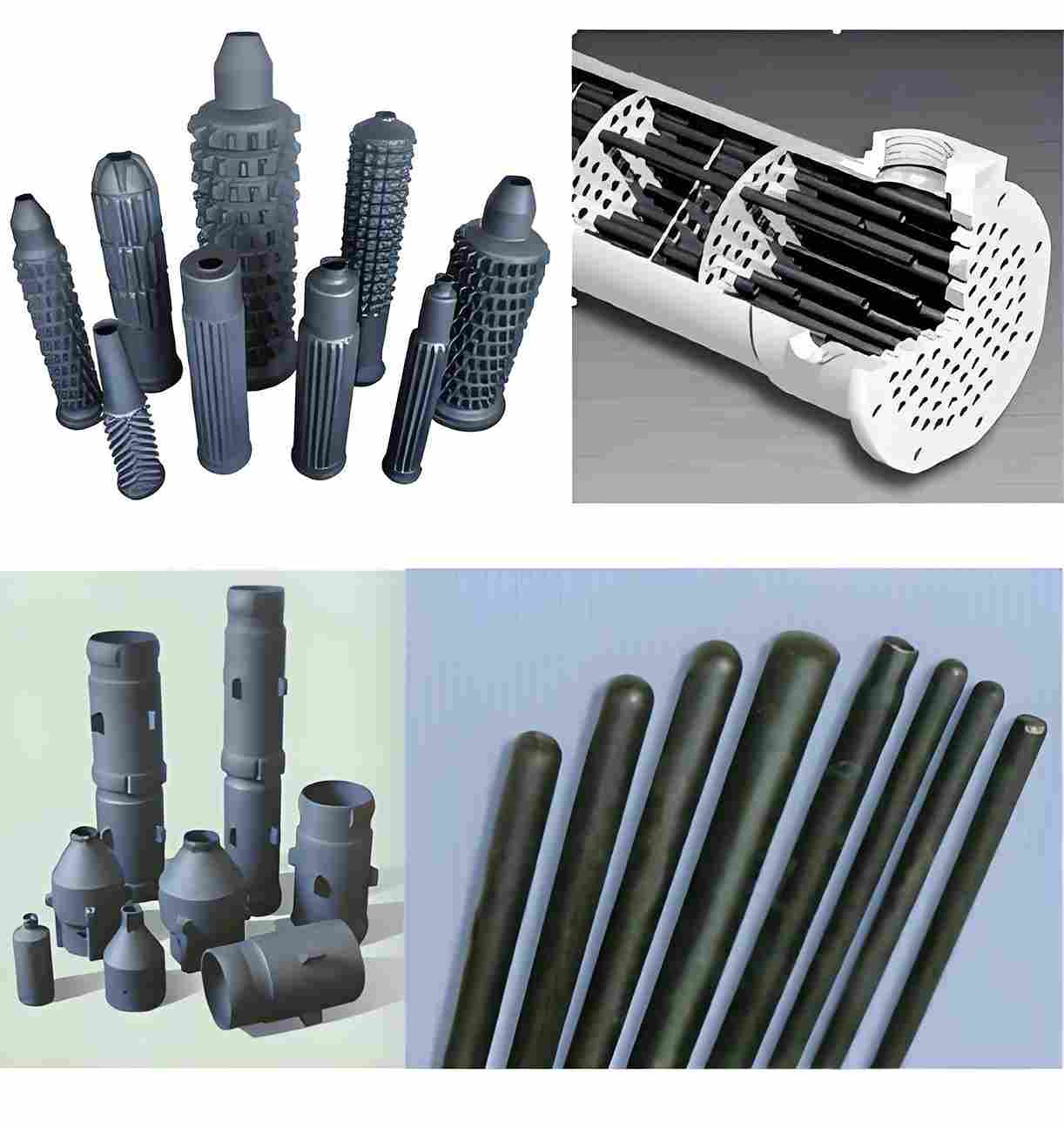
3D printing gets marketed as the answer to everything, from phone cases to rocket engines. So it is natural to ask: can we 3D print silicon carbide ceramics, and will additive manufacturing replace traditional SiC production?
The short answer: additive manufacturing of silicon carbide is real and growing, but for most industrial users it is still a special-tool technology, not a total replacement for pressed, isostatically formed, and conventionally sintered SiC tubes, plates, and seal rings.
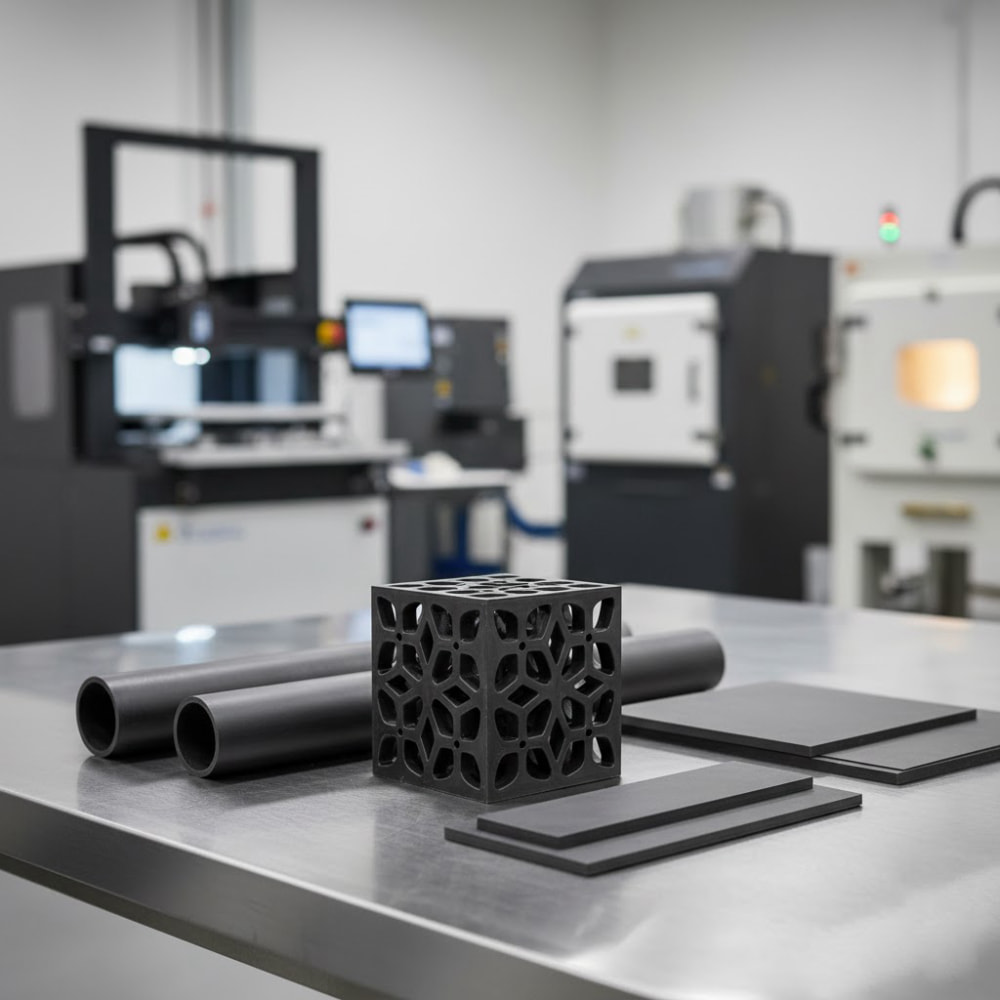
What does “3D printed silicon carbide” actually mean?
Before jumping to conclusions, it helps to clarify what “3D printed” or additive manufacturing of silicon carbide really involves.
For ceramics, including SiC, several additive approaches exist:
- Binder jetting: SiC powder is selectively bound layer by layer, then the “green” body is post-processed (infiltrated, sintered, or both).
- Stereolithography / vat photopolymerization (SLA-type): SiC powders are dispersed in a photosensitive resin; a light source cures the resin layer by layer, followed by debinding and sintering.
- Material extrusion / paste printing: highly loaded ceramic pastes are extruded layer by layer and later sintered.
In all cases, the 3D printer builds a pre-sintered shape that must still go through high-temperature processing. There is no “print and use immediately” for structural silicon carbide ceramics.
Why 3D print SiC at all?
Given that conventional SiC manufacturing is mature, why bother with additive manufacturing?
3D printed silicon carbide can, in principle, offer:
- Complex internal geometries that are impossible or very expensive to achieve by machining and green forming.
- Topology-optimized structures that put material only where it is needed for strength or heat transfer.
- Rapid prototyping of unusual parts without full tooling investment.
- Weight reduction by using lattice or hollow structures instead of solid blocks.
This is highly attractive for niche, high-value components. But it comes with trade-offs in cost, scale, and consistency that industrial buyers need to understand.
How do properties of 3D printed SiC compare to traditional SiC?
Properties depend heavily on the specific process and post-treatment, but a few general trends are visible:
- Density and porosity: many 3D printed SiC parts still struggle to match the density and low porosity of high-grade pressureless sintered SiC (SSiC). This can affect strength, corrosion resistance, and leak tightness.
- Mechanical strength: flexural strength and fracture toughness can be good, but often show more scatter than well-controlled pressed-and-sintered SiC.
- Surface quality: as-printed surfaces usually require additional finishing (grinding, lapping) for critical sealing or bearing areas.
- Anisotropy: layer-by-layer processes can introduce direction-dependent properties, especially if printing and sintering are not tightly controlled.
For many standard components – like silicon carbide tubes or silicon carbide plates – conventional manufacturing still delivers better property consistency and cost at scale.
Where 3D printed SiC currently makes practical sense
Despite its limitations, silicon carbide additive manufacturing is not just a lab toy. It is already useful in certain situations:
- Complex internal channels for advanced heat exchangers or burners, where internal flow paths cannot be drilled or machined.
- Lightweight lattice or truss structures in high-temperature applications where mass must be minimized.
- Small-volume, high-value prototypes that validate a concept before committing to expensive pressing tools or molds.
- Special fixtures or supports for aggressive thermal or chemical environments where conventional materials fail quickly.
If your design truly requires complex internal geometry or radically optimized shape, additive manufacturing can open doors that standard SiC processing would close or price out of reach.
Where traditional SiC still wins easily
For many mainstream industrial applications, 3D printing is still a poor fit compared to proven processes. Conventional manufacturing keeps clear advantages in:
- Standard shapes and sizes: tubes, rings, plates, beams, burners, crucibles, and nozzles where geometry is relatively simple.
- Property consistency: pressed and isostatically formed parts with mature sintering cycles deliver very stable density, strength, and porosity.
- Cost and scale: once tooling and processes are set, conventional SiC is more economical for repeated orders and larger batches.
- Surface finishing and tolerances: factories are already optimized to grind, lap, and polish sintered parts to tight tolerances with good yield.
If you need robust, repeatable components like silicon carbide crucibles, seal rings, rollers, or standard tubes, conventional routes are usually the faster and safer choice.
Practical issues: cost, lead time, and scalability
From a buyer’s viewpoint, several practical questions matter more than process names:
- Cost per part: 3D printed SiC often carries a higher cost per kilogram and per part, especially after including finishing and inspection.
- Lead time: while printing itself can be fast, debinding, sintering, and qualification still take real time. For repeatable shapes, conventional pressing lines can be faster overall.
- Scalability: additive manufacturing shines for small series and prototypes, but it is not yet the lowest-cost option for hundreds or thousands of similar parts.
- Qualification effort: new processes and microstructures often require more testing and validation before customers are comfortable using them in critical equipment.
In simple terms: additive makes sense where design freedom and uniqueness are more valuable than cost per piece. For everyday SiC components, traditional methods remain hard to beat.
How engineers should think about 3D printed SiC today
Rather than asking “Will 3D printed silicon carbide replace everything?”, a more useful question is:
“Are there zones in my equipment where geometry limits performance, and where a different shape could dramatically improve flow, heat transfer, or weight?”
When the answer is yes, additive manufacturing becomes interesting:
- You can explore new burner shapes, heat-exchanger channels, or structural layouts that are impossible with simple extrusions and plates.
- You can prototype and test these shapes with limited tooling commitment.
- You can combine a 3D printed core with more conventional SiC or metal elements, using each process where it makes sense.
For everything else – standard tubes, plates, tiles, crucibles, and seal rings – focus on choosing the right SiC grade, tolerances, and quality level rather than chasing a new manufacturing buzzword.
FAQ – Silicon carbide and additive manufacturing
Q1: Is 3D printed silicon carbide as strong as traditional SiC?
A: Not consistently. Some processes can reach high density and good strength, but many printed SiC parts still show higher porosity and more variability than conventional pressureless sintered SiC. For critical parts, always look at real test data and not only process claims.
Q2: Can I 3D print any complex SiC part I can draw?
A: No. Geometry must still respect ceramic limitations: avoid extreme thin-walled features, sharp stress concentrators, and shapes that cause uneven shrinkage or internal stresses during sintering. Additive manufacturing increases freedom, but it does not cancel the physics of ceramics.
Q3: Is additive manufacturing cheaper for custom SiC than traditional methods?
A: It depends on volume and complexity. For one-off or very small-batch, highly complex parts, additive can be competitive because it avoids full tooling. For larger quantities or simple shapes, conventional forming and machining are usually more cost-effective.
Q4: Are 3D printed SiC parts widely available from industrial suppliers?
A: Availability is growing, but supply is still limited compared with standard SiC tubes, plates, nozzles, and crucibles. Most offerings target specialized applications where customers are willing to pay for new geometries or extreme performance.
Q5: Will additive manufacturing completely replace traditional SiC production in the future?
A: Very unlikely. The more realistic scenario is a hybrid landscape: traditional pressing and sintering for standard shapes and high-volume parts, combined with additive manufacturing for special geometries, prototypes, and extreme applications where design freedom matters more than unit cost.