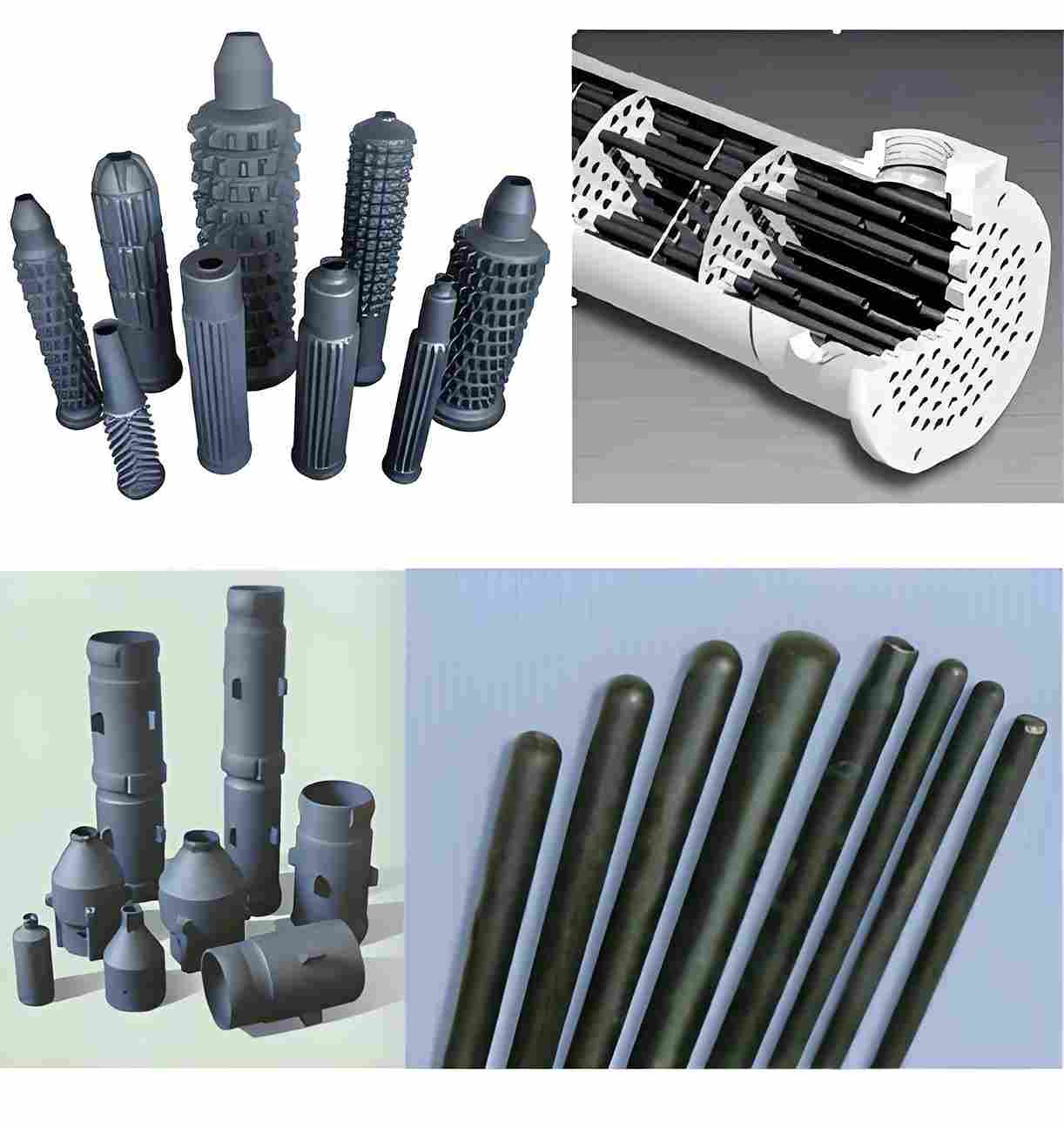
Drawings often die in the gap between “nice CAD model” and “what is actually manufacturable.” With silicon carbide ceramics, that gap can become expensive very quickly. Every extra decimal place in a tolerance, every unnecessary polished surface, and every awkward geometry means more grinding, more scrap, and higher cost.
This guide explains why precision matters in custom SiC components, where it truly adds value, and where you can safely relax tolerances and finishes without sacrificing performance.
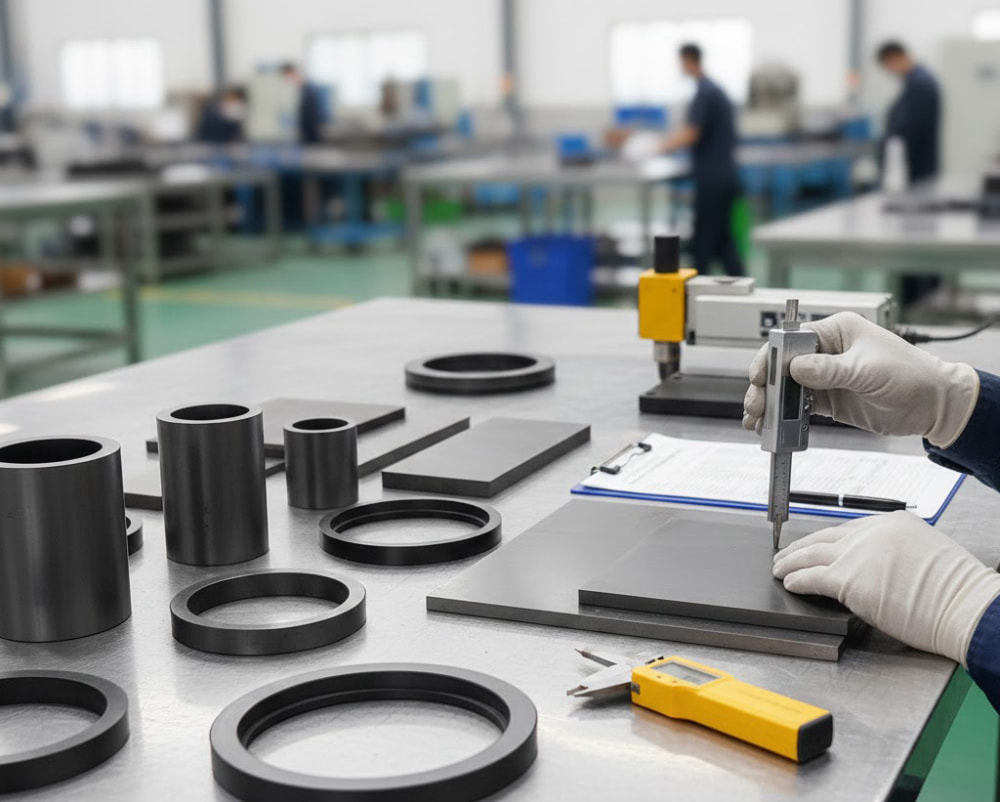
Precision in ceramics is not the same as precision in metals
Silicon carbide is not a friendly metal you can rework endlessly. It is a hard, brittle ceramic that:
- Requires diamond grinding, lapping, or polishing after sintering.
- Is sensitive to sharp corners, thin sections, and stress concentrators.
- Becomes scrap very quickly if you “just take a bit more off” in the wrong place.
That does not mean precision is impossible. On the contrary, modern SiC factories routinely deliver:
- Seal faces flat and parallel within a few microns.
- Cylindrical fits with ±0.01–0.02 mm tolerance where needed.
- Controlled thickness and flatness on plates and tiles.
The point is not that precision is difficult, but that precision must be used where it matters, not everywhere by default.
Which dimensions actually need tight tolerances?
In most custom silicon carbide designs, only a few dimensions are truly critical. Typical examples include:
- Seal ring faces and diameters – for mechanical seal rings and sleeves, face flatness, parallelism, and the main sealing diameters need tight control to avoid leakage and uneven wear.
- Bearing fits and shaft interfaces – inner and outer diameters that mate with metal housings or shafts often require precise tolerances to prevent vibration, misalignment, or excessive play.
- Locating surfaces – specific shoulders, steps, or reference planes that determine the position of the SiC part inside an assembly.
On the other hand, many dimensions can be kept at standard industrial tolerances without harming performance:
- Overall length of tubes that are simply guided or supported.
- Non-critical edges or outer profiles on tiles and plates.
- Secondary features that do not align or seal against other parts.
For example, a silicon carbide tube may require a tight tolerance on the OD that fits into a burner block, but can accept a looser tolerance on the free end length.
Tolerance bands: realistic expectations for SiC components
Indicative (not contractual) ranges you will often see in SiC production are:
- Standard dimensional tolerances: ±0.1–0.3 mm on general dimensions for structural parts.
- Precision diameters: ±0.01–0.05 mm on critical fits, with diamond grinding and full inspection.
- Flatness and parallelism on seal faces: a few microns across the active sealing area.
Pushing everything into the tightest band is technically possible, but economically pointless. A smarter approach is to:
- Mark critical-to-function dimensions with precise tolerances.
- Specify standard tolerances everywhere else.
- Discuss special cases (long spans, thin plates, very large diameters) with the supplier early, because size strongly affects what is realistic.
Surface finishing: ground, lapped, and polished
Finishing is the other half of precision. For silicon carbide, the main options are:
- As-fired surfaces: functional for many structural areas where exact roughness is not critical.
- Ground surfaces: achieved by diamond grinding; provide controlled dimensions and moderate roughness (common for OD/ID fits and flat supports).
- Lapped and polished surfaces: very fine, flat surfaces used on mechanical seal faces and high-precision contacts.
Key reality check: polish is not automatically better. Ultra-smooth surfaces are necessary for:
- Mechanical seal faces with controlled leakage.
- Very tight sliding interfaces where lubrication and wear must be finely controlled.
But they add cost and processing time. For structural parts like silicon carbide plates used as supports or kiln furniture, ground or even as-fired surfaces are usually sufficient.
How precision affects real-world performance
When tolerances and finishes are matched to the application, you get measurable benefits:
- More stable seals: flat, parallel faces and correct diameters reduce leakage, heat generation, and uneven wear in mechanical seals.
- Less vibration and noise: well-matched fits on sleeves and bearings lower misalignment and dynamic loading.
- Predictable thermal behaviour: uniform thickness and controlled flatness help parts respond more evenly to temperature changes.
- Reduced risk of stress cracks: removing unnecessary sharp edges and ensuring smooth transitions in critical areas lowers stress concentration.
On the flip side, overspecifying can hurt you:
- Unnecessary grinding or polishing on non-critical surfaces.
- Higher scrap rates when every dimension is held to “seal face” standards.
- Longer lead times due to excessive inspection and rework.
Drawing and specification tips for custom SiC components
To get the right balance between precision and cost, your drawings and specs should:
- Clearly mark critical features: use notes or symbols to indicate which dimensions drive sealing, alignment, or mechanical loading.
- Assign realistic default tolerances: define a general tolerance (e.g. ISO or ASME system) for non-critical dimensions.
- Specify surface finish where it matters: for example, lapped faces for seal rings, ground diameters for fits, as-fired elsewhere.
- Avoid conflicting tolerances: do not mix overlapping or inconsistent requirements on the same feature.
- Include service conditions: a short note on temperature, media, and load helps the SiC supplier judge whether requested tolerances are appropriate.
Sometimes a quick review with the manufacturer avoids weeks of trial and error, especially for custom seal rings or complex structural components.
Inspection and quality control: what to ask for
Precision only matters if it is verified. For critical silicon carbide components, you should be clear about inspection expectations. Typical elements include:
- Dimensional inspection reports for key features (diameters, thickness, length, flatness).
- Surface finish verification on seal faces or sliding surfaces where roughness matters.
- Visual inspection criteria for chips, surface defects, and edge quality.
For high-duty parts like mechanical seal rings, combining good material with proper tolerances and documented finishing is what delivers real reliability in chemical pumps and other demanding equipment.
FAQ – Tolerances and finishing in custom SiC components
Q1: Do all silicon carbide parts need very tight tolerances?
A: No. Only dimensions that affect sealing, alignment, or critical fits need tight control. Many other dimensions can use standard tolerances without affecting performance. Over-specifying tolerances only increases cost and lead time.
Q2: How tight can tolerances realistically be on SiC?
A: With proper grinding and fixturing, tolerances like ±0.01–0.02 mm are achievable on key diameters and seal faces. For large structural parts, realistic ranges are broader (e.g. ±0.1–0.3 mm) due to size, distortion, and handling limits.
Q3: When is a polished surface really necessary?
A: Polished or lapped surfaces are mainly required on sealing faces and some sliding interfaces where leakage and friction must be tightly controlled. For general structural surfaces on tubes, plates, or tiles, ground or even as-fired surfaces are usually sufficient.
Q4: Can I simply copy metal tolerances from an existing design?
A: Not safely. Metal parts and SiC ceramics behave very differently. Tolerances that are trivial in steel can be very expensive in SiC, and some thin or sharp features that work in metal are risky in ceramics. Always review the drawing with ceramic-specific constraints in mind.
Q5: How do tolerances influence the price of custom SiC components?
A: Tighter tolerances and finer finishes mean more grinding time, more specialized setups, and more inspection. That translates directly into higher cost and, often, longer lead times. The best strategy is to be strict only where precision directly supports performance or safety.