Alumina ceramics are the workhorse of industrial engineering: affordable, familiar, and available in almost every catalog. But at some point, higher temperatures, tougher chemistries, and stricter uptime requirements push alumina past its comfort zone.
That is where silicon carbide comes in. This guide explains when it makes sense to move from alumina to SiC, what you gain, what you pay, and how to decide if an upgrade is actually worth it in your equipment.
1. Alumina ceramics: strong, proven, but not invincible
Alumina (Al₂O₃) is popular for good reasons:
- Good mechanical strength at moderate to high temperatures.
- Excellent electrical insulation for many applications.
- Corrosion resistance in many neutral and slightly corrosive environments.
- Reasonable cost and well-established supply chains.
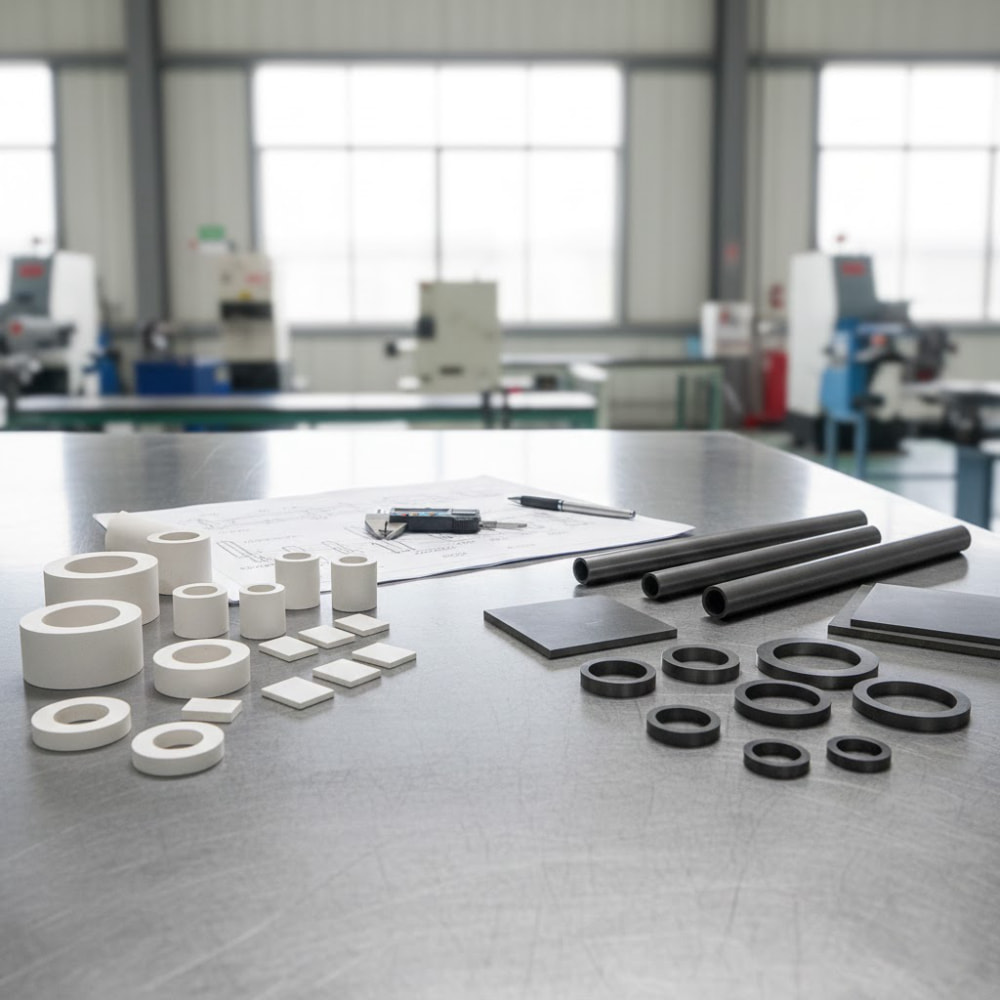
Typical uses include insulators, wear parts in moderate conditions, fluid handling components, and general-purpose kiln furniture.
Where it starts to struggle:
- Very high temperatures for long periods.
- Thermal shock from rapid heating and cooling.
- Aggressive acids, hot corrosive gases, or erosive slurries.
- Applications where both wear and corrosion are severe at the same time.
2. What silicon carbide brings to the table
Silicon carbide (SiC) is not “alumina plus 10%.” It is a different class of ceramic with its own strengths:
- Higher thermal conductivity – spreads heat more effectively, reduces hotspots, and improves thermal shock resistance.
- Lower thermal expansion – less dimensional change with temperature, better resistance to cracking during cycling.
- Superior high-temperature strength – maintains mechanical integrity where many alumina parts start to soften or creep.
- Outstanding wear resistance – especially for abrasives, slurries, and high-velocity particles.
- Excellent chemical resistance – particularly in many acidic and corrosive media.
That is why silicon carbide is widely used in:
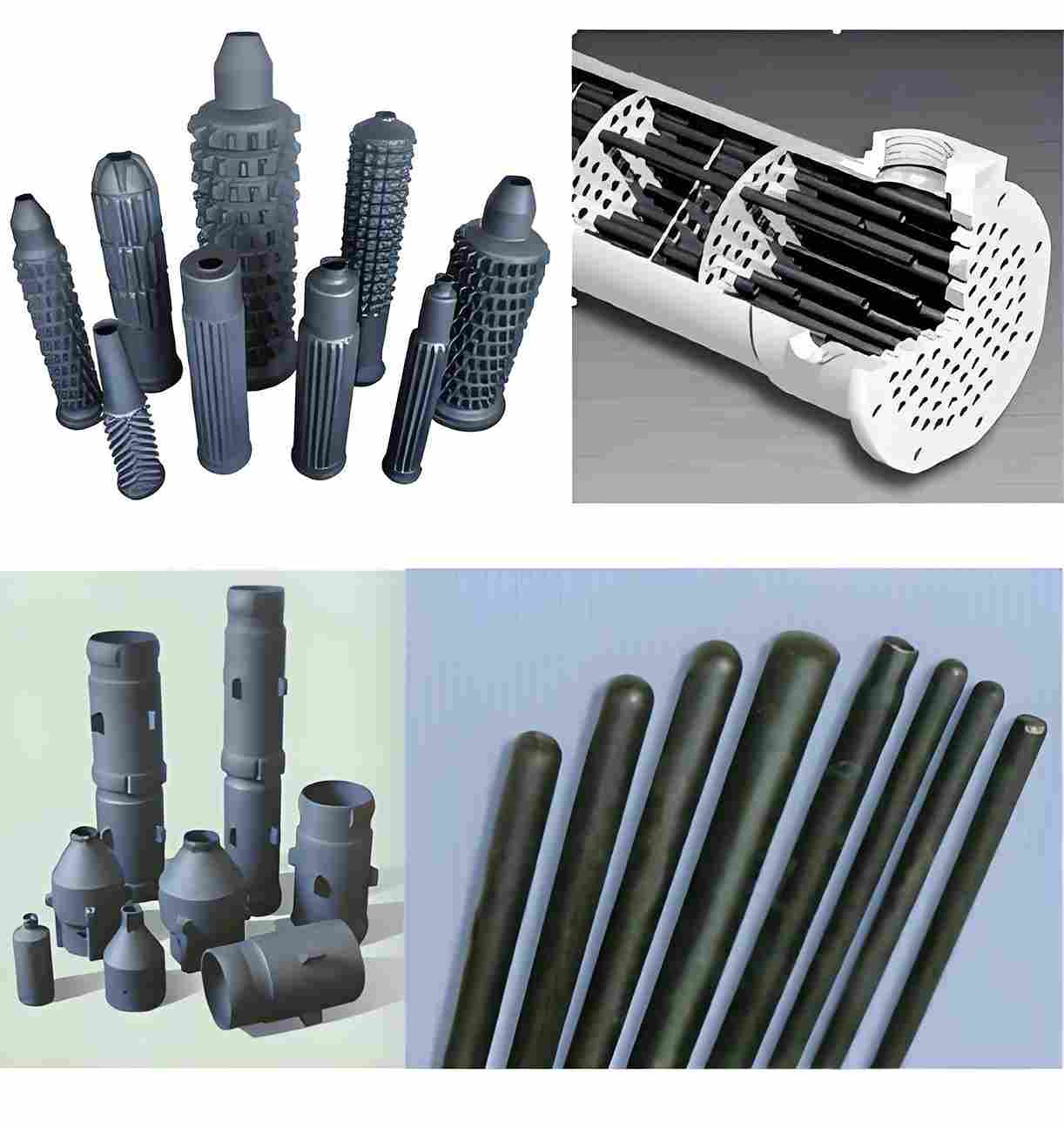
- Silicon carbide tubes for high-temperature burners and furnace atmospheres.
- Silicon carbide seal rings for pumps and agitators in chemical and petrochemical plants.
- SiC plates, tiles, and liners in high-wear, high-heat process zones.
3. Where alumina reaches its practical limits
Upgrading materials only makes sense when alumina is clearly stressed. Common warning signs include:
- Frequent cracking after thermal cycling – repeated start/stop or batch cycles causing fractures in tubes, plates, or kiln furniture.
- Fast wear in erosive or slurry service – alumina inserts, liners, or nozzles eroding much faster than planned.
- Chemical attack in aggressive media – pitting, surface roughening, or contamination of product due to corrosion.
- Dimensional drift at high temperature – sagging beams, warped plates, or deformed supports after long campaigns.
- Unplanned downtime – too many shutdowns required to replace alumina components in critical positions.
If you see one or more of these patterns in the same location of the system, that position is a candidate for switching from alumina to silicon carbide.
4. Key performance differences: alumina vs silicon carbide
Exact numbers depend on grade and manufacturer, but typical trends look like this:
- Thermal conductivity: SiC is significantly higher than alumina, helping remove heat from hotspots and reducing thermal stress.
- Thermal expansion: SiC generally has a lower coefficient of thermal expansion, reducing cracking risk during fast heating or cooling.
- High-temperature strength: SiC maintains strength at elevated temperatures where alumina may lose stiffness or creep over time.
- Wear resistance: both are hard, but SiC typically offers better performance in severe abrasion and particle-laden flows.
- Chemical behaviour: dense SiC often outperforms alumina in hot acidic or strongly corrosive conditions.
On the other hand:
- Alumina often wins on cost for moderate conditions.
- For low-to-medium stress environments, alumina can be “good enough” without paying the SiC premium.
5. When upgrading to silicon carbide makes sense
You do not need to replace every alumina component with SiC. The upgrade usually pays off when:
- Failure costs are high: each broken tube, tile, or seal ring leads to expensive downtime, scrap, or safety risk.
- Operating conditions are harsh: high temperature, strong acids, erosive flows, or frequent thermal cycling.
- System is already optimized elsewhere: you have tuned process controls, but component failures still limit performance.
- Campaign life targets are increasing: you want longer runs between shutdowns without adding more maintenance.
In these cases, the higher material cost of silicon carbide is often offset quickly by fewer replacements, less unplanned maintenance, and more stable operation.
6. Typical upgrade scenarios
Scenario 1 – Furnace tubes
An industrial furnace runs alumina tubes for burner or radiant sections. Problems:
- Cracking after repeated startups and shutdowns.
- Hotspots and local overheating near flame or peak temperature zones.
Upgrading to SiC tubes with higher thermal conductivity and better thermal shock behaviour can reduce tube failures and stabilize temperature profiles, improving both reliability and energy efficiency.
Scenario 2 – Chemical pump seals
A chemical plant uses alumina-based seal faces in pumps handling hot, slightly acidic liquids. Symptoms:
- Accelerated wear on seal faces.
- Increased leakage and frequent seal replacements.
Switching to silicon carbide seal rings with higher hardness and better acid resistance often cuts failure rates and leakage, extending seal life and reducing maintenance interventions.
Scenario 3 – Kiln plates and wear liners
A kiln or process line uses alumina tiles and plates in zones with high mechanical load and temperature. Over time:
- Plates warp or crack under load at high temperature.
- Edges chip and create alignment or product quality issues.
Using SiC plates or liners with higher strength at temperature and better resistance to thermal cycling can maintain flatness and support for longer campaigns.
7. Practical selection guidelines for SiC vs alumina
Instead of making it philosophical, use a simple checklist:
- Temperature: if you are pushing alumina near its upper limits, or you need more stability over long service, consider SiC.
- Thermal cycling: frequent heat-up/cool-down cycles favour silicon carbide because of better thermal shock behaviour.
- Media: hot acids, corrosive gases, or erosive slurries are strong arguments for SiC, especially dense grades.
- Failure cost: if component failure stops production or damages other equipment, upgrading to SiC usually makes financial sense.
- Geometry and support: long spans, heavy loads at temperature, and areas prone to sagging often benefit from SiC’s high-temperature strength.
8. FAQ – Upgrading from alumina to silicon carbide
Q1: Do I need to redesign my component to switch from alumina to SiC?
A: Not always. Many alumina components can be replaced with silicon carbide using the same overall geometry. However, switching materials is a good opportunity to review thicknesses, radii, and supports to take better advantage of SiC’s properties and avoid unnecessary stress concentrators.
Q2: Is silicon carbide always better than alumina?
A: No. SiC is generally superior in high-temperature, high-wear, and aggressive chemical environments, but alumina can be perfectly adequate in moderate conditions at lower cost. The right choice depends on temperature, media, mechanical load, and the cost of failure.
Q3: How much more expensive is SiC compared to alumina?
A: It varies with part size, geometry, and grade, but per kilogram SiC is typically more expensive. The key question is not price per piece, but total cost of ownership: how many replacements, shutdowns, and maintenance hours you avoid by upgrading.
Q4: Can I test silicon carbide on a small scale before full conversion?
A: Yes. Many plants start by upgrading only the most failure-prone positions to SiC – for example, a subset of tubes, plates, or seal rings – and comparing lifetime, downtime, and maintenance costs against remaining alumina parts.
Q5: What information should I give a supplier when considering a switch to SiC?
A: Provide current material and geometry, operating temperature profile, media (gases, liquids, solids), failure history, and your performance goals (longer life, fewer shutdowns, higher temperature, etc.). This allows the supplier to recommend the right SiC grade and design adjustments instead of just copying the old part in a new material.
Conclusion
Upgrading from alumina to silicon carbide is not about chasing a fashionable material; it is about solving specific problems better. When thermal shock, high temperature, aggressive chemistry, and wear combine to push alumina beyond its limits, silicon carbide offers:
- Longer service life and fewer failures.
- More stable performance across thermal cycles.
- Improved resistance to corrosion and erosion.
Used strategically in the right locations – tubes, seal rings, plates, and key wear zones – SiC can turn chronic maintenance headaches into predictable, long-lived components that match the real demands of your process.