“High pressure” sounds simple until you have to keep a ceramic part alive in it. Silicon carbide is famous for high-temperature and corrosive environments, but can it really handle the mechanical stress of high-pressure systems without turning into expensive gravel?
This guide looks at how silicon carbide behaves in high-pressure applications, where it works brilliantly, where it is risky, and what you need to get right in design and mounting so the material’s strengths are actually used instead of abused.
1. What “high pressure” means for silicon carbide
Before asking if SiC “can handle it,” you have to define the “it.” For ceramics, high pressure usually shows up in situations like:
- Pumps and compressors: mechanical seal rings and sleeves seeing tens of bar up to several hundred bar in process fluids.
- Valves and chokes: SiC trims, seats, and discs throttling high-pressure, often erosive streams.
- High-pressure pipes and liners: thick-walled SiC tubes or inserts inside metal housings.
- Autoclaves and reactors: internal components exposed to combined pressure, temperature, and corrosive media.
In all of these, the key questions are:
- Is the stress mostly compressive or are you creating significant tensile and bending stresses?
- Is the loading steady or subject to pressure spikes, cavitation, and impact?
- How good is the support and alignment from surrounding metal parts?
Silicon carbide can handle very high compressive stresses, but it is still a brittle ceramic. Design decides whether you are using its strengths or poking its weaknesses.
2. Why silicon carbide can work very well under high pressure
When used properly, SiC is actually quite comfortable in high-pressure environments because it offers:
- High compressive strength: far higher than most metals and many other ceramics.
- Very high hardness: resists wear under high-pressure, high-velocity flow with particles.
- Stable properties at temperature: mechanical strength remains high even as temperature rises, within the material’s recommended range.
- Chemical and corrosion resistance: especially in acidic or aggressive media where metals pit or corrode rapidly under pressure.
That’s why silicon carbide is widely used in:
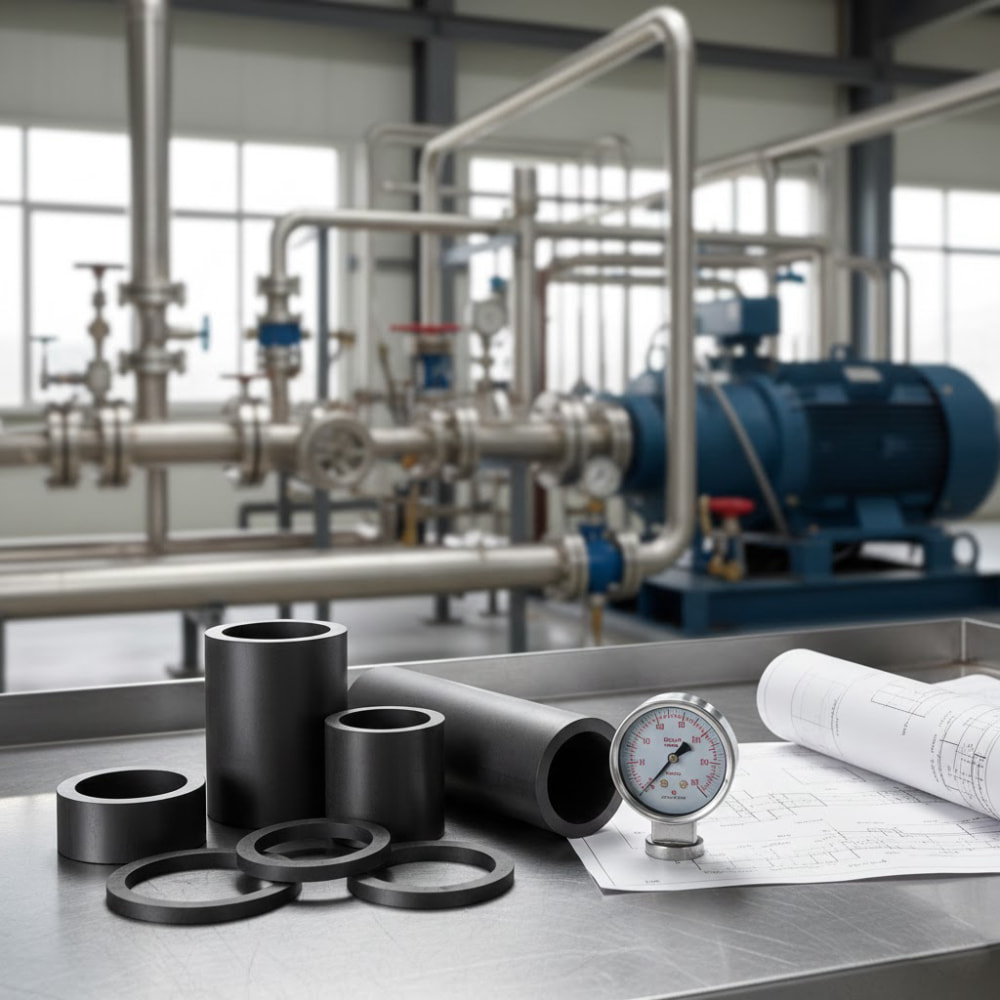
- Mechanical seal rings and faces in high-pressure chemical and petrochemical pumps.
- Valve seats, discs, and trims in control valves handling erosive or corrosive flows.
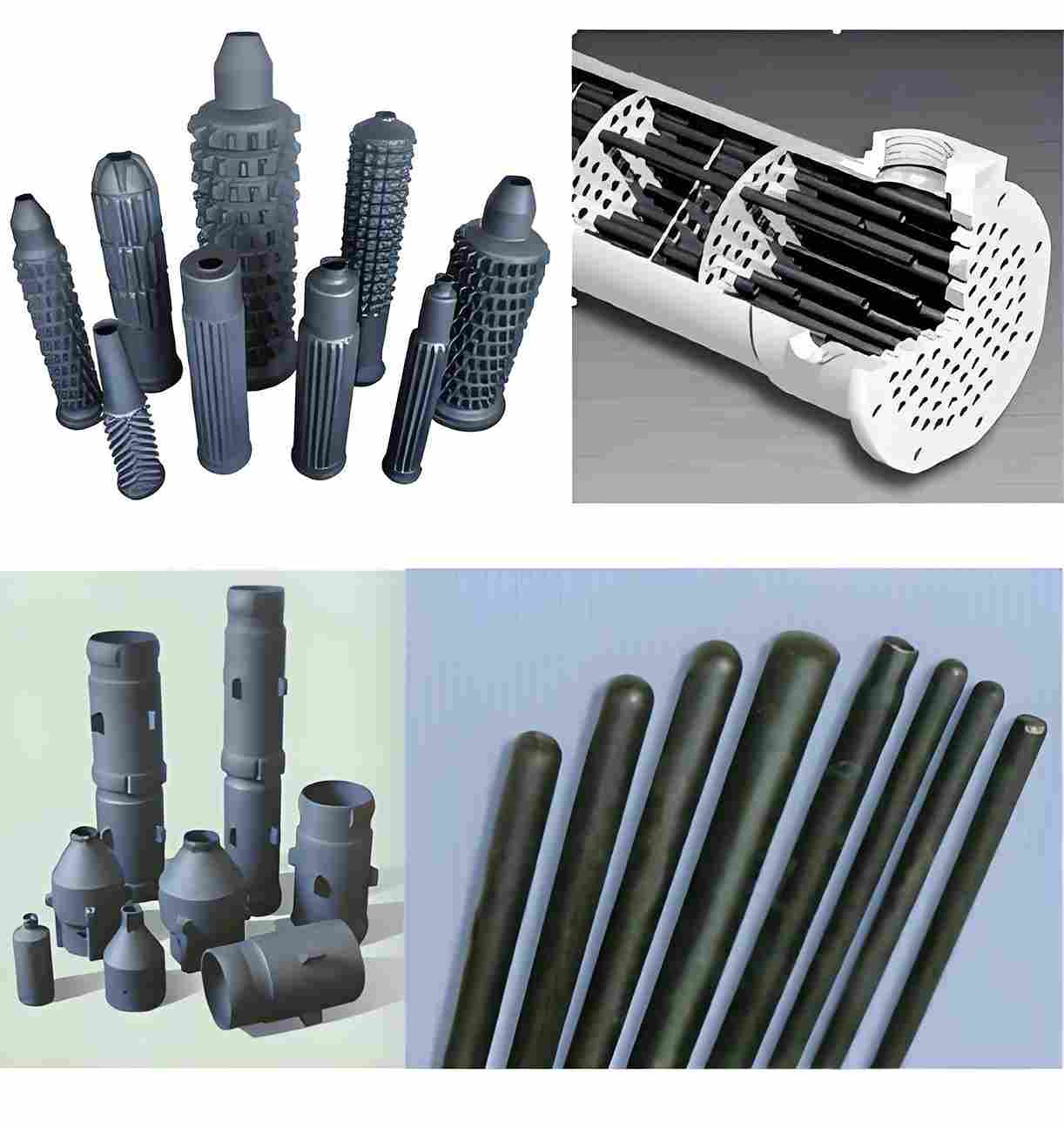
- Thick-walled tubes, sleeves, and inserts inside metal housings where pressure is contained by the metallic shell and the SiC provides wear/corrosion protection.
For example, dense SiC seal rings are standard in many high-pressure chemical pumps because they combine excellent wear behaviour with low leakage and strong chemical resistance.
3. Where high pressure becomes dangerous for SiC
Silicon carbide is strong, but not bulletproof. It becomes vulnerable when design and installation create the wrong stress patterns:
- Tension and bending: ceramics hate tensile stresses and bending loads, especially when combined with surface flaws or sharp notches.
- Stress concentrations: sharp corners, abrupt section changes, and deep narrow grooves concentrate stress and can trigger cracks under pressure.
- Point contact and misalignment: if a ring, plate, or tube is supported on a small contact area, local stress under pressure can exceed safe limits even if average stress looks low.
- Pressure shocks: rapid pressure rises, water hammer, cavitation collapse, or solid impact can produce very high transient stresses.
In other words, silicon carbide can absolutely handle the stress, but only if you don’t ask it to behave like ductile steel.
4. Typical high-pressure SiC applications and what makes them work
Mechanical seal rings in high-pressure pumps
Here, SiC faces see pressure from the process fluid plus spring and hydraulic loads. They work because:
- Rings are thick enough with generous radii to avoid stress concentrations.
- Pressure acts mainly in a way that creates compressive stresses through the section.
- Seal faces are precision lapped for flat contact and controlled film behaviour.
Valve components and throttling trims
Silicon carbide seats, discs, and trims in high-pressure valves survive because:
- They are supported by metallic housings that carry the main pressure load.
- SiC elements are shaped to avoid thin sections and sharp edges at loaded points.
- Hardness and wear resistance protect against high-velocity jets and particles.
Thick-walled tubes and liners
For high-pressure, high-temperature, corrosive flows, a common strategy is to use a SiC tube or liner inside a steel pressure shell. For example:
- A thick SiC tube handles chemical attack and erosion.
- The surrounding metal tube handles hoop stress and overall containment.
This division of labour is why silicon carbide tubes are often chosen as inserts or liners instead of standalone pressure vessels.
5. Design rules for SiC in high-pressure environments
If you want silicon carbide to survive high pressure, follow these practical rules:
- Let metal carry the pressure: use SiC as an insert, sleeve, liner, or sealing surface, with a steel or alloy shell taking the primary hoop and axial loads.
- Avoid thin, unsupported sections: use adequate wall thickness and generous radii at transitions.
- Use uniform support: seat rings and plates on well-machined metal surfaces, not on a few contact points or rough welds.
- Control tolerances and fits: avoid excessive interference that creates high assembly stresses; design interference fits carefully with thermal expansion differences in mind.
- Account for pressure cycling: consider fatigue-like effects in long-term service; do not design only for static pressure.
Good SiC design for high pressure looks boring: thick enough, smooth transitions, well-supported by metal, and no aggressive “styling” features that make stress analysis a horror show.
6. Testing and qualification: don’t rely only on datasheets
Material datasheets are helpful, but they don’t tell you everything about high-pressure performance. For critical parts, you should consider:
- Hydrostatic pressure tests on sample components in realistic geometries.
- Combined tests with temperature and pressure cycling to simulate start-up and shutdown behaviour.
- Inspection after testing (visual, dye penetrant on ground surfaces, or more advanced methods) to check for cracks and damage.
When you combine proper grade selection, sound design, and realistic pressure testing, silicon carbide becomes a reliable option instead of a gamble.
7. FAQ – Silicon carbide in high-pressure applications
Q1: Can silicon carbide withstand very high static pressure?
A: Yes, silicon carbide has very high compressive strength and can tolerate high static pressures, especially when used as an insert supported by a metal shell. Problems arise more from tensile and bending stresses or bad geometry than from pure compression.
Q2: Is SiC suitable for high-pressure mechanical seals?
A: Yes. SiC is widely used in high-pressure mechanical seals because of its hardness, wear resistance, and chemical stability. The key is proper ring design, flatness and parallelism of faces, correct loading, and good support from the metal hardware.
Q3: Are silicon carbide tubes safe as standalone high-pressure pipes?
A: In most cases, SiC is better used as a liner inside a metal pressure shell rather than as a free-standing pressure pipe. Ceramics are brittle; combining SiC with metal containment gives you the best of both worlds: chemical and wear resistance from SiC and pressure capacity from steel.
Q4: How do pressure spikes affect SiC components?
A: Fast pressure transients, water hammer, and cavitation can generate very high local stresses and may crack ceramics even when the average design pressure is safe. If your system sees frequent transients, you must consider them in design and may need to limit peak rates of pressure change.
Q5: Does high pressure make SiC more likely to fail from small defects?
A: Yes. Like other ceramics, silicon carbide strength is sensitive to flaws and stress concentrations. Higher stresses mean a lower margin between natural defect sizes and failure. This is why surface quality, edge finishing, and avoidance of sharp notches are especially important in high-pressure parts.
Q6: Is silicon carbide better than metals in high-pressure systems?
A: It depends what you are asking it to do. SiC is not a direct substitute for steel pressure vessels, but it is often far better for wear- and corrosion-critical components inside high-pressure systems: seal rings, seats, trims, liners, and inserts. Let metals carry the burst pressure; let SiC handle the environment.
Q7: What should I send a supplier when I want to use SiC in a high-pressure application?
A: At minimum: pressure range (normal and peak), temperature profile, fluid composition (including solids), current material and failure history, and basic dimensions or drawings. With that, a silicon carbide manufacturer can recommend suitable grades, wall thicknesses, and support concepts instead of just copying a metal part shape directly.
Conclusion
Silicon carbide can absolutely handle high-pressure applications – as long as you use it for what it does best: resisting wear, corrosion, and high temperature inside a well-designed mechanical system.
If you let ductile metals carry the primary pressure load and use SiC where the environment is the real enemy, you can get the full benefit of the material: longer life, lower leakage, and fewer nasty surprises when the system runs at the high end of its pressure and temperature window.