“Use silicon carbide, it’s high performance.” That’s not a decision, that’s a slogan. In real plants, you have budgets, lead times, existing designs, and people who get very unhappy when a “better material” fails faster than the old one.
This guide walks through how to decide whether silicon carbide is actually the right choice for your application, using clear criteria instead of wishful thinking.
Start with the real problem, not the material
Before choosing any material, clarify what you are trying to fix. Typical pain points where engineers start thinking about silicon carbide include:
- Frequent failures of existing metal or ceramic parts in specific zones.
- High-temperature operation where current materials creep, warp, or crack.
- Corrosive or acidic media that rapidly attack metals or basic refractories.
- Severe abrasion or erosive slurries that chew through liners, nozzles, or seals.
- Thermal cycling causing repeated cracking during start-up and shutdown.
- Demand for longer campaigns or reduced maintenance interventions.
If you can’t clearly state which of these you are facing, you are not ready to decide on SiC yet. Material choice should solve a specific problem, not just “upgrade the spec.”
Where silicon carbide is usually a strong candidate
Silicon carbide tends to be the right answer in applications with one or more of the following characteristics:
- High temperature: continuous operation at elevated temperatures where metal strength or basic refractories are marginal.
- Combined heat + corrosion: hot acids, corrosive gases, or aggressive process media.
- Severe wear: particle-laden flows, slurries, erosive jets, or high-speed impingement.
- Thermal cycling: frequent heating and cooling cycles that damage less stable ceramics.
- Critical components: seal faces, liners, tubes, or plates whose failure stops production.
Typical examples include:
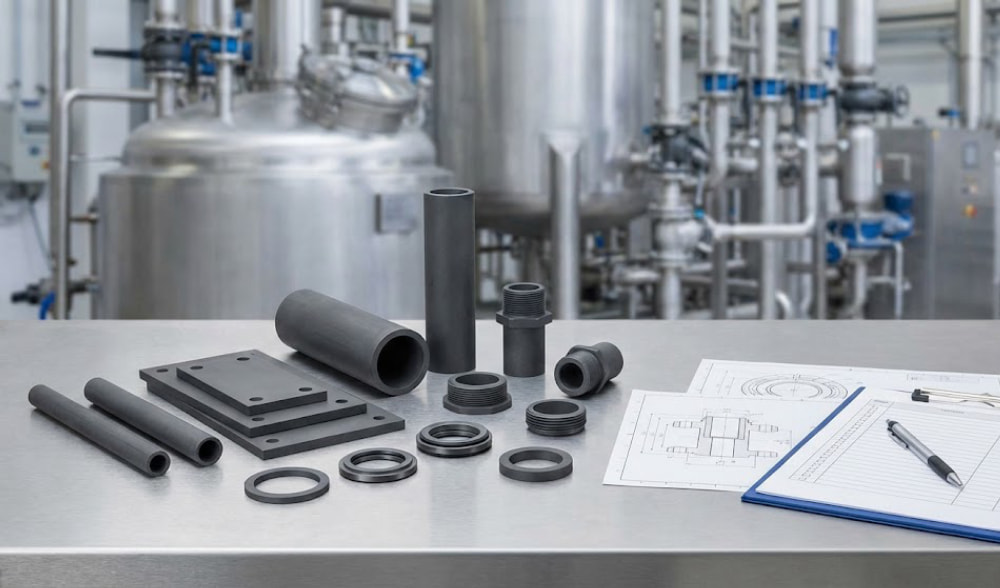
- Chemical pumps: silicon carbide seal rings and sleeves in hot, corrosive liquids. See: Silicon Carbide Seal Rings.
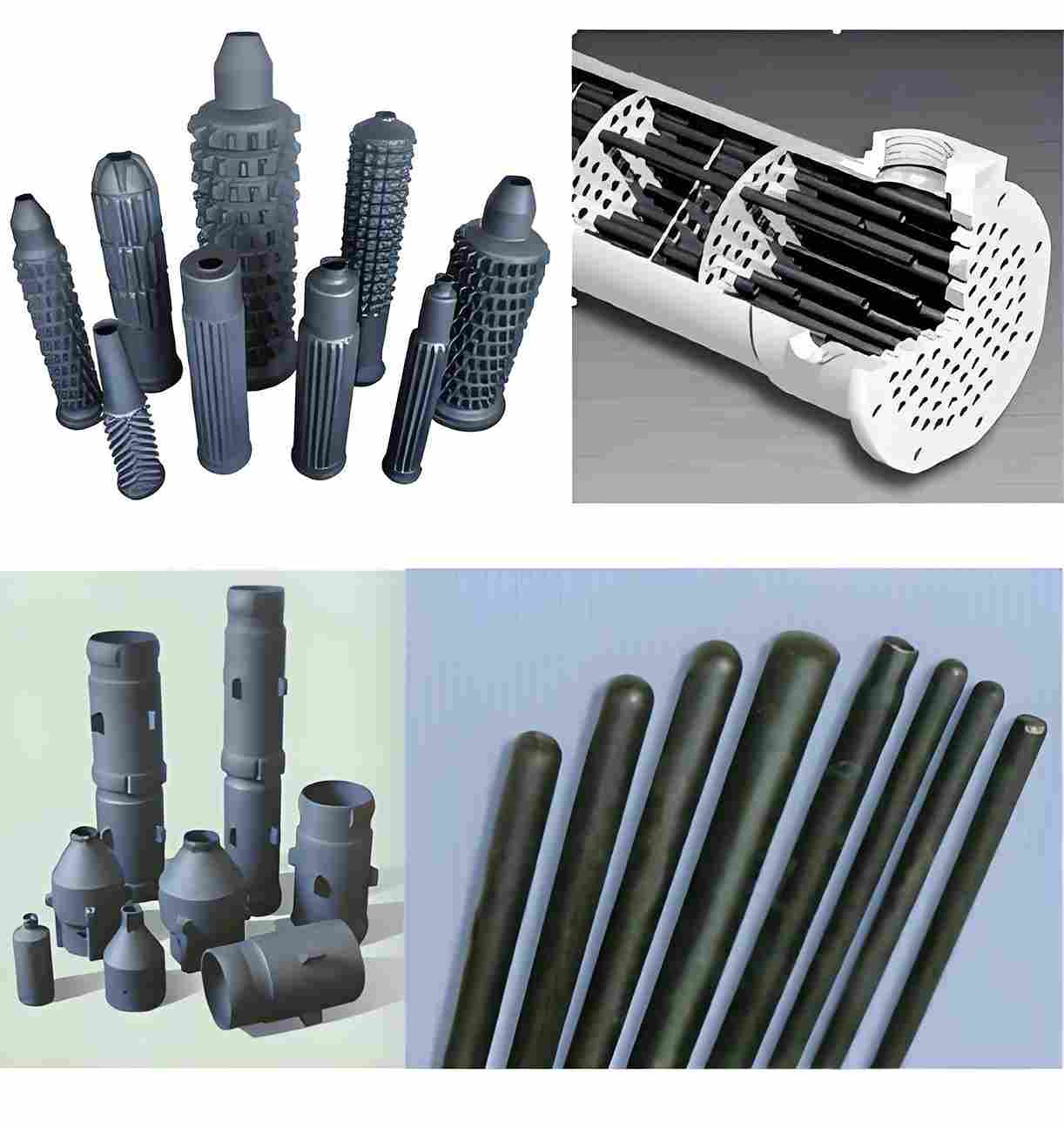
- High-temperature furnaces: silicon carbide tubes and burners in radiant or flame zones.
- Wear linings: SiC plates and tiles in hoppers, chutes, and high-wear process areas.
Where silicon carbide is probably overkill
Silicon carbide is not a magic replacement for every metal or alumina part. It is often overkill in situations like:
- Low to moderate temperature where standard alloys or alumina already last a long time.
- Non-corrosive, non-abrasive media with benign process conditions.
- Low failure impact – when replacing a part is cheap, fast, and doesn’t stop production.
- Shock and impact dominated loads where toughness matters more than hardness or corrosion resistance.
In these cases, the extra cost and lead time of SiC rarely pay back. You get a fancy material doing a simple job your existing one already handled.
Key parameters to evaluate before choosing SiC
To decide rationally, look at the combination of conditions instead of just one number on a datasheet.
Temperature profile
- What is the normal operating temperature and the peak temperature?
- How fast does the system heat up and cool down (°C per minute)?
- Are there hotspots where components see higher local temperatures than the bulk?
Silicon carbide is most useful when your current material is clearly near its temperature limit or cracking during thermal cycling.
Media and chemistry
- Is the medium acidic, alkaline, or neutral?
- Are there chlorides, sulphur compounds, or oxidizers present?
- Does the chemistry change during cleaning, start-up, or upset conditions?
Dense SiC is very attractive when metals or low-grade ceramics are failing due to hot acids, mixed corrosive media, or combined corrosion plus erosion.
Wear and erosion
- Are there solids in the flow (slurries, dust, particles)?
- Is the velocity high, or are there impingement zones (nozzles, bends, throttling points)?
- Do you see grooves, thinning, or pitting in the flow direction on existing parts?
When abrasive wear is killing components faster than expected, silicon carbide’s hardness and wear resistance are usually a major step up.
Mechanical load and geometry
- Is the stress mainly compressive, or do you have tension and bending?
- Are there long spans, thin sections, or sharp corners in the design?
- How well is the part supported and aligned by surrounding metal structures?
SiC is strong in compression but brittle under tension or impact. Designs must respect that. If your part is basically a structural beam under variable bending and shock, metal may still be the better option.
Precision, tolerances, and sealing
- Do you need tight tolerances on diameters or faces?
- Are there sealing surfaces where leakage must be tightly controlled?
- Is surface finish critical for friction, lubrication, or product quality?
SiC works especially well for precision components like seal rings, bearings, and sleeves where high stiffness, flatness, and wear resistance make a measurable difference in performance.
Economic impact of failure
- How much downtime and scrap does each failure cause?
- What is the labour cost and complexity of replacement?
- Is the component in a location that requires a shutdown to access?
If failures in that location are cheap and easy to fix, switching to SiC may not be justified. If each failure is a serious event, SiC becomes much more attractive.
A practical decision framework for SiC
You can think in terms of a simple decision flow:
- Step 1 – Identify the critical zone: focus on the part or location that fails most or has the highest consequence of failure.
- Step 2 – Map the conditions: list temperature, media, flow, pressure, loads, and current failure modes.
- Step 3 – Check if failure is driven by heat, corrosion, or wear: if the answer is “yes, and in combination,” SiC becomes a strong candidate.
- Step 4 – Compare lifetime and cost: estimate how much extra life you realistically need and what each failure is costing.
- Step 5 – Test on a limited scope: upgrade a subset of parts or one critical position with SiC first, then track lifetime and downtime.
The right question is not “Is SiC better on paper?” but “Does SiC reduce my total cost and risk in this specific zone?”
Example scenarios: when SiC is the right move
Chemical pump with repeated seal failures
Current situation:
- Hot, slightly acidic media.
- Carbon/metal seal faces wearing quickly and leaking.
- Frequent unplanned interventions to change seals.
Switching to dense silicon carbide seal rings and sleeves:
- Improves wear resistance and chemical stability.
- Reduces leakage and extends seal life.
- Cuts downtime and maintenance labour.
Furnace radiant tubes with cracking and warping
Current situation:
- Metal tubes sag and oxidize at high temperature.
- Cracking during thermal cycling and start-ups.
Switching to silicon carbide tubes:
- Improves dimensional stability at temperature.
- Enhances resistance to thermal shock.
- Extends tube life and stabilizes heat distribution.
Wear liners in slurry handling
Current situation:
- Metal or basic ceramic liners eroding too fast.
- Frequent replacement stops production.
Adopting SiC tiles or plates in the highest wear zones:
- Significantly increases wear lifetime.
- Reduces the frequency of liner replacement.
- Improves predictability of maintenance planning.
FAQ – Deciding if silicon carbide is right for your application
Q1: Is silicon carbide always better than metals and other ceramics?
A: No. Silicon carbide is usually better in high-temperature, corrosive, and high-wear environments where failures are costly. In moderate conditions with low failure impact, metals or alumina may be sufficient and cheaper.
Q2: What is the minimum information I need before asking for a SiC solution?
A: At minimum: operating and peak temperature, media composition, presence of solids, flow conditions, current material, failure mode (corrosion, wear, cracking), and desired lifetime. Without that, any recommendation is guesswork.
Q3: Can I just copy my metal part design in silicon carbide?
A: Often no. Metals and SiC behave differently. Thin sections, sharp corners, and certain stress patterns that are fine in ductile metals can be risky in brittle ceramics. It’s better to review geometry with a SiC supplier and adjust where needed.
Q4: How do I justify the higher cost of silicon carbide internally?
A: Compare the full picture: part cost + downtime + labour + scrap. If SiC extends life by a factor of several times or eliminates unplanned shutdowns, the total cost of ownership usually improves, even if the unit price is higher.
Q5: Should I switch everything to SiC at once?
A: Usually not. Start with the most critical, high-pain locations: where failures are frequent or extremely expensive. Prove the benefit there, then decide whether it makes sense to expand SiC usage to other areas.