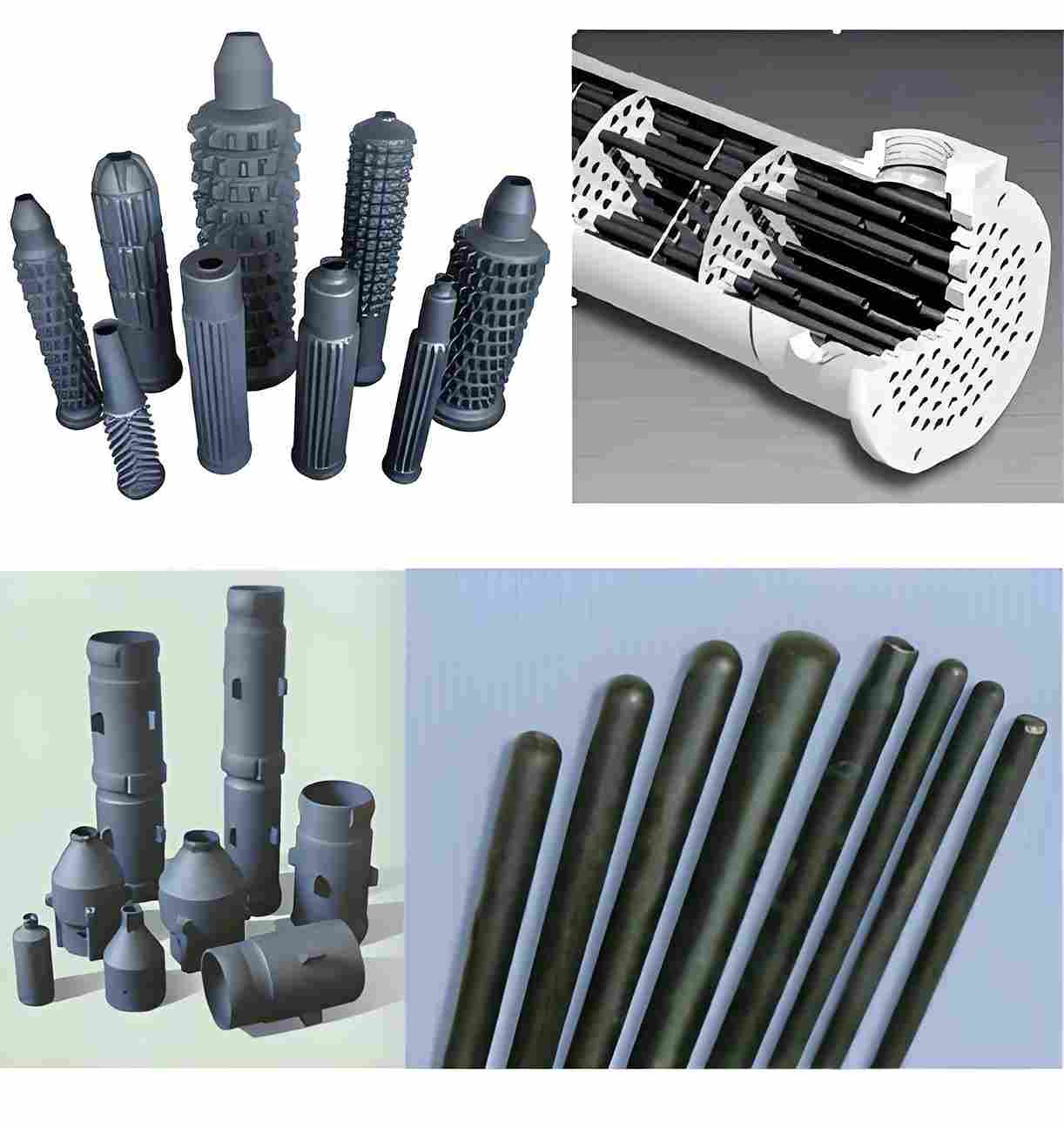
Silicon carbide (SiC) has a reputation for being incredibly hard, extremely wear-resistant and surprisingly strong at high temperatures. Engineers use it in pumps, valves, furnaces, kilns and many other industrial systems where metals and conventional ceramics simply do not survive.
But what exactly makes silicon carbide so strong and hard? This article looks at the science behind SiC – from atomic bonding and crystal structure to microstructure and manufacturing – and explains how these factors translate into real-world performance in industrial equipment.
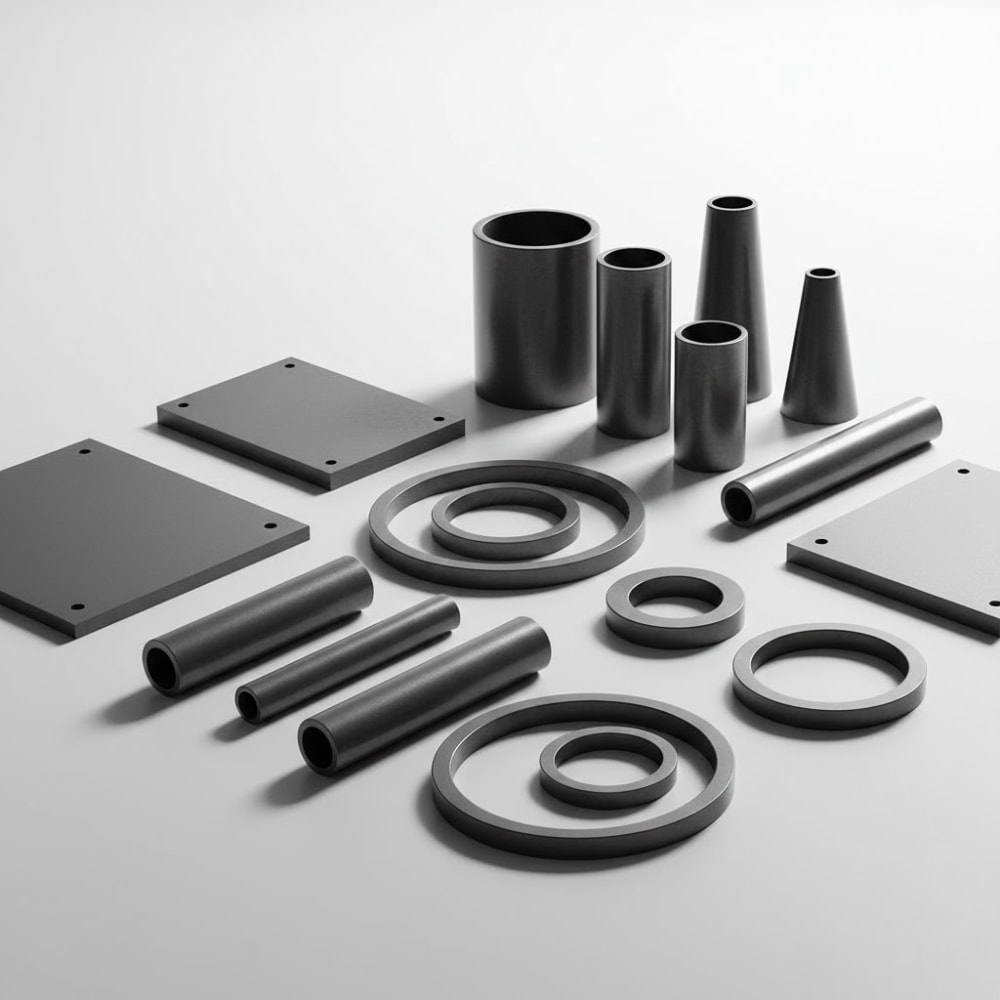
Why Strength and Hardness Matter in Industrial Applications
In high-temperature and corrosive industrial environments, component failure is rarely a “bad luck” event. It usually comes down to materials not having enough strength, hardness or toughness for the job. For example:
- Pump seal rings wear out quickly when the material cannot resist abrasive solids or cavitation.
- Furnace tubes and burner nozzles crack or deform when strength at high temperature is not sufficient.
- Wear plates and liners erode rapidly when the surface hardness is too low for the particle impact energy.
Silicon carbide solves many of these problems because it combines three rare qualities in one material:
- Very high hardness
- High strength and stiffness, even at elevated temperature
- Excellent wear and corrosion resistance
To understand why, we need to start at the atomic scale.
Atomic Structure: Strong Covalent Bonds
The first reason for silicon carbide’s hardness is its bonding. SiC is a covalent compound: each silicon atom (Si) forms strong covalent bonds with four carbon (C) atoms in a tetrahedral arrangement, and each carbon atom bonds with four silicon atoms.
- Covalent bonding means electrons are shared tightly between atoms, creating very strong, directional bonds.
- The result is a rigid three-dimensional network that resists deformation when stressed.
In contrast, metals use metallic bonding, where electrons are more “mobile”, making metals ductile but also easier to plastically deform. This is why most metals are far softer than silicon carbide.
Crystal structure and polytypes
SiC exists in many crystal forms (polytypes), such as 4H, 6H and 3C. Although this is critical in semiconductor applications, for structural ceramics the key point is that:
- All these polytypes retain strong covalent bonding.
- Stacking variations produce slightly different physical properties, but hardness and stiffness remain very high.
The combination of covalent bonding and tetrahedral coordination gives silicon carbide a very high bonding energy, which directly supports high hardness and high modulus.
From Atoms to Microstructure: Grains, Pores and Phases
Real-world silicon carbide components (seal rings, tubes, plates, nozzles) are not single crystals. They are made from SiC powder and sintered into a polycrystalline ceramic. The way these powders are processed and sintered strongly affects:
- Hardness
- Strength
- Toughness and reliability
Three common structural SiC families are:
- SSiC – pressureless sintered silicon carbide
- RBSiC / SiSiC – reaction-bonded silicon carbide
- RSiC – recrystallized silicon carbide
Role of grain size
SiC ceramics are made of many small grains (crystals):
- Fine grains can increase hardness and strength because cracks have to change direction more often and cannot propagate as easily.
- However, very fine grains require precise processing and can be more sensitive to micro-defects if not controlled well.
Role of porosity
Porosity (pores and voids in the ceramic) is the enemy of strength and hardness:
- Pores act as stress concentrators and crack initiation sites.
- Higher density (fewer pores) means fewer weak points, higher strength and better wear resistance.
Dense SSiC grades have very low porosity and therefore very high mechanical performance. Recrystallized grades have more controlled porosity, which can improve thermal shock resistance but often reduce strength slightly.
Role of secondary phases
Some SiC materials, especially reaction-bonded SiC (RBSiC / SiSiC), contain a second phase such as:
- Residual silicon (free Si)
- Glass or oxide phases at the grain boundaries
These secondary phases help with processing and sintering at lower temperatures, and they can also influence thermal shock resistance and machining. However:
- Too much free silicon or weak grain-boundary phases can lower hardness and strength.
- High-purity SSiC with minimal secondary phases tends to offer the highest hardness and chemical resistance.
Key Mechanical Properties: What the Numbers Mean
Different suppliers and grades will have slightly different values, but typical structural silicon carbide ceramics show:
- Hardness: Vickers hardness often in the range of 22–28 GPa (Mohs hardness approx. 9–9.5)
- Elastic modulus: roughly 380–450 GPa (far stiffer than steels)
- Flexural (bending) strength: around 300–500 MPa at room temperature, depending on grade
- Good retention of strength at high temperature compared to many other ceramics
What this means in practice:
- Surfaces resist scratching, abrasion and indentation under high contact pressure.
- Components can carry substantial mechanical loads at high temperature without excessive deformation.
- Wear under sliding and impact conditions is much lower than softer materials.
Hardness and Wear Resistance in Real Applications
High hardness alone does not guarantee good performance, but it is a major factor in wear resistance. In industrial equipment, SiC’s hardness delivers clear benefits:
- Mechanical seals: SiC seal faces resist abrasive particles in slurries, sand or contaminated fluids, reducing leakage and extending seal life.
- Nozzles and burner tips: High hardness resists erosion from high-speed gases and particles, keeping the flow geometry stable.
- Wear plates and liners: SiC surfaces withstand impact and sliding wear in chutes, cyclones and slurry lines.
- Valves and seats: SiC balls and seats maintain tight sealing under cycling pressure and dirty media.
Where softer materials might polish, scratch or groove over time, silicon carbide maintains its shape, which directly translates into better process control and less maintenance.
Comparison: Silicon Carbide vs Common Alternatives
The table below gives a qualitative comparison between silicon carbide and some typical alternative materials used in industrial components.
| Property | Silicon Carbide (SiC) | Alumina (Al2O3) | Tungsten Carbide (WC-Co) | Steel (Alloy) |
|---|---|---|---|---|
| Hardness | Very high | High | Very high | Medium |
| High-temperature strength | Excellent | Good | Limited above ~600–800 °C (binder softening) | Falls with temperature |
| Corrosion resistance | Excellent in many acids/alkalis | Good | Sensitive to some corrosion due to metallic binder | Often needs coatings |
| Density | Low (lightweight) | Medium | Very high (heavy) | Medium |
| Typical use cases | Seals, tubes, nozzles, plates, rollers | Insulators, general ceramics | Cutting tools, drilling bits | General structural components |
This is why silicon carbide often becomes the only realistic choice when you need a combination of high hardness, high temperature capability and corrosion resistance in the same component.
How Zirsec Uses SiC Strength and Hardness in Product Design
At Zirsec, we design silicon carbide components specifically to exploit SiC’s strength and hardness in real industrial conditions:
- Seal rings and faces: high-hardness SSiC for long-lasting sealing in chemical pumps and mixers.
- SiC tubes and protection tubes: strong and rigid tubes that resist thermal shock and mechanical load in furnaces.
- Burner nozzles and tips: erosion-resistant SiC for stable combustion conditions and longer service life.
- Wear plates, liners and rollers: high-hardness surfaces that reduce wear in abrasive and high-load environments.
Because we control the full process, from powder selection to sintering and precision machining, we can adapt the microstructure (density, grain size, secondary phases) to match the mechanical requirements of your application.
Engineering Example: Upgrading Pump Seals to Silicon Carbide
Background
A chemical processing plant was using alumina ceramic seal rings in a slurry pump. The media contained fine abrasive particles and corrosive chemicals. Seal life was inconsistent, and unplanned downtime was becoming a serious cost driver.
Problem
- Alumina rings showed grooving and surface wear after a short service time.
- Once grooves formed, leakage increased and seals had to be replaced.
- Maintenance intervals were shorter than planned, causing frequent stops.
Solution
- Seal faces were upgraded to high-density silicon carbide with higher hardness and better corrosion resistance.
- Surface finish and flatness were optimized to reduce friction and heat.
- Running conditions (cooling and lubrication) were checked to avoid dry running.
Result
- Seal life increased by a factor of 3–5 compared to the previous design.
- Wear tracks were much shallower, and faces stayed flatter over time.
- Unplanned seal failures were largely eliminated, cutting maintenance cost and downtime.
FAQ: Understanding Silicon Carbide Strength and Hardness
Q1. Is silicon carbide harder than steel?
Yes. Silicon carbide is far harder than typical alloy steels. It sits close to diamond and cubic boron nitride on the hardness scale, while steels are much softer. This is why SiC can handle high contact stress and abrasive media that quickly damage metal parts.
Q2. How hard is silicon carbide compared to alumina?
Both silicon carbide and alumina are hard ceramics, but SiC is generally harder and has higher thermal conductivity. In many wear and high-temperature applications, silicon carbide offers better lifetime than alumina, especially when corrosion and thermal shock are also involved.
Q3. If silicon carbide is so hard, does that mean it is unbreakable?
No. Silicon carbide is hard and strong, but it is still a ceramic and therefore relatively brittle compared to metals. It does not deform plastically before breaking. Good design and correct installation are required to avoid impact damage and excessive tensile stresses.
Q4. Why do some silicon carbide components still fail if the material is so strong?
Most failures come from design or operating issues: incorrect material grade, unexpected thermal shock, excessive bending or misalignment, or installation defects. SiC’s potential can only be realized when the component is properly designed for the real load and environment.
Q5. Can silicon carbide be machined easily?
Because of its high hardness, silicon carbide cannot be machined with conventional metal-cutting tools after sintering. Most geometry must be created before or during sintering, and final operations typically use grinding or lapping with diamond tools.
Q6. How is the hardness of silicon carbide measured?
Hardness is usually measured using Vickers or Knoop indentation tests, where a diamond indenter presses into the surface under a defined load. Mohs hardness ratings are also used for comparison but are less precise for engineering design.
Q7. Does silicon carbide keep its strength at high temperature?
Yes. One of the advantages of silicon carbide is that it maintains much of its strength and stiffness at elevated temperature compared to metals and many other ceramics. This makes it suitable for structural parts in furnaces, kilns and high-temperature processing lines.
Q8. How does porosity affect silicon carbide strength?
Porosity reduces strength and hardness because pores act as crack initiation sites. High-density, low-porosity grades such as SSiC generally have superior strength, wear resistance and corrosion resistance compared to more porous grades.
Q9. Is silicon carbide always the best choice?
Not always. Silicon carbide is ideal when you need a combination of high hardness, high temperature capability and corrosion resistance. In low-temperature, low-wear or very low-cost applications, other materials may be sufficient. The key is to match the material to the real operating conditions.
Q10. How can I know if silicon carbide is suitable for my application?
The best approach is to review your operating conditions (temperature, atmosphere, media, load, required lifetime) and compare them with SiC’s capabilities. If you are dealing with aggressive wear, corrosion and high temperature, silicon carbide is usually a strong candidate. Sharing your process data with an experienced supplier helps you make a confident decision.
Need help matching silicon carbide strength and hardness to your design? You can send Zirsec your operating conditions, drawings and lifetime targets, and our engineering team will recommend suitable SiC grades and component designs for your application.