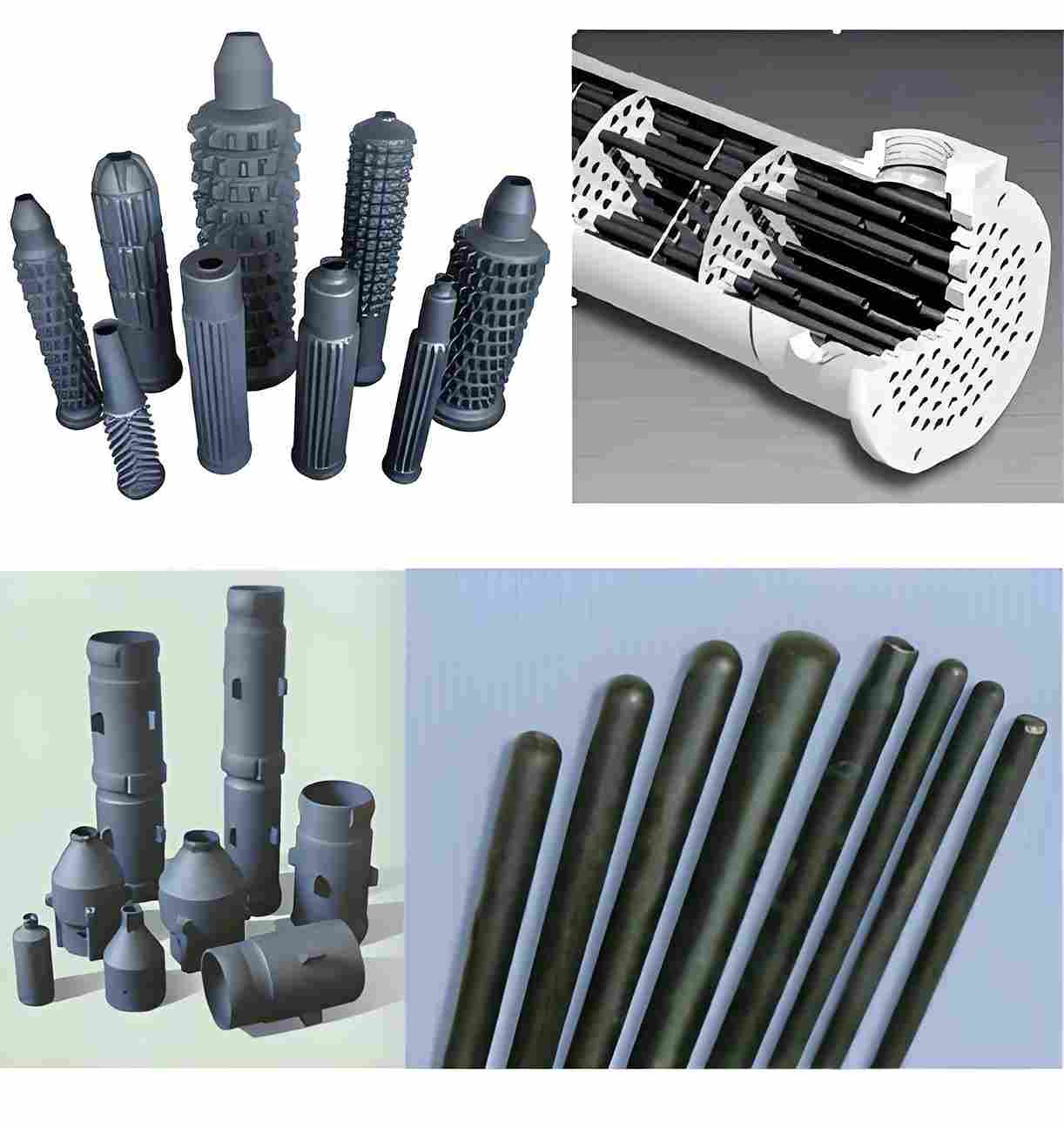
Choosing a silicon carbide supplier is not just a price game. In industrial applications, the wrong supplier can cost you far more than the price difference on a quotation: production delays, premature failures, inconsistent quality, and frustrated end users.
If you are responsible for sourcing silicon carbide tubes, plates, seal rings, nozzles, crucibles or custom ceramic parts, you need a supplier who can handle harsh operating conditions, custom drawings and tight delivery deadlines. This article outlines five key factors B2B buyers should evaluate when selecting a silicon carbide supplier for critical industrial projects.

Why Picking the Right Silicon Carbide Supplier Matters
Silicon carbide components are often used in “high-risk” positions inside equipment:
- Mechanical seal rings in chemical pumps
- Burner nozzles and tubes in high-temperature furnaces
- Crucibles and plates in foundries and metallurgical processes
- Wear liners and seats in abrasive and corrosive environments
When these parts fail, the cost is not just the replacement component. It can include:
- Unexpected shutdowns and lost production time
- Maintenance labor and emergency interventions
- Damage to other components or contamination of product
- Reputation risk with your own end customers
That is why the right silicon carbide supplier should be evaluated on total value and risk, not just unit price.
Factor 1 – Technical Capability and Product Range
The first thing to check is whether the supplier actually understands silicon carbide technology and industrial applications, or is simply trading generic parts.
Key questions to ask
- Do they offer multiple SiC grades (SSiC, RBSiC/SiSiC, RSiC) and can they explain when to use which one?
- Do they have engineering experience with your industry (chemical processing, metallurgy, furnaces, pumps, etc.)?
- Can they handle both standard parts and custom designs from drawings?
- Do their engineers understand thermal stress, corrosion, wear and mechanical loading?
A strong silicon carbide supplier should be able to:
- Review your operating conditions (temperature, atmosphere, media, pressure, load).
- Recommend suitable SiC grades and designs for each application.
- Explain trade-offs between lifetime, cost and manufacturability.
If the supplier cannot discuss these topics in practical terms, you are taking unnecessary risks on critical components.
Factor 2 – Material Grades, Process Control and Consistency
Silicon carbide ceramics are only as good as the powders, process and quality control behind them. Two parts with the same “name” can behave very differently in real service.
What to check
- Powder and grade control: Are SiC grades clearly specified (purity, density, porosity range)?
- Sintering and bonding: Do they have in-house capability for sintering (SSiC, RBSiC, RSiC), or do they outsource everything?
- Dimensional accuracy: What tolerances can they repeatedly achieve (e.g. ±0.2 mm or tighter for precision parts)?
- Surface finish: Can they provide lapped sealing faces, polished surfaces or special finishes when required?
Ask for typical data sheets showing:
- Density and porosity
- Flexural strength
- Hardness and modulus
- Thermal conductivity and thermal expansion
Consistency is just as important as maximum values. A good silicon carbide supplier focuses on repeatable batches, so your components behave predictably from order to order.
Factor 3 – Engineering Support and Customization Capability
Most industrial buyers do not only purchase standard catalogue parts. They need custom silicon carbide components tailored to their equipment and projects. That is where engineering support becomes a key differentiator.
Signs of strong engineering support
- They can review your CAD drawings and highlight potential stress or manufacturability issues.
- They help you refine dimensions, wall thicknesses and tolerances for better performance and lower risk.
- They can work from samples and reverse engineer components when drawings are incomplete.
- They offer design suggestions to improve lifetime or reduce cost without sacrificing reliability.
For example, a capable supplier can suggest:
- Changing the corner radius or fillet to reduce stress concentration.
- Adjusting wall thickness to balance strength and thermal shock resistance.
- Selecting a different SiC grade for better corrosion resistance or thermal stability.
This kind of support is especially important when you are replacing metal parts with ceramics, upgrading existing systems or designing new equipment.
Factor 4 – Quality Assurance, Traceability and Documentation
For B2B buyers, quality is not just a promise – it must be proven and documented. Silicon carbide components often end up in critical equipment, audits and customer inspections.
Quality aspects to verify
- Quality system: Do they follow recognized standards and documented procedures?
- Incoming and in-process inspection: How do they control powder quality, green parts and fired parts?
- Final inspection: Dimensional checks, surface finish, density or other key characteristics.
- Traceability: Can batches be traced back to production lots and test records?
Documentation that helps B2B buyers
- Material certificates and test reports (COA)
- Dimensional inspection records for critical parts
- Optional reports on porosity, strength or leak testing when needed
Clear documentation and traceability make it easier to qualify new suppliers internally and satisfy your own customers’ requirements.
Factor 5 – Lead Time, Logistics and After-Sales Support
Even the best ceramic parts are useless if they arrive too late or with no support. In project business and maintenance operations, timing is critical.
Lead time and flexibility
- What are their typical lead times for samples and production orders?
- Can they handle small batches for trials and spare parts?
- Do they stock common standard sizes that can ship quickly?
A supplier that supports small minimum order quantities (MOQ) with reasonable lead time is very valuable when you are:
- Testing new designs
- Supporting urgent maintenance
- Serving customers with varied and unpredictable demand
Logistics and after-sales
- Do they have experience shipping fragile ceramics internationally?
- Can they provide proper packaging and export documentation?
- Is there a clear point of contact for technical questions and claim handling?
The right silicon carbide supplier treats logistics and after-sales as part of the solution, not as an afterthought.
How to Evaluate Silicon Carbide Suppliers: A Simple Checklist
Before you commit to a new supplier, you can use the following checklist in your internal vendor assessment.
1. Technical capability
- Can explain SSiC, RBSiC and RSiC grade differences.
- Understands your industry and typical failure modes.
- Offers both standard and custom parts.
2. Process and material control
- Provides datasheets with typical and guaranteed properties.
- Shows how they control density, porosity and dimensions.
- Has a track record of supplying similar parts.
3. Engineering and customization
- Supports drawing review and design optimization.
- Can work from samples when drawings are incomplete.
- Offers realistic suggestions, not just “yes” to every request.
4. Quality and documentation
- Has documented quality procedures and inspection steps.
- Provides COA and inspection reports when required.
- Offers traceability for key components and batches.
5. Delivery and service
- Clear lead times for samples and production.
- Support for small orders and urgent projects.
- Responsive communication and technical after-sales.
How Zirsec Supports Global B2B Buyers
Zirsec focuses on industrial silicon carbide ceramic solutions for B2B equipment manufacturers, engineering companies and end users. Based on more than 20 years of SiC manufacturing experience and thousands of mass-production cases, Zirsec offers:
- Flexible small-batch customization: support from 1 piece, fast sampling and short lead time for small series.
- Full-process control: from powder selection and forming to sintering and CNC machining.
- Engineering support: drawing review, material selection and design suggestions for demanding applications.
- Quality and traceability: controlled porosity, high purity and documented inspection for critical parts.
- Global export and logistics: support for international shipments, packing and documentation.
If you are evaluating silicon carbide suppliers for high-temperature, corrosive or high-wear environments, working with a technically focused manufacturer can reduce project risk and improve long-term reliability.
FAQ: Selecting a Silicon Carbide Supplier
Q1. Is it better to buy from a silicon carbide manufacturer or a trading company?
For critical industrial applications, working directly with a manufacturer usually offers better technical support, more stable quality and more flexible customization options. Trading companies can be useful for very simple parts, but they may have limited control over material grades and process details.
Q2. How many suppliers should I qualify for silicon carbide components?
For key components, most B2B buyers qualify at least two suppliers: one primary and one backup. However, the primary supplier should cover most of your volume to keep quality consistent and communication efficient.
Q3. What information should I provide to potential silicon carbide suppliers?
You should provide drawings (or samples), operating temperature and atmosphere, media (fluids, gases, solids), mechanical load, required lifetime, and any special requirements for tolerances or surface finish. The more complete the data, the better the supplier can design and quote.
Q4. How can I compare quotes from different silicon carbide suppliers fairly?
Do not compare based on unit price alone. Check material grade, density and porosity, tolerances, surface finish, inspection scope, documentation and lead time. A slightly higher price can be more economical if it gives longer lifetime or lower risk.
Q5. How do I know if a supplier can handle custom silicon carbide parts?
Ask for examples of past custom projects, machining capabilities, maximum part size, achievable tolerances and typical lead times. A capable supplier will show sample photos, data and reference applications.
Q6. Are longer lead times always a bad sign?
Not always. Complex or large SiC parts naturally require more processing time. What matters is whether the lead time is clear, realistic and stable. A supplier that consistently meets their stated lead time is more valuable than one that promises unrealistically fast delivery and then delays.
Q7. How important is local stock for standard silicon carbide parts?
Stock availability for standard tubes, rings or plates can be very helpful for maintenance and urgent replacements. If your application uses common sizes, it can be efficient to choose a supplier that holds stock and can ship within 24–48 hours.
Q8. What is the best way to start working with a new silicon carbide supplier?
Start with a focused trial: select a limited number of parts or one project, share full technical data, and monitor quality, communication and delivery performance. If the results are stable over several batches, you can gradually increase the share of business.
Need support evaluating a silicon carbide supplier? You can share your application details and requirements with Zirsec, and our engineering and sales team will help you assess risks, select suitable SiC grades and plan a realistic sourcing strategy for your components.