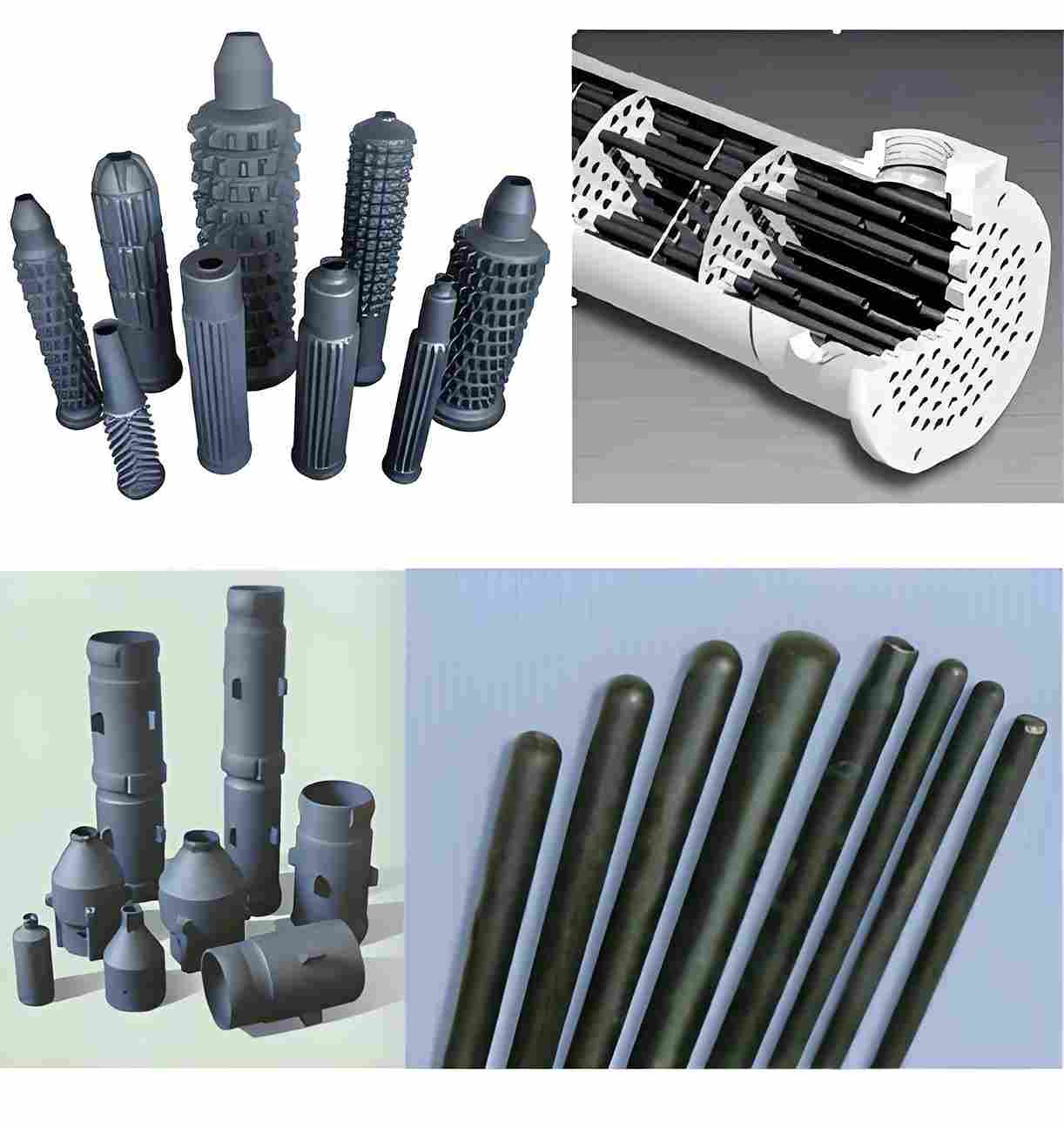
Non-ferrous melting furnaces fail for very boring reasons: crucibles crack mid-campaign, metal picks up impurities, energy bills creep up, and nobody quite remembers which size or material they ordered last time. If you are a foundry engineer, process owner, or maintenance manager running non-ferrous metal melting furnaces, choosing the right silicon carbide crucibles is one of the simplest ways to stabilize yield, life, and energy consumption. This guide walks through how to select silicon carbide crucibles for non-ferrous metal melting furnaces in a structured, engineering-friendly way.
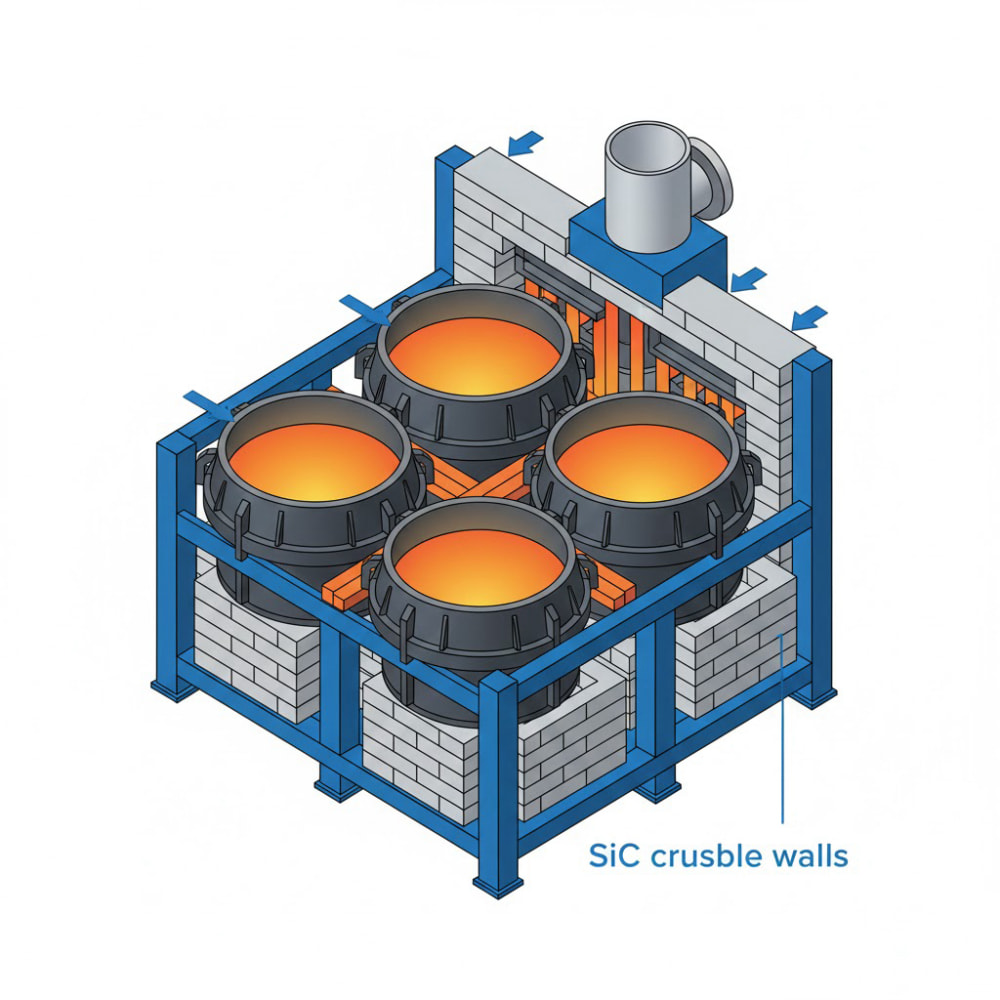
What Are Silicon Carbide Crucibles for Non-Ferrous Metal Melting Furnaces?
Silicon carbide (SiC) crucibles are high-performance ceramic vessels used to melt and hold non-ferrous metals such as aluminum, copper, brass, bronze, zinc, and precious metals. Compared with clay-graphite, steel pots, or basic alumina crucibles, SiC crucibles combine high thermal conductivity, excellent thermal shock resistance, and superior chemical stability. In fuel-fired, electric resistance, or induction furnaces, properly selected SiC crucibles help shorten melting time, reduce energy per ton, and extend campaign life, especially under aggressive fluxes and oxidizing atmospheres.
Problems and Challenges with Conventional Crucibles
Before looking at what to buy, it is useful to be honest about what typically goes wrong when non-ferrous melting uses the wrong crucible material or geometry.
- Thermal shock cracking: Steel or low-grade ceramic crucibles suffer from cracking during rapid heat-up, charge additions, or emergency cool-downs.
- Chemical attack and erosion: Chloride or fluoride fluxes, aggressive dross, and molten copper alloys quickly thin walls and create local hot spots.
- Metal contamination: Graphite pick-up, iron contamination from steel pots, or reaction products from poorly compatible refractories degrade alloy cleanliness.
- Unstable energy consumption: Poor thermal conductivity forces higher furnace input power or longer melting cycles to reach target temperature.
- Unpredictable service life: Mixed crucible types and inconsistent operating procedures create random failures and unplanned downtime.
- Inventory complexity: Multiple shapes and “similar but different” dimensions make it hard to standardize campaigns and spares across lines.
The reason silicon carbide crucibles are attractive for non-ferrous melting is that they address most of these pain points at once: faster and more uniform heating, lower risk of thermal shock failure, and more predictable life in tough furnace atmospheres.
Selection Criteria for Silicon Carbide Crucibles
Selecting SiC crucibles for non-ferrous metal melting furnaces is not guesswork. It can be broken into a few engineering questions that your team can answer in minutes.
1. Furnace Type and Heating Method
Start with the furnace, not the crucible catalogue. Different furnace designs impose different thermal and mechanical loads on the crucible:
- Fuel-fired furnaces: Flame impingement, uneven hot spots, and combustion products create high local temperature gradients. Choose crucibles with strong thermal shock resistance and slightly more conservative wall thickness.
- Electric resistance furnaces: More uniform temperature, but long holds at high temperature. Here, creep strength, oxidation resistance, and dimensional stability matter as much as thermal shock resistance.
- Induction furnaces: The magnetic field and fast heat-up rates demand crucibles with good mechanical strength and high thermal conductivity to avoid local overheating. Geometry and wall thickness must be compatible with the coil design.
When you contact Zirsec, always specify furnace type, rated power, and typical heating profile. This information helps match crucible design and SiC grade to the real thermal loads in your plant.
2. Metal Type and Melt Temperature
The molten metal drives both temperature level and chemistry. For non-ferrous melting, typical cases include:
- Aluminum and aluminum alloys: Moderate melt temperatures (~660–800 °C), high sensitivity to contamination, frequent flux usage, and significant dross formation. SiC crucibles with excellent oxidation resistance and smooth internal surfaces help minimize build-up and inclusion risk.
- Copper, brass, and bronze: Higher melt temperatures (~1,050–1,200 °C) and more aggressive slag. Crucibles must combine chemical resistance with high strength at temperature to avoid distortion and erosion.
- Zinc and die-casting alloys: Lower temperatures but strong vaporization tendencies and corrosive condensates. Wall thickness and outside coating should be optimized for corrosion resistance.
- Precious metals: High value per kilogram and strict cleanliness requirements. SiC crucibles for precious metals often run at higher purity and tighter dimensional tolerances.
The more accurately you specify alloy family, melt temperature, and typical fluxes, the easier it is to choose a silicon carbide crucible grade that balances life, cleanliness, and cost.
3. Crucible Size, Geometry, and Wall Thickness
Crucibles are not generic “pots” that can be scaled up or down without consequences. As crucible volume grows, thermal gradients and mechanical stresses change. Key points:
- Net metal capacity: Define required net metal mass per heat (for example, 150 kg aluminum or 500 kg copper). Always add a margin for dross volume and operational level.
- Geometry: Tall and narrow crucibles suit deeper furnaces and help reduce surface oxidation, while wider shapes may be preferred for skimming and alloying access.
- Wall and bottom thickness: Thicker walls increase robustness and life but reduce thermal response and raise energy consumption. For high-throughput lines, slightly thinner walls in a high-grade SiC material may deliver lower cost per ton.
Standard Zirsec SiC crucibles cover a wide range of sizes and shapes. When standard shapes do not fit your furnace envelope, Zirsec can design custom geometries adapted to coil clearances, burner positions, and charge patterns, as detailed on the SiC crucibles product page.
4. Operating Pattern and Thermal Cycling
A crucible that survives continuous operation may fail quickly in an intermittent or “on-off” duty cycle. During selection, always clarify:
- Continuous vs. batch operation: Continuous furnaces with small temperature swings stress crucibles differently than batch furnaces that cool down between heats.
- Ramp-up and cool-down rate: Fast ramping improves productivity but dramatically increases thermal shock. SiC crucibles can tolerate rapid cycling, but there are limits that must be respected.
- Expected campaign length: Define target heats or operating hours per crucible. This helps justify higher-grade materials when necessary.
Where furnaces run at high temperature with frequent charging and skimming, zircon-based refractories or lower-grade ceramics tend to crack or erode early. SiC crucibles are specifically attractive in these high-cycling profiles because of their thermal shock resistance and high mechanical strength at temperature.
5. Atmosphere, Fluxes, and Slag Chemistry
Melting behavior is heavily influenced by furnace atmosphere and slag/flux composition:
- Oxidizing atmospheres: Require crucibles with strong oxidation resistance to maintain wall thickness and prevent surface scaling.
- Reducing or protective atmospheres: Allow higher operating temperatures and longer campaigns, but still require good creep resistance at temperature.
- Flux type: Chlorinated or fluoride-based fluxes can attack conventional crucibles quickly. High-density, low-porosity SiC with tailored glaze reduces penetration and chemical attack.
If you share your flux data and basic slag analysis with Zirsec, the team can recommend crucible materials and surface treatments that minimize chemical degradation and extend service life.
6. Cost per Melt and Process KPIs
Finally, crucible selection should be linked to the numbers that actually matter for your plant:
- Energy consumption per ton of metal
- Yield (metal loss to slag and dross)
- Crucible change frequency and downtime
- Annual consumable cost per furnace line
Silicon carbide crucibles rarely look “cheapest” per piece, but once energy, life, and downtime are included, they often reduce total cost per ton. When comparing quotes, convert everything into cost per melt or cost per ton of liquid metal produced rather than unit price per crucible.
Product Overview and Key Specifications of Zirsec SiC Crucibles
Zirsec SiC crucibles are engineered for non-ferrous metal melting furnaces where high temperature, thermal cycling, and aggressive slag are routine. Standard products are based on high-purity silicon carbide bodies with controlled porosity and strong bonding phases, optimized for temperatures up to around 1,600 °C in industrial operation.
Typical characteristics (indicative ranges; refer to your specific data sheet for exact values) include:
- Maximum operating temperature: up to approximately 1,600 °C in appropriate atmospheres
- Bulk density: around 3.0–3.2 g/cm³ for dense, robust crucibles
- Thermal conductivity: high thermal conductivity to allow fast and uniform heating of the metal bath
- Thermal expansion: relatively low thermal expansion compared with many oxide ceramics, which supports thermal shock resistance
- Mechanical strength: high bending strength to resist handling damage and furnace-side mechanical loads
Zirsec supplies different material grades (for example, reaction-bonded and sintered SiC) and coatings depending on whether your priority is maximum life, maximum thermal response, or highest purity. For detailed specification tables and dimensional ranges, visit the Zirsec SiC crucibles type page.
Applications and Use Cases
Silicon carbide crucibles from Zirsec are suitable for a wide range of non-ferrous metal melting furnaces. Typical use cases include:
- Aluminum foundries: Melting and holding primary and secondary aluminum and Al alloys in fuel-fired or electric resistance furnaces. High thermal conductivity reduces melting time, while dense SiC walls help control oxidation and metal loss.
- Copper, brass, and bronze shops: Batch and continuous melting of copper-based alloys where wall attack and contamination are concerns. SiC crucibles provide long, predictable campaigns under demanding slag chemistries.
- Zinc and die-casting alloys: Holding furnaces and dosing furnaces for Zn and Zn-Al alloys that cycle frequently. Robust SiC crucibles limit distortion and dimensional drift.
- Precious metal refining: Melting and alloying gold, silver, and other precious metals where temperature stability and cleanliness are critical, and crucible failure would be extremely costly.
- R&D and pilot furnaces: Laboratory and pilot-scale furnace systems where process conditions change often and crucibles must tolerate variable thermal cycles.
Where crucibles operate as part of a broader refractory and SiC component system, they can be combined with other Zirsec products such as SiC plates, beams, and mechanical parts used in high-temperature furnace applications. This allows the entire furnace hot zone to be optimized as a single engineered system.
Zirsec Support for OEMs and MRO Teams
Good crucibles are only part of a stable melting process. Zirsec combines silicon carbide crucible products with engineering support for original equipment manufacturers (OEMs) and maintenance, repair, and operations (MRO) teams.
- Application engineering: Support on crucible selection, sizing, and positioning relative to burners or coils, including basic thermal and stress considerations.
- Customization: Tailor-made crucible geometries, pouring spouts, and wall profiles aligned with your furnace envelope and charging method.
- Qualification and trial support: Assistance in setting up initial campaigns, defining operating limits, and collecting performance data (heats per crucible, energy per ton, failure modes).
- Quality and traceability: Stable raw material sources, process control, and traceable batch documentation so that performance can be correlated with production lots.
- Supply and logistics: Flexible batch sizes for OEM ramp-up and regular supply plans for running plants, minimizing both stock-outs and excess inventory.
For OEMs integrating crucibles into new furnace platforms, Zirsec can help lock in standard sizes and lifetimes early, simplifying service packages offered to end users.
FAQs
1. How long do silicon carbide crucibles last in non-ferrous melting?
Service life depends on furnace type, temperature, fluxes, and operating discipline. In well-controlled aluminum and copper melting lines, silicon carbide crucibles typically deliver significantly longer campaigns than conventional crucibles. The key is consistent start-up, controlled ramp rates, and proper flux management. Zirsec usually evaluates life in terms of heats or operating hours per crucible and optimizes material grade accordingly.
2. Can one crucible type handle different non-ferrous metals?
A single SiC crucible design may technically handle several non-ferrous metals, but this is not always recommended. For example, a crucible optimized for aluminum flux and temperature may not be ideal for high-temperature copper alloys or zinc operations with heavy vaporization. Where plants run multiple alloy families, Zirsec typically recommends separate crucible specifications per line or per furnace to avoid compromise on life or cleanliness.
3. What information does Zirsec need to recommend a crucible?
To receive a meaningful recommendation, prepare a short data set:
- Furnace type (fuel-fired, resistance, induction) and nominal capacity
- Target metal (for example, AlSi alloy, copper, brass, zinc) and melt temperature
- Desired net metal capacity per heat
- Operating pattern (continuous vs. batch, average heats per week)
- Flux and slag types used
Sending this information together with basic furnace drawings allows Zirsec to propose silicon carbide crucible sizes and grades that fit your real operating window.
4. Are SiC crucibles compatible with induction furnaces?
Yes, many non-ferrous induction furnaces use silicon carbide crucibles. Their high thermal conductivity supports rapid, uniform heating of the metal bath. However, wall thickness and geometry must be matched to the induction coil to avoid hotspots, and lining design must control mechanical loads. For induction applications, Zirsec typically recommends higher-strength SiC bodies and close coordination with the furnace OEM.
5. How should silicon carbide crucibles be started up to avoid cracking?
Even though SiC crucibles have excellent thermal shock resistance, they should be preheated according to a defined curve:
- Initial low-temperature dry-out to remove moisture.
- Controlled ramp to intermediate temperature with slow rate and hold time.
- Final ramp to operating temperature only after the crucible is dry and evenly heated.
Avoid direct flame impingement on a cold crucible and sudden charging of large cold ingots into a very hot bath. Zirsec can provide start-up recommendations matched to your crucible size and furnace design.
6. How does the cost of SiC crucibles compare to other materials?
On a piece-price basis, silicon carbide crucibles typically cost more than simple clay-graphite crucibles or steel pots. However, when you factor in longer campaigns, lower energy consumption, reduced scrap, and less unplanned downtime, the cost per ton of molten metal is often lower. Zirsec can help you build a simple cost-per-melt model so that procurement decisions are based on total cost of ownership, not just unit price.
Get a Tailored Crucible Recommendation from Zirsec
If you are upgrading an existing non-ferrous metal melting furnace or specifying crucibles for a new line, sending a clear set of operating requirements to Zirsec is the fastest way to converge on the right silicon carbide crucible.
Use your current melting line as a reference: document furnace type, alloy, charge weight, operating temperatures, fluxes, and typical campaign length. Then compare those data with the standard ranges and options described on the Zirsec SiC crucibles page and relevant high-temperature furnace applications. This combination of plant reality plus product data allows Zirsec engineers to propose crucibles that are not just technically suitable, but optimized for your cost and reliability targets.
By treating crucible selection as an engineering decision instead of a commodity purchase, you can stabilize furnace availability, reduce variability in melt quality, and turn silicon carbide crucibles into a quiet but very real productivity upgrade for your non-ferrous metal melting operations.