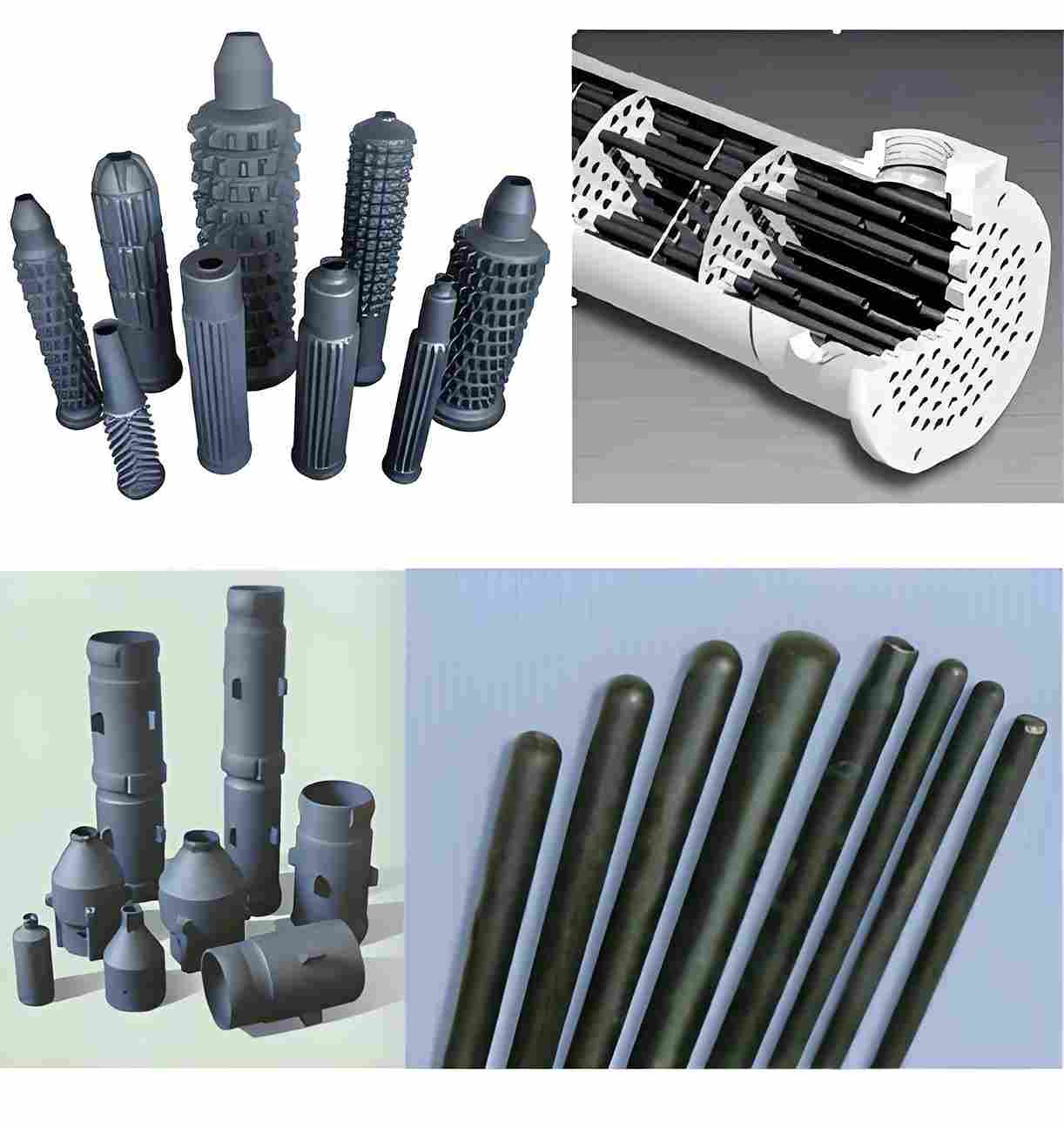
What Is a High-Load Silicon Carbide Bearing for Pumps?
A high-load silicon carbide bearing for pumps is a hydrodynamic or mixed-lubrication bearing made from sintered or
reaction-bonded SiC, designed to support radial and axial loads on the pump shaft in chemically aggressive and
low-lubricity fluids. These bearings are typically used as journal bearings, sleeve bearings or thrust pads in
chemical and petrochemical process pumps, where conventional metallic or polymer bearings reach their wear or
corrosion limits.
In many chemical and petrochemical pumps, the process fluid itself lubricates the bearing. This creates demanding
operating conditions: low viscosity, possible solids, thermal cycling and frequent starts. High-load silicon
carbide bearings address these conditions by combining high compressive strength, stiffness, wear resistance and
chemical stability in a single ceramic system.
For procurement engineers, specifying “SiC pump bearings” is not enough. Each bearing must be defined by:
silicon carbide grade, geometry, clearance, surface finish, dimensional tolerances and documentation. These
parameters have a direct impact on pump reliability, mean time between failures (MTBF) and lifecycle cost.
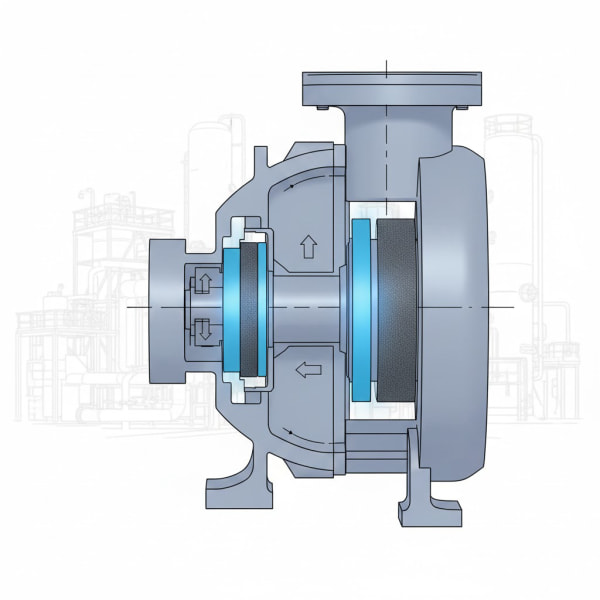
Why High-Load Silicon Carbide Bearings Matter in Industrial Applications
In chemical and petrochemical plants, pump failures are often traced back to bearing and seal problems. Sleeve and
thrust bearings must carry the hydraulic and mechanical loads while operating in fluids that may offer limited
lubrication. When a bearing fails, the result can be shaft contact, seal overload, vibration and unplanned
shutdowns.
High-load silicon carbide bearings matter for several reasons that are directly relevant to reliability metrics and
purchasing decisions:
- Load capacity:
SiC has high compressive strength (typically > 2 GPa) and high elastic modulus, allowing compact bearing
designs to carry significant radial and axial loads without plastic deformation. - Wear resistance in poor lubrication:
In fluids with low viscosity or poor lubricity, SiC maintains clearance and surface geometry longer than many
metal alloys, reducing shaft contact risk over time. - Chemical resistance:
SSiC and RBSiC grades resist many acids, bases, solvents and amine-containing streams found in chemical and
petrochemical services, which helps maintain bearing integrity between overhauls. - Dimensional stability:
Low thermal expansion and high stiffness support stable clearances across the operating temperature range,
which is essential for hydrodynamic film formation.
For plants in the US, Germany, Italy, the UK and other industrial regions, upgrading to silicon carbide bearings is
a practical lever to reduce unexpected pump outages and align maintenance intervals with planned turnaround cycles.
Key Selection Factors / Technical Guide
Choosing high-load silicon carbide bearings for chemical and petrochemical pumps requires coordination between
mechanical design, process engineering and procurement. The following factors help structure specifications and
RFQs.
1. Bearing Function and Load Profile
The first step is to clarify the role of the bearing and its load conditions:
- Bearing type: purely radial journal, combined radial/axial, or dedicated thrust bearing;
- Calculated radial and axial loads under normal and upset conditions;
- Dynamic effects from rotor unbalance, cavitation or transient operation;
- Required service life in hours or years between planned overhauls.
This information sets the basis for required bearing dimensions, wall thickness and SiC grade selection.
2. Process Fluid and Lubrication Conditions
In many API-type chemical process pumps, the pumped fluid acts as the lubricant. Key data points include:
- Fluid type and composition, including off-spec and cleaning fluids;
- Viscosity at operating temperature (cP) and density (kg/m³);
- Presence and size of solid particles or crystals;
- Operating temperature range and maximum temperature during upset;
- Risk of dry running, vapor lock or intermittent flow.
SSiC is typically preferred for aggressive fluids or high temperature, while RBSiC can be suitable for less
aggressive services with a focus on cost-efficiency and thermal shock robustness. Zirsec uses this data to
recommend realistic SiC bearing configurations.
3. Bearing Geometry, Clearance and Surface Finish
Geometry and surface quality are critical to forming a stable hydrodynamic film and avoiding shaft contact. For
silicon carbide bearings, useful specification points are:
- Bearing length and diameter ratio (L/D) matched to load and lubrication conditions;
- Radial clearance between shaft and bearing, typically in the range of tens of micrometres, defined per pump
size and fluid; - Surface roughness: often Ra ≤ 0.2–0.4 µm on the running surface, depending on film formation strategy;
- Chamfers, grooves or pockets if required for flow distribution or cooling.
Zirsec machines SiC bearings with bore tolerances typically down to ±0.01–0.02 mm, supporting consistent
clearances across batches and simplifying alignment with OEM design values.
4. Integration with Metallic Housings and Shafts
Silicon carbide bearings are often installed into metallic housings or carriers. Mechanical integration must
account for:
- Fit between SiC bearing and metallic housing (interference, slip or bonded fit);
- Thermal expansion differences between ceramic and metal;
- Contact surfaces, radii and shoulders to avoid stress concentrations;
- Assembly and disassembly procedures during maintenance.
Properly defined tolerances and seat geometries prevent overloading the ceramic during installation and thermal
cycling, which is a frequent failure mode when ceramic bearings are treated like metallic bushings.
5. Choice Between SSiC and RBSiC
Both SSiC and RBSiC can be used in high-load pump bearings. A practical guideline is:
- SSiC bearings for aggressive media, higher temperatures, high-purity applications and when
long-term corrosion resistance is critical; - RBSiC bearings for chemically moderate but mechanically demanding services where thermal shock
and cost-effectiveness are important.
Zirsec’s material portfolio allows plants and OEMs to standardise SiC bearing solutions across families of pumps
while adapting grade choice to individual process lines.
How Zirsec Solves These Engineering Challenges
Zirsec focuses specifically on silicon carbide ceramics for demanding industrial equipment, including bearings for
chemical and petrochemical pumps. The goal is to convert bearing performance from an uncertainty into a controlled,
documented part of pump reliability.
Zirsec supports OEM and end-user projects by:
- Providing characterised SiC grades:
SSiC and RBSiC materials with documented flexural strength (≈250–450 MPa), hardness (≈20–26 GPa),
thermal conductivity (≈60–120 W/m·K) and corrosion resistance relevant to process pump conditions. - Machining precision bearing geometries:
Cylindrical, flanged and segment bearings produced with tight bore and OD tolerances, flatness control on thrust
faces and surface finishes suitable for hydrodynamic lubrication. - Co-engineering with pump designers:
Reviewing bearing loads, fluid conditions and existing failure modes to optimise SiC bearing dimensions,
clearances and seat designs. - Aligning lead times with outages:
Scheduling prototypes and series deliveries to coincide with planned maintenance windows, reducing the need for
emergency sourcing and high safety stocks. - Supplying full documentation:
Material certificates, inspection reports and traceability aligned with QA requirements in chemical and
petrochemical plants in the US and Europe.
For procurement teams, this means that drawings, operating envelopes and target dates can be translated into clear
SiC bearing proposals with defined tolerances, material data and delivery commitments.
Application Scenarios
High-load silicon carbide bearings from Zirsec are used where metallic or polymer bearings have reached their
performance limits. Typical application scenarios include:
- Chemical process pumps:
Pumps handling acids, caustics, solvents and mixed streams, operating with low-viscosity fluids and demanding
emission limits. - Petrochemical and refinery pumps:
Light hydrocarbons, amine-containing streams and high-temperature services where bearing lubrication is
marginal and chemical resistance is required. - Offshore and marine chemical injection pumps:
Compact, high-speed units where space constraints and reliability targets demand stable bearings under varying
pressure and temperature. - Circulation and quench pumps:
Pumps that experience frequent starts, variable flow and thermal cycling, which can stress traditional bearing
materials. - Specialty chemical plants:
High-purity and corrosive services where metallic bearing wear and corrosion can lead to contamination and
product quality issues.
In each case, silicon carbide bearings are evaluated against existing bearing life, pump failure statistics and
maintenance costs to determine whether an upgrade project is justified.
Real Case Example
A petrochemical plant operating vertical chemical process pumps on a lean amine service was experiencing repeated
bearing-related failures. Metallic sleeve bearings showed accelerated wear in the low-viscosity, chemically
aggressive fluid. Average bearing life was approximately 12–15 months, with some unplanned failures causing
production losses.
The reliability team engaged Zirsec to investigate a silicon carbide bearing solution. The process included:
- Collecting process data: pressure, temperature profile, amine concentration and viscosity;
- Reviewing pump design details, bearing loads and clearances;
- Analysing worn metallic bearings to understand wear patterns and shaft condition;
- Proposing sintered silicon carbide (SSiC) journal and thrust bearings with defined clearances and surface
finish; - Preparing detailed drawings with bore tolerances down to ±0.01 mm and thrust face flatness targets;
- Manufacturing and delivering the first set of bearings in time for the next scheduled shutdown.
After installation, the SiC bearings completed more than 30 months of operation without bearing-related
unplanned stops. Inspection during the next major outage showed moderate, uniform wear and acceptable clearances.
The plant reported:
- A reduction in bearing-related corrective work orders on the pilot line;
- Improved stability of seal performance due to reduced shaft movement;
- A clear economic justification to expand SiC bearings to other pumps with similar services.
For the plant’s procurement and reliability teams, the decisive factors were Zirsec’s fast technical response,
precise machining, stable lead times and clear documentation, which simplified internal approval and qualification.
Specifications / Parameters
The table below summarises typical parameter ranges for Zirsec silicon carbide bearings used in chemical and
petrochemical pumps. Exact values are specified per drawing and application.
| Parameter | SSiC (Typical) | RBSiC (Typical) |
|---|---|---|
| Density | ≥ 3.10 g/cm³ | ≥ 3.00 g/cm³ |
| Flexural strength (room temperature) | ≈ 400–450 MPa | ≈ 250–320 MPa |
| Hardness | ≈ 22–26 GPa | ≈ 20–23 GPa |
| Thermal conductivity (room temperature) | ≈ 80–120 W/m·K | ≈ 60–90 W/m·K |
| Linear thermal expansion (20–800 °C) | ≈ 4.0–4.5 × 10⁻⁶/K | ≈ 4.0–4.8 × 10⁻⁶/K |
| Typical bore tolerance | Down to ±0.01–0.02 mm | Down to ±0.01–0.02 mm |
| Typical surface roughness on running surface | Ra ≤ 0.2–0.4 µm | Ra ≤ 0.2–0.4 µm |
| Typical bearing diameter range | Up to ≈ 300 mm ID (project dependent) | Up to ≈ 300 mm ID (project dependent) |
These figures give engineering and procurement teams a starting point for comparing offers and formalising silicon
carbide bearing specifications in internal standards.
FAQ
1. When should I consider silicon carbide bearings instead of metallic bearings?
SiC bearings are most relevant when metallic bearings show short life due to combined corrosion and wear, when
lubrication by process fluid is marginal, or when pump failures are affecting production targets. Reviewing the
pumps with the highest bearing-related downtime is a practical starting point.
2. Can silicon carbide bearings be retrofitted into existing chemical process pumps?
In many cases, yes. Zirsec can work from existing bearing drawings or physical samples to design SiC replacements
that fit current housings. Some projects use metallic sleeves or carriers to adapt to existing dimensions and to
manage thermal expansion differences.
3. What information does Zirsec need to quote high-load SiC bearings?
For a precise quotation, Zirsec typically requires bearing drawings or 3D models, operating conditions (pressure,
temperature, speed, loads), fluid description, any solids content and target service life. If grade selection is
open, Zirsec can recommend SSiC or RBSiC based on this data.
4. How do silicon carbide bearings behave during start-up and dry-running events?
Silicon carbide has favourable emergency running behaviour compared with many metals, but continuous dry running is
not recommended. Short dry-running incidents may be tolerable if bearing clearances, counterfaces and operating
procedures are considered during design. Zirsec can comment on risk once specific scenarios are known.
5. Are SiC bearings compatible with standard shafts and housings?
Yes, provided tolerances and fits are designed for ceramic components. Zirsec defines bore and OD tolerances, radii
and seating geometries that work with common pump shaft materials and housings, while avoiding local stress that
could damage the ceramic.