What Is a Silicon Carbide Heat Exchanger Tube for Corrosive Flue Gas Recovery?
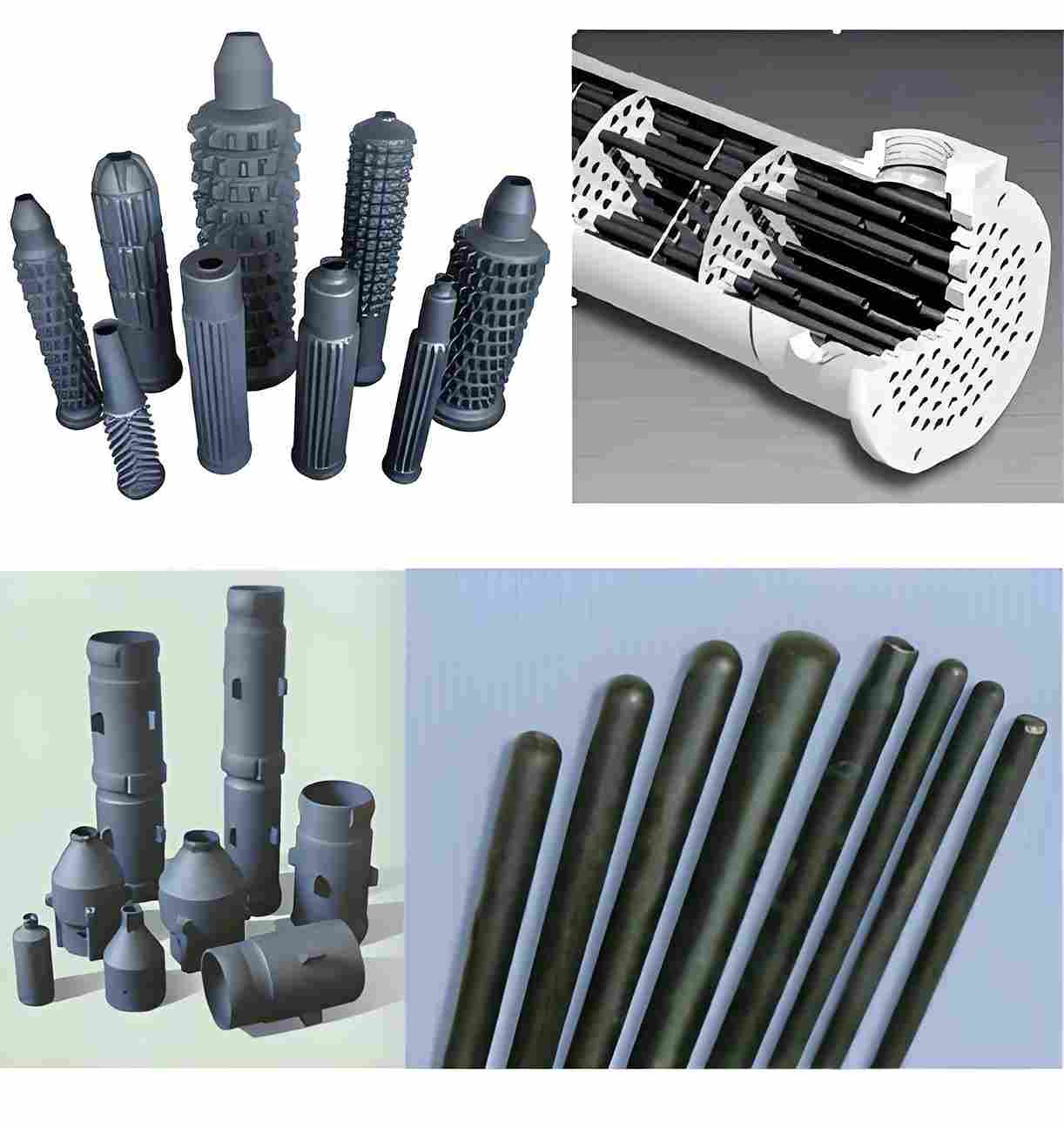
A silicon carbide heat exchanger tube for corrosive flue gas recovery is a high-performance SiC ceramic tube used as the primary heat transfer surface in gas-to-liquid or gas-to-gas heat exchangers. The tubes are installed in shell-and-tube bundles or modular blocks and exposed directly to hot, corrosive flue gases while transferring heat to a process liquid, condensate or combustion air.
Unlike metallic tubes (for example stainless steel, nickel alloys) or graphite tubes, silicon carbide tubes combine high thermal conductivity, resistance to acidic condensates and chlorides, high-temperature strength and good thermal shock resistance. These properties make them suitable for recovering heat from flue gases that contain SO2, SO3, HCl, HF and dust, where conventional tube materials suffer rapid corrosion or fouling.
For procurement engineers, a “SiC heat exchanger tube” is not a generic ceramic component. Each tube is defined by silicon carbide grade, outer and inner diameter, wall thickness, length, straightness, leak tightness and joining concept to tube sheets or headers. These parameters drive both technical performance and lifecycle cost of the heat-recovery unit.
Why Silicon Carbide Heat Exchanger Tubes Matter in Industrial Applications
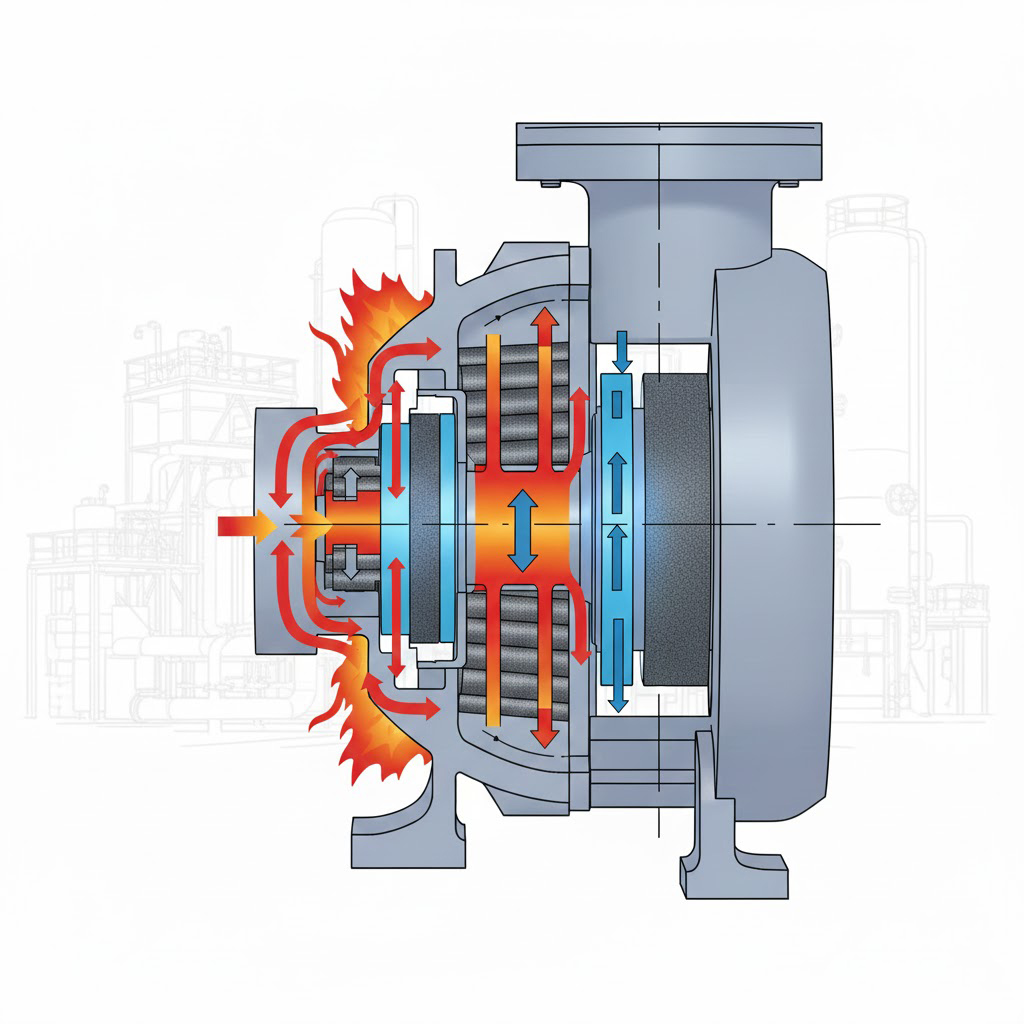
In sectors such as waste incineration, non-ferrous metallurgy, sulfuric acid production, chemical processing and glass manufacturing, flue gases can reach several hundred degrees Celsius and contain corrosive species. The combination of high temperature, acid dew point corrosion and particulate erosion shortens the life of metal tubes and constrains how much heat can be safely recovered.
Using silicon carbide heat exchanger tubes in these environments affects key reliability and economic indicators:
- Higher allowable gas-side temperature: SiC tubes tolerate much higher flue gas inlet temperatures than many metallic alternatives, which allows heat recovery closer to the process and reduces energy loss to the stack.
- Improved corrosion resistance: Sintered SiC grades maintain tube wall integrity in the presence of acidic condensates, halogens and oxidising species, reducing the risk of through-wall attack and tube leakage.
- High thermal conductivity: SiC tubes have thermal conductivity comparable to graphite and significantly higher than most corrosion-resistant metals, which enables compact designs or lower heat transfer area for the same duty.
- Longer service intervals: Better resistance to corrosion and thermal shock translates into longer operating campaigns between tube bundle replacements, lowering maintenance cost and outage frequency.
For plants in the US, Germany, Italy, the UK and other industrial markets, this combination supports higher energy recovery, lower fuel consumption and better environmental compliance without accepting frequent tube failures.
Key Selection Factors / Technical Guide
Specifying silicon carbide heat exchanger tubes for corrosive flue gas recovery is a design and procurement decision that should be based on quantifiable data. The following factors help structure requirements and supplier evaluations.
1. Flue Gas Composition and Operating Window
The starting point is a realistic description of the flue gas and operating envelope:
- Inlet and outlet flue gas temperature range;
- SO2, SO3, HCl, HF, NOx and oxygen levels;
- Acid dew point temperature and expected condensation behaviour;
- Dust loading, particle hardness and particle size distribution;
- Operating pressure and possible pressure pulsations.
Sintered silicon carbide (SSiC) is generally recommended when acid condensates and halogens are present and long life is required. Reaction-bonded SiC (RBSiC) can be used in less aggressive conditions where combined corrosion and erosion risk is moderate.
2. Tube Geometry, Bundle Design and Flow Regime
Tube geometry has a direct impact on thermal performance, pressure drop and mechanical stability. Useful specification parameters include:
- Tube outer diameter (for example 20–50 mm) and wall thickness based on design pressure and erosion risk;
- Tube length per pass and total bundle length within layout constraints;
- Tube pitch and layout pattern (triangular, square) affecting gas-side fouling and cleaning access;
- Gas-side and liquid-side velocities and acceptable pressure drops;
- Support and baffle spacing to control vibration and deflection.
Zirsec can work from existing metallic tube bundle designs or co-develop new layouts that take SiC properties into account, balancing thermal performance, mechanical safety margin and cleanability.
3. Mechanical Design, Joints and Sealing Concept
Silicon carbide is a brittle ceramic, so mechanical design must address:
- Design pressure on the tube side and shell side, including transient conditions;
- Tube-to-tube sheet or header connection (e.g. shrink-fit blocks, gasketed joints, brazed or bonded interfaces);
- Allowance for differential thermal expansion between SiC tubes and metallic components;
- Support against bending loads from gas flow, vibration and handling.
Clear tolerances on tube OD, straightness and end geometry simplify assembly and reduce the risk of stress concentrations at the joints, which is critical for long-term integrity.
4. Choice Between SSiC and RBSiC
Both SSiC and RBSiC can be used for heat exchanger tubes, but they behave differently in corrosive flue gases:
- SSiC tubes (pressureless sintered) are single-phase, high-purity ceramics with excellent corrosion resistance, especially in acidic and oxidising environments, and very low porosity.
- RBSiC tubes contain free silicon and are attractive where conditions are less aggressive and cost-efficiency and thermal shock resistance are priorities.
For flue gas recovery where sulfuric acid and halogen-containing condensates are expected, SSiC is typically the safer choice, particularly when design lifetimes of many years are targeted.
5. Thermal Cycling, Start-up and Cleaning Strategy
Heat exchangers for flue gas recovery often face:
- Frequent start-up and shutdown cycles with large temperature swings;
- Cleaning procedures using steam, water or chemical agents;
- Occasional fast quenching events, planned or unplanned.
Procurement documents should specify expected ramp rates, cleaning media and maximum temperature differentials (ΔT) across the tubes. Zirsec uses this input to recommend wall thickness, tube support schemes and SiC grade to keep thermal and mechanical stresses within acceptable limits.
How Zirsec Solves These Engineering Challenges
Zirsec focuses on silicon carbide ceramics for demanding industrial equipment and maintains a dedicated portfolio of SiC tubes for corrosive heat exchanger duties. The goal is to provide a predictable, documentable upgrade path from metallic or graphite tubes to SiC.
For flue gas recovery projects, Zirsec typically supports engineering and procurement teams by:
- Offering characterised SiC tube grades: SSiC and RBSiC materials with documented thermal conductivity, flexural strength, corrosion resistance and maximum recommended operating temperature for gas-side exposure.
- Supplying custom tube geometries: Outer diameters, wall thicknesses and lengths tailored to existing heat exchanger shells or new designs, with tight dimensional tolerances and straightness control.
- Supporting tube bundle and header design: Cooperation with OEMs and plant engineering teams to define tube patterns, tube sheet concepts and sealing designs suitable for SiC.
- Aligning production with shutdowns: Planning prototypes, qualification batches and series deliveries around planned outages to minimise the need for emergency sourcing and surplus inventory.
- Providing documentation for internal approval: Material certificates, leak test records and dimensional inspection reports that match QA requirements in chemical, power and environmental plants.
This approach turns “SiC tube” from a one-line material change into a well-documented reliability and energy efficiency project that can be defended in internal investment reviews.
Application Scenarios
Silicon carbide heat exchanger tubes from Zirsec are relevant wherever hot, corrosive flue gases and energy recovery targets coincide. Typical scenarios include:
- Waste incineration and WtE plants: Recovery of heat from flue gases containing HCl, SO2, SO3 and dust, especially in condensing heat exchangers located downstream of gas cleaning stages.
- Sulfuric acid and fertiliser plants: Gas-to-liquid heat exchangers handling SO2/SO3-rich gases where metal tubes suffer fast acid dew point corrosion.
- Non-ferrous metal smelters: High-temperature off-gases with particulates and corrosive species, where additional heat recovery is needed without increasing tube failure risk.
- Chemical and petrochemical furnaces: Flue gas heat recovery from fired heaters where traditional alloy tubes are limited by corrosion or temperature.
- Glass and ceramics kilns: Waste heat recovery from combustion gases containing alkali vapours and dust that attack metallic tubes.
In each scenario, silicon carbide tubes are evaluated against existing materials for tube life, unplanned leakage events, cleaning requirements and achievable additional heat recovery.
Real Case Example
A European waste-to-energy plant operated a condensing flue gas heat exchanger downstream of its main boiler. The unit used alloy steel tubes to recover low-grade heat and preheat district heating water. Due to acid dew point corrosion and particulate erosion, tube bundles required partial replacement every 12–18 months, and tube leaks caused unplanned outages.
The plant’s engineering and procurement teams evaluated a switch to silicon carbide tubes and engaged Zirsec for a feasibility study. The process consisted of:
- Reviewing flue gas composition, dew point, dust loading and temperature profile;
- Analysing failure modes of the existing alloy tubes and identifying critical temperature zones;
- Proposing an SSiC tube specification with defined OD, wall thickness and length compatible with the existing shell and tube sheet layout;
- Preparing drawings with tight tolerances on OD and straightness to simplify assembly;
- Manufacturing a pilot set of tubes and delivering them in time for a planned outage.
After installation, the SiC tube bundle operated for more than 36 months without tube leakage. Inspection showed limited wall loss and no signs of acid under-deposit attack in high-risk zones. The plant’s internal review concluded:
- Tube-related unplanned outages on the line were eliminated during the observation period;
- Additional heat recovery allowed a measurable reduction in auxiliary fuel consumption;
- The higher initial tube cost was offset within the first two operating years through reduced maintenance and energy savings.
For the project team, Zirsec’s fast response on data requests, precise machining tolerances and reliable delivery timing were decisive factors in approving further SiC tube deployments.
Specifications / Parameters
The table below summarises typical parameter ranges for Zirsec silicon carbide heat exchanger tubes. Exact values are defined per project, drawing and SiC grade.
| Parameter | Typical SSiC Tube | Typical RBSiC Tube |
|---|---|---|
| Material | Pressureless sintered silicon carbide | Reaction-bonded silicon carbide |
| Density | ≥ 3.10 g/cm³ | ≥ 3.00 g/cm³ |
| Thermal conductivity (room temperature) | ≈ 120–140 W/m·K | ≈ 80–120 W/m·K |
| Flexural strength (room temperature) | ≈ 400–450 MPa | ≈ 250–320 MPa |
| Linear thermal expansion (20–800 °C) | ≈ 4.0–4.5 × 10⁻⁶/K | ≈ 4.0–4.8 × 10⁻⁶/K |
| Typical outer diameter range | ≈ 20–50 mm (project dependent) | ≈ 20–50 mm (project dependent) |
| Typical wall thickness | ≈ 3–10 mm (per design pressure) | ≈ 3–10 mm (per design pressure) |
| Typical tube length | Up to ≈ 4–5 m per tube (layout dependent) | Up to ≈ 4–5 m per tube (layout dependent) |
| Recommended max gas-side temperature* | Application-specific, typically up to > 1000 °C | Application-specific, typically up to > 1000 °C |
*The allowable gas-side temperature depends on detailed mechanical design, pressure, thermal cycling conditions, tube support concept and safety factors agreed during engineering.
FAQ
1. When does it make sense to switch to silicon carbide tubes from metallic tubes?
SiC tubes are most relevant when existing metal or alloy tubes suffer from rapid acid dew point corrosion, frequent leaks or limited allowable gas temperature. A practical starting point is to review heat exchangers with the highest tube failure rates or the tightest corrosion allowances and evaluate SiC as an alternative for those units.
2. Can silicon carbide tubes be installed in existing heat exchanger shells?
In many cases, yes. Zirsec can work from existing shell and tube sheet drawings to design SiC tubes and tube blocks that fit within the same envelope. Some projects use modular SiC tube blocks or headers to simplify retrofit while maintaining the external shell and nozzles.
3. How are tube-to-tube sheet joints handled with SiC?
Different concepts are used depending on pressure and temperature: shrink-fitted tube blocks, gasketed mechanical joints or other proven ceramic-to-metal interfaces. Zirsec supports selection and detailing of the joint concept in cooperation with the heat exchanger designer to ensure leak-tightness and manageable assembly procedures.
4. How do silicon carbide tubes handle thermal shock and rapid temperature changes?
SiC ceramics offer good thermal shock resistance compared with many other ceramics, but design limits must be respected. Wall thickness, tube supports, ramp rates and cleaning procedures are defined so that thermal stresses remain within allowable ranges. Zirsec can provide guidance on acceptable ΔT and start-up profiles for the chosen tube design.
5. Are SiC tubes more prone to fouling than metal tubes?
In many flue gas services, the smooth, chemically inert SiC surface reduces adhesion of deposits compared with corroding metal surfaces. However, fouling behaviour is still dominated by gas composition and operating regime. During the design phase, gas-side velocity, tube pitch and cleaning strategy are reviewed together with tube material.
6. What information does Zirsec need to quote silicon carbide heat exchanger tubes?
For a meaningful quotation, Zirsec typically needs heat exchanger duty data, flue gas analysis, operating pressures and temperatures, a tube layout or bundle drawing, preferred SiC grade if already defined and target delivery dates. If grade selection is open, Zirsec can recommend SSiC or RBSiC based on the provided process data.
7. What is the typical lifetime of SiC tubes in corrosive flue gas recovery?
Lifetime depends on gas chemistry, temperature, dust loading and cleaning method. In many retrofit cases, plants have seen multi-year operation with SiC tubes where metallic tubes required replacement every one to two years. A realistic lifetime estimate is provided once process data and design details are available.
8. Are there minimum order quantities for SiC heat exchanger tubes?
Zirsec supports both pilot projects and serial supply. For new applications, small batches are often used to equip a single bundle or a part of a bundle for field evaluation. Minimum quantities and commercial terms are aligned with project size and long-term volume expectations.
Contact Zirsec
If you are evaluating silicon carbide heat exchanger tubes for corrosive flue gas recovery or for upgrading an existing unit, Zirsec can support with material selection, tube and bundle design review and manufacturing capability data.
Engineering and procurement teams in the US, Germany, Italy, the UK and other industrial markets are invited to share process data, drawings and current failure statistics so that Zirsec can prepare a technically grounded proposal.
Need custom silicon carbide components for your project? Contact Zirsec for drawings, quotations, or technical consultation.