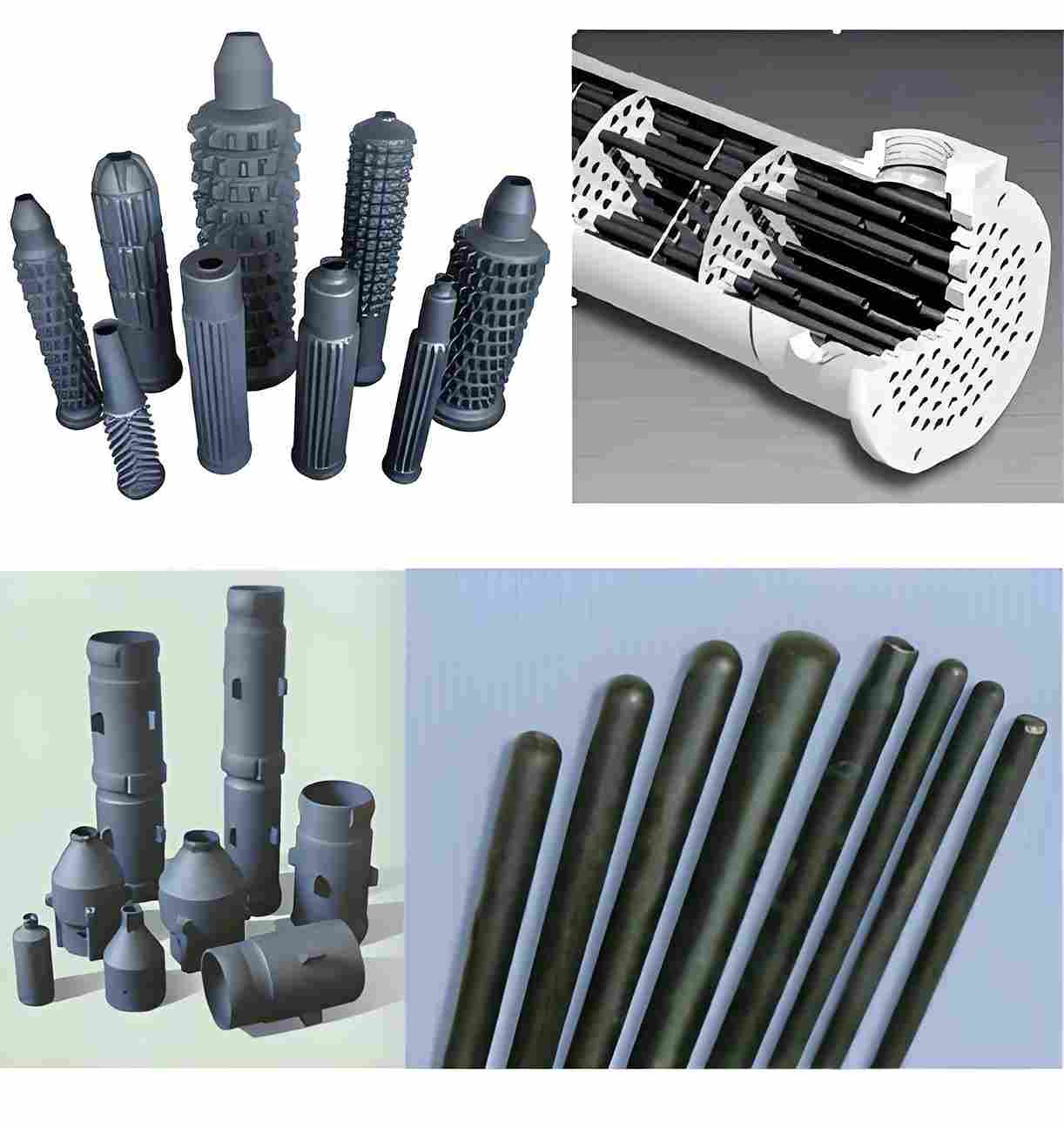
Large silicon carbide structural components are not “just bigger parts”. Once size increases, the real problems become distortion control, internal stress, machining allowance, joint design and consistency across batches. That is why material choice between reaction-bonded silicon carbide (RBSiC/SiSiC) and pressureless sintered silicon carbide (SSiC) is often the difference between stable multi-year service and recurring cracks, warpage or unexpected wear. This guide compares RBSiC vs SSiC specifically for large structural components such as beams, rollers and furnace tubes used in high-temperature and wear-intensive industries.
What Changes When SiC Components Get Large
For small ceramic parts, you can often “buy a grade and hope”. For large beams, long tubes and kiln rollers, scale amplifies every risk: thermal gradients during heating and cooling, bending deflection under load, fixture contact stress, and dimensional variation caused by sintering shrinkage. Large components also experience higher mechanical leverage, so minor microcracks or surface defects become failure initiators. The best material selection is the one that controls these risks while meeting temperature, load and lifetime requirements with predictable lead time.
RBSiC vs SSiC: The Two Routes and What They Mean for OEM Buyers
RBSiC (reaction-bonded SiC) is formed by infiltrating silicon into a porous SiC/C preform, creating a SiC-based structure that typically contains some residual free silicon. SSiC (pressureless sintered SiC) is densified through high-temperature sintering without silicon infiltration, creating a highly dense SiC structure with minimal residual phases. For large structural components, this difference affects maximum service temperature, corrosion behavior, stiffness stability and machining strategy.
Selection Criteria That Actually Matter in Large Structural Applications
1) Maximum Service Temperature and Thermal Safety Margin
If your component must survive continuous high-temperature exposure with minimal performance drift, SSiC usually offers a higher thermal safety margin. RBSiC performs extremely well in many kiln furniture and furnace structural roles, but residual free silicon can become a limiting factor in the most aggressive high-temperature or oxidizing conditions. For OEMs, the right question is not “What is the max temperature on paper?” but “What is the real continuous temperature plus hot spots plus thermal cycling, and what failure mode can we accept?”
2) Thermal Shock and Cycle Life
Large parts rarely fail at steady state. They fail during start-up, shutdown and unexpected thermal excursions. Both RBSiC and SSiC can offer strong thermal shock performance, but the better choice depends on heat flux, thickness, and how quickly your furnace ramps. In rapid cycling systems, uniformity and predictable microstructure matter as much as peak properties. If your operation has frequent thermal cycling, the material decision should be tied to cycle-life targets, not only temperature rating.
3) Corrosion, Slag, Alkali Vapors and Process Atmosphere
In kilns and furnaces, the atmosphere is often more damaging than the heat itself: alkali vapors, molten salts, corrosive flue gas and process condensates attack vulnerable phases and accelerate surface recession. When chemical exposure is severe, SSiC is usually favored for higher chemical stability, while RBSiC is widely used where the atmosphere is controlled and the cost-performance balance is critical. If your failures involve surface pitting, glassy deposits or chemical thinning, treat the atmosphere as the primary input to material selection.
4) Mechanical Load, Deflection and Long-Span Stability
For beams and long-span supports, stiffness stability and creep resistance drive part life. A “slightly softer” material becomes a big problem once span length and load increase, because deflection grows and fixtures shift. In many kiln furniture structures, RBSiC provides strong rigidity and stable geometry, which is why it is widely used for beams and structural elements. For extreme loads and higher safety margins, SSiC is often specified when the design is pushed to the limit.
5) Machining, Tolerance Strategy and Cost Control
Large SiC components are expensive to machine, and the cost jump is usually caused by tolerance strategy rather than material price. If your design demands tight tolerances across long lengths, you must plan machining allowances and inspection points early. RBSiC is often selected in large parts because it can deliver excellent structural performance with a cost-effective overall route, while SSiC is frequently selected when tighter property control and higher chemical/thermal margins justify the machining investment. The “right” choice is the one that meets tolerance with the least rework and scrap risk.
Typical Use Cases: Which Grade Wins in Real Projects
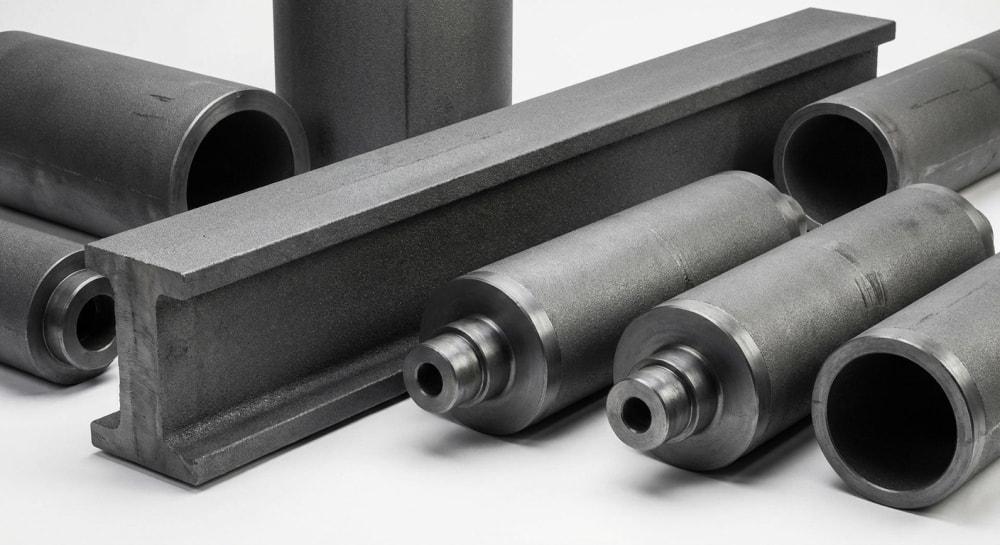
RBSiC is widely used for large kiln furniture and furnace structural components such as Silicon Carbide Beam and long rollers, where a strong cost-performance balance and dimensional stability are critical. SSiC is commonly selected when the environment is more corrosive, temperature is higher, or lifecycle targets are aggressive and failure costs are high. If your system includes corrosive gas handling or severe thermal gradients, it is often worth evaluating SSiC for the highest-risk components while keeping RBSiC for less critical structures.
Component Examples: Mapping Material Choice to Product Categories
For long furnace tubes and protective components, material selection should be tied to atmosphere and thermal cycling. If you are evaluating structural and transport parts, review Zirsec’s Silicon Carbide Tubes category for typical geometries and engineering support options. For kiln transport systems, rollers and beams are often the highest ROI upgrade because they directly affect throughput, straightness control and downtime. The fastest path is to confirm span length, load, operating temperature, atmosphere type and cycle frequency, then match the SiC route accordingly.
Engineering Case: Reducing Warpage and Unplanned Shutdowns in Large Parts
An OEM furnace line experienced recurring roller replacement due to runout growth and surface recession, causing product handling instability and downtime. Zirsec reviewed the operating temperature profile, atmosphere composition and ramp rates, then proposed an optimized RBSiC route for large structural rollers with controlled dimensional stability and machining allowance strategy. After implementation, roller change frequency dropped significantly and line uptime improved. For a second high-risk zone exposed to more aggressive chemistry, Zirsec recommended upgrading to SSiC to increase chemical margin, reducing risk of early-life surface damage.
Practical Comparison Table for Large Structural Components
| Selection Factor | RBSiC / SiSiC (Reaction-Bonded) | SSiC (Pressureless Sintered) | What OEM Buyers Should Optimize |
|---|---|---|---|
| Typical Strength Stability | High and cost-effective for large structures | High with stronger property margin | Choose based on failure cost and safety factor |
| Max Temperature Margin | Very good for many furnace/kiln structures | Higher margin for extreme conditions | Use real continuous temperature + hot spots |
| Chemical Resistance | Good to very good depending on atmosphere | Excellent for harsher chemistry | Let atmosphere drive the decision |
| Thermal Shock / Cycling | Very good in many kiln cycles | Very good with higher stability margin | Match to ramp rates and cycle targets |
| Cost for Large Parts | Typically more cost-efficient | Higher initial cost | Compare lifecycle cost, not unit price |
| Best Fit Components | Beams, rollers, kiln furniture structures | High-risk zones: harsh chemistry or higher temp | Hybrid spec often works best |
FAQ: RBSiC vs SSiC for Large Structural Parts
Is RBSiC good enough for kiln beams and rollers?
In many kiln furniture and structural transport applications, yes. RBSiC is widely used due to strong cost-performance and stable geometry for large parts, provided the atmosphere and temperature are within the project’s safety margin.
When should I specify SSiC for large components?
Specify SSiC when you face harsher chemical exposure, higher continuous temperature, or when the failure cost is high and you need the strongest stability margin.
Why do large SiC parts fail even when temperature is “within spec”?
Most failures come from thermal gradients, rapid ramping, chemical deposits and deflection under load. Large parts amplify these factors, so selection must consider cycle profile, atmosphere and span load, not only peak temperature.
Can Zirsec help choose between RBSiC and SSiC for my design?
Yes. Zirsec reviews your drawings and operating conditions, then recommends a process route and tolerance strategy to minimize distortion, machining rework and early failures.
Do you support small-batch sampling for large structural components?
Yes. Zirsec supports small-batch sampling and provides engineering feedback early, so you validate performance before committing to larger production volumes.
Contact Zirsec to Specify the Right SiC Route for Large Components
If you are selecting silicon carbide for large structural components and want a predictable outcome instead of expensive iteration, contact Zirsec with your drawings and operating conditions. We will recommend the right SiC process route, tolerance strategy and inspection focus so you can lock performance, lead time and lifecycle cost from the start.