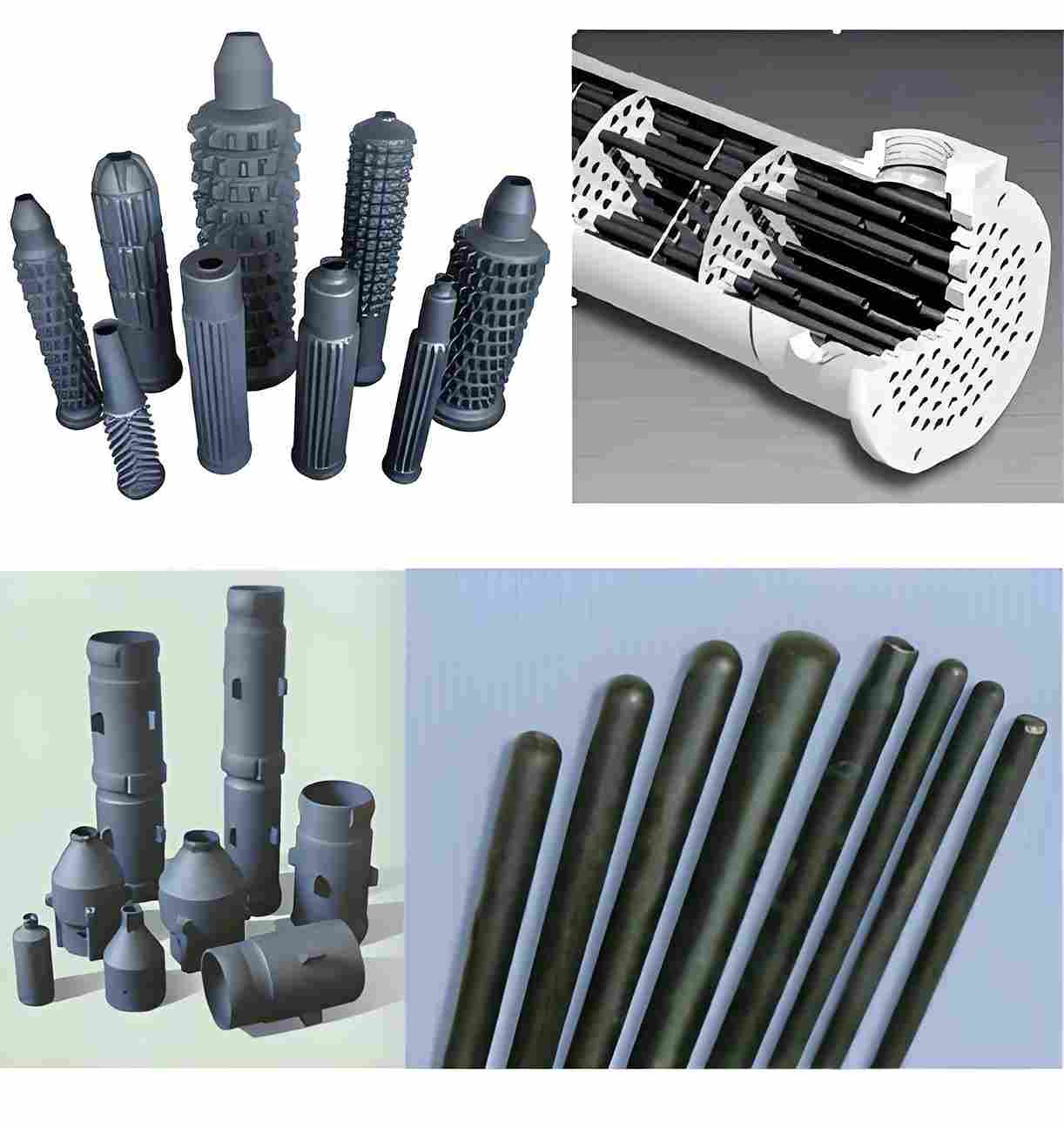
Crucible selection in aluminum and copper foundries directly affects melt quality, operating cost, furnace uptime and safety. While graphite crucibles are widely used due to their thermal conductivity and low initial cost, many foundries face oxidation loss, short service life and contamination risks. This is why silicon carbide crucibles are increasingly specified for medium to high-duty melting operations where stability and lifecycle cost matter more than purchase price.
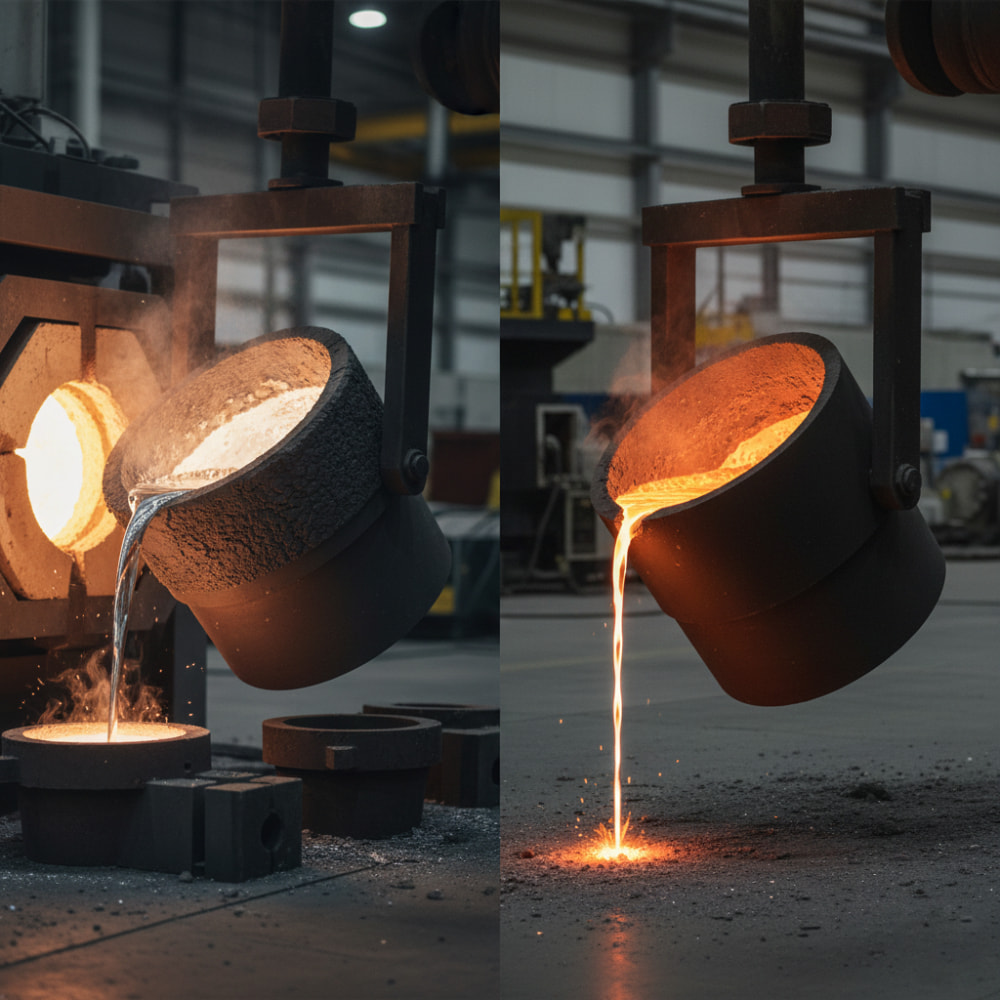
What Foundries Really Expect from a Crucible
A crucible in aluminum or copper service must withstand repeated thermal cycling, resist oxidation, maintain structural integrity under molten metal load and avoid introducing impurities into the melt. Failure usually does not happen as a sudden crack but as gradual oxidation thinning, deformation or contamination that compromises casting quality and forces unplanned replacement.
Graphite Crucibles: Advantages and Hidden Limitations
Graphite crucibles heat quickly and are easy to machine, which makes them popular for small furnaces and short campaigns. However, graphite oxidizes progressively at high temperature, especially in oxidizing furnace atmospheres. As oxidation advances, wall thickness reduces, mechanical strength drops and service life becomes unpredictable. In aluminum and copper melting, graphite degradation can also introduce carbon-related contamination, affecting alloy consistency.
Why Silicon Carbide Crucibles Perform Differently in Foundry Service
Oxidation Resistance and Structural Stability
Silicon carbide crucibles exhibit far better oxidation resistance than graphite under comparable operating conditions. This slows material loss, preserves wall thickness and maintains load-bearing strength throughout repeated melt cycles, which is critical for copper and high-temperature aluminum alloys.
Longer Service Life Under Repeated Thermal Cycling
SiC crucibles are designed to tolerate frequent heating and cooling without the progressive thinning seen in graphite. This stability translates directly into longer campaign length and fewer emergency replacements.
Lower Risk of Melt Contamination
Unlike graphite, silicon carbide does not release carbon into the melt during normal operation. This is especially important for copper alloys and aluminum grades with tight composition control requirements.
When Foundries Should Specify Silicon Carbide Over Graphite
Silicon carbide crucibles are typically preferred in continuous or semi-continuous production, higher temperature copper melting, oxidizing furnace atmospheres and operations where crucible replacement downtime carries a high cost. If your foundry tracks crucible life per ton of metal melted rather than cost per piece, SiC usually delivers a better overall result.
How Zirsec Supports Foundry Crucible Selection
Zirsec manufactures industrial-grade Silicon Carbide Crucibles with controlled material composition and consistent wall thickness to support stable melting operations. With flexible batch sizes and fast response for standard dimensions, Zirsec helps foundries balance inventory, performance and delivery timelines without overstocking.
Engineering Case: Reducing Crucible Replacement in Copper Melting
A copper foundry experienced frequent graphite crucible oxidation, leading to deformation and inconsistent melt quality after limited cycles. Zirsec supported a switch to silicon carbide crucibles matched to the existing furnace geometry. The result was a significant increase in service life, improved melt consistency and reduced unplanned downtime, allowing the foundry to standardize maintenance intervals and reduce total melting cost.
Technical Comparison: Silicon Carbide vs Graphite Crucibles
| Performance Factor | Silicon Carbide Crucible | Graphite Crucible | Foundry Impact |
|---|---|---|---|
| Oxidation Resistance | High | Low to moderate | Determines usable service life |
| Thermal Shock Resistance | Good | Excellent | Affects start-stop operation |
| Structural Strength at High Temp | High | Decreases with oxidation | Safety and deformation risk |
| Melt Contamination Risk | Low | Moderate | Alloy quality control |
| Typical Lifecycle Cost | Lower over time | Lower upfront, higher replacement cost | Total cost per ton melted |
FAQ: Silicon Carbide vs Graphite Crucibles
Are silicon carbide crucibles suitable for aluminum melting?
Yes. SiC crucibles are widely used for aluminum melting, especially where longer service life and oxidation resistance are required.
Do SiC crucibles require special furnace modifications?
No major modifications are usually required. Crucibles are selected to match existing furnace dimensions and operating conditions.
Why do graphite crucibles fail faster in oxidizing atmospheres?
Graphite reacts with oxygen at high temperature, causing gradual material loss and strength reduction.
Is silicon carbide more expensive than graphite?
Initial unit cost is often higher, but lifecycle cost is typically lower due to longer service life and reduced downtime.
What information is needed to select the right SiC crucible?
Furnace type, melting temperature, metal type, crucible dimensions and expected production cycle help ensure proper selection.
Contact Zirsec for Foundry-Grade Silicon Carbide Crucibles
If you are evaluating silicon carbide vs graphite crucibles for aluminum or copper melting, contact Zirsec with your furnace details and operating conditions. Our engineering team will help you select a crucible that improves service life, melt stability and overall foundry efficiency.