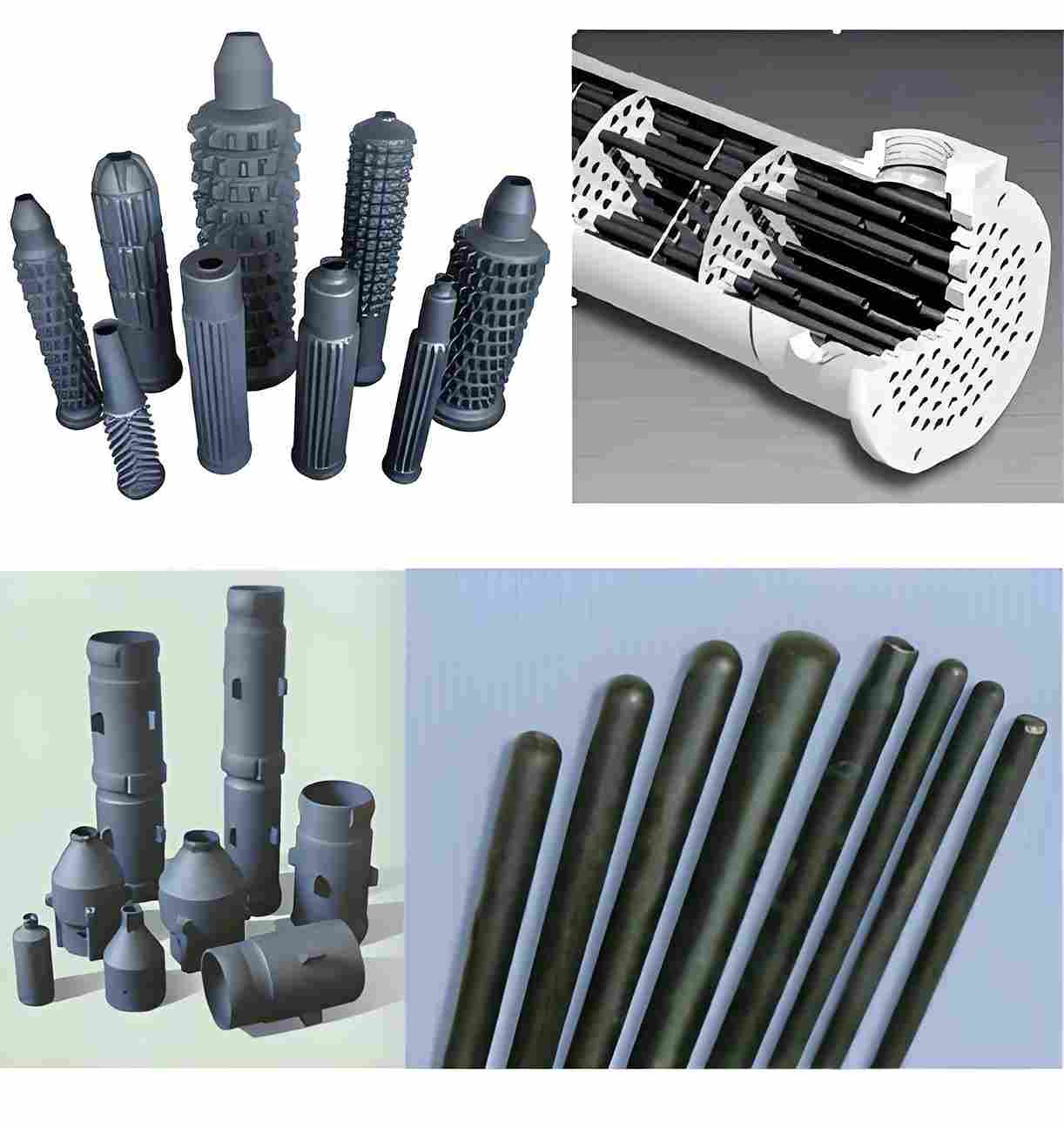
When you need a flawless surface on a silicon carbide (SiC) component, the choice of grinding wheel, parameters, and post‑process finishing are the decisive factors that separate a reliable part from a costly failure.
Why Proper Grinding Matters for SiC
SiC ceramics are prized for their extreme hardness (9–9.5 on the Mohs scale) and high‑temperature stability, but these same properties make them unforgiving during machining. An inappropriate abrasive can introduce micro‑cracks, excessive heat, or dimensional drift that compromises the part’s strength, wear resistance, or sealing capability. In industries such as chemical processing, metallurgy, and renewable energy, a single defect can halt production for days and result in thousands of dollars of lost revenue.
Material Characteristics That Drive the Grinding Strategy
- Hardness and Toughness: SiC’s high hardness demands super‑abrasive grains (diamond or cubic boron nitride) to achieve material removal without excessive wheel wear.
- Thermal Conductivity: With a conductivity of 120–200 W/m·K, SiC dissipates heat quickly, yet localized temperatures at the wheel‑workpiece interface can still exceed 800 °C if cooling is inadequate.
- Thermal Shock Resistance: Rapid temperature changes can cause spalling; therefore, controlled coolant flow and low grinding speeds are essential.
- Brittleness: SiC fragments rather than deforms, so low feed rates and gentle wheel engagement minimize crack propagation.
Choosing the Right Grinding Wheel
The wheel is the heart of the process. Below is a decision matrix that we use at ZIRSEC for every custom SiC order:
| Application | Wheel Type | Abrasive Grain | Bonding Material | Typical Grit |
|---|---|---|---|---|
| Coarse Stock Removal (≥0.5 mm) | Resin Bonded | Diamond (Coated) | Phenolic | 30–60 |
| Medium Finishing (0.1–0.5 mm) | Vitrified Bonded | Diamond (Electroplated) | Vitreous | 80–120 |
| Fine Polishing (<0.1 mm) | Porous Alumina | Diamond (Ultra‑fine) | Alumina Matrix | 180–300 |
For high‑precision sealing rings or furnace tubes, we often start with a 30 µm diamond‐coated resin wheel for stock removal, then switch to a vitrified 80 µm wheel for geometry refinement, and finish with a porous alumina wheel at 180 µm for sub‑micron surface roughness.
Grinding Parameters and Process Control
Even with the perfect wheel, the process variables determine the final outcome. The following table summarizes the parameters we recommend for typical SiC parts (diameter 10‑200 mm):
| Parameter | Recommended Range | Impact |
|---|---|---|
| Surface Speed (Vs) | 10–30 m/s | Higher speeds increase material removal but raise wheel temperature. |
| Feed Rate (F) | 0.02–0.1 mm/rev | Low feed reduces micro‑cracking. |
| Depth of Cut (DOC) | 0.05–0.2 mm (coarse); ≤0.05 mm (finish) | Controls chip size and heat generation. |
| Coolant Type | High‑pressure water‑based emulsion ( ≥150 psi ) | Removes heat, flushes debris, prevents wheel loading. |
| Wheel Dressing Frequency | Every 10–15 min (coarse) or after 1 mm removal | Maintains consistent geometry and prevents glazing. |
We monitor wheel temperature with a non‑contact infrared sensor. If the temperature approaches 350 °C, we increase coolant flow or reduce speed immediately.
Finishing Techniques for SiC
Finishing is more than polishing; it is about achieving the target surface roughness (Ra) and edge integrity required by the end‑use. The most common finishing routes are:
- Micro‑grinding: Using ultra‑fine diamond wheels (200–400 µm grit) with a minimal depth of cut (<0.02 mm) to reach Ra 0.2–0.4 µm.
- Chemical‑Mechanical Polishing (CMP): A slurry of colloidal silica combined with a low‑abrasion pad can lower Ra below 0.1 µm for optical‑grade components.
- Laser Texturing: For applications that demand a controlled, non‑contact surface (e.g., anti‑adhesion), a short‑pulse fiber laser creates micro‑patterns without mechanical stress.
We often pair micro‑grinding with a final CMP step when the component will operate in a corrosive environment; the polishing removes residual diamond particles that could act as initiation sites for corrosion.
Common Defects and How to Prevent Them
Even seasoned shops encounter recurring issues. Below is a quick checklist that our engineers use on every job:
- Wheel Loading
- Symptoms: Increased vibration, reduced stock removal.
Prevention: Use high‑flow coolant and dress the wheel frequently. - Thermal Cracking
- Symptoms: Visible hairline cracks after grinding.
Prevention: Keep wheel speed below 30 m/s, maintain coolant temperature <25 °C. - Edge Chipping
- Symptoms: Chips on part corners or flanges.
Prevention: Reduce feed rate near edges, employ a tapered wheel for gentle entry. - Surface Roughness Exceeding Spec
- Symptoms: Ra measured >0.5 µm when <0.3 µm required.
Prevention: Add an extra polishing pass with a finer grit wheel or switch to CMP.
Quality Inspection and Acceptance Criteria
After grinding and finishing, we subject each part to a three‑stage inspection:
- Dimensional Check: Coordinate measuring machine (CMM) with ±0.05 mm tolerance for standard parts; tighter ±0.02 mm for critical sealing surfaces.
- Surface Roughness Survey: Laser profilometer; Ra must meet the drawing specification (typically 0.1–0.4 µm).
- Non‑Destructive Evaluation: Ultrasonic pulse‑echo to detect subsurface cracks and a high‑resolution infrared thermography scan for residual stress hotspots.
We provide a full inspection report, including a certificate of conformity, to streamline your internal QA process.
Cost and Lead‑Time Considerations
The grinding and finishing stage accounts for roughly 15‑25 % of the total SiC part cost, depending on geometry complexity and tolerance. Typical lead‑times at ZIRSEC are:
- Standard stock removal (≤5 mm material) – 5 days.
- Full‑cycle grinding & finishing for custom tube or ring – 2‑3 weeks.
- Ultra‑fine polishing (Ra < 0.2 µm) – additional 4‑7 days.
Our in‑house CNC grinding centers and a dedicated finishing lab enable rapid iteration, especially for small batch orders (as low as 20 pieces).
Case Study: High‑Temperature Furnace Tube
A European furnace manufacturer required a 150 mm‑diameter, 2 m‑long SiC tube capable of withstanding 1550 °C and aggressive alumina‑based slag. Their previous supplier delivered a tube with micro‑cracks caused by excessive wheel speed during rough grinding, leading to a catastrophic failure after 200 hours of operation.
We intervened with a two‑stage process:
- Stage 1 – Coarse Removal: 30 µm diamond‑coated resin wheel, Vs = 18 m/s, DOC = 0.15 mm, water‑based coolant at 20 °C.
- Result: Bulk material removed safely; no detectable thermal shock.
- Stage 2 – Precision Finishing: 120 µm vitrified wheel, Vs = 12 m/s, DOC = 0.04 mm, followed by a CMP pass with colloidal silica slurry.
- Result: Final Ra = 0.18 µm, dimensional tolerance ±0.05 mm, zero crack count in ultrasonic inspection.
The finished tube passed a 400‑hour soak test at 1550 °C without any degradation. The customer reported a 30 % reduction in downtime and a 12 % cost saving compared with their prior supplier. For more details on our SiC tube capabilities, see our Silicon Carbide Tubes page.
Quick FAQ
- Can I use conventional aluminum oxide wheels on SiC?
- No. Al₂O₃ wheels wear out within minutes and generate excessive heat, leading to surface damage.
- Is dry grinding ever acceptable?
- Only for very short, low‑energy passes on small coupons; otherwise coolant is mandatory.
- How do I verify the surface finish on a sealed ring?
- Measure Ra with a laser profilometer and perform a leak test at the intended operating pressure.
- What is the typical scrap rate for SiC grinding?
- With proper parameters, scrap stays below 2 %; poor temperature control can push it above 10 %.
Next Steps with ZIRSEC
If you are ready to move from prototype to production, our engineering team will:
- Review your CAD drawings and specify the optimal wheel‑grit‑bond combo.
- Provide a detailed process sheet, including cycle times and cost estimate.
- Issue a sample for your in‑house validation within 10 days (stock wheels) or 18 days (custom wheels).
- Coordinate shipment directly to your manufacturing line, complete with inspection certificates.
Contact us at info@zirsec.com or fill out the inquiry form on our website. Let’s eliminate grinding‑related failures and get your silicon carbide parts performing at their theoretical best.