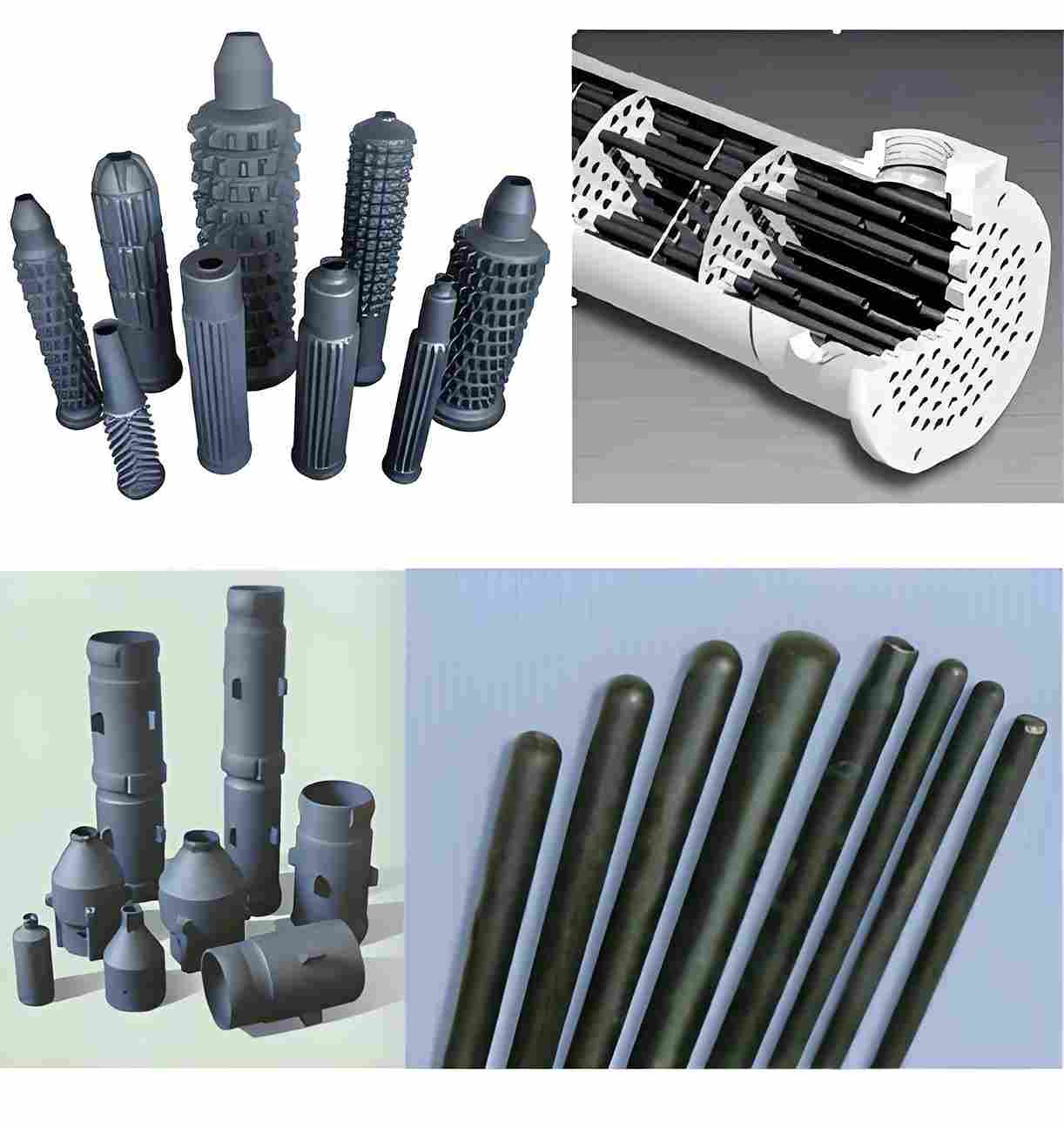
When a non‑ferrous foundry needs a container that can survive 1,600 °C, resist molten copper alloys, and keep dimensional stability for thousands of heating cycles, silicon carbide (SiC) crucibles become the default choice.
Understanding Silicon Carbide Crucibles
SiC is a covalent ceramic composed of over 98% silicon and carbon. Its crystal lattice gives it a unique blend of high thermal conductivity (up to 120 W/m·K), low thermal expansion (≈4.5 ×10⁻⁶ /K), and compressive strength that exceeds 150 MPa at room temperature. These properties translate directly into a crucible that heats uniformly, resists thermal shock, and maintains shape under the weight of heavy molten brass or aluminum.
Key Material Properties
- Maximum Service Temperature: 1,350‑1,600 °C depending on grade and wall thickness.
- Oxidation Resistance: Forms a protective SiO₂ layer in oxidizing atmospheres, allowing long‑term exposure to air.
- Chemical Inertness: Minimal interaction with Cu‑Zn, Al‑Si, and Mg‑based alloys; corrosion rates <0.01 mm/1000 h.
- Mechanical Toughness: Fracture toughness 3‑4 MPa·m½, which is sufficient for most casting loads when proper handling procedures are followed.
Standard Dimensions and Custom Options
Most foundries start with a catalog of standard sizes: 100 mm × 200 mm, 150 mm × 300 mm, and 200 mm × 400 mm (inner × outer diameter). For niche alloys or special furnace geometries, ZIRSEC can machine custom lengths from 50 mm up to 1,200 mm, maintaining a wall‑thickness tolerance of ±0.2 mm (industrial) or ±0.1 mm (precision).
Why Non‑Ferrous Foundries Prefer SiC Crucibles
Non‑ferrous metals melt at lower temperatures than steel but are far more aggressive chemically. Molten aluminum, for example, dissolves most oxide layers and attacks Al₂O₃ crucibles within hours. SiC’s combination of high-temperature strength and chemical compatibility makes it the only material that can meet the dual demands of thermal performance and alloy‑specific resistance without frequent replacement.
Case Study: A German copper‑alloy casting shop reported a 40% reduction in downtime after switching from graphite to SiC crucibles supplied by ZIRSEC. The change eliminated weekly crucible breakage and saved roughly $12,000 per year in scrap and labor.
Selecting the Right SiC Crucible
1. Design Criteria
Start by mapping the furnace profile: maximum temperature, heating rate, and atmosphere (air, inert gas, or vacuum). Next, define the alloy volume and desired melt‑to‑crucible ratio (typically 1:1.5 for optimal heat transfer). Finally, consider any downstream processing—whether the crucible will be directly poured or transferred to a ladle.
2. Temperature Rating
Choose a grade that exceeds the peak melt temperature by at least 150 °C. For aluminum‑copper alloys (~660‑720 °C) a 1,200 °C SiC crucible offers ample safety margin, while copper‑zinc alloys (~1,050 °C) require a 1,500 °C grade.
3. Chemical Compatibility
Check the alloy’s slag composition. If the melt contains high silica or phosphorus, verify that the SiC surface will not be etched. ZIRSEC’s surface‑coated SiC (a thin SiO₂ glaze) can be specified for especially aggressive slags.
4. Mechanical Strength & Tolerance
For high‑gravity casting, the crucible must support its own weight plus the hydrostatic pressure of the melt (≈1 MPa for a 300 mm tall aluminum bath). Verify compressive strength ≥130 MPa and radial tolerance within ±0.2 mm to prevent uneven heating.
5. Standard vs. Custom
Standard crucibles are stocked and can ship within 24 hours from ZIRSEC’s Shanghai warehouse. Custom orders, which include unique diameters, reinforced rims, or integrated thermocouple ports, typically require 4‑6 weeks from CAD approval to shipment.
Common Failure Modes and How to Prevent Them
- Thermal Shock Cracking: Rapid temperature changes (>300 °C/min) can induce micro‑cracks. Use a controlled ramp‑up, or ask ZIRSEC for a pre‑stressed design that tolerates faster heating.
- Wear from Molten Metal Flow: High‑velocity streams erode the inner wall. Incorporate a 2‑3 mm thicker wall or a sacrificial inner liner.
- Oxidation Spalling: In oxidizing atmospheres above 1,500 °C the SiO₂ layer can flake. Maintaining a protective inert gas blanket extends life by 30‑40%.
- Mechanical Impact: Dropping a crucible onto a steel plate can cause catastrophic failure. Use handling trays with silicone pads and train staff on proper lifting techniques.
Cost‑vs‑Lifetime Analysis
Although the upfront price of a SiC crucible ($120‑$350 per unit) exceeds that of a graphite or alumina alternative, the life‑cycle cost tells a different story. A typical SiC crucible in a copper‑alloy line lasts 10‑12 cycles (≈2 years), whereas graphite must be replaced every 3‑4 cycles. Assuming a replacement cost of $45 for graphite and $250 for SiC, the total 5‑year expense for a 3‑crucible line is:
- Graphite: 5 years × (5 replacements × $45) = $1,125
- SiC: 5 years × (1 replacement × $250) = $250
When you factor in downtime, scrap loss, and labor, the net savings easily exceed 60%.
How ZIRSEC Supports Your Non‑Ferrous Foundry
ZIRSEC combines 20 years of SiC ceramic expertise with a full B2B service chain. Our engineering team works from your CAD drawing to produce a detailed manufacturing plan, runs finite‑element thermal simulations, and issues a full material‑test certificate (COA, MSDS) before production. For urgent projects we keep a stock of standard crucibles at our European hub, guaranteeing 24‑hour dispatch.
Visit our product overview for a complete list of SiC solutions, including silicon carbide tubes that share the same high‑temperature credentials.
Quick Summary
- SiC crucibles handle 1,350‑1,600 °C, resist copper‑based slags, and have low thermal expansion.
- Choose wall thickness and tolerance based on melt volume and casting pressure.
- Prevent thermal shock with controlled heating ramps; use inert gas blankets to limit oxidation.
- Standard sizes ship within 24 h; custom designs need 4‑6 weeks.
- ZIRSEC offers engineering support, rapid delivery, and full documentation for export compliance.
Frequently Asked Questions
- What is the typical lifespan of a SiC crucible in an aluminum melt?
- Approximately 10‑12 casting cycles under normal ramp rates; up to 20 cycles with inert gas protection.
- Can I retrofit an existing graphite crucible mount to accept a SiC crucible?
- Most mounts are compatible, but verify the inner diameter and allow a 0.5 mm clearance for thermal expansion.
- Is there a size limit for custom SiC crucibles?
- ZIRSEC can produce lengths up to 1.2 m and diameters up to 500 mm, subject to shipping constraints.
- Do you provide thermocouple integration?
- Yes, we can mill a 6‑mm port and weld a Type K sheath directly into the crucible wall.
- How do you ensure quality for export to the EU and US?
- All parts are inspected under ISO 9001, accompanied by a COA, MSDS, and, when required, a RoHS declaration.
Next Steps
Download our detailed specification sheet, upload your CAD file through the ZIRSEC portal, and request a free thermal‑stress analysis. Our sales engineers will reply within one business day, outline pricing, and confirm lead‑time. The right SiC crucible can shave hours off your melt cycle and protect your upstream equipment—make the switch today.