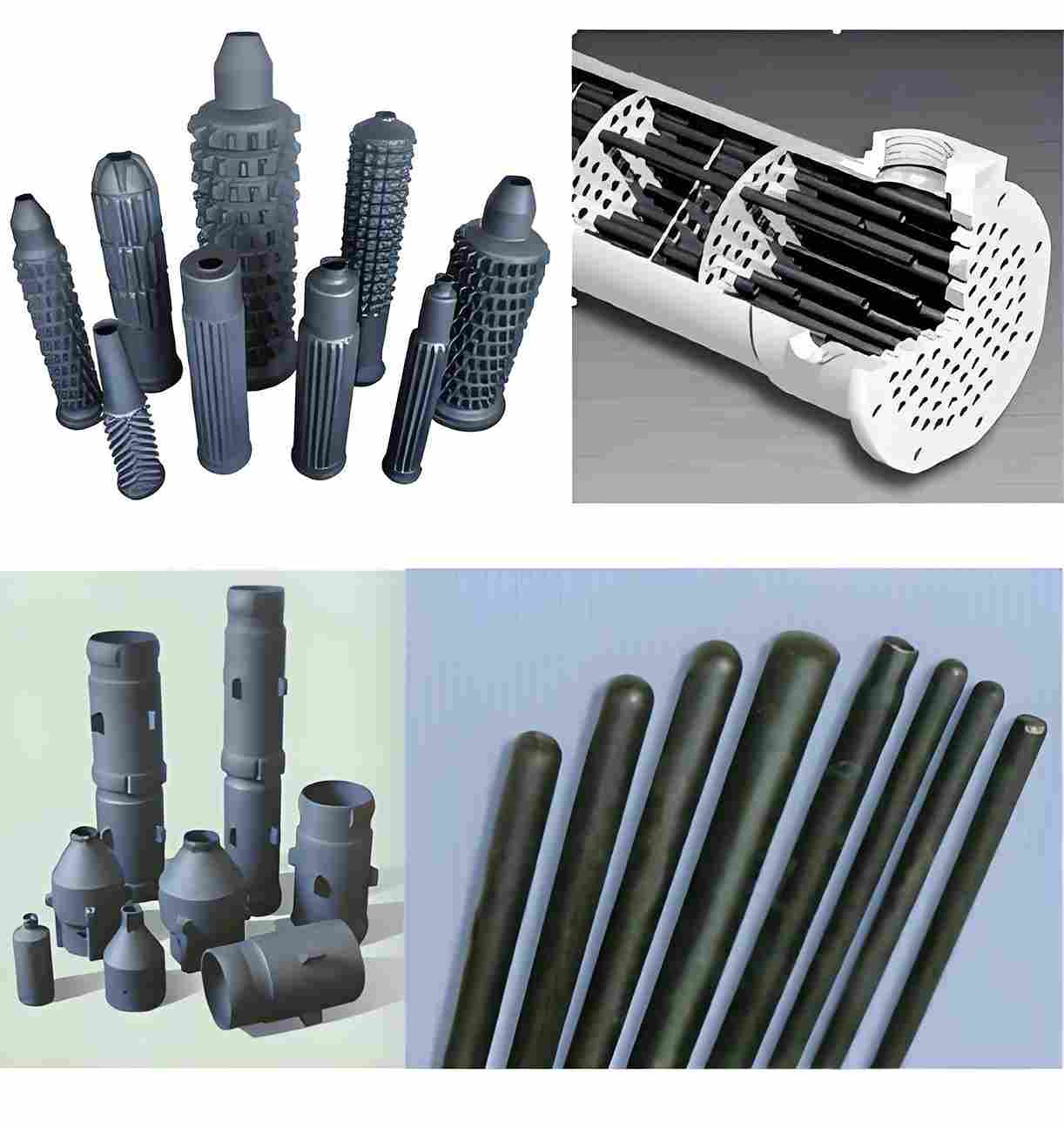
Thermal shock cracking is the most common failure mode for silicon carbide (SiC) tubes and plates, especially when they are subjected to rapid temperature changes during start‑up, shut‑down, or sudden process excursions. If you have ever faced unexpected downtime because a SiC component fractured, the following guide will give you the exact steps to eliminate the problem.
Quick Summary
- Identify the temperature gradient that exceeds 3 °C/mm – the typical threshold for SiC.
- Use graded material transitions or pre‑heat zones to keep gradients below 1.5 °C/mm.
- Choose SiC grades with low thermal expansion coefficient (4‑5 ×10⁻⁶ K⁻¹) and high Young’s modulus (>410 GPa).
- Implement proper edge‑finishing and stress‑relief annealing during manufacturing.
- Follow ZIRSEC’s recommended installation sequence to avoid uneven heating.
Understanding Thermal Shock in SiC
Silicon carbide offers unmatched hardness, corrosion resistance, and high‑temperature strength, but its very low thermal conductivity (≈ 120 W/m·K) makes it vulnerable when the surface temperature spikes faster than the core can follow. The resulting tensile stress on the cooled side can exceed the material’s fracture strength (≈ 130 MPa for dense SiC), producing a crack that propagates instantly.
Two physical parameters dominate the phenomenon:
- Temperature Gradient (ΔT/Δx) – the rate of temperature change per unit thickness.
- Thermal Expansion Mismatch – differences between SiC and any adjacent metal or ceramic layers.
When either parameter crosses a critical value, micro‑cracks nucleate at surface flaws, edge chips, or machining scratches.
Root Causes of Cracks
1. Inadequate Pre‑heat/Cool‑down Procedures
Many plant operators treat a SiC tube like a metal pipe, turning the furnace on at full power. The outer wall can reach 1500 °C in seconds while the core stays below 500 °C, creating a gradient of > 4 °C/mm in a 10 mm wall thickness.
2. Improper Material Selection
Not all SiC grades are created equal. High‑purity (> 98 % SiC) grades have lower residual porosity and better fracture toughness (≈ 3.5 MPa·m½) than low‑cost grades, which can fracture at gradients as low as 1.5 °C/mm.
3. Edge Damage During Machining
Grinding or laser cutting introduces micro‑cracks at the edge. If the edge radius is less than 0.5 mm, stress concentration factors can be > 3, making those points the first to fail.
4. Thermal Mismatch With Mounting Hardware
Stainless steel or Inconel flanges have a thermal expansion coefficient around 16 ×10⁻⁶ K⁻¹, three times that of SiC. If the flange is bolted tightly without an elastic intermediary, the SiC plate will experience bending stresses during heating.
5. Rapid Gas Flow Changes
Sudden increase in high‑temperature gas velocity can cause localized convective cooling on one side of the tube, effectively creating a hot‑cold differential that mimics a rapid temperature gradient.
Design Strategies to Resist Thermal Shock
Material Grading
Use a graded SiC composite where the inner layer contains a higher SiC content (≥ 99 %) and the outer layer includes a small fraction of alumina (≈ 5 %). The alumina raises the thermal conductivity modestly, easing the gradient.
Geometric Optimization
Increase wall thickness only where mechanical load requires it. For a tube carrying 10 bar pressure, a 6 mm wall is sufficient; adding more thickness merely worsens the thermal gradient.
Edge Radius Design
Specifying a minimum edge radius of 1 mm during CAD reduces stress concentration dramatically. In practice, ZIRSEC’s CNC grinding stations can achieve a 0.8 mm radius with a surface roughness Ra ≤ 0.8 µm.
Integrated Heat‑Exchange Zones
In furnace designs, install a pre‑heat zone that ramps temperature at ≤ 200 °C/min before the SiC segment enters the high‑temperature zone. This keeps ΔT/Δx under the safe 1.5 °C/mm threshold.
Use of Interlayers
Bond a thin (≈ 0.3 mm) compliant SiC‑based sealant or a high‑temperature ceramic fiber blanket between the SiC plate and metallic supports. The interlayer absorbs differential expansion without transmitting large shear forces.
Manufacturing Best Practices
Raw Material Selection
Order SiC powders with a purity of 98 % or higher and particle size distribution D90 < 5 µm. ZIRSEC sources its powder from accredited German suppliers, guaranteeing consistent thermal expansion values.
Hot‑Isostatic Pressing (HIP)
HIP at 2100 °C and 150 MPa for 2 h eliminates residual porosity, raising fracture toughness by up to 20 % compared to pressure‑less sintering.
Stress‑Relief Annealing
After grinding, perform a low‑temperature anneal (1150 °C, 4 h, furnace cooling) to allow micro‑cracks to close. This step reduces the probability of crack initiation by ~30 %.
Surface Finishing
Polish the outer surface to a finish of Ra ≤ 1 µm. A smoother surface reduces local heat‑transfer peaks caused by surface roughness, keeping temperature gradients more uniform.
Quality Inspection
Utilize ultrasonic C‑scan and indexed microscopy to detect sub‑surface defects larger than 50 µm. Any component failing this test is rejected before shipment.
Installation & Operation Guidelines
Pre‑Installation Checks
- Verify that the mounting flange material matches the recommended thermal expansion coefficient (e.g., Inconel 625 with a compliant ceramic gasket).
- Inspect all edges for chips; re‑grind if the radius is below 0.8 mm.
- Confirm that the supplied certificate of analysis (COA) matches the batch reference number.
Start‑Up Procedure
- Ramp furnace temperature at ≤ 150 °C/min until 800 °C is reached.
- Hold for 30 min to allow temperature homogenization across the SiC wall.
- Increase to the target temperature (typically 1350‑1600 °C) in increments of 100 °C, monitoring the gradient with thermocouple arrays placed at inlet, mid‑section, and outlet.
Operational Monitoring
Install a dual‑shielded Type‑K thermocouple at the outer surface and a Type‑S at the inner surface. Use the difference to calculate real‑time ΔT/Δx. If the gradient exceeds 2 °C/mm, trigger an automatic ramp‑down.
Shutdown Procedure
Cool the furnace at ≤ 100 °C/min. Introduce a low‑flow inert gas (e.g., nitrogen) to prevent hot spots caused by rapid convective cooling on one side.
Maintenance
Perform visual inspection after each thermal cycle. Look for hairline cracks near edge radii. Replace any component that shows signs of crack propagation – even a 0.2 mm crack can double the failure risk.
Case Study: How ZIRSEC Helped a European Furnace Supplier Prevent Cracks
Background: A German furnace manufacturer reported a 12 % scrap rate on SiC plates used in a 1500 °C alumina‑kiln. The root cause was identified as rapid temperature spikes during batch changeovers.
Solution:
- ZIRSEC supplied graded SiC plates (98 % SiC core, 5 % Al₂O₃ outer layer) with a 1 mm edge radius.
- Implemented a 2‑stage pre‑heat zone and provided a custom stainless‑steel‑to‑SiC interlayer made of high‑temperature ceramic fiber.
- Performed HIP on all plates and added a 4‑hour stress‑relief anneal.
- Delivered a detailed start‑up protocol that limited ΔT/Δx to 1.2 °C/mm.
Result: Scrap rate dropped from 12 % to <0.5 %, and the supplier shortened lead time from 9 weeks to 4 weeks thanks to ZIRSEC’s 24‑hour inventory of standard‑size plates. The client highlighted the partnership in a press release, citing “reliable performance under extreme thermal cycling.”
For similar products, see our Silicon Carbide Tubes page.
Frequently Asked Questions
- What is the safest temperature ramp rate for a 10 mm SiC tube?
- Keep the ramp ≤ 150 °C/min until 800 °C, then ≤ 100 °C/min thereafter. This keeps the gradient under 1.5 °C/mm.
- Can I use stainless steel flanges directly with SiC plates?
- Only if you insert a compliant ceramic fiber gasket or a thin SiC‑based sealant to absorb the expansion mismatch.
- Is HIP necessary for all SiC components?
- HIP is highly recommended for critical load‑bearing parts. For standard‑size, low‑stress plates, pressure‑less sintering can be acceptable if the supplier provides a full defect‑scan report.
- What inspection methods catch sub‑surface cracks?
- Ultrasonic C‑scan, phased‑array ultrasonic testing, and high‑resolution X‑ray computed tomography are the industry standards.
Take Action – Protect Your Investment Today
Thermal shock is preventable when design, material, and operational practices align. Contact ZIRSEC’s engineering team now to receive a free thermal‑gradient analysis for your next SiC tube or plate purchase. We will review your process data, suggest the optimal SiC grade, and provide a customized start‑up protocol that guarantees crack‑free performance.
Email: info@zirsec.com | Phone: +86‑10‑xxxx‑xxxx