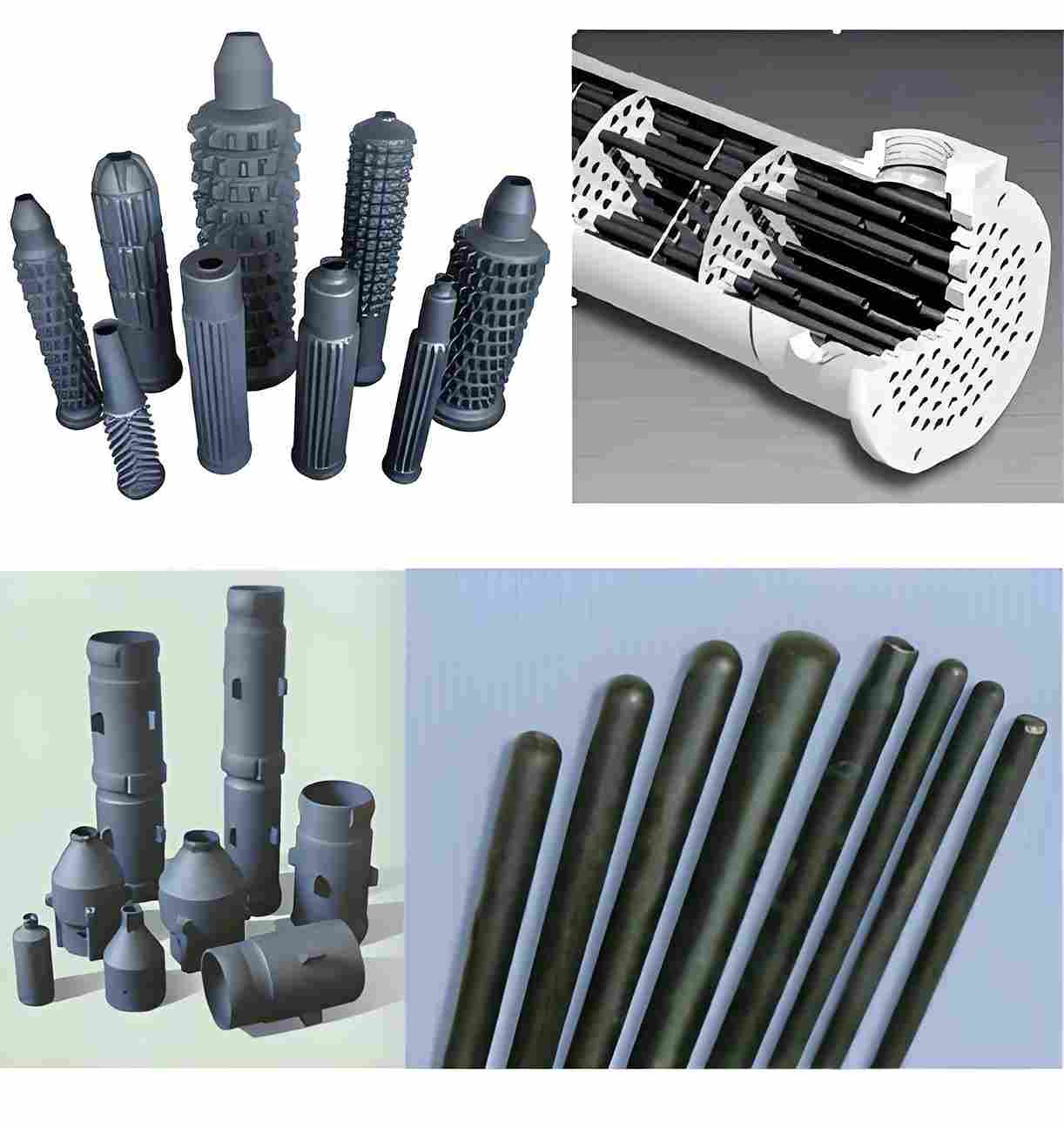
When a SiC nozzle or burner tip starts losing material, the whole process line can shut down within hours, costing thousands of dollars.
Quick Summary (FAQ)
- What causes erosion in SiC nozzles? High‑velocity abrasive particles, thermal cycling, chemical attack, and improper mounting.
- How can I detect early‑stage erosion? Visual inspection, laser profilometry, and ultrasonic thickness mapping.
- Is replacement the only solution? Not always – surface re‑coating, flow redesign, and material upgrades can extend service life.
- What role does a supplier play? Accurate tolerances, material certification, and engineering support reduce premature wear.
Why Erosion Matters for Your Process
Silicon carbide (SiC) offers unparalleled hardness, thermal conductivity, and oxidation resistance, which is why it dominates high‑temperature burners, glass‑forming furnaces, and petrochemical spray systems. Yet even the toughest ceramic can lose material when the design, installation, or operating conditions push it beyond its limits. Erosion translates directly into:
- Reduced flow precision – a 0.2 mm loss in orifice diameter can change flame shape by 15 %.
- Increased heat loss – exposed ceramic walls radiate more, raising fuel consumption.
- Unexpected shutdowns – a critical tip fracture triggers safety interlocks.
- Higher maintenance budgets – frequent part swaps inflate OPEX.
Typical Erosion Scenarios
1. Particle‑Driven Wear
In processes that handle particulate‑laden streams (e.g., glass‑making, mineral slurry), high‑velocity particles strike the nozzle surface at angles between 30°‑70°. Over time, micro‑chipping creates a roughened profile that accelerates material loss.
2. Thermal‑Shock Cracking
Sudden temperature jumps, such as rapid startup or quench cycles, generate tensile stresses that exceed SiC’s fracture toughness. Cracks propagate along grain boundaries, providing pathways for erosion.
3. Chemical Corrosion
Although SiC resists most oxidizing environments, aggressive halides (Cl‑, F‑) or molten salts can attack the glassy phase, especially at >1500 °C.
4. Mechanical Mis‑alignment
Improper mounting introduces point loads that concentrate stress on the nozzle lip. Even a 0.1 mm mis‑alignment can increase wear rates threefold.
Step‑by‑Step Diagnosis Procedure
- Gather Process Data – Record temperature, pressure, flow velocity, particle size distribution, and startup/shutdown frequency for the last 30 days.
- Visual Inspection – Use a 10× magnifier or borescope. Look for pitting, rim‑wear, discoloration, and edge rounding. Photograph every nozzle for trend analysis.
- Dimensional Measurement – Apply a calibrated laser scanner (≤5 µm resolution) to map the internal profile. Compare against the original CAD geometry.
- Thickness Mapping – Ultrasonic probes can measure wall thickness without dismantling the assembly. Areas below 80 % of nominal thickness flag imminent failure.
- Materials Analysis – If pitting appears irregular, send a fragment to a lab for SEM‑EDS. Presence of foreign elements (Fe, Al, SiO₂) confirms abrasive or corrosive sources.
- Root‑Cause Correlation – Cross‑reference wear patterns with process data. For example, higher particle concentration aligns with increased pitting on the downstream side.
Case Study: 30 % Lifetime Loss in a SiC Burner Tip
Client: German furnace manufacturer (annual output 1,200 t of specialty glass). Problem: Burner tips failed after 1,800 h instead of the expected 6,000 h.
Investigation: Our team collected wear maps and discovered concentric erosion rings aligned with the fuel‑air swirl pattern. Chemical analysis revealed trace fluorine from the fuel additive, which attacked the SiC glassy matrix.
Solution: We supplied a custom‑graded SiC tip with a 3 % boron‑nitride surface coating, reducing fluorine uptake by 90 %. The client also adjusted fuel composition and added a pre‑heat cycle to mitigate thermal shock. Result – tip life extended to 5,800 h, a 222 % improvement.
Mitigation Strategies
Material Upgrades
Consider SiC grades with higher densification (≥99.5 % theoretical density) or a protective coating (BN, Si₃N₄). These options raise hardness and lower chemical reactivity.
Design Optimizations
- Increase orifice radius by 10 % to lower particle velocity.
- Introduce a staged‑flow guide to reduce turbulent eddies at the lip.
- Use an interchangeable wear‑ring made of SiC‑cermet for easy replacement.
Operational Adjustments
- Ramp temperature at ≤5 °C/min during startup.
- Implement a filtration system to capture particles >5 µm before they reach the nozzle.
- Monitor fuel composition continuously; avoid halide additives when using SiC.
Maintenance Protocols
Schedule a visual + ultrasonic check every 500 h of operation. Replace any nozzle that shows >15 % thickness loss or surface roughness Ra >2.5 µm.
Choosing the Right Supplier
Not all SiC providers are equal. Look for a partner who can:
- Provide full material certification (COA, purity ≥98 %).
- Offer machining tolerances of ±0.2 mm or tighter on custom geometries.
- Support rapid prototyping – 24‑hour in‑stock delivery for standard sizes.
- Deliver engineering assistance, from CAD review to installation guidelines.
Our factory in China has a 20‑year track record producing SiC components for chemical, metallurgical, and renewable‑energy sectors. We maintain an in‑stock inventory of standard nozzles and can mill custom burner tips from CAD files within 2‑3 weeks.
Action Checklist for Engineers
- Document current operating parameters (temperature, pressure, particle load).
- Perform a baseline wear map on at least one nozzle.
- Cross‑check material certification and dimensional tolerance with the supplier.
- Implement one mitigation step (e.g., filtration, coating) and re‑measure after 500 h.
- Schedule quarterly reviews to update the erosion model.
Conclusion
Erosion in silicon carbide nozzles and burner tips is rarely random; it follows a pattern driven by particles, temperature swings, chemistry, and installation quality. By systematically gathering data, measuring wear, and correlating it with process variables, you can predict failure before it happens. Upgrading material grade, refining design, and partnering with a reliable SiC supplier such as ZIRSEC turns a costly problem into a manageable maintenance task.
Ready to evaluate your current nozzle fleet? Contact our engineering team at info@zirsec.com for a free wear‑assessment package.