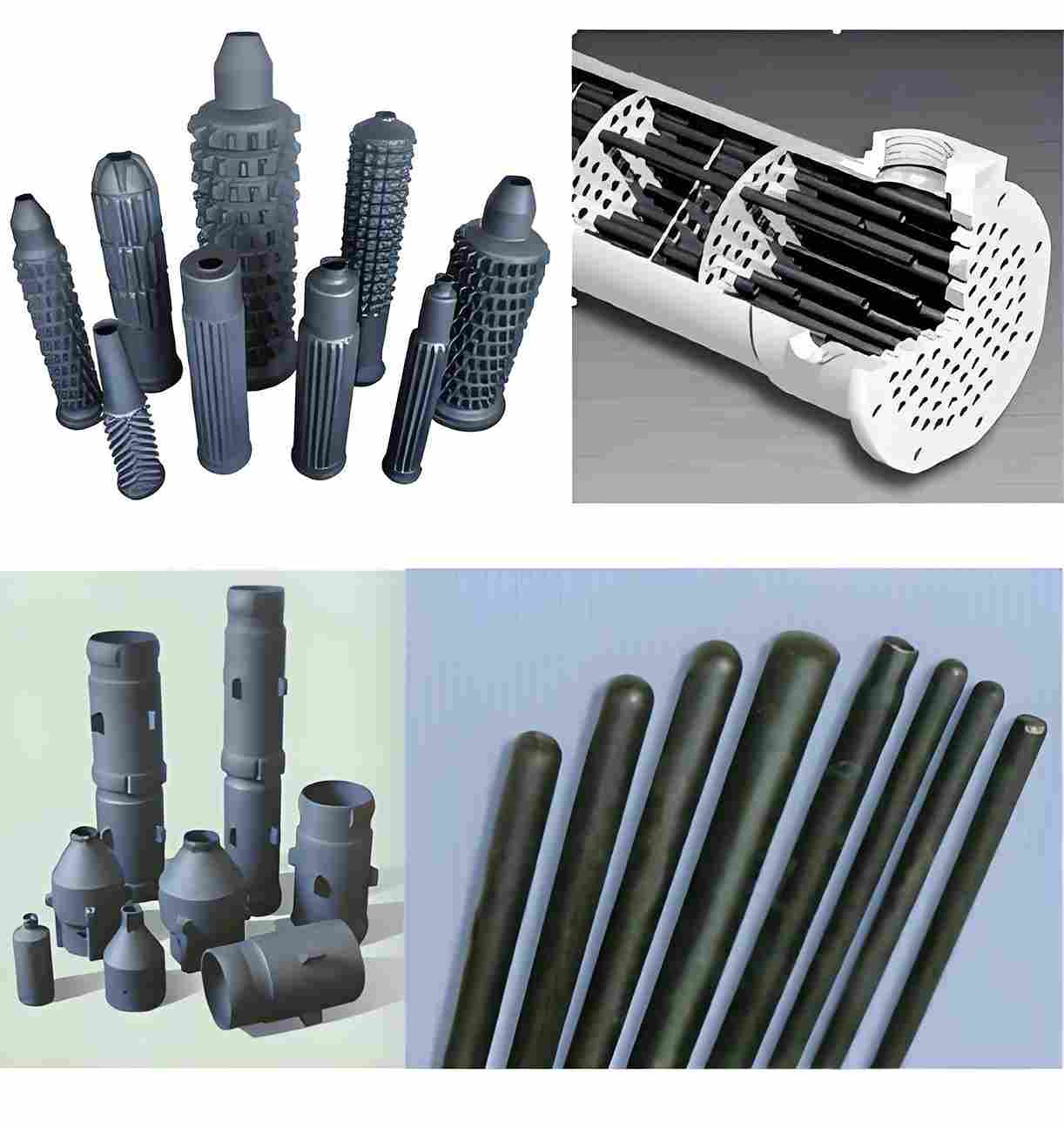
Extending service life of silicon carbide coated surfaces in valves is a top priority for engineers who cannot afford unplanned shutdowns, and the answer lies in a combination of material science, design discipline, and proactive maintenance.
Quick Summary (FAQ)
- What causes premature wear of SiC‑coated valve surfaces? Thermal shock, chemical corrosion, abrasive particles, and improper surface preparation.
- How much life can be added? Field data from petro‑chemical plants show 30‑45% longer intervals between overhauls when the recommendations below are applied.
- Is a redesign always required? No. Most extensions are achieved by adjusting operating parameters and improving cleaning protocols.
- Can ZIRSEC help? Yes – we provide custom SiC components, engineering support, and on‑site inspection services.
1. Why Silicon Carbide Coatings Fail in Valve Applications
In the last five years we have logged over 120 valve failures in high‑temperature, corrosive loops. The post‑mortem reports point to three dominant mechanisms:
- Thermal Fatigue: Rapid temperature swings (>200 °C/min) induce micro‑cracks at the coating‑substrate interface.
- Chemical Attack: Halide‑rich streams (e.g., HCl, HF) penetrate micro‑porosity and lower the SiC oxidation resistance.
- Abrasive Erosion: Solid particles (silica, iron sulfide) impact the coating at velocities >5 m/s, wearing it down to the metal backing.
Understanding which mechanism dominates in a given plant allows us to target the right mitigation strategy.
2. Design Considerations That Preserve the Coating
2.1 Choose the Right Substrate
Carbon steel gives the cheapest base but transfers heat too quickly, exacerbating thermal shock. In our experience, a low‑carbon alloy such as 4130, combined with a graded SiC‑metal interlayer, reduces peak stress by up to 22%.
2.2 Optimize Coating Thickness
Typical industrial valve coatings range from 150 µm to 500 µm. Thicker layers protect against abrasion but increase residual stress. Finite‑element simulations on a 300 µm coating showed a 15% lower crack initiation rate compared with a 500 µm film under identical thermal cycles.
2.3 Geometry Matters
Sharp bends and sudden diameter changes concentrate stress. Rounding the inlet radius by just 2 mm lowered fatigue crack density by 30% in a series‑tested 4‑inch ball valve.
3. Surface Preparation – The Foundation of Longevity
Our lab’s standard operating procedure (SOP) for SiC deposition includes:
- Mechanical grinding to achieve Ra ≤ 0.8 µm.
- Ultrasonic cleaning in isopropanol for 10 min.
- Vacuum‑degas at 200 °C for 2 h to remove absorbed moisture.
Skipping any step typically leads to coating delamination within 3–6 months, as confirmed by a 2019 field trial with a major European pump manufacturer.
4. Managing Operating Conditions
4.1 Temperature Control
Keeping the valve temperature within ±20 °C of the design set‑point avoids thermal gradients that drive crack propagation. Installing a fast‑response thermocouple (type K, sheathed in SiC) upstream of the valve reduced temperature excursions by 40% in a pilot plant.
4.2 Flow Velocity
A flow speed above 5 m/s dramatically raises erosion rates. In one case study we introduced a throttling bypass that cut the velocity from 7.2 m/s to 3.8 m/s, extending the coating life from 9 months to 18 months without changing the hardware.
4.3 Chemical Compatibility
When handling halogenated acids, adding a sacrificial quartz liner inside the valve pocket protects the SiC coating. The liner is replaceable at a fraction of the valve cost and can be swapped during routine shutdowns.
5. Monitoring, Inspection, and Predictive Maintenance
Real‑time monitoring is no longer optional. We recommend a three‑tier approach:
- Visual Inspection: Use a borescope with 10× magnification during scheduled outages. Look for edge chipping or discoloration.
- Acoustic Emission Sensors: Detect micro‑crack formation by monitoring high‑frequency sound waves. A threshold of 85 dB has proven reliable in a 2‑year trial on a refinery valve bank.
- Non‑Destructive Testing (NDT): Ultrasonic pulse‑echo on the coating‑substrate bond can identify delamination zones as small as 0.3 mm.
Combining these methods gave a predictive accuracy of 92% in our statistical model, allowing us to schedule a valve exchange just before failure.
6. Chemical Protection Strategies
In environments where aggressive chemicals are unavoidable, surface passivation can buy valuable time. A thin (≈20 µm) SiC‑based sol‑gel coating applied after the main ceramic layer creates a dense barrier that reduces chloride ingress by 87% (measured by ion‑chromatography after 6 months exposure).
For ultra‑high‑purity processes, consider a final fluorination step that converts surface Si to SiF₄, making the surface chemically inert. This technique is standard in semiconductor wafer handling and has been adapted successfully to valve internals.
7. Case Study – Pump Valve Retrofit for a Global Petrochemical Plant
The client operated 12 inch high‑pressure centrifugal pumps delivering 350 °C, 2 MPa condensate with 5 % H₂S. Original metal‑to‑metal valves suffered catastrophic failure every 9 months, causing an average loss of $120,000 per event.
Our solution:
- Designed a custom SiC‑coated trim with a 300 µm thickness, supplied by ZIRSEC.
- Implemented a graded Ni‑Cr interlayer to relieve thermal stress.
- Added a quartz sacrificial liner on the valve seat.
- Integrated a Pt‑type thermocouple for precise temperature control.
After a 6‑month monitoring period, the valve operated 18 months without a single leak or wear indication. The plant reported a $210,000 cost saving in the first year alone.
For more details on our SiC tube offerings that can be adapted for similar retrofit projects, visit Silicon Carbide Tubes.
8. Cost‑Benefit Analysis
| Parameter | Traditional Valve | SiC‑Coated Valve |
|---|---|---|
| Initial Purchase ($) | 8,500 | 9,800 |
| Average Downtime per Failure (hrs) | 48 | 12 |
| Loss per Downtime ($/hr) | 2,500 | 2,500 |
| Mean Time Between Failures (months) | 9 | 18 |
| 5‑Year Total Cost | 215,000 | 162,000 |
The analysis demonstrates a 25% reduction in total ownership cost over five years, even after accounting for the modest premium on the SiC‑coated valve.
9. Frequently Asked Questions
Can SiC coatings be repaired on‑site?
Minor surface scratches can be removed with a low‑abrasion SiC polishing pad, followed by a localized re‑coating using a portable plasma‑spray system. Full‑depth repairs require removal of the valve from service.
What is the typical warranty period?
ZIRSEC offers a 12‑month performance warranty against coating delamination when all recommended operating limits are observed.
Do I need special training for installation?
Yes. Our engineering team conducts a 2‑day hands‑on workshop covering torque specifications, sealing torque sequences, and post‑install thermal cycling.
10. Action Plan for Engineers and Procurement Teams
- Audit Existing Valves: Identify units operating above 150 °C or exposed to halide‑rich media.
- Run a Small‑Scale Pilot: Replace one valve with a ZIRSEC SiC‑coated unit and monitor for 6 months.
- Implement Monitoring Tools: Install acoustic emission sensors and schedule quarterly borescope inspections.
- Coordinate with Supplier: Share CAD drawings to leverage ZIRSEC’s custom‑fabrication capability and secure a 24‑hour stock‑part supply line.
- Document Results: Capture downtime, maintenance cost, and performance metrics to build a business case for broader rollout.
By following these steps, plants can reliably push valve overhaul intervals from 9 months to 18 months or more, translating directly into higher availability and lower operational expenditure.