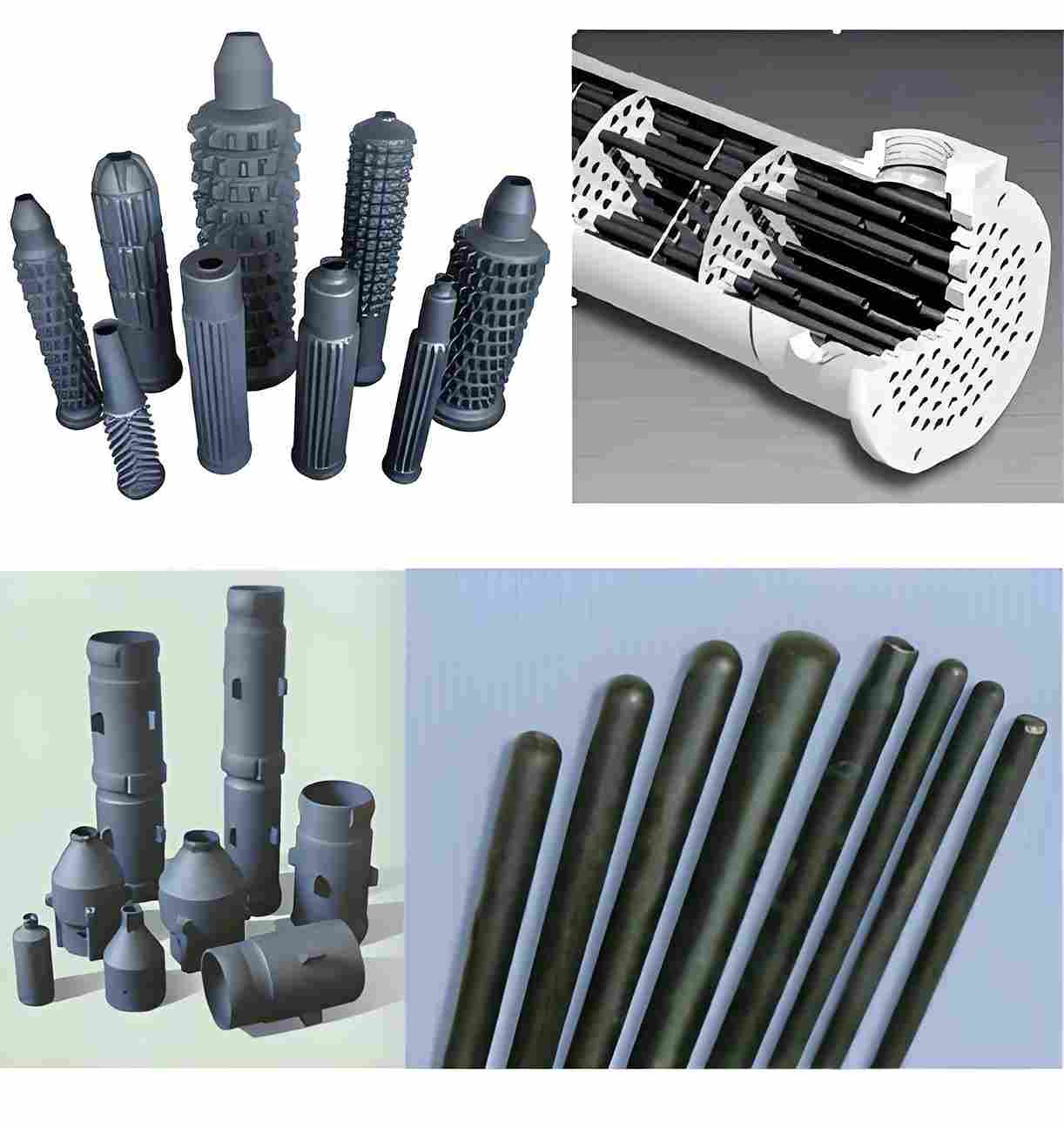
Silicon carbide (SiC) components carry a higher price tag than traditional alloys, but the long‑term savings they generate often outweigh the upfront expense.
Quick Summary
- Typical lifetime extension: 2‑5× compared with stainless steel or Al₂O₃.
- Average cost premium: 25‑150 % per part, depending on geometry and tolerance.
- Payback period for most heavy‑duty furnace tubes and seal rings: 12‑24 months.
- Key ROI drivers: reduced downtime, lower replacement inventory, and higher process efficiency.
Why Industrial Buyers Question the Cost
When a procurement manager receives a quotation for a SiC ceramic tube at $120 per piece, the first reaction is often “Can we afford that?” The concern is legitimate – capital budgets are tight, and switching materials means re‑qualifying designs, updating maintenance contracts, and convincing senior leadership.
Our experience at Silicon Carbide Tubes shows that the real question is not just the sticker price but the total cost of ownership (TCO). If a standard 304 stainless tube fails every 18 months in a 1,350 °C furnace, the hidden cost includes lost production, emergency shipping, and the high‑temperature corrosion‑related scrap that follows each failure.
How to Calculate ROI for SiC Parts
We break the analysis into three components:
- Initial Investment – material cost, tooling, and engineering support.
- Operational Savings – reduced downtime, lower energy consumption, and smaller inventory buffers.
- Residual Value – salvage or resale potential at the end of the service life.
Below is a simple spreadsheet‑style example for a 200 mm diameter, 1 m long SiC furnace tube used in a steel reheating line.
| Parameter | Stainless Steel (304) | SiC Ceramic (ZIRSEC) |
|---|---|---|
| Unit Cost (USD) | 45 | 135 |
| Mean Time Between Failures (months) | 18 | 72 |
| Downtime per Failure (hours) | 48 | 12 |
| Production Loss per Hour (USD) | 8,000 | 8,000 |
| Annual Maintenance Cost (USD) | 2,500 | 1,200 |
| Annual Energy Savings (USD) | 0 | 1,500 |
| Annual Total Cost | 13,300 | 8,700 |
Even though the SiC tube costs three times more per unit, the extended service life cuts failure events from four per year to one, saving $4,600 annually in lost production alone. Adding energy savings brings the net benefit to $5,200 per year. The payback period on the $90 extra per tube (assuming a batch of 20 tubes) is just 1.7 years.
Industry Case Studies
1. Chemical Pump Seal Rings – $15,000 Downtime Avoided
A European pump‑valve maker replaced Al₂O₃ seal rings with ZIRSEC SiC seal rings in a 250 °C chlorinated‑acid line. The older seals cracked after 6 months, causing an eight‑day production halt that cost the client ≈ $15,000 in lost throughput and emergency parts. After the swap, the SiC rings lasted 30 months with only routine inspections. The ROI calculation:
- Additional part cost: $2,200 (vs. $1,200 for Al₂O₃)
- Avoided downtime: $15,000 × (30/8) ≈ $56,250 over 2.5 years
- Net benefit: $54,050 → ROI ≈ 2,460 %.
2. Furnace Tubes for Steel Reheat – 3× Lifetime
A North American steel mill sourced 500 mm SiC tubes for its 1,500 °C after‑heat furnace. The previous SiC supplier delivered tubes with a 30 % dimensional variance, causing a 12 % scrap rate in downstream forming. ZIRSEC’s tighter tolerance (±0.2 mm) reduced scrap to 2 %, saving the plant roughly $120,000 per year in raw‑material waste. The per‑tube premium was $90, leading to a payback in under nine months.
3. Burner Nozzles in Renewable Energy Boilers – Energy Gain
A renewable‑energy boiler manufacturer replaced metal‑alloy nozzles with SiC ceramic nozzles to survive continuous operation at 1,300 °C. The ceramic design maintained a stable flame profile, raising boiler efficiency from 84 % to 88 %. At a plant output of 30 MW, the extra 4 % translates to about 1,200 MWh saved annually – roughly $84,000 in fuel costs. The nozzle set cost $4,500 versus $1,800 for the alloy version, delivering a clear financial upside within the first year.
Key Factors That Influence ROI
1. Operating Temperature Range – SiC retains >90 % of its strength up to 1,600 °C, whereas most metals begin to soften above 800 °C. If your process exceeds 1,200 °C, the cost premium becomes a safety buffer against catastrophic failure.
2. Chemical Compatibility – In corrosive environments (e.g., molten salts, chlorine‑rich gases), SiC shows negligible mass loss, while conventional alloys may suffer rapid erosion that forces premature replacement.
3. Mechanical Wear – For grinding or abrasive slurry applications, SiC’s hardness (9.5 Mohs) delivers 2‑5× longer wear life than Al₂O₃ or zirconia, directly cutting part‑stock expenses.
4. Design Flexibility – ZIRSEC offers both stocked standard sizes and rapid custom machining. A company that can avoid tooling changes by ordering a near‑standard geometry reduces lead‑time costs dramatically.
5. Supply Chain Reliability – Our 20‑year manufacturing base in China, combined with a 24‑hour inventory for standard parts, means you rarely face extended back‑orders that other suppliers can’t guarantee.
How ZIRSEC Reduces the Risk of Buying SiC
We know that a higher price tag invites scrutiny. That’s why we back every order with three practical safeguards:
- Engineering Consultation – Our product engineers work side‑by‑side with your design team to validate dimensions, tolerances, and thermal‑stress calculations.
- Sample‑to‑Serial Path – A low‑volume pilot run (5‑20 pieces) is shipped within two weeks, allowing you to run field‑tests before committing to full production.
- Full Documentation Package – Material certificates (COA), MSDS, and detailed inspection reports accompany every shipment, simplifying your compliance and customs processes.
These services translate into smoother project approvals and fewer hidden costs during installation.
Practical Checklist for Decision‑Makers
| Consideration | Yes / No |
|---|---|
| Process temperature > 1,200 °C? | |
| Exposure to aggressive chemicals (Cl‑, F‑, molten salts)? | |
| Current component replacement cycle < 12 months? | |
| Downtime cost > $5,000 per hour? | |
| Available budget for a 2‑year payback? | |
| Need for custom geometry or tight tolerance? |
If you answered “yes” to three or more of the rows, the ROI case for SiC is strong.
Conclusion: Is Silicon Carbide Worth It?
In the projects we have supported over the past decade, the average payback period for SiC components sits between 12 and 24 months, with total lifecycle savings ranging from 30 % to 70 % compared with conventional metal or alumina parts. The decision hinges on quantifying your downtime cost, energy consumption, and scrap rates – not merely on the headline price.
When you partner with a supplier that offers rapid prototyping, full engineering support, and reliable inventory, the financial risk shrinks dramatically. ZIRSEC’s proven track record across chemical, metallurgical, and renewable‑energy sectors means you get both the material performance and the service framework needed to turn a higher upfront cost into a measurable bottom‑line advantage.
Ready to run your own ROI model? Contact us at info@zirsec.com or request a free engineering quote through our website. Your next SiC investment could be the catalyst that turns an expensive‑to‑maintain line into a profit‑center.