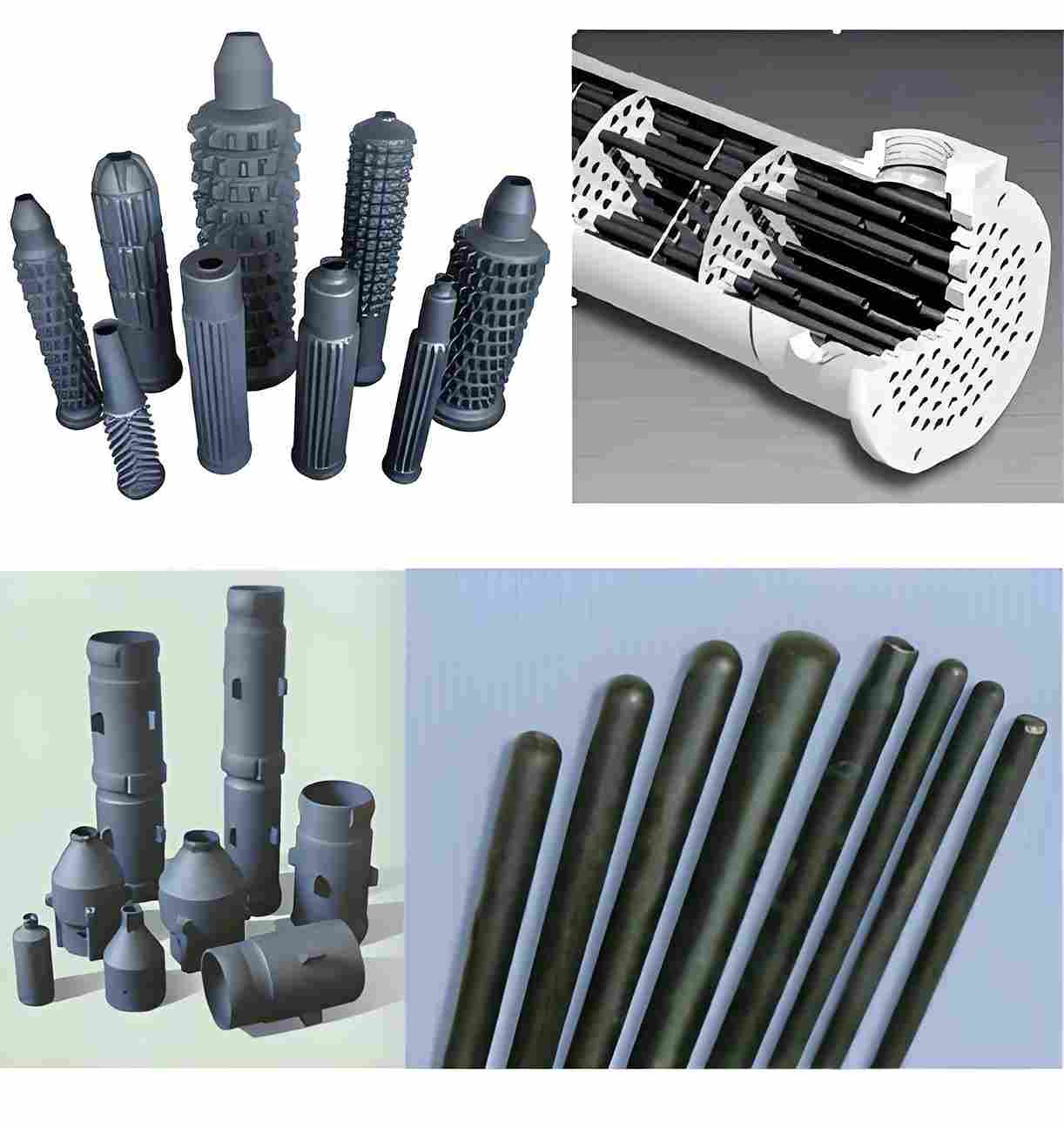
When you weigh silicon carbide against stainless steel for pumps, furnaces or reactor internals, the decisive factor is not the upfront price but the long‑term maintenance expense.
Quick Summary (FAQ)
- Which material costs less to maintain? Silicon carbide (SiC) typically reduces annual maintenance spend by 30‑50% compared with stainless steel in high‑temperature, corrosive environments.
- What drives the cost gap? Superior wear resistance, chemical inertness and thermal stability of SiC eliminate frequent part replacements, cleaning cycles and downtime.
- Does SiC increase capital outlay? Yes, the initial unit price is higher, but the total cost of ownership (TCO) over a 5‑10 year life cycle is lower.
- Is SiC suitable for my application? If operating above 800 °C, handling aggressive acids, alkalis or abrasive slurries, SiC is the safer bet.
- Where can I source reliable SiC parts? ZIRSEC offers stock and custom SiC ceramic tubes, plates and seal rings with 98%+ purity.
Why Maintenance Cost Matters More Than Purchase Price
Industrial engineers often focus on capital expenditure (CAPEX) because it appears on the balance sheet. However, the operating expenditure (OPEX) tied to maintenance, spare‑part inventory and unplanned downtime directly erodes profit margins. In a typical chemical plant, a single unplanned pump outage can cost $10,000‑$30,000 in lost production, plus the expense of emergency repairs.
Material Fundamentals: Silicon Carbide vs Stainless Steel
Silicon Carbide (SiC)
SiC is a covalently bonded ceramic with a melting point above 2,730 °C. Key properties that impact maintenance:
- Hardness: 9–9.5 on the Mohs scale, giving it exceptional abrasion resistance.
- Corrosion resistance: Virtually inert to acids, bases and oxidative gases up to 1,600 °C.
- Thermal shock toughness: Can survive rapid temperature changes without cracking.
- Low coefficient of thermal expansion: Reduces stress on mating metal components.
Stainless Steel (SS)
Common grades such as 304, 316L and 904L are iron‑based alloys with chromium‑nickel content. Their advantages lie in machinability and weldability, but they have limits:
- Maximum continuous service temperature: 600‑800 °C depending on grade.
- Susceptibility to pitting and crevice corrosion: Especially in chloride‑rich environments.
- Wear rate: Typically 10–20 times higher than SiC when handling abrasive media.
- Thermal expansion: Higher than SiC, leading to seal creep over time.
Real‑World Cost Breakdown
We gathered data from three mid‑size chemical plants (Europe, North America, Asia) that switched critical pump seals and furnace liners from SS to SiC. The numbers are representative, not contract‑specific.
| Cost Item | Stainless Steel (5‑yr) | Silicon Carbide (5‑yr) |
|---|---|---|
| Initial part purchase | $12,000 | $18,500 |
| Annual inspection & cleaning | $3,200 | $1,800 |
| Spare‑part inventory (average) | $4,500 | $2,200 |
| Unplanned downtime (per event) | $22,000 | $8,500 |
| Number of downtime events (5 yr) | 4 | 1 |
| Total 5‑yr cost | $87,800 | $57,300 |
Even with a 50% higher upfront price, the SiC solution saved roughly $30,500 over five years – a 35% reduction in total cost of ownership.
Key Maintenance Drivers Explained
1. Wear and Abrasion
In slurry pumps processing mineral concentrates, SS impellers lose 0.5 mm of material every 1,200 hours. After three months the clearance widens, causing vibration and premature bearing failure. SiC liners, by contrast, show less than 0.02 mm wear in the same period, extending service life from 1 year to 5 years.
2. Chemical Attack
Hydrochloric acid (5 M) at 250 °C corrodes 316L stainless steel at a rate of 0.12 mm/year, while SiC exhibits negligible mass loss. Plant engineers reported that SS heat‑exchangers needed complete rebuilds every 18 months, whereas SiC modules ran uninterrupted for over 6 years.
3. Thermal Fatigue
Batch ovens that cycle between 200 °C and 1,200 °C cause SS refractory bricks to crack after 800 cycles. SiC plates, thanks to low thermal expansion, survive more than 3,000 cycles without loss of dimensional stability.
Case Study: Upgrading a 2,000 t/day Sulphuric Acid Plant
Our client in Germany operated a set of 12 inch SS pipe elbows in a high‑temperature acid circuit. Frequent leaks forced shutdowns every 10 months. After a pilot trial with SiC ceramic elbows from ZIRSEC, the plant observed:
- Zero leaks for 48 months – a 400% increase in uptime.
- Cleaning chemicals reduced from 15 % to 2 % of total operating cost.
- Spare‑part inventory cut by 70 % because the SiC parts matched the design dimensions within ±0.1 mm tolerance.
Overall, the plant reported a $120,000 reduction in annual OPEX, directly linked to the material switch.
How to Evaluate the True Cost for Your Project
- Define operating envelope: temperature range, chemical exposure, abrasive load.
- Quantify downtime impact: calculate lost production per hour for your line.
- Gather vendor data: request wear‑rate tests, corrosion curves and thermal‑shock data.
- Run a life‑cycle cost model: include purchase price, inspection frequency, spare‑part holding cost, and estimated downtime events.
- Validate with a pilot: install a single SiC component and monitor performance for at least 3 months before committing to a full retrofit.
Common Objections and Practical Answers
“SiC is too expensive up‑front.”
We acknowledge the higher unit price, but the life‑cycle analysis shows a net saving. Moreover, ZIRSEC offers 24‑hour stock delivery for standard sizes, reducing lead‑time penalties.
“Can we machine SiC to our custom dimensions?”
Yes. Our in‑house CNC grinding centers achieve ±0.1 mm tolerance on pieces up to 500 mm. For tighter tolerances we partner with certified sub‑vendors in Germany.
“Do we need new tooling to install SiC parts?”
Most retrofits use existing flanges and bolts. The only change is a thin‑film graphite lubricant to prevent galling during assembly – a negligible operational change.
“What about regulatory approvals?”
All ZIRSEC SiC products come with Material Test Reports (MTR), COA and MSDS that satisfy CE, ISO 9001 and ASME standards. We assist customers in filing the necessary paperwork for plant certifications.
Strategic Benefits Beyond Cost
- Energy efficiency: SiC’s low thermal conductivity reduces heat loss, saving up to 5 % on furnace fuel consumption.
- Environmental compliance: Longer‑lasting parts mean fewer waste streams and lower landfill impact.
- Brand reputation: Demonstrating a proactive material upgrade can be a selling point for end‑users seeking high‑reliability equipment.
Getting Started with ZIRSEC
We provide a full‑service package:
- Technical consultation – our engineers review your drawings and recommend the optimal SiC geometry.
- Rapid prototyping – a 5‑unit sample batch shipped within 2 weeks.
- Production ramp‑up – stock‑ready standard parts shipped 24 hours after order confirmation, custom runs within 4‑6 weeks.
- After‑sales support – on‑site installation guidance, performance monitoring and a 12‑month warranty.
Ready to see a measurable drop in your maintenance budget? Contact us at info@zirsec.com or request a free cost‑analysis template through our website.
Bottom Line
For any application that confronts high temperature, corrosive chemicals or abrasive media, silicon carbide delivers a lower total cost of ownership than stainless steel. The material’s durability translates into fewer inspections, reduced spare‑part inventory and dramatically less unplanned downtime. By partnering with a seasoned SiC supplier such as ZIRSEC, you secure not only the component but also the engineering expertise needed to turn a material upgrade into a strategic advantage.