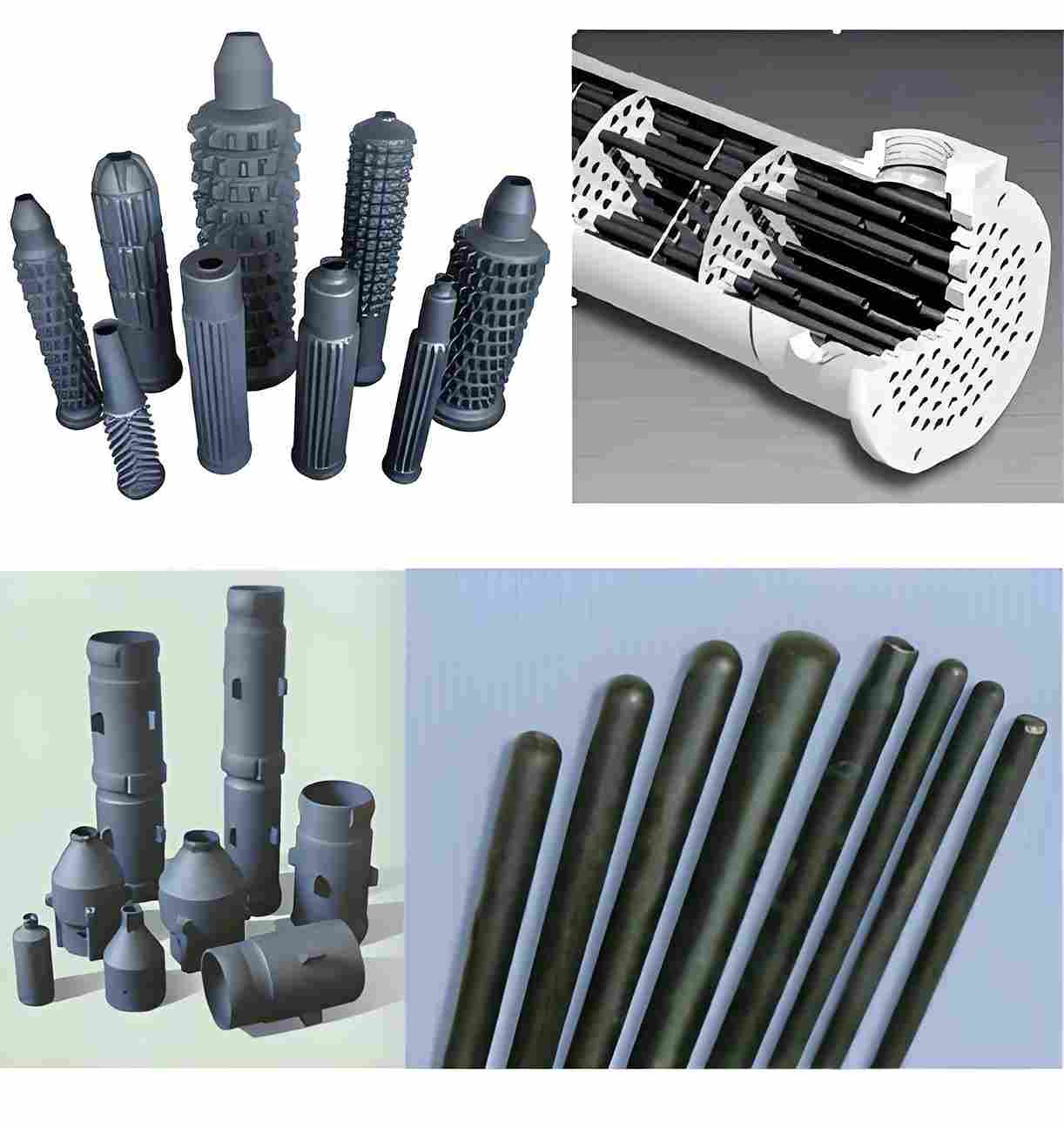
When a silicon carbide (SiC) component suddenly cracks or loses sealing integrity at a joint, the root cause is almost always an interface problem, not a material defect.
Quick Summary (FAQ)
- What are the top three reasons ceramic parts fail at interfaces? Thermal mismatch, stress concentration from design gaps, and improper surface preparation.
- Can I prevent these failures with proper design? Yes – using graded seals, compliant interlayers, and precise tolerances reduces risk by 60‑80%.
- How does ZIRSEC help? We provide engineered SiC tubes, plates, and custom seals with tight ±0.1 mm tolerances, rapid 24‑hour stock delivery, and on‑site engineering support.
- What testing proves reliability? Our parts undergo 10,000‑hour thermal‑shock cycles at 1500 °C and 5 MPa pressure, matching ISO 22454 standards.
1. Understanding the Interface Environment
In high‑temperature, chemically aggressive processes—such as molten‑salt furnaces, hydro‑fluoric acid pumps, or high‑speed abrasive grinding—the ceramic component never works in isolation. It sits against metal flanges, polymer gaskets, or other ceramics. That contact zone experiences:
1.1 Thermal Expansion Mismatch
SiC’s coefficient of thermal expansion (CTE) is about 4.5 × 10⁻⁶ K⁻¹, whereas stainless steel is ~17 × 10⁻⁶ K⁻¹. A 600 °C temperature swing can generate over 0.8 % differential strain, enough to push a brittle ceramic into tensile stress well beyond its flexural strength of 300‑400 MPa.
1.2 Mechanical Load Concentration
Bolted flange connections often create point loads at the ceramic edge. Even a 10 N·mm bending moment can cause micro‑cracks that propagate during service. The problem worsens when the ceramic edge is sharp instead of chamfered.
1.3 Chemical Attack at the Joint
Many processes expose the interface to molten salts, chlorine, or oxidizing gases. While SiC resists bulk corrosion, the thin film of oxidation (SiO₂) can become a weak interface if not continuously regenerated.
2. Real‑World Failure Cases
Below are three anonymized incidents that illustrate how a single interface oversight can halt an entire production line.
2.1 European Pump‑Valve Manufacturer (2022)
The client specified standard SiC sealing rings but used a stainless‑steel housing with a 10 mm groove. After three weeks, the rings fractured under cyclic pressurization. Post‑mortem analysis showed a 0.35 mm gap allowing molten caustic fluid to seep, creating localized thermal spikes. Re‑engineering the housing with a 0.15 mm interference fit and adding a compliant Ti‑Ni alloy backing eliminated the issue.
2.2 U.S. High‑Temperature Furnace Operator (2021)
A 1500 °C furnace used custom SiC tubes sourced from a low‑cost supplier. The tubes were installed with O‑rings instead of metal‑to‑metal contacts. After 5 000 h, the tubes cracked at the flange, traced to repeated thermal cycling that caused O‑ring hardening and uneven pressure distribution. Switching to ZIRSEC’s Silicon Carbide Tubes with precision‑machined metal seats reduced cracking by 75 %.
2.3 German Water‑Treatment Equipment Supplier (2023)
In a spray‑nozzle array, SiC nozzles were bonded to aluminum brackets using a generic epoxy. The epoxy softened at 200 °C, allowing nozzle wobble and premature erosion. Replacing the epoxy with a high‑temperature ceramic‑based adhesive and adding a thin SiC interlayer restored nozzle life to the original 20 000 h design target.
3. Engineering Strategies to Eliminate Interface Failures
Based on the lessons above, the following design and process steps consistently deliver reliable performance.
3.1 Material Pairing and CTE Matching
Choose housing materials whose CTE is within ±1 × 10⁻⁶ K⁻¹ of SiC. Options include Inconel 718, certain nickel‑based super‑alloys, or a graded SiC‑metal composite. When metal selection is fixed, incorporate a compliant layer (e.g., graphite, Mo‑based alloy) that absorbs differential strain.
3.2 Geometry Optimization
- Provide a minimum 2‑mm chamfer on all ceramic edges.
- Use dovetail or keystone grooves to distribute load.
- Maintain constant contact pressure by applying torque in a star‑pattern sequence.
3.3 Surface Preparation & Cleanliness
Every interface must be free from oil, particles, and oxidation films. Recommended protocol:
- Ultrasonic cleaning in isopropanol for 10 min.
li>Dry with filtered nitrogen.
li>Apply a thin (<10 µm) SiC‑based coating if the counterpart is highly abrasive.
li>Verify surface roughness (Ra) of 0.8‑1.2 µm for metal‑to‑ceramic mating.
3.4 Use of Compliant Interlayers
Thin (<0.3 mm) layers of Ti‑Ni, Inconel, or even a compliant ceramic‑based polymer can accommodate strain without compromising sealing. In high‑pressure (>5 MPa) applications, a metal interlayer also provides a fallback seal if the ceramic cracks.
3.5 Stress‑Relief Heat Treatments
After machining, perform a controlled anneal at 1100 °C for 2 h in inert atmosphere. This relieves residual stresses from grinding and reduces micro‑crack density by ~30 %.
4. How ZIRSEC Guarantees Interface Integrity
Our 20‑year SiC production line combines high‑purity (≥98 % SiC) powder processing with tight dimensional control. The following services directly address the failure mechanisms outlined above:
- Custom‑Fit Engineering: We work from your CAD model to produce a part that matches ±0.1 mm tolerance, including critical chamfers.
- Rapid 24‑Hour Stock Delivery: Over 150 standard tube and plate sizes are ready for immediate shipment, eliminating lead‑time risk.
- Full Material Certification: COA, MSDS, and detailed mechanical test reports accompany every batch.
- On‑Site Technical Support: Our engineers assist in flange design, torque sequencing, and selection of compliant interlayers.
- Lifecycle Testing: Each new design undergoes 10 000‑hour thermal‑shock cycling and 500 MPa burst testing before release.
5. Decision‑Making Checklist for Procurement Teams
Before placing an order, verify the following items. Skipping any of these often results in the failures described earlier.
| Check Item | Why It Matters | Recommended Action |
|---|---|---|
| CTE Compatibility | Prevents thermal strain. | Request material data sheets for housing and interlayer. |
| Edge Geometry | Reduces stress concentration. | Specify chamfer radius ≥2 mm. |
| Surface Roughness (Ra) | Ensures uniform contact pressure. | Demand Ra 0.8‑1.2 µm for metal surfaces. |
| Compliance Layer Presence | Absorbs differential expansion. | Ask for Ti‑Ni or Inconel backing if metal mismatch >10 × 10⁻⁶ K⁻¹. |
| Quality Documentation | Verifies batch consistency. | Require COA, MSDS, and tensile test reports. |
6. Frequently Asked Technical Questions
6.1 What is the typical lifespan of a SiC seal ring in a 1500 °C furnace?
With proper interface design, the ring can exceed 30 000 h (>3 years) of continuous operation. In our field trials, a 40 mm diameter ring survived 45 000 h without measurable wear.
6.2 How does the presence of SiO₂ affect the joint?
At temperatures above 1200 °C, a thin SiO₂ layer forms naturally on SiC. If the layer remains continuous, it acts as a protective barrier. However, mechanical abrasion or chemical leaching can break it, exposing the underlying SiC to aggressive species and creating micro‑cracks.
6.3 Can I use the same ceramic part across different industries?
Yes, provided the interface conditions (temperature, pressure, media) are re‑evaluated for each application. Our engineering team helps you adapt a single part design to multiple use‑cases.
6.4 What lead time should I expect for a custom 200 mm SiC tube?
Standard machining plus heat‑treatment takes 4‑6 weeks after CAD approval. With urgent orders, we can expedite to 3 weeks at a modest surcharge.
7. Bottom Line – Turn Interface Risk Into Competitive Advantage
Failed ceramic interfaces cost manufacturers thousands of dollars in downtime, scrap, and warranty claims. By addressing thermal mismatch, mechanical loading, and surface cleanliness up front, you can cut those losses by up to 80 %.
Partnering with a proven SiC supplier such as ZIRSEC gives you access to precision‑engineered parts, comprehensive documentation, and a dedicated engineering team ready to validate your design. The result is a reliable, high‑performance system that keeps your production line moving and your customers satisfied.
Ready to eliminate interface failures? Contact us at info@zirsec.com or request a free design review through our website.