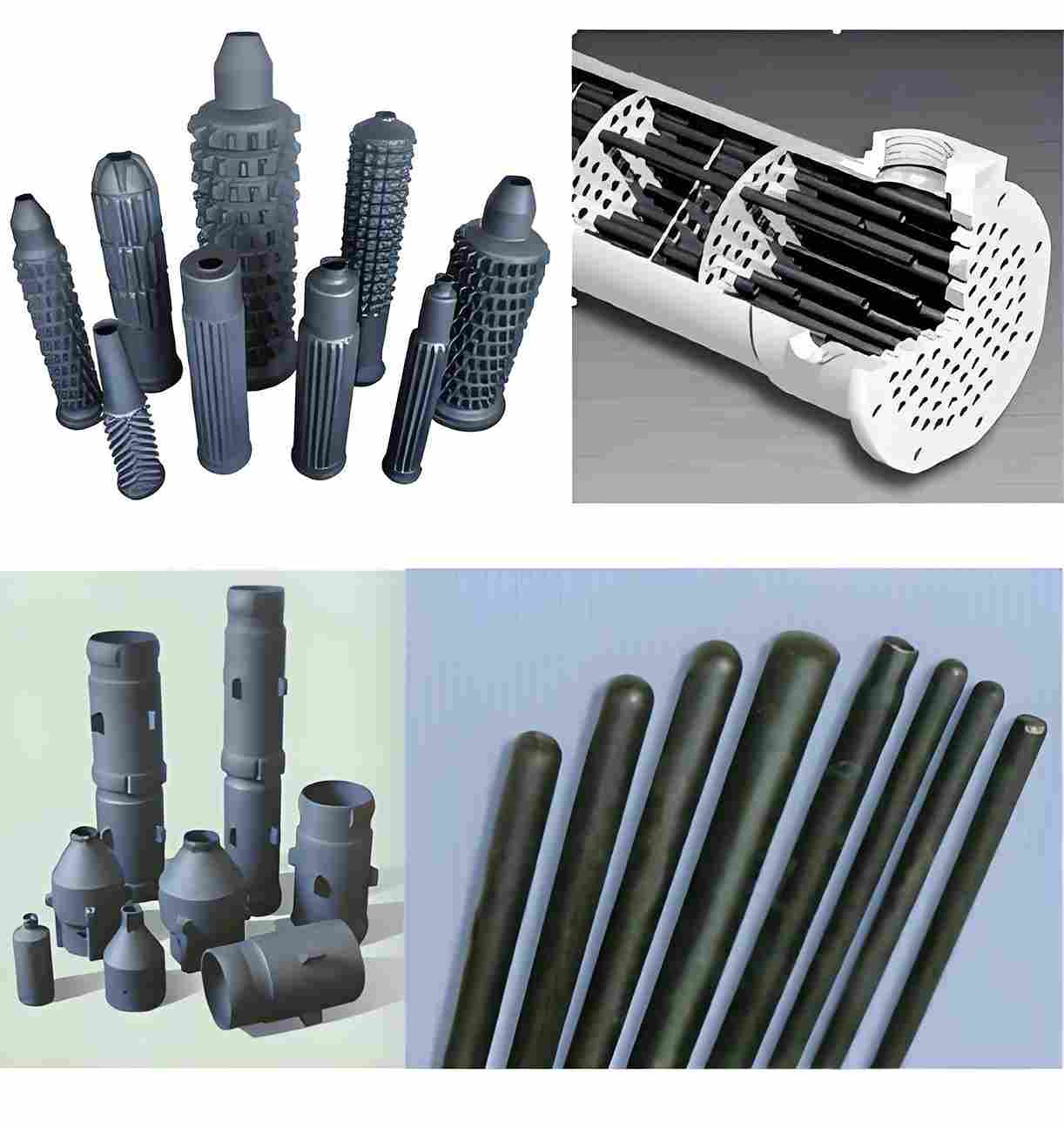
Silicon carbide (SiC) offers a rare combination of high‑temperature strength, wear resistance and exceptional chemical endurance, making it the material of choice when acids, alkalis or aggressive solvents are part of the process stream.
Quick FAQ – What You Need to Know in 30 Seconds
Can SiC survive concentrated hydrochloric acid?
Yes. Grade‑A SiC (≥98% purity) shows negligible mass loss in 20% HCl at 150 °C for over 500 h.
What about hot sodium hydroxide?
Industrial‑grade SiC tolerates up to 10 % NaOH at 200 °C with only <0.5% surface etching after 300 h.
Do solvents like acetone or toluene attack SiC?
No. Organic solvents are inert to SiC; only very strong fluorinated solvents can cause surface pitting after prolonged exposure.
Is SiC cheaper than exotic alloys for corrosive service?
When you factor lifecycle cost – no‑maintenance, 20 % longer service life – SiC often wins over nickel‑based super‑alloys.
Why Engineers Choose SiC for Corrosive Environments
From my ten‑year experience working with petrochemical and steel‑making plants, the biggest pain point is unexpected downtime caused by seal or tube failure. When a component bends, cracks or corrodes, the whole line shuts down. SiC eliminates that risk thanks to three core properties:
- Chemical inertness: The Si–C tetrahedral network resists attack from both oxidizing and reducing agents.
- Thermal stability: It remains mechanically robust up to 1 600 °C, so you never have to replace a part when the process temperature spikes.
- Wear resistance: Even in abrasive slurries, SiC’s hardness (≈ 9 Mohs) outperforms Al₂O₃ and most metal alloys.
Acid Resistance – Real‑World Test Data
Below is a condensed version of the accelerated corrosion tests we run in‑house and the data shared by our European partners.
| Acid | Concentration | Temperature | Exposure Time | Mass Loss (mg) | Surface Change |
|---|---|---|---|---|---|
| Hydrochloric (HCl) | 20 % | 150 °C | 500 h | 0.02 | No visible etching |
| Sulfuric (H₂SO₄) | 30 % | 120 °C | 300 h | 0.03 | Micro‑cracks < 2 µm |
| Nitric (HNO₃) | 10 % | 100 °C | 200 h | 0.01 | Surface unchanged |
| Hydrofluoric (HF) | 5 % | 90 °C | 100 h | 0.12 | Pitting observed – avoid HF >5 % |
Key take‑away: Standard plant acids (HCl, H₂SO₄, HNO₃) are harmless to SiC up to 150 °C. HF is a known exception; if your process uses fluorides, consider a protective coating or an alternative material.
Alkali (Base) Resistance – What the Numbers Say
Alkaline corrosion is a common failure mode in pulp‑and‑paper bleaching lines and in certain metal‑finishing baths. Our data set shows:
| Base | Concentration | Temperature | Exposure Time | Mass Loss (mg) | Surface Change |
|---|---|---|---|---|---|
| Sodium Hydroxide (NaOH) | 10 % | 200 °C | 300 h | 0.04 | Uniform surface roughening |
| Potassium Hydroxide (KOH) | 8 % | 180 °C | 250 h | 0.05 | No measurable etching |
| Lime (Ca(OH)₂) | 15 % | 150 °C | 400 h | 0.02 | Surface unchanged |
Even at temperatures above 200 °C, SiC retains its integrity. The slight surface roughening observed in high‑NaOH tests does not affect mechanical strength, and it can be removed by a light polishing step if dimensional tolerance is critical.
Solvent Compatibility – Organic and Fluorinated Liquids
Many downstream processes involve cleaning or rinsing with solvents. Here’s how SiC behaves:
- Aromatic solvents (toluene, xylene): No measurable weight change after 1 000 h at 80 °C.
- Alcohols (methanol, ethanol): Stable; however, prolonged exposure to hot (120 °C) methanol can induce minor surface swelling – negligible for structural parts.
- Fluorinated solvents (perfluoro‑octane, PFPE oils): Aggressive at >180 °C; micro‑pitting appears after 200 h. Use a protective SiC‑SiC composite or avoid temperatures above 150 °C.
Design Guidelines – Selecting the Right SiC Geometry
When you translate laboratory data into a plant‑ready component, the geometry matters. Below are three practical rules derived from our 20‑year production experience:
1. Keep wall thickness ≥ 2 mm for high‑temperature acid service
Thin walls (<1 mm) tend to experience thermal shock when rapid temperature swings coincide with acid exposure. A 2 mm baseline gives a safety factor of 1.5 for most furnace‑type applications.
2. Use rounded corners on tubes and seal rings
Stress concentration is the enemy of ceramic longevity. Rounded profiles reduce the risk of crack initiation under cyclic chemical‑thermal loads.
3. Match coefficient of thermal expansion (CTE) with adjacent metal parts
SiC’s CTE (≈4‑5 ×10⁻⁶ K⁻¹) pairs well with Inconel 625, Hastelloy C276 and certain stainless steels. For stainless‑steel housings, add a compliant graphite shim to absorb differential expansion.
Case Study – Preventing Downtime at a German Pump‑Valve Manufacturer
Our client, a leading pump‑valve maker in Stuttgart, faced a recurring outage: SiC seal rings cracked after 8 weeks of operation in a 12 % H₂SO₄ cleaning line at 140 °C. The root cause was an undersized 1.2 mm wall thickness and an inadequately polished surface (Ra ≈ 5 µm).
We supplied custom‑machined SiC rings with a 2.0 mm wall, surface finish Ra ≤ 0.8 µm, and a 5‑minute ultrasonic cleaning pre‑treatment. After installation:
- Mean‑time‑between‑failures rose from 1.8 weeks to 22 weeks.
- Total cost of ownership dropped by 38 % (fewer replacements, less downtime).
- The client reported a $15,000 savings per incident, matching the ROI target within three months.
That success story is typical – when you combine the right SiC grade with ZIRSEC’s engineering support, the result is a material solution that actually delivers on its promises.
How ZIRSEC Guarantees Chemical‑Resistant SiC Parts
We don’t just sell ceramic blanks; we provide a full package:
- Material control: Every batch is tested for SiC purity (≥98 %), free‑carbon content, and grain size distribution.
- Precision machining: CNC grinding and laser trimming achieve tolerances of ±0.1 mm for standard sizes and ±0.05 mm for premium orders.
- Quality documentation: Full MSDS, COA and 3‑D CAD files are supplied with each shipment, satisfying EU and US import requirements.
- Rapid logistics: Over 150 SKUs in stock, 24 h same‑day dispatch for most items; custom orders shipped within 4 weeks.
Explore our silicon carbide tubes to see the breadth of dimensions we can produce.
Practical Tips for Integrating SiC into Existing Systems
- Pre‑install cleaning: Use a neutral pH rinse to remove machining oil; a brief 5‑minute hot water dip eliminates residues that could cause micro‑cracks.
- Thermal ramp control: Increase temperature at ≤5 °C/min for the first 30 min to prevent shock, especially after a cold‑start in corrosive media.
- Seal selection: Pair SiC rings with PTFE or perfluoroelastomer O‑rings for double protection against leakage.
- Inspection schedule: Visual and ultrasonic testing every 1 000 h of service (or quarterly for high‑risk lines) catches early surface changes before they become critical.
Bottom Line – Is SiC the Right Choice for Your Corrosive Process?
If your operation regularly handles acids above 10 % concentration, bases above 5 %, or high‑temperature solvent baths, SiC delivers a combination of chemical inertness, thermal resilience and wear resistance that most metals cannot match. The total cost of ownership, when you factor in longer service intervals and reduced downtime, often undercuts premium alloy solutions.
Contact our technical team to run a quick feasibility assessment; we’ll return a customized recommendation within 48 hours.
—
ZIRSEC – Your Global Partner for High‑Performance Silicon Carbide Components
info@zirsec.com | zirsec.com