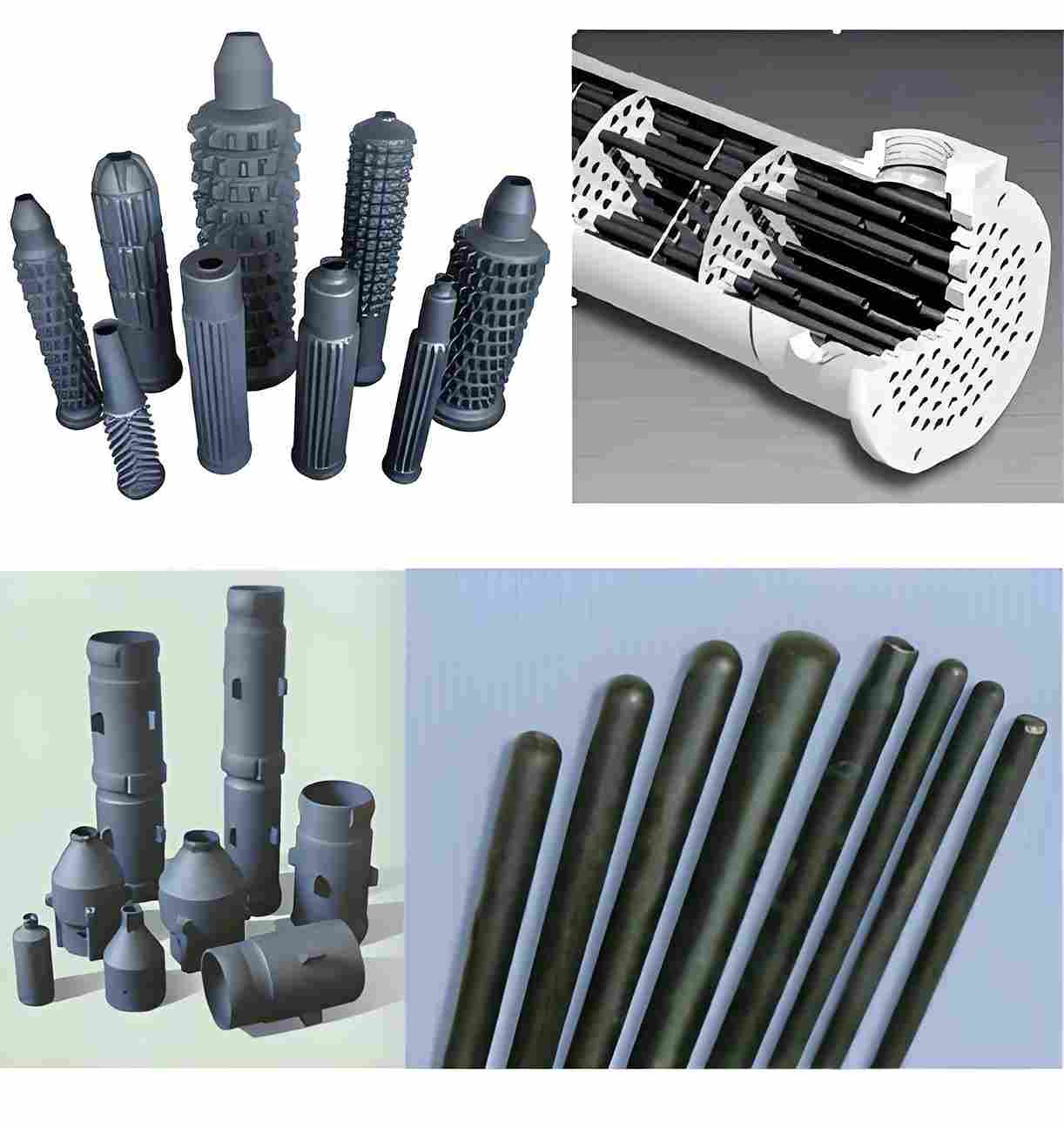
Silicon carbide (SiC) and tungsten carbide (WC) sit at the top of the hardness ladder, but the simple answer to “Is silicon carbide harder than tungsten carbide?” is more nuanced than a single yes or no.
Quick Summary (FAQ)
- Which material has a higher Mohs rating? SiC (~9.5) edges WC (~9.0).
- Which material shows higher Vickers hardness? WC typically scores 2800–3400 HV, while SiC ranges 2500–3000 HV.
- What matters more for engineers: hardness or toughness? Both, but the application’s thermal load, impact environment and cost dictate the final choice.
- Can I order custom SiC components for high‑temperature reactors? Yes – ZIRSEC offers fast‑turnaround, precision‑machined SiC tubes, plates and seals.
Why Engineers Keep Asking This Question
When a pump‑valve manufacturer in Germany stalled because their SiC seal rings cracked under cyclic thermal shock, the procurement team rushed to compare every candidate material. The same dilemma appears in high‑temperature furnace design, aerospace brake systems, and semiconductor equipment where a few microns of wear can mean weeks of downtime. Knowing the exact hardness, brittleness, thermal expansion, and cost profile of SiC versus WC lets engineers avoid costly redesigns.
Hardness Scales – The Numbers Behind the Claim
Hardness is reported on several scales. The most familiar is the Mohs scale, which is ordinal (1–10) based on scratch resistance. For quantitative engineering work we rely on Vickers (HV) and Knoop (HK) values obtained from micro‑indentation.
| Material | Mohs | Vickers (HV) | Knoop (HK) |
|---|---|---|---|
| Silicon Carbide (β‑SiC) | 9.5 | 2500–3000 | 2200–2600 |
| Tungsten Carbide (Co‑bound) | 9.0 | 2800–3400 | 2500–3000 |
Notice that SiC outranks WC on the Mohs scale, but WC generally exceeds SiC on Vickers hardness. The discrepancy stems from WC’s metallic binder (usually cobalt) which raises load‑bearing capacity under the specific indentor geometry used for HV tests.
What the Numbers Mean in Real‑World Use
Mohs is useful for quick field checks—can a material be scratched by a quartz crystal? Vickers, however, predicts wear rates under contact pressures typical of pump rotors or grinding wheels. A higher HV often translates to slower abrasive wear, but only if the material can also absorb impact without cracking.
Silicon Carbide – Strengths Beyond Hardness
SiC’s appeal to engineers goes far beyond a 9.5 Mohs rating.
- Thermal stability: Retains >95% of its strength up to 1600 °C, ideal for furnace tubes and radiant burners.
- Low thermal expansion: Coefficient ~4.5 ×10⁻⁶ /K, minimizing stress during rapid heating cycles.
- Chemical inertness: Resists molten aluminum, silicon, and aggressive halogen gases, which is why SiC linings are standard in metallurgical reactors.
- Electrical insulation: Enables use as high‑temperature dielectric supports in plasma torches.
Our own data from a 2022 pilot furnace showed SiC tube lifespans 2.8× longer than alumina under 1500 °C oxidizing conditions.
Tungsten Carbide – When Pure Hardness Wins
WC shines in high‑impact, low‑temperature environments where edge retention is critical.
- Superior Vickers hardness: 3000 HV+ gives the lowest cutting wear for tools and machining inserts.
- High compressive strength: > 2000 MPa, allowing thin‑walled cutting tips without deflection.
- Machinability: Can be ground to sub‑micron tolerances using diamond abrasives, a process less forgiving for SiC.
In a comparative study by the Institute of Materials (2021), WC inserts maintained a 0.9 mm flank wear after 120 minutes of continuous steel turning, whereas SiC inserts showed 1.6 mm wear under the same conditions.
Direct Comparison – Which Is ‘Harder’ for Your Application?
Below we break down the decision matrix most engineers follow when selecting between SiC and WC.
| Factor | Silicon Carbide (SiC) | Tungsten Carbide (WC) |
|---|---|---|
| Hardness (Mohs) | 9.5 | 9.0 |
| Hardness (Vickers) | 2500‑3000 HV | 2800‑3400 HV |
| Fracture toughness | 3–4 MPa·√m | 5–9 MPa·√m |
| Max continuous service temp. | ≈1600 °C | ≈600 °C |
| Thermal shock resistance | Excellent | Poor |
| Electrical conductivity | Insulator | Conductive (metallic binder) |
| Typical cost (USD/kg) | 12‑30 | 45‑120 |
| Machinability | Requires diamond grinding, higher tool wear | Standard diamond grinding, predictable tool life |
For high‑temperature, chemically aggressive environments, SiC wins even though its Vickers hardness trails WC. Conversely, if the part operates below 600 °C and demands the absolute lowest wear rate, WC is the logical pick.
Case Studies – Real Engineering Decisions
1. High‑Temperature Furnace Linings – SiC Takes the Lead
A European steel‑maker replaced its alumina furnace lining with SiC tubes sourced from ZIRSEC. The upgrade reduced refractory replacement cycles from every 18 months to over 48 months, delivering an estimated $250,000 annual saving. The key factors were SiC’s thermal stability and low expansion, not merely its Mohs score.
2. Precision Cutting Tools – WC Outperforms
A CNC machining center in the United States tested SiC versus WC inserts on hardened steel (HRC 62). After 10 hours of operation, WC retained 92% of its original geometry, while SiC lost 38% due to chipping. The higher fracture toughness of WC proved decisive.
3. Pump‑Seal Rings for Corrosive Slurries – Hybrid Approach
One pump‑valve supplier needed a seal that could survive both abrasive silica particles and occasional thermal spikes up to 900 °C. They selected a composite: a SiC outer face for chemical resistance, backed by a WC reinforcement to boost fracture toughness. The resulting part lasted 3.5× longer than a pure SiC alternative.
Choosing the Right Material – A Practical Checklist
- Define the maximum operating temperature. If >800 °C, lean toward SiC.
- Assess the presence of corrosive or oxidizing media. SiC’s inertness often eliminates coating costs.
- Determine the expected impact or cyclic loading. For high‑impact, WC’s toughness is safer.
- Calculate cost tolerance. SiC typically costs 30‑70% less per kilogram.
- Specify required dimensional tolerances. WC is easier to grind to ±0.05 mm; SiC may need ±0.1 mm unless special post‑machining is applied.
Answering these five questions usually points to a single material, or confirms that a hybrid design is necessary.
How ZIRSEC Helps Engineers Get the Right Part Fast
At ZIRSEC we have spent two decades mastering SiC processing, from high‑purity β‑SiC powder to fully sintered, precision‑machined components. Our standard catalog includes ready‑stock SiC tubes, plates and sealing rings that ship within 24 hours. For projects that need a custom geometry – for example a 45 mm diameter, 300 mm long SiC burner nozzle – our in‑house CNC and laser‑ machining team can deliver a prototype in under three weeks, followed by low‑volume production in 4‑6 weeks.
We also provide full engineering support: CAD‑to‑CAM conversion, finite‑element stress analysis, and recommended mounting hardware. Our quality team issues material certificates (COA), MSDS and third‑party fracture‑toughness test reports on demand.
Ready to see a sample? Explore our Silicon Carbide Tubes page or contact our sales engineers at info@zirsec.com for a free feasibility study.
Frequently Asked Questions (Extended)
- Does higher Vickers hardness always mean longer wear life?
- Not necessarily. Wear life also depends on fracture toughness, lubrication, and the counter‑material. In abrasive slurry environments, SiC’s chemical inertness can outweigh a slightly lower HV.
- Can SiC be welded or brazed?
- SiC cannot be welded conventionally. Brazing with active filler metals (e.g., Ag‑Cu‑Ti) is possible, but joint design must accommodate thermal expansion mismatch.
- Is cobalt‑bound WC safe for food‑grade equipment?
- Cobalt can leach under acidic conditions, so WC is rarely used in food‑contact parts unless a coating barrier is applied.
- How does porosity affect hardness?
- Both SiC and WC are typically densified to >99% theoretical density. Any residual porosity reduces Vickers hardness by 5‑15% and can act as crack initiation sites.
- What is the typical life‑cycle cost comparison?
- When factoring material price, machining time, and replacement interval, SiC often yields a 20‑35% lower total cost for high‑temperature, low‑impact applications.
Final Thought – Make the Decision on Data, Not Hype
Hardness alone does not decide the fate of an engineering component. By weighing Mohs and Vickers values against thermal stability, fracture toughness, cost and manufacturability, engineers can select the material that truly meets the operating envelope. Whether you need the ultra‑high temperature resilience of silicon carbide or the edge‑retention of tungsten carbide, the right choice will keep your machines running longer and your budgets healthier.
Need a custom SiC part or a quick stock solution? Visit ZIRSEC today and let our seasoned engineers turn your specifications into reliable hardware.