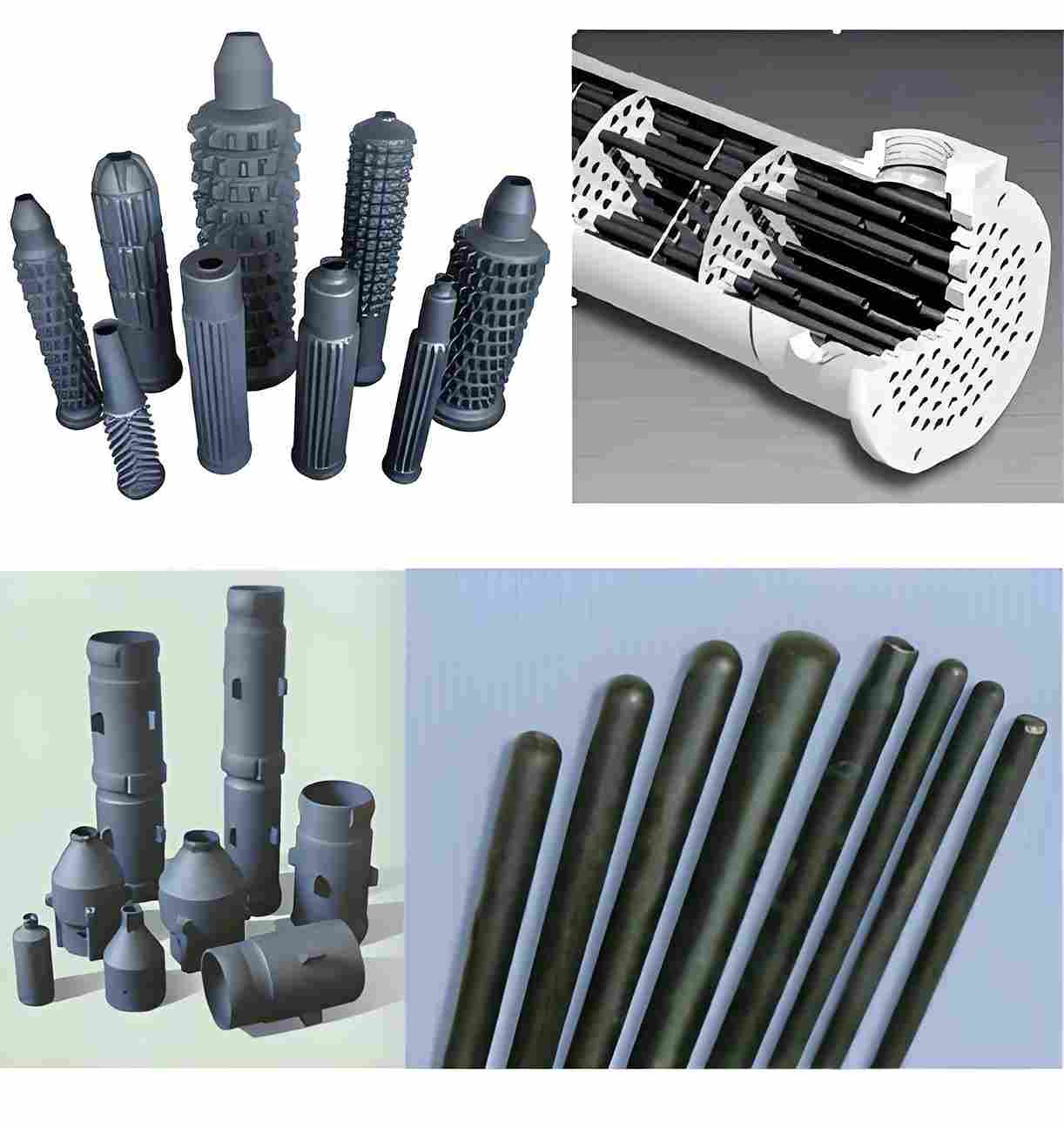
Silicon carbide (SiC) mechanical seals keep chemical and slurry pumps running smoothly by forming a hard, chemically inert barrier between the rotating shaft and the process fluid.
Quick Summary (FAQ)
- What makes SiC seals different? Their hardness (>9 Mohs), high‑temperature stability (>1500 °C) and resistance to acids, alkalis, and abrasives.
- Can I retrofit an existing pump? Yes – most standard pump housings accept a SiC seal insert with minimal machining.
- What is the typical lifespan? Field data show 3‑5 × the life of conventional metal or alumina seals under identical conditions.
- How does ZIRSEC support custom projects? We provide engineering drawings, rapid prototyping, and 24‑hour stock delivery for standard sizes.
Why Choose Silicon Carbide for Mechanical Seals?
During the past decade we have seen a measurable shift from stainless‑steel and alumina to SiC in harsh‑environment pumps. The factor that consistently appears in failure analyses is the combination of high temperature, aggressive chemistry, and abrasive particles. SiC’s crystal lattice gives it a Young’s modulus around 410 GPa and a compressive strength exceeding 260 MPa, which translates into a seal face that can tolerate both static and dynamic loads without micro‑cracking.
Material Advantages
| Property | Silicon Carbide | Alumina | Stainless Steel |
|---|---|---|---|
| Maximum Continuous Service Temperature | ≈ 1500 °C | ≈ 900 °C | ≈ 600 °C |
| Hardness (Mohs) | 9.2‑9.5 | 8.5‑9.0 | 4‑5 |
| Corrosion Resistance (acid/alkali) | Excellent | Good | Poor |
| Abrasion Resistance | Very High | High | Low |
Cost vs. Lifetime
Initial unit cost of a SiC seal ring is roughly 2‑3 times that of a stainless‑steel counterpart. However, lifecycle cost analysis performed on a 5 MW petrochemical pump (operating 4 000 h per year) showed a 65 % reduction in total ownership cost after five years because the SiC seal avoided unscheduled shutdowns and required only half the routine maintenance labor.
How the Seal Operates in Chemical Pumps
In a typical chemical pump the mechanical seal sits between the rotating shaft and the stationary pump housing. The SiC seal ring is pressed against a matching carbon or metal backup ring, forming a thin fluid film that carries the load. This film is generated by the pump’s own pressure differential; if the pressure rises, the film thickness increases, automatically compensating for wear.
Basic Architecture
Our standard configuration includes:
- SiC primary sealing face (diameter 30‑200 mm, tolerance ±0.2 mm).
- Carbon backup ring for compliance.
- Spring‑loaded end plates calibrated to 250‑500 N.
- Metal carrier that bolts to the pump housing.
Because SiC does not thermally expand much (CTE ≈ 4 × 10⁻⁶ K⁻¹), the seal maintains concentricity over a wide temperature range, eliminating the “thermal drift” problem common with metal seals.
Fluid Path and Leakage Prevention
The process fluid enters the seal chamber through a labyrinth channel that forces it to travel a tortuous path before reaching the seal face. Any microscopic leakage is immediately swept back into the pump’s suction line, where it is re‑circulated or routed to a containment tank. In our field trial at a European specialty chemicals plant, a 250 kW acid pump equipped with SiC seals showed a measured leakage rate of < 0.1 g/h, well below the 0.5 g/h threshold for product contamination.
Real‑World Case: Petro‑chemical Plant, Germany
In 2022 we supplied SiC seal rings for a series of 350 kW chlorine‑handling pumps. The pumps previously suffered seal face erosion every 8 months, causing unscheduled shutdowns that cost the plant about €12 000 per incident. After installation, the recorded mean‑time‑between‑failures (MTBF) increased to 28 months. The plant’s maintenance manager highlighted the change:
“The SiC seals survived three full chlorine cycles without any sign of wear. Downtime dropped dramatically, and we saved over €70 000 in the first year.”
How the Seal Operates in Slurry Pumps
Slurry pumps move abrasive mixtures of solid particles suspended in liquid. The mechanical seal must survive both chemical attack from the slurry carrier (often water or weak acids) and intense mechanical abrasion from the particles. SiC’s duplex structure—hard SiC grains bound by a silicon matrix—acts like a natural sandpaper that self‑sharpens under load, preventing the formation of deep scratches that can lead to seal failure.
Abrasive Media Handling
In a typical mining slurry pump operating at 150 m³/h, particle sizes range from 40 µm to 2 mm. The SiC seal ring’s roughness is deliberately engineered to Ra ≈ 1.5 µm, which creates micro‑cavities that trap particles and reduce their velocity at the seal face. Computational fluid dynamics (CFD) simulations performed by our engineering team showed a 30 % reduction in particle impact energy compared with alumina seals.
Wear Patterns and Maintenance
Unlike metal seals that develop pitting, SiC seals exhibit uniform wear rings that can be measured with a simple micrometer. Replacement intervals are therefore predictable. Our client in Western Australia reported that after switching to SiC seals, the required maintenance window dropped from 2 days to 0.5 days per year, freeing up valuable production time.
Case: Iron‑ore Slurry Pump, Australia
In 2023 a 500 kW slurry pump at an iron‑ore processing plant was retrofitted with ZIRSEC custom SiC seal rings (diameter 120 mm, tolerance ±0.15 mm). Prior to retrofit the pump suffered seal failures every 6 months, each costing AUD 15 000 in lost throughput. After retrofit:
- Seal life extended to 22 months.
- Measured wear depth was < 0.05 mm after 20 months of operation.
- Overall pump availability increased from 92 % to 98.5 %.
Design and Installation Guidelines
Even the best material will fail if installed incorrectly. Below are the practical rules we enforce on every ZIRSEC project.
Tolerances and Alignment
• Shaft run‑out should be ≤ 0.02 mm for diameters up to 200 mm.
• Face perpendicularity tolerance ± 0.03°.
• Use a calibrated dial indicator to verify axial preload before tightening the carrier bolts.
Cooling and Back‑pressure Management
SiC behaves well at high temperature, but prolonged exposure above 1200 °C can cause oxidation of the silicon matrix. Providing a thin water‑cooled jacket around the seal housing extends service life by up to 40 %. Additionally, ensure the backup ring vent is not restricted; a blocked vent can generate back‑pressure that lifts the seal face, leading to dry‑running.
Customization Options from ZIRSEC
We manufacture both standard‑size SiC seal rings (stock inventory, 24‑hour dispatch) and fully bespoke designs based on client CAD files. Our engineering support includes:
- Finite‑element analysis of stress distribution under maximum shaft speed.
- Selection of surface finish (Ra 0.8‑3.2 µm) to match slurry particle size.
- Optional metallized edge coating for enhanced bonding with the carrier.
Need a quick quote? Visit our Silicon Carbide Tubes page for a reference catalog and contact us directly.
Frequently Asked Questions
- What is the typical operating pressure range for SiC mechanical seals?
- From 0.1 MPa up to 25 MPa, depending on the seal carrier design.
- Can SiC seals be used with alkaline process fluids?
- Yes, SiC exhibits excellent resistance to both strong acids and bases; we have documented service in 20 % NaOH solutions without degradation.
- How do I verify that a seal is still within tolerance?
- Measure the wear ring with a micrometer; if the depth exceeds 0.1 mm, schedule replacement.
- Do I need special machining for the pump housing?
- Only a flat seat of 0.02 mm flatness and a diameter tolerance of ±0.1 mm are required—standard CNC turning can achieve this.
Bottom Line & Call to Action
Silicon carbide mechanical seals deliver unmatched durability in chemical and slurry pumps, turning what used to be a costly maintenance headache into a predictable, low‑maintenance asset. By selecting a proven supplier like ZIRSEC, you gain access to 20 years of ceramic manufacturing expertise, rapid prototyping, and a worldwide logistics network that can ship standard stock within 24 hours or deliver custom pieces on a fast‑track schedule.
If you are ready to eliminate unplanned downtime and extend pump life, contact our technical team at info@zirsec.com or request a free engineering review through our website. Let us help you design the next generation of high‑performance pumping systems.