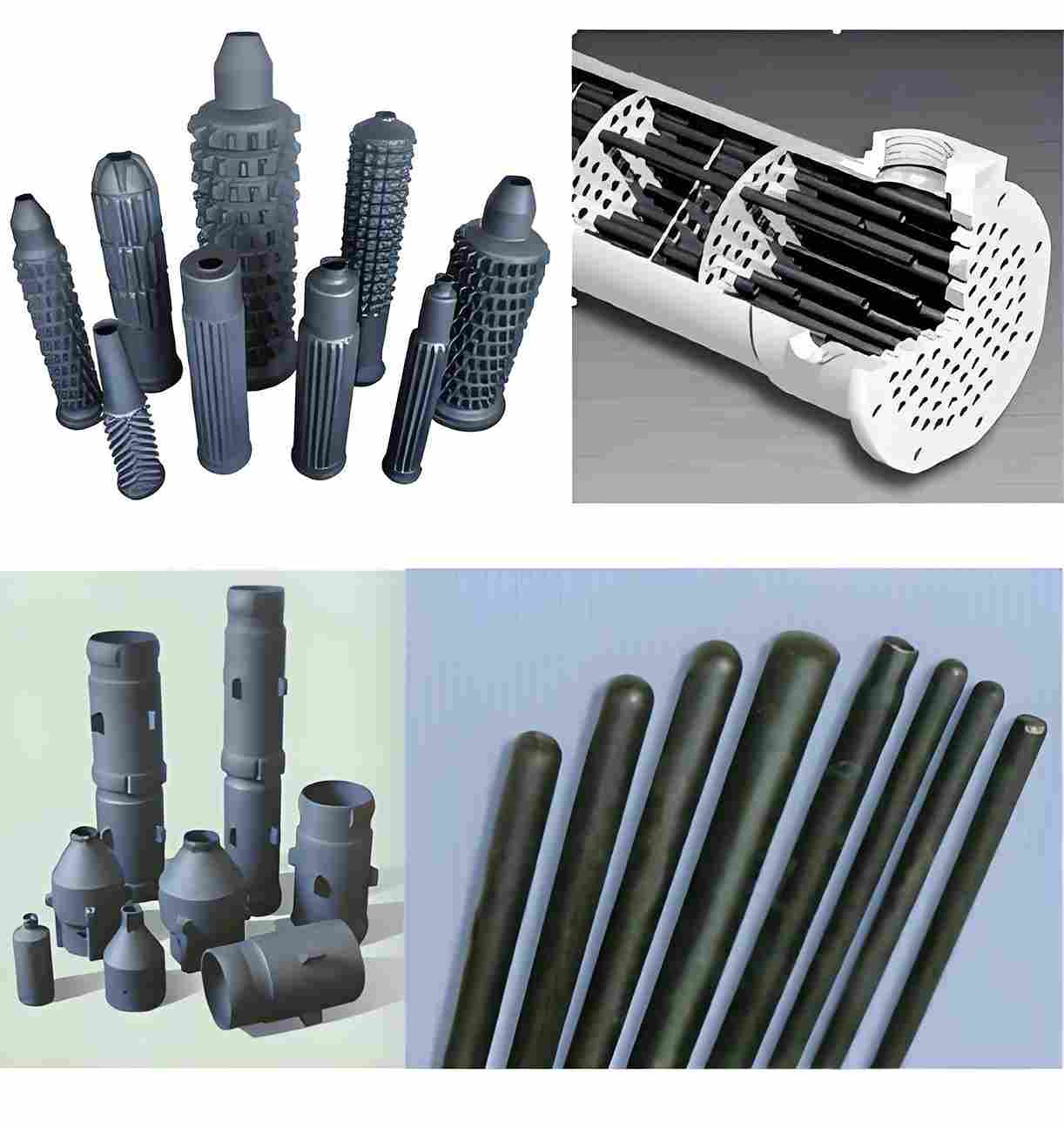
Silicon carbide (SiC) almost never wins on unit price. Compared with metals and standard ceramics, it is more expensive per kilogram and more demanding to machine. The question engineers actually care about is different:
Does silicon carbide pay for itself over the full lifecycle of the equipment?
This article looks at cost vs performance for silicon carbide in real industrial applications and explains when the higher material cost is justified, and when it might be overkill.
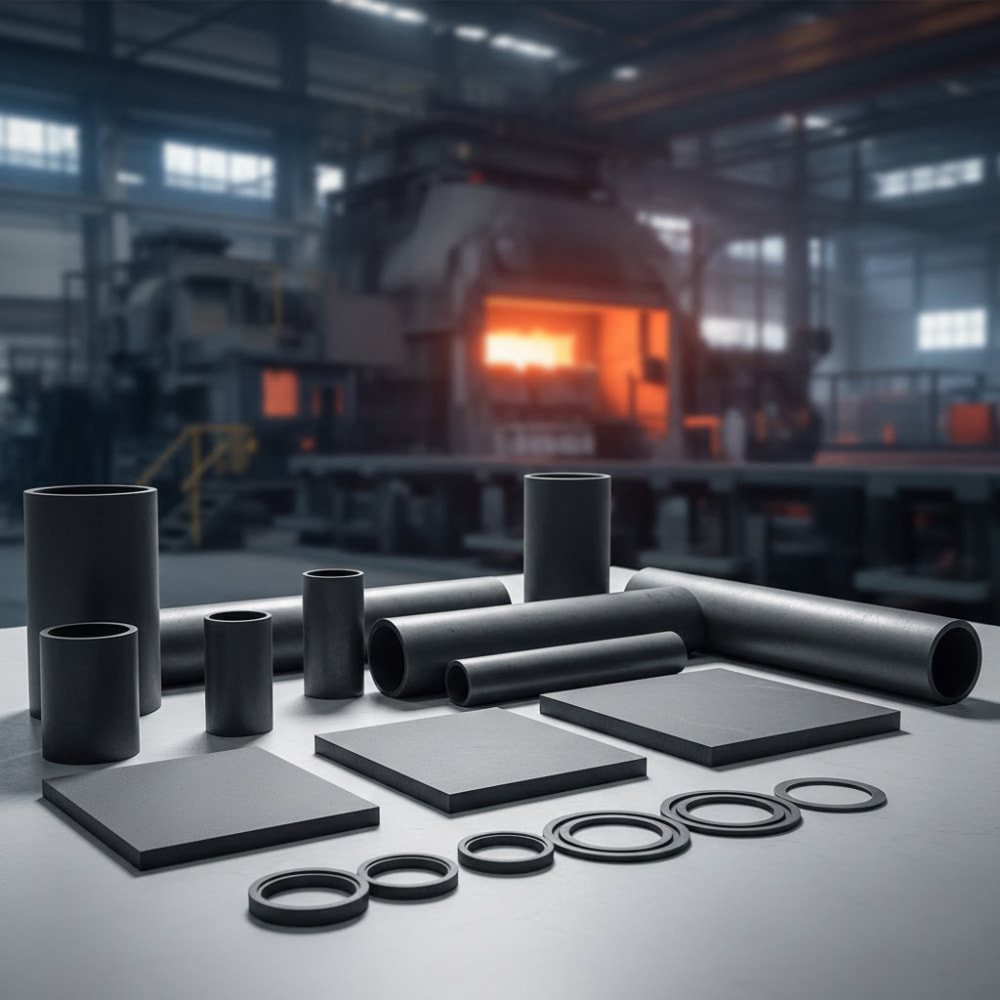
Why Silicon Carbide Looks Expensive at First Glance
On a simple line-item quote, silicon carbide components usually sit at the top of the price list. Reasons are straightforward:
- Raw material and processing: High-purity SiC powder, advanced sintering (SSiC, RBSiC, RSiC), and controlled microstructures cost more to produce than standard alumina or metal parts.
- Precision machining and lapping: SiC is extremely hard, so grinding and finishing require dedicated tools, time, and experience.
- Quality control: Components for high-temperature, high-pressure, or critical sealing need tight tolerances and inspection, adding to total cost.
If you only compare price per piece, SiC often looks like the “expensive option” on the RFQ. But in harsh service, focusing on unit price alone is usually the fastest way to lose money.
What You Actually Pay for in Industrial Service
The real economic picture of a component includes more than its invoice price. Typical cost buckets are:
- Initial component cost (material + machining + logistics)
- Installation and commissioning time and labor
- Planned replacement cost (spares, scheduled shutdowns)
- Unplanned failures – emergency maintenance, line stops, safety risks
- Energy efficiency and process performance – impact on fuel, throughput, and product quality
Silicon carbide earns its keep by reducing the last four, not the first one.
Where Silicon Carbide’s Performance Translates into Real Savings
SiC’s main value drivers are not mysterious. They show up repeatedly across applications:
- Longer service life in high-temperature, corrosive, and abrasive environments
- Less deformation at temperature (less sagging, warping, or bowing)
- Higher thermal conductivity (more efficient heat transfer and reduced hotspots)
- Higher reliability, reducing unplanned shutdowns and leak events
When these benefits map directly onto your plant’s pain points, the total cost of ownership shifts in favor of SiC very quickly.
Example: Silicon Carbide Tubes in High-Temperature Service
Consider a furnace or heat exchanger using tubes in a high-temperature, corrosive environment:
- Metal tubes or standard ceramics oxidize, creep, or crack after a limited number of cycles.
- Each failure requires a cooldown, replacement, and restart – often measured in days, not hours.
- Process instability during the degradation phase can affect product quality and yields.
Upgrading to silicon carbide tubes changes the math:
- Tubes maintain geometry and strength over many more thermal cycles.
- Higher thermal conductivity improves temperature uniformity, often allowing more compact or efficient designs.
- Failures drop from “unpredictable” to “aligned with planned shutdowns.”
The result is fewer tube replacements, more stable production, and far less unplanned downtime. For many plants, the avoided downtime alone pays for the premium in SiC material.
Example: SiC Plates and Kiln Furniture vs Deformation and Scrap
In kilns or high-temperature furnaces, shelves and plates define how your load behaves. When lower-grade slabs or standard ceramics sag:
- Fired product warps or cracks.
- Stacking patterns must be de-rated to avoid overloading shelves.
- Operators spend more time compensating for uneven heating and geometry.
By switching key load-bearing levels to silicon carbide plates and kiln furniture, plants typically see:
- More uniform firing and consistent product dimensions.
- Higher stacking density, because shelves remain flatter under load.
- Reduced scrap and rework linked to shelf deformation.
Even if each SiC plate costs several times more than a basic ceramic slab, the payback often comes from improved yield and reduced replacements over a few firing campaigns.
How to Compare Cost vs Performance in a Structured Way
To move beyond “SiC is expensive,” it helps to use a simple cost model. At minimum, compare:
- Component lifetime: How long does each material last before replacement?
- Cost per cycle: Component cost divided by the number of operating cycles or hours.
- Downtime cost: Lost production, labor, and energy per unplanned failure.
- Quality impact: Scrap, rework, or off-spec product linked to component degradation.
A simplified approach:
- Estimate the average lifetime of the current material and the expected lifetime of SiC (based on tests, pilot trials, or supplier experience).
- Calculate the total cost per year, including replacement parts, installation, and downtime for each option.
- Compare the cost per unit of useful production (e.g. cost per ton, per batch, or per operating hour).
In many harsh-duty applications, the SiC option shows a lower cost per unit of output, even though the unit price is higher.
When Silicon Carbide Is Probably Overkill
There are also clear situations where SiC does not make economic sense:
- Operating temperatures are moderate, far below metal or standard ceramics limits.
- Environment is non-corrosive and non-abrasive, with clean fluids and low particulate.
- Components are easy and cheap to replace, with minimal downtime impact.
- The process is not bottlenecked by these components or their failure modes.
In those cases, switching to SiC may improve lifespan, but the additional performance might not translate into measurable financial gain. Alumina, cordierite, or metal can remain the rational choice.
Signals That It’s Time to Evaluate SiC
You don’t need a full financial model to sense that your current material is failing economically. Typical warning signs:
- Unplanned shutdowns due to tube, nozzle, or liner failure are recurring.
- You are regularly replacing parts well before your planned service interval.
- Operators already treat certain components as “consumables” in a supposedly long-life system.
- Scrap or quality issues can be traced back to warping, erosion, or cracking of ceramic or metal parts.
- Maintenance teams are asking for “something more durable” in the same position every shutdown.
When that pattern appears, the premium for a silicon carbide solution is no longer a luxury item; it becomes a candidate for reducing total cost.
How Zirsec Reduces Risk When Moving to Silicon Carbide
Moving from standard materials to silicon carbide is not just a catalog swap. To make the cost vs performance equation work in your favor, you need a controlled upgrade path:
- Start with the worst offenders: Identify the one or two components causing the most downtime or scrap.
- Redesign in SiC: Use a suitable grade and geometry (for example reaction-bonded or sintered SiC tubes, plates, or seal rings).
- Run a controlled trial: Track lifetime, failure modes, and process stability vs the previous material.
- Scale out: Once the ROI is clear, apply the same approach to similar components.
Zirsec’s small-batch and customization capability makes this easier. Instead of committing to a full plant conversion, you can validate the business case with limited, targeted upgrades.
FAQ: Cost vs Performance for Silicon Carbide
1. How much more expensive is SiC compared with metals or alumina?
It depends on geometry and grade, but as a rough rule, SiC components can be several times more expensive than standard metal or alumina parts on a per-piece basis. The key is that they often last multiple times longer and reduce unplanned failures, so the cost per operating hour or per ton of product can actually be lower.
2. In what types of applications does SiC pay back the fastest?
SiC usually pays back quickest in high-temperature, high-wear, or corrosive services where downtime is expensive: furnace tubes, burner components, hot gas paths, chemical pump parts, and kiln furniture. Anywhere you are already fighting premature failures is a prime candidate.
3. How do I justify SiC to management if the unit price is higher?
Frame the discussion around total cost of ownership: number of failures, downtime hours, scrap, and maintenance labor. Show the historical cost of your current solution and model a realistic improvement scenario with SiC. Management usually cares more about plant availability and output than about saving on individual parts.
4. Do I need to redesign my equipment to use SiC components?
Not always. In many cases, silicon carbide parts can be machined to match existing dimensions and interfaces. For more demanding services, a small redesign (for example, adjusting supports, clearances, or sealing surfaces) can further increase lifetime and reliability.
5. Is SiC always the best choice among advanced ceramics?
No. If your main problem is impact or mechanical shock, silicon nitride or zirconia may be better. If you need a combination of cost-effectiveness and moderate performance, alumina may still be enough. SiC is strongest where heat, corrosion, and abrasion dominate.
6. What information should I prepare before asking for a SiC quotation?
Useful data include: drawings, operating temperature, pressure, fluid composition, solids content, current material, observed failure modes, and target lifetime. The more complete this picture, the easier it is to choose the right SiC grade and geometry.
Conclusion: When Silicon Carbide’s Price Is Justified
Silicon carbide will probably never be the cheapest line on your BOM. It doesn’t need to be. In the right applications, it wins by:
- Lasting longer under extreme conditions
- Reducing unplanned downtime and emergency maintenance
- Improving process efficiency and yield
If your plant is already paying the price for tube failures, warped plates, or worn-out seals, then SiC is less a “premium upgrade” and more a tool for stabilizing your process economics. The practical way forward is simple: convert one critical component, measure the results, and then decide how far to extend silicon carbide across your system.