Alumina, zirconia, silicon carbide, and silicon nitride are the “big four” of advanced ceramics in industrial equipment. On datasheets they all look impressive. In real plants, they fail in very different ways.
This guide compares these four materials from a practical engineering perspective and explains how to choose between them for high-temperature, high-wear, and corrosive applications. It also shows where silicon carbide (SiC) components from Zirsec are positioned in this landscape.
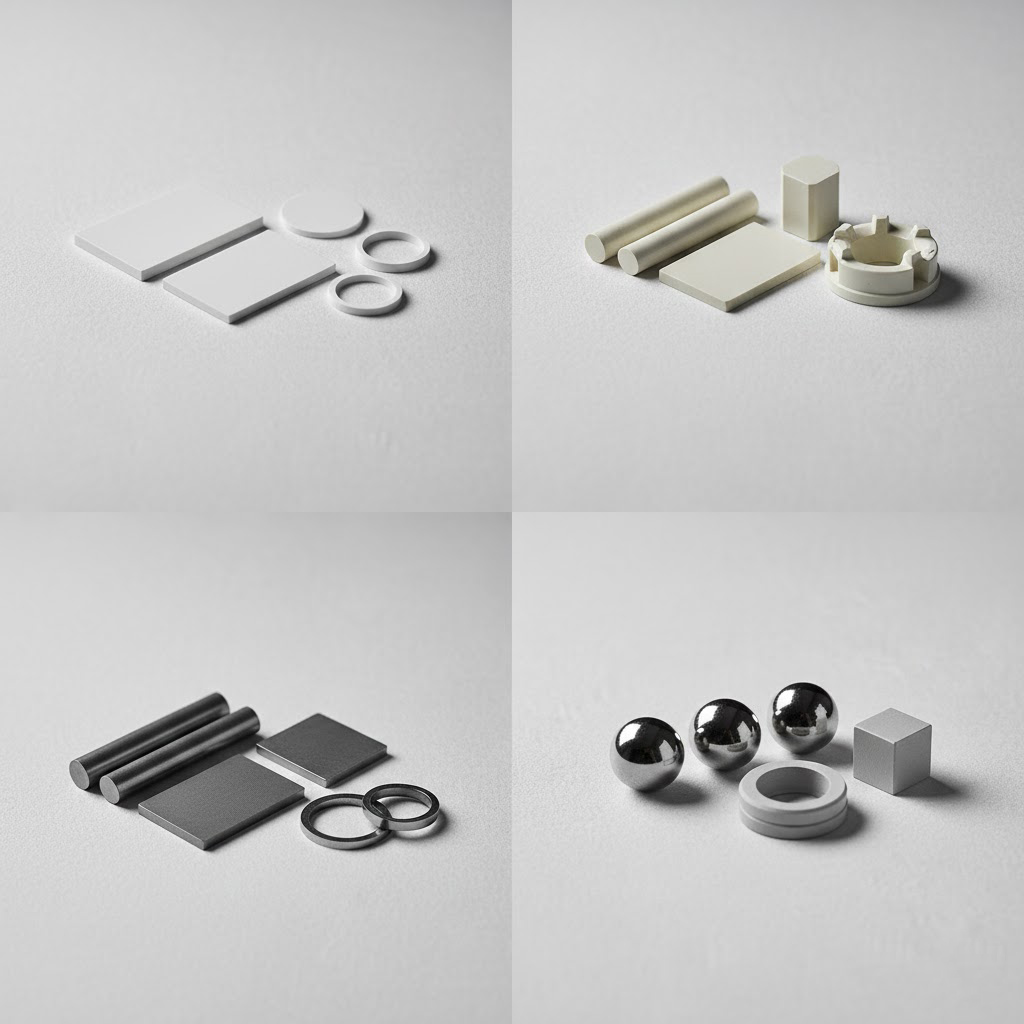
Four advanced ceramics at a glance
Each material has a distinct profile:
- Alumina (Al₂O₃): the general-purpose workhorse – good temperature capability, good wear resistance, strong electrical insulation, and relatively low cost.
- Zirconia (ZrO₂): high toughness and very low thermal conductivity – used where impact resistance and thermal barrier effects matter.
- Silicon carbide (SiC): high thermal conductivity, excellent wear and corrosion resistance, very strong at high temperature.
- Silicon nitride (Si₃N₄): high toughness, good strength retention, and good thermal shock resistance – often used in bearings and rotating parts.
Property comparison: alumina, zirconia, SiC, Si₃N₄
Values are indicative ranges for engineering grades rather than exact numbers for a specific manufacturer, but they’re sufficient to understand the trade-offs.
| Property | Alumina | Zirconia | Silicon Carbide | Silicon Nitride | Practical note |
|---|---|---|---|---|---|
| Typical thermal conductivity (W/m·K) | ≈ 20–35 | ≈ 2–3 | ≈ 80–120 | ≈ 20–30 | SiC conducts heat very well; zirconia is almost an insulator. |
| Max. working temperature (in air) | High (up to ~1700 °C, grade-dependent) | High, but phase stability & environment dependent | Very high (≈ 1500–1600 °C, grade & atmosphere dependent) | High (≈ 1200–1400 °C typical) | All handle heat; SiC and high-purity alumina are best for very hot duty. |
| Fracture toughness | Moderate | High (transformation toughening) | Low to moderate | High | Zirconia & Si₃N₄ handle impact / shock better than alumina or SiC. |
| Hardness / wear resistance | High | High | Very high | High | SiC is usually top choice for extreme abrasion. |
| Thermal shock resistance | Moderate | Good | Good to very good (high k, low expansion) | Very good | SiC and Si₃N₄ are preferred for rapid heating / cooling. |
| Thermal expansion | Moderate | Relatively high | Low | Low to moderate | Zirconia moves more with temperature; SiC moves the least. |
| Chemical / corrosion resistance | Good | Good, but environment-sensitive | Excellent in many aggressive media | Good | SiC is usually the first choice for hot corrosive fluids and gases. |
| Electrical behaviour | Excellent insulator | Excellent insulator | Semi-conductive | Insulator / semi-insulator | For high-voltage insulation, alumina & zirconia are simpler choices. |
| Relative material cost | Low to moderate | High | High (engineering-grade) | High | Alumina is cheapest; the others must justify themselves on performance. |
Alumina: the general-purpose workhorse
Where alumina shines:
- General wear components in moderate-temperature, moderate-duty systems
- Electrical insulators, sensor bodies, and structural supports
- Applications where cost and availability are more critical than peak performance
Typical use cases: bushings, guides, insulators, simple wear pads, and components in relatively clean process environments.
Limitations:
- Thermal shock resistance is limited compared with SiC and Si₃N₄
- Wear and erosion in dirty slurries can still be high
- At the extreme high end of temperature + mechanical load, alumina will be the first to drop out
Alumina is usually your “baseline” material. If it survives comfortably, there’s no urgent need to upgrade. Once it starts cracking, eroding, or failing early, you step up to SiC, Si₃N₄, or zirconia depending on what’s killing it.
Zirconia: toughness and thermal barrier
Where zirconia shines:
- High fracture toughness and damage tolerance compared with most ceramics
- Very low thermal conductivity – it behaves more like a thermal barrier
- Good for parts that see mechanical shocks, chipping or high contact stresses
Typical use cases: small, high-stress components such as valve seats, ball heads, medical tools, and thermal barrier elements near very hot zones.
Limitations:
- Low thermal conductivity is a disadvantage where you want heat to move, such as in heat exchangers or radiant components
- Phase stability and long-term behaviour depend on composition and environment
- Material cost is significantly higher than alumina
Zirconia is rarely used as the main hot-face or heat-transfer surface in industrial furnaces. It is better for tough, thermally insulating pieces that must survive localized abuse.
Silicon carbide: high heat, high wear, high throughput
Where silicon carbide shines:
- High thermal conductivity: excellent for heat transfer, fast response, and reducing hot spots
- Very high hardness and wear resistance, especially in abrasive flows
- Outstanding performance in high-temperature, corrosive gas and liquid environments
- Good thermal shock resistance thanks to high k and low thermal expansion
Typical use cases:
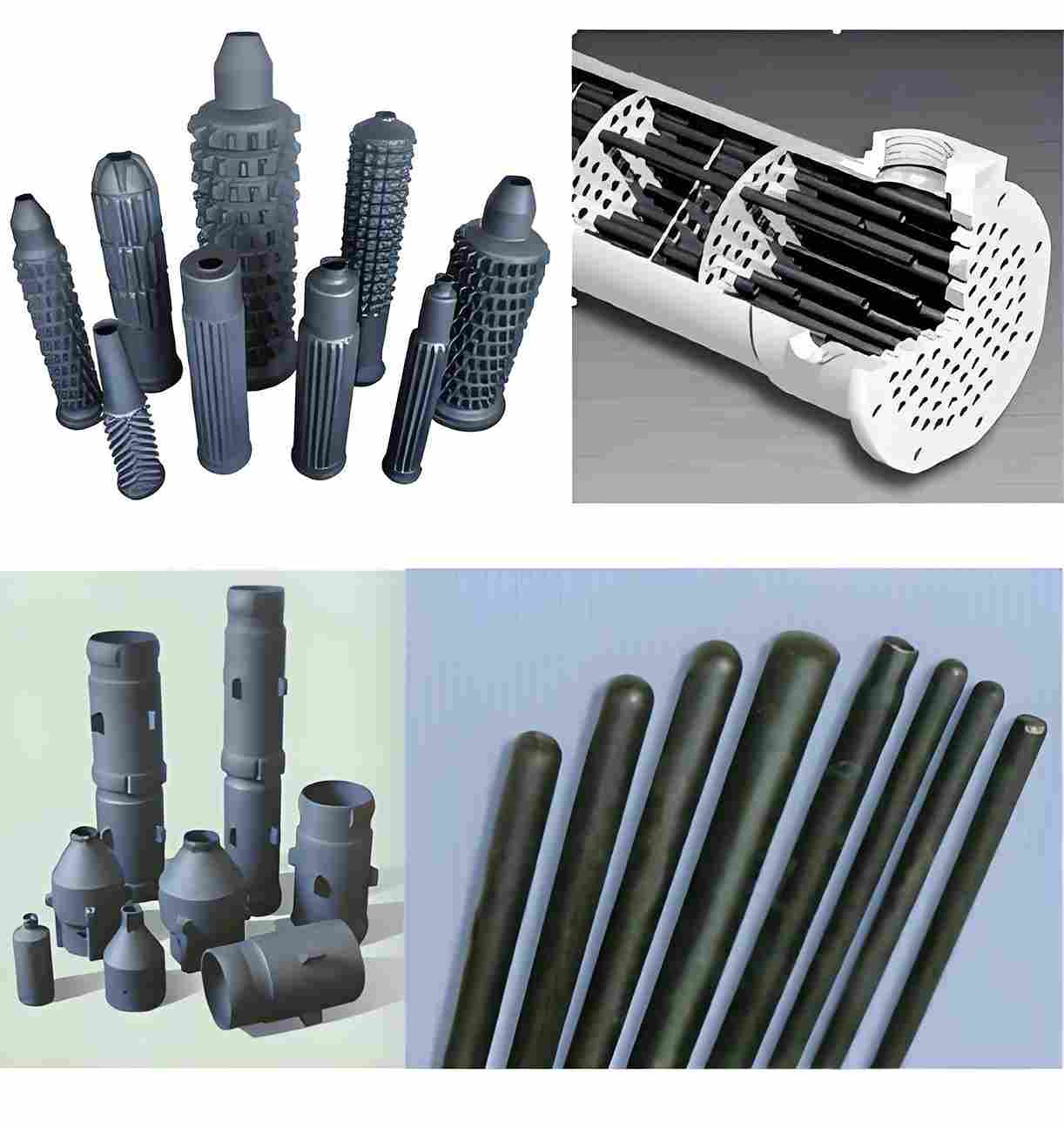
- Heat exchanger tubes, radiant tubes, and hot gas paths
- Wear liners, plates, and kiln furniture in high-temperature furnaces
- Seal rings, sleeves, and pump components in chemical and petrochemical service
For example, Zirsec silicon carbide tubes combine high thermal conductivity with corrosion and thermal shock resistance for harsh heat-transfer applications.
Limitations:
- Lower fracture toughness than zirconia or Si₃N₄ – must be protected from impact and misalignment
- Semi-conductive behaviour means you need to think about electrical effects in some designs
- Higher component cost than alumina – needs to pay back through uptime and performance
In many high-temperature industrial systems, SiC becomes the logical choice when alumina fails too often and when heat-transfer efficiency is important, not just survival.
Silicon nitride: tough, reliable, and rotation-friendly
Where silicon nitride shines:
- High fracture toughness and good damage tolerance for a ceramic
- Good thermal shock resistance, suitable for rapid heating and cooling
- High strength-to-weight ratio, attractive for rotating components
Typical use cases:
- Rolling bearings and balls in high-speed, high-temperature equipment
- Engine components, turbocharger parts, and other rotating elements
- Structural components where both toughness and temperature capability are needed
Limitations:
- Lower thermal conductivity than SiC – not ideal as a primary heat-transfer surface
- Cost and processing are more complex than alumina
- Applications usually focus on mechanical performance, not maximum k
Silicon nitride is often chosen when you need a “mechanically forgiving” advanced ceramic where alumina is too brittle but SiC’s extra thermal conductivity is not essential.
Application-based selection: which ceramic fits your job?
High-temperature heat transfer and corrosive gases/liquids
- Best fit: silicon carbide
- Why: high thermal conductivity, great hot strength, excellent corrosion and wear resistance
- Typical components: SiC tubes, plates, baffles, and blocks in heat exchangers, furnaces and reactors
General high-temperature wear components and insulators
- Best fit: alumina
- Why: solid performance at moderate cost, proven supply chain
- Typical components: guides, rings, insulators, moderate-duty liners
Impact-prone and thermally insulated parts
- Best fit: zirconia
- Why: high fracture toughness, low thermal conductivity
- Typical components: valve seats, balls, wear inserts, thermal barrier parts near hotspots
Bearings and high-speed rotating components
- Best fit: silicon nitride
- Why: combination of toughness, thermal shock resistance, and low density
- Typical components: bearing balls and races, rotor components, high-speed supports
Design trade-offs to keep in mind
When selecting among alumina, zirconia, SiC and Si₃N₄, it helps to be explicit about what matters most in your project. Common trade-offs:
- Thermal conductivity vs insulation
If you want to move heat efficiently (heat exchangers, radiant components), SiC is the primary candidate. If you want to block heat, zirconia or alumina may be better. - Hardness vs toughness
SiC and alumina are very hard but relatively brittle. Zirconia and Si₃N₄ bring more toughness for impact or shock-heavy environments. - Cost vs lifetime
Alumina is cheapest up front. SiC, zirconia and Si₃N₄ must earn their place through longer lifetime, fewer failures, or higher process efficiency. - Temperature vs mechanical load
For extreme heat plus mechanical load, SiC and high-purity alumina are usually starting points. For high mechanical shock at moderate temperatures, Si₃N₄ and zirconia often win.
How Zirsec positions silicon carbide in this landscape
Zirsec focuses on industrial-grade silicon carbide ceramics where high temperature, high wear, and corrosion come together. Typical component families include:
- Silicon carbide tubes for heat exchangers, furnace systems, and corrosive pipelines
- Custom SiC plates, tiles, and structural parts for kiln furniture and hot-face linings
- Seal rings, sleeves, and mechanical parts for pumps and rotating equipment
For projects where it is not yet clear whether alumina, zirconia, SiC or Si₃N₄ is the best fit, Zirsec’s team can review your drawings, operating conditions, and failure history, then recommend whether a silicon carbide solution will realistically outperform your current material choice.
Practical selection checklist
Before you lock in a material, answer these questions:
- What is the maximum continuous temperature and how fast do you heat/cool?
- Is heat transfer or insulation more important in this component?
- What are the dominant failure modes today: cracking, wear, corrosion, or impact?
- How expensive is downtime compared with the price difference between materials?
- Do you need electrical insulation or is semi-conductive behaviour acceptable?
If your system is running hot, dirty, and expensive to stop, there is a good chance that alumina has hit its ceiling and it is time to evaluate silicon carbide or silicon nitride – with zirconia handling the most impact-prone and insulating roles. Starting from a small trial on your worst-performing components is usually the fastest way to prove the business case.