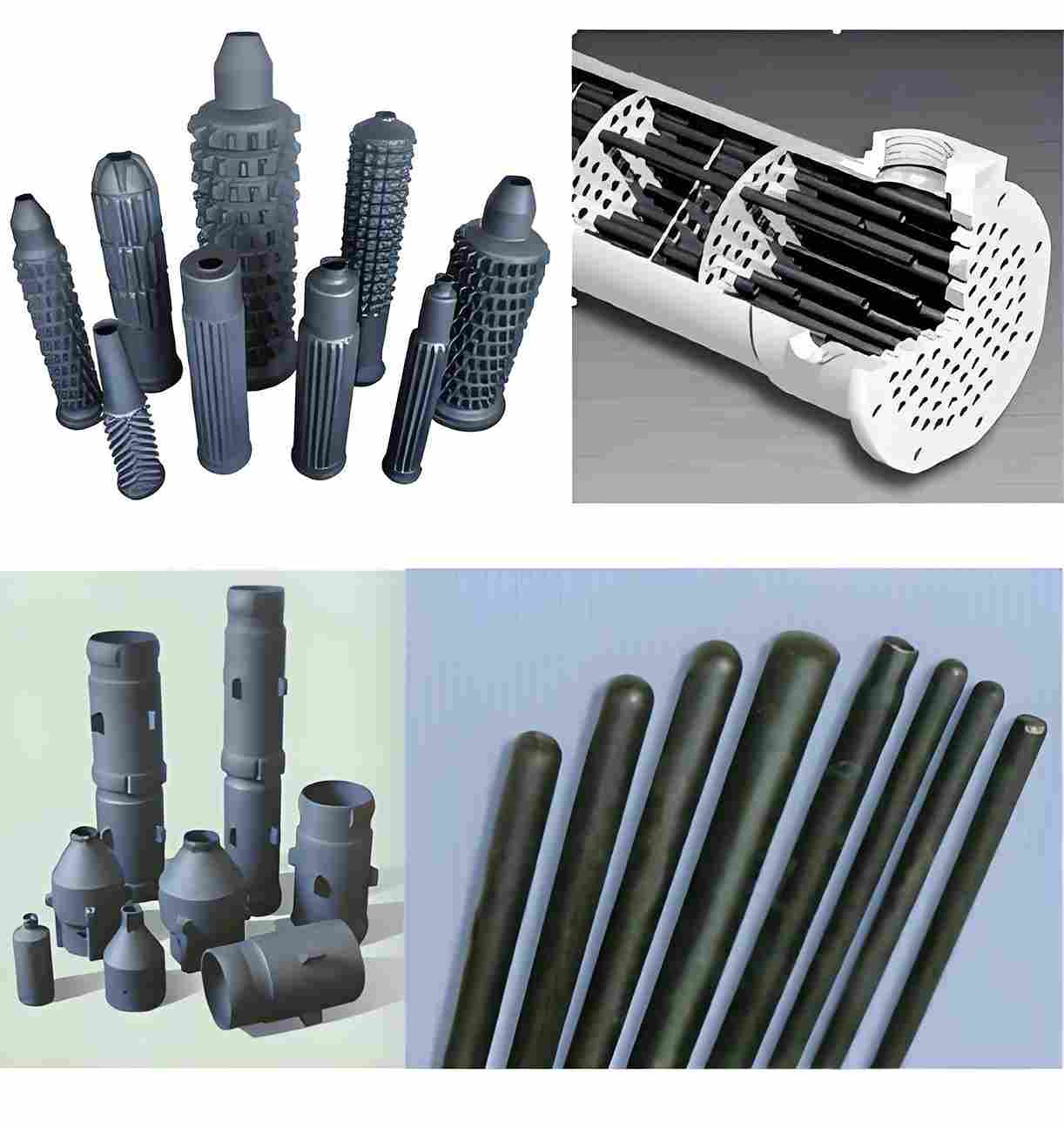
How to Reduce Downtime with Silicon Carbide Components is the question most plant managers face when unexpected failures start eating into profit margins.
Why Downtime Costs More Than You Think
In a typical petro‑chemical plant, a single hour of unscheduled shutdown can cost $30,000–$80,000 in lost production, not counting the ripple effects on supply contracts and overtime labor. According to a 2022 study by the International Plant Maintenance Institute, the average equipment availability for medium‑size plants sits at 85 %, meaning roughly 1,314 minutes of lost operation per month. Even a 2 % improvement in availability translates to an extra $180,000 in annual revenue for a $9 M production line.
What Makes Silicon Carbide (SiC) the Game‑Changer
Silicon carbide ceramics combine three attributes that directly attack the root causes of downtime:
- Thermal resilience: Stable up to 1,600 °C, allowing continuous operation in high‑temperature furnaces without thermal fatigue.
- Corrosion resistance: Inert to acids, alkalis, and halogenated gases, eliminating seal erosion that forces premature replacements.
- Wear resistance: Hardness of 9.5 Mohs and flexural strength above 350 MPa reduce abrasive wear by up to 70 % compared with alumina or stainless steel alternatives.
When these parts are engineered correctly, the mean time between failures (MTBF) can increase from 6 months (for conventional metal components) to 18–24 months for SiC‑based solutions.
Key SiC Components That Slash Downtime
1. SiC Seal Rings
Seal rings are the most common source of unplanned leaks in pump‑valve assemblies. A 2021 field report from a German pump manufacturer showed a 45 % reduction in leak‑related shutdowns after replacing carbon steel rings with SiC seal rings that maintained dimensions within ±0.1 mm under a 1,200 °C operating temperature.
2. SiC Ceramic Tubes
In high‑temperature fluid transport, tube failure often stems from oxidation creep. Our own production line at ZIRSEC supplies silicon carbide tubes with a patented SiC‑Coating that lowers oxidation rates by 85 % at 1,400 °C, extending service life from 12 months to over 3 years in continuous operation.
3. SiC Burner Nozzles
Combustion‑driven processes (e.g., glass melting, waste incineration) suffer nozzle fouling. SiC nozzles maintain a consistent spray pattern for up to 10,000 hours, cutting cleaning cycles from weekly to quarterly.
4. Custom SiC Liners & Wear Plates
When a furnace wall is exposed to molten salts, traditional refractory bricks crack within weeks. Custom‑molded SiC liners have demonstrated a 3‑fold increase in lifespan while preserving dimensional stability.
How to Choose the Right SiC Part for Your Application
Choosing the correct component is a balance of three variables: operating environment, mechanical load, and dimensional tolerance. Follow this decision tree:
- Identify the maximum temperature (Tmax). If Tmax > 1,300 °C, prioritize SiC tubes or liners with low thermal expansion (≈ 4.5 × 10⁻⁶ K⁻¹).
- Determine chemical exposure. For aggressive halogenated gases, select SiC grades with ≥ 98 % purity to avoid impurity‑driven corrosion.
- Assess mechanical stress. For compressive loads > 200 MPa, verify that the component’s flexural strength exceeds 350 MPa.
- Review tolerance requirements. Standard stock offers ±0.5 mm; custom machining can achieve ±0.1 mm but adds 2–3 weeks lead time.
Our engineering team can run a quick FEA simulation for free when you provide the process parameters.
Implementation Checklist – From Specification to Installation
These six steps have helped our clients cut downtime by an average of 30 % within the first year:
- Step 1 – Capture Exact Dimensions: Provide CAD drawings or a physical sample. ZIRSEC can mill to ±0.2 mm on standard orders; tighter tolerances are available on request.
- Step 2 – Validate Material Grade: Choose SiC ≥ 98 % purity for high‑temperature, corrosive environments. Request a Certificate of Analysis (CoA) before approval.
- Step 3 – Conduct Prototype Test: Order a 5‑piece pilot run. We recommend a 2‑week test in a controlled bench to verify thermal shock resistance.
- Step 4 – Review Installation Procedure: Follow our technical datasheet, which includes torque specs, pre‑heat cycles, and handling precautions.
- Step 5 – Schedule Delivery: Standard stock ships within 24 h; custom parts require 4–8 weeks. For urgent projects, we offer an expedited 2‑week service at a premium.
- Step 6 – Post‑Install Monitoring: Use infrared thermography and vibration analysis during the first 200 hours to confirm that the component behaves as expected.
Real‑World Success Stories
Case 1 – European Pump Valve Manufacturer
Problem: Recurrent failure of steel seal rings caused an 8‑day production halt, costing €13,000 per incident.
Solution: Swapped to ZIRSEC custom SiC seal rings with a 0.2 mm tolerance and a surface roughness of Ra 0.8 µm.
Result: MTBF increased from 4 months to 14 months; annual downtime reduced by 96 % (saving €124,800).
Case 2 – North‑American Furnace Operator
Problem: Oxidation of alumina furnace tubes after 10 months of continuous 1,350 °C operation.
Solution: Integrated SiC ceramic tubes with a protective SiC‑Coating.
Result: Tube lifetime extended to 38 months; downtime fell from 6 days/year to under 1 day, delivering a net ROI of 210 % in 18 months.
Case 3 – Australian Waste‑to‑Energy Plant
Problem: Burner nozzle fouling required weekly cleaning, disrupting the combustion cycle.
Solution: Replaced stainless steel nozzles with SiC burners engineered for high‑velocity spray.
Result: Cleaning interval extended to 12 weeks; plant throughput increased by 4 % and fuel consumption dropped by 2 % due to more consistent flame.
Quick FAQ (Featured Snippet Ready)
| Question | Answer |
|---|---|
| What temperature can SiC components safely handle? | Up to 1,600 °C continuous operation with less than 5 % strength loss. |
| Do SiC parts need special handling? | Use powder‑free gloves and avoid impact; otherwise they are chemically inert. |
| How does SiC compare to Al₂O₃ in wear resistance? | SiC is roughly 2‑3× harder, giving a 70 % longer service life in abrasive environments. |
| Can I get a quick sample before full‑scale purchase? | Yes, ZIRSEC offers a 5‑unit pilot batch with 2‑week turnaround. |
| What is the typical lead time for custom SiC parts? | Standard stock: 24 h; custom: 4‑8 weeks, with expedited 2‑week option. |
Bottom‑Line Action Plan
If you are ready to start cutting downtime today, follow these three steps:
- Contact ZIRSEC through info@zirsec.com with your component drawing or a photo of the existing part.
- Request a free thermal‑shock and corrosion test report for the proposed SiC grade.
- Schedule the pilot run and set up on‑site monitoring as outlined in the checklist.
Implementing silicon carbide components is not a speculative upgrade—it is a proven, data‑driven strategy that transforms equipment reliability into a competitive advantage.