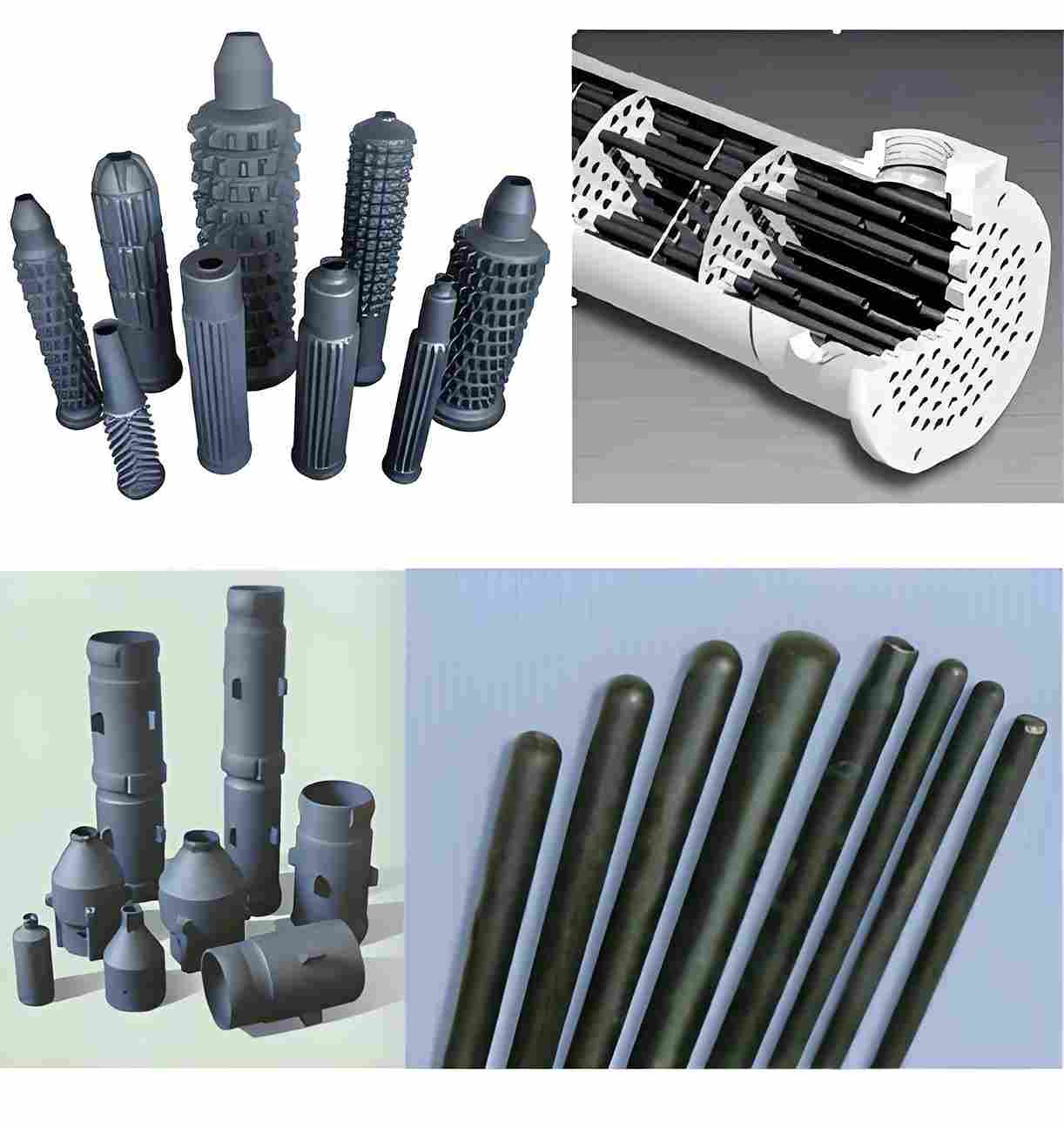
When a silicon carbide component fails in service, it is almost never “just the material.” Most of the time, the real causes are poor process control, inconsistent quality, or missing inspection steps. For critical equipment, relying on a simple “OK” from the supplier is not enough.
This guide explains how to test and ensure quality in silicon carbide (SiC) components, from dimensional checks and visual inspection to performance testing and documentation. The goal is simple: fewer surprises in the field and more predictable service life in your pumps, furnaces, and process lines.
1. Start from the end: define what “quality” means for your application
“High quality” is meaningless unless it is linked to how the component is used. Before writing any test plan, clarify:
- Function of the part (seal, structural support, wear surface, tube, crucible, nozzle, etc.).
- Operating conditions (temperature, pressure, fluid chemistry, solids content, number of cycles).
- Dominant failure risks (wear, cracking, leakage, distortion, corrosion, contamination).
Once this is clear, you can decide which tests really matter. A mechanical seal ring for a chemical pump needs different priorities than a silicon carbide plate in a kiln, or a high-temperature tube in a furnace.
2. Dimensional inspection: the first line of quality control
For precision silicon carbide components, dimensional accuracy is fundamental. At minimum, you should expect:
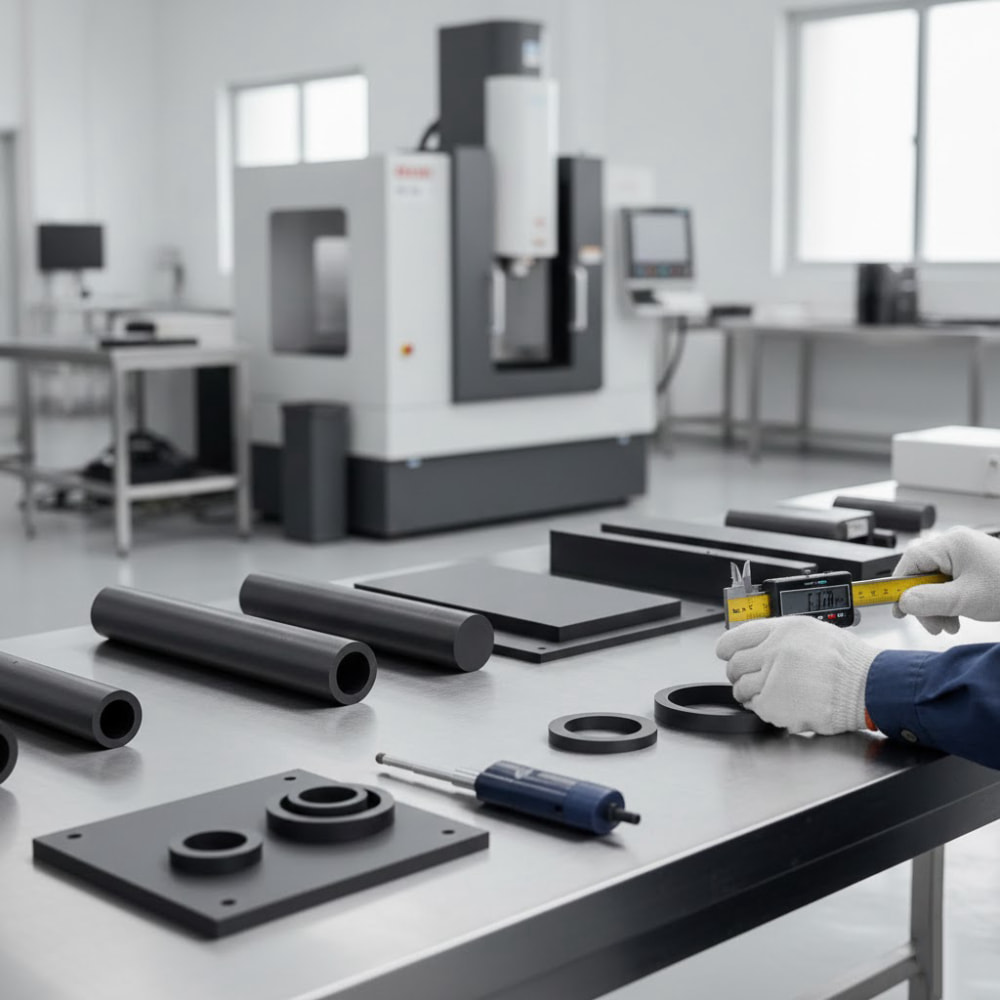
- Measurement of all critical dimensions using calibrated equipment (calipers, micrometers, gauges, or CMM).
- Verification of tolerances on diameters, thickness, widths, and lengths as specified on your drawing.
- Checks of flatness, run-out, and concentricity for rings, sleeves, and rotating parts.
For seal rings and similar parts, insist on documented measurements for:
- Outer and inner diameter
- Face flatness and parallelism
- Key shoulders, grooves, and critical fits
For structural components such as silicon carbide plates or beams, flatness, straightness, and support-plane geometry should be explicitly checked, not assumed.
3. Visual inspection and surface quality
Visual examination seems basic, but it catches a large share of defects before they go into service. A robust inspection should look for:
- Cracks or microcracks visible on edges and surfaces.
- Chips, edge damage, and corner breakage, especially on thin sections and seal faces.
- Large pores, inclusions, or surface defects that can act as crack initiators.
- Grinding marks and burn marks that may indicate overheating during finish machining.
For sealing and bearing surfaces, visual inspection should be combined with simple contact checks (e.g. optical flat and monochromatic light for seal faces) to confirm proper lapping and contact area.
4. Material verification: density, porosity, and microstructure
Two silicon carbide parts can look identical but behave very differently if the internal structure is not controlled. Key material checks include:
- Bulk density: ensures that sintering reached the expected level; low density often correlates with poor strength and high permeability.
- Open porosity: especially important where corrosion resistance, gas tightness, or mechanical strength matter.
- Microstructural examination: on representative samples, checking grain size, distribution, and uniformity.
For critical applications, you may require the supplier to provide typical density and porosity values for each SiC grade, plus periodic batch verification. This is particularly relevant for pressureless sintered SiC used in mechanical seal rings and sleeves.
5. Mechanical properties: strength, hardness, and fracture toughness
You cannot destructively test every part, but you can ensure that each production batch is tied to validated mechanical properties. Useful tests include:
- Flexural strength (modulus of rupture): a baseline indicator of structural capability and process consistency.
- Hardness testing: confirms that the material meets the expected resistance to indentation and wear.
- Fracture toughness (on representative samples): gives insight into how the ceramic will behave under stress concentrations.
For parts that see high mechanical loads or thermal cycling, ask your supplier to provide statistical data (average and minimum values) rather than a single “typical” number from marketing material.
6. Application-specific performance tests
Beyond general material and dimensional checks, good quality control includes tests that simulate or approximate real service conditions.
Leak and pressure testing for tubes and hollow parts
For silicon carbide tubes in furnaces or process lines (for example, silicon carbide tubes used for heat transfer or thermocouple protection), you should consider:
- Hydrostatic or pneumatic pressure testing up to a defined safety factor.
- Leak testing for applications where gas-tightness or fluid containment is critical.
- Dimensional checks at the ends to verify compatibility with seals, flanges, or fittings.
Thermal cycling and thermal shock tests
Where components see frequent heating and cooling, ask for:
- Thermal cycle testing across the relevant temperature range, with controlled heating and cooling rates.
- Thermal shock tests (within realistic limits) to evaluate resistance to rapid temperature changes.
You do not need to recreate your entire furnace schedule in the lab, but you should verify that the chosen SiC grade and geometry can survive representative cycling.
Corrosion and media compatibility tests
In chemical processing or corrosive flue gas environments, corrosion resistance is as important as strength. Depending on duty, you may require:
- Immersion tests in key process fluids at operating temperature.
- Weight loss or thickness loss measurements after defined exposure times.
- Post-test microstructural checks to see how the surface and near-surface region were affected.
7. Supplier process controls and traceability
Quality is not just about the part you receive; it is also about the process behind it. When evaluating a silicon carbide supplier, look at:
- Consistency of raw materials: control of SiC powder, binders, and additives.
- Documented process parameters: pressing, debinding, sintering, and grinding settings.
- Batch traceability: ability to trace each part back to powder batch, furnace run, and inspection records.
- In-process checks: density and dimension checks after forming, sintering, and final machining, not only at the end.
Ask how non-conformities are handled and what rework or rejection criteria exist at each step. A robust supplier can explain this in concrete terms, not vague statements.
8. Documentation: what you should request with each order
For critical silicon carbide components, documentation is part of quality assurance. Consider requesting:
- Inspection report listing measured critical dimensions and tolerance status.
- Material certificate indicating SiC grade, density, and key properties.
- Heat or batch number for traceability.
- Test reports for any special tests (pressure test, leak test, corrosion test, etc.).
Define which documents are required in your purchase specification, so they become standard deliverables rather than “optional extras.”
9. Sampling strategy: 100% inspection vs batch testing
You do not need to apply every test to every part, but you should be deliberate in how you sample.
- 100% checks: critical dimensions, basic visual inspection, and seal face quality for mechanical parts.
- Sampling per batch: density, porosity, flexural strength, and microstructures on representative specimens.
- Special tests: corrosion, thermal shock, and long-term cycling usually done on qualification batches or periodic audits.
Adjust the intensity of testing based on criticality of the component and experience with the supplier. New suppliers and new designs justify heavier testing until performance is proven.
10. Practical checklist for ensuring SiC component quality
When you purchase or qualify silicon carbide components, use this checklist as a starting point:
- Define application requirements: function, environment, failure modes, and acceptable risk.
- Specify the SiC grade (SSiC, RBSiC/SiSiC, RSIC) based on temperature, chemistry, and load.
- List critical dimensions and tolerances that must be measured and reported.
- Define visual and surface quality criteria for chips, cracks, and finish.
- Agree on material property targets and how they are verified by batch (density, porosity, strength).
- Include application-specific tests where relevant (pressure, leak, thermal shock, corrosion).
- Require traceable documentation: inspection reports, certificates, and batch IDs.
- Review supplier process controls to ensure consistency over time, not just good samples.
Conclusion
Silicon carbide ceramics can deliver excellent performance in harsh industrial environments, but only if manufacturing and quality control are taken seriously. By combining clear specifications, targeted testing, and robust supplier processes, you can dramatically reduce failure risk and get the full value from your SiC components.
In practice, the strongest quality programs are not the ones with the longest test lists, but the ones that focus on the tests that correlate with real field failures. If your inspection and testing plan reflects how your components actually fail in service, silicon carbide becomes not just a high-performance material, but a predictable and dependable one.