Kiln shelves look simple, but they quietly decide whether your firing is stable, efficient, and profitable. In production kilns and industrial furnaces, choosing between silicon carbide (SiC) shelves and cordierite shelves is not a cosmetic decision; it directly affects warpage, scrap rate, energy use, and maintenance.
This guide compares silicon carbide vs cordierite kiln shelves, explains their strengths and trade-offs, and gives a practical selection framework for engineers, production managers, and technical buyers.
What kiln shelves actually have to survive
Regardless of material, all kiln shelves must handle the same abuse:
- High temperature cycles – repeated firing up to cone 8–12 or industrial furnace ranges.
- Mechanical load – stacked ware, kiln furniture, and point loads from posts or saggars.
- Thermal gradients – uneven heating, fast ramps, and cooling profiles.
- Chemical exposure – fluxes, vapors, and atmosphere that slowly attack the surface.
When shelves sag, crack, or spall, you don’t just lose a plate; you lose fired product, time, and sometimes the kiln itself. That’s why the material choice between cordierite and SiC matters.
What cordierite kiln shelves are good at
Cordierite is a magnesium aluminosilicate ceramic widely used in “standard” kiln shelves. It’s popular in studio and light industrial kilns because it is:
- Relatively lightweight compared with dense high-alumina shelves.
- Reasonably resistant to thermal shock, especially in electric top-loading kilns.
- Affordable and easy to source in common shelf sizes.
- Stable enough for moderate loads and temperatures when properly supported.
For hobby kilns, light production, or lower cone firings, cordierite shelves are often “good enough” if firing schedules are conservative and loading is not extreme.
Limitations of cordierite shelves
Cordierite’s weak spots become obvious once duty cycles get tougher:
- Lower hot strength: under heavy loads at high temperature, cordierite shelves can sag over time, changing kiln geometry and clearances.
- Lower maximum temperature: typical working limits are around 1250–1300°C; sustained higher temps shorten life quickly.
- Thicker and heavier: to carry load, cordierite shelves are usually thick and heavy, increasing thermal mass and energy use.
- Gradual microcracking: repeated cycles can build internal damage that ends in sudden cracking or warpage.
Once you’re pushing temperature, loading, or throughput, cordierite starts feeling like the weak link in the system.
What silicon carbide kiln shelves bring to the table
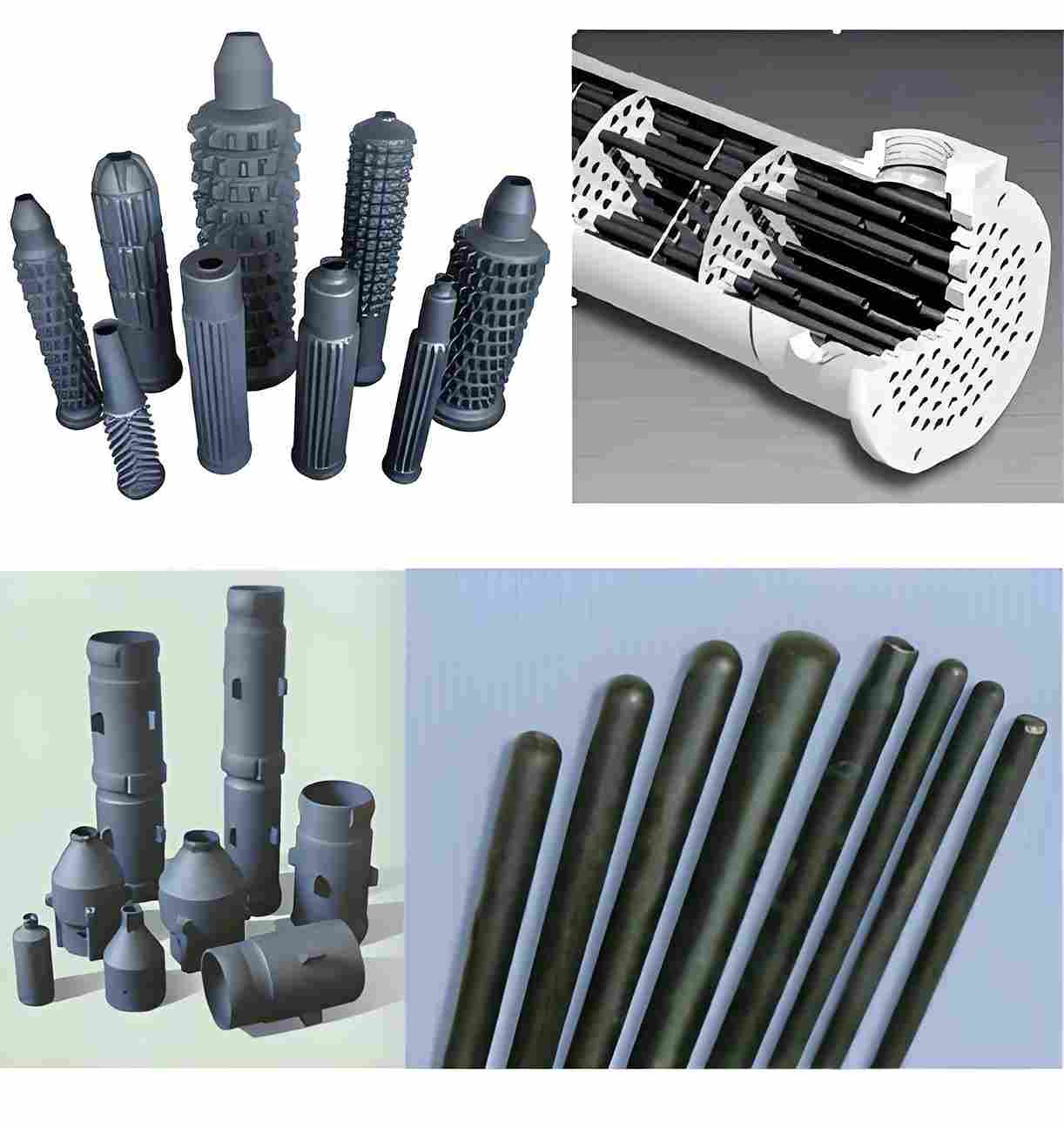
Silicon carbide shelves are engineered from high-performance SiC plates designed for high temperature, high strength, and excellent wear resistance. Depending on the grade (RBSiC, SSiC, RSiC), they offer:
- Much higher hot strength and stiffness than cordierite, even at elevated temperatures.
- Ability to make shelves thinner and lighter while carrying the same or higher load.
- Higher temperature capability, suitable for industrial firing regimes and repeated cone 10+ cycles.
- Better resistance to bending and sagging over long service life.
- High thermal conductivity, which can help even out temperature gradients in the load.
SiC shelves are usually built from reaction-bonded or recrystallized plates. For heavy wear areas such as kiln linings and impact points, they can be combined with silicon carbide tiles and beams to build a complete SiC kiln furniture system.
Limitations of silicon carbide shelves
Of course, SiC is not magic. The trade-offs are clear:
- Higher initial cost: piece price is significantly above cordierite; ROI depends on lifetime and reduced downtime.
- Electrical conductivity: in some electric kiln designs, SiC shelves must be used carefully to avoid stray conduction paths.
- Thermal shock sensitivity vs cordierite: although robust, aggressive cold-to-hot shocks can still damage SiC if design and loading are poor.
For industrial and high-throughput kilns, these downsides are often outweighed by the gain in usable life, stiffness, and process stability.
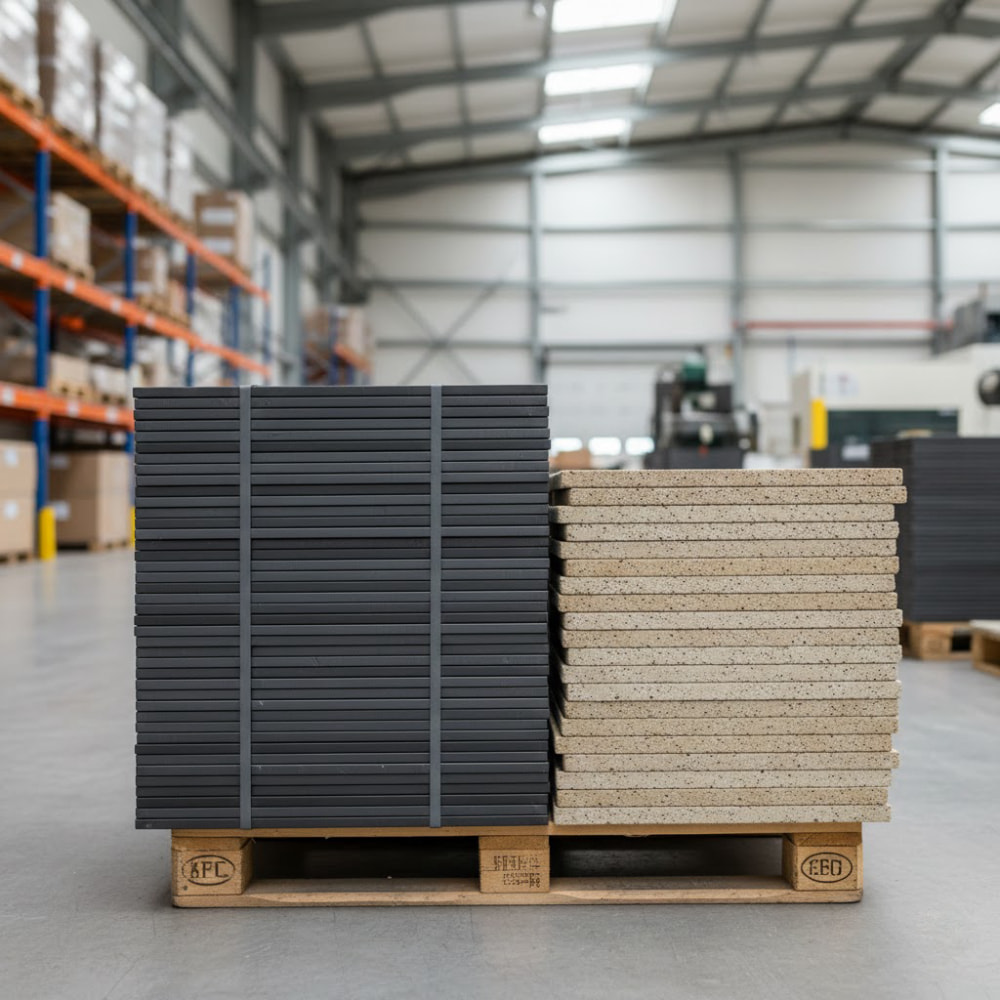
Side-by-side comparison: SiC vs cordierite kiln shelves
| Parameter | Silicon Carbide Shelves | Cordierite Shelves | Practical impact |
|---|---|---|---|
| Typical working temperature | Up to ~1400–1500°C (grade-dependent) | Typically up to ~1250–1300°C | SiC handles higher cones and industrial furnace ranges with margin. |
| Hot strength & stiffness | Very high | Moderate | SiC shelves can stay flat under heavy load; cordierite more prone to sag. |
| Shelf thickness for same load | Thinner possible | Thicker required | SiC reduces mass and improves heat-up/cool-down efficiency. |
| Weight | Lower (for same load rating) | Higher | Lighter shelves are easier to handle and less stressful on kiln furniture. |
| Thermal conductivity | High | Lower | SiC helps distribute heat across the ware; cordierite is more insulating. |
| Thermal shock resistance | Good to very good | Very good at moderate temps | Cordierite is forgiving of aggressive ramp rates; SiC needs sensible firing curves. |
| Service life under heavy load | Long, especially in RBSiC / RSiC grades | Shorter, with progressive sag | SiC typically offers more cycles before replacement. |
| Initial cost | High | Low to moderate | SiC is an investment justified when downtime and scrap are expensive. |
When cordierite kiln shelves still make sense
There are many scenarios where cordierite remains a rational choice:
- Lower-temperature kilns where peak temperature and load are modest.
- Intermittent production where cycles per year are relatively low.
- Small electric kilns where the main priority is low upfront cost.
- Lightweight ware that does not push the structural limits of the shelf.
If damage from occasional shelf failure is limited and downtime is cheap, cordierite can be a cost-effective “consumable” rather than a long-term asset.
When silicon carbide shelves are the better investment
SiC kiln shelves start paying for themselves as soon as your process looks like this:
- High firing temperature or frequent cone 10+ / industrial cycles.
- Heavy, unevenly distributed loads, such as dense furnace ware or stacked setters.
- Production kiln with tight delivery commitments, where shelf failure equals missed orders.
- Stable process needed – flatness and geometry must stay consistent over many cycles.
By switching key positions in the kiln stack to SiC shelves (for example, the hottest or heaviest loaded decks), many plants find that scrap, breakage, and warped product drop significantly. That’s usually where materials like dense silicon carbide plates earn their keep.
Design considerations when using SiC shelves
Upgrading material alone is not enough; shelf performance also depends on how they’re used:
- Support pattern: Use three-point support where possible to avoid over-constraining the shelf as it expands.
- Post placement: Align posts vertically through the stack so the shelf carries compressive load, not bending from random post patterns.
- Temperature ramping: With SiC, you can often run more efficient curves, but still avoid extreme cold-to-hot shocks.
- Surface protection: Use kiln wash formulated for SiC surfaces to prevent sticking and glaze bonding.
In industrial furnace projects, these design details are typically handled alongside other silicon carbide furniture like beams and supports to create a coherent system rather than a “drop-in” swap.
Quick selection framework: cordierite vs silicon carbide
Use this simplified decision guide:
- Small studio or light production kiln, cone 6–8, light to medium loads → cordierite shelves are usually sufficient.
- High-fire, dense load, or heavy kiln car systems → prioritize SiC shelves for main load-bearing layers.
- Industrial furnace or continuous kiln, high uptime, expensive scrap → SiC shelves and tiles should be standard.
- Upgrade strategy: start by replacing the most heavily loaded / hottest shelves with SiC, track deformation and lifetime over a year, then expand conversion where ROI is clear.
How Zirsec supports silicon carbide kiln shelf projects
If you are moving from cordierite to silicon carbide kiln shelves, you usually need more than a catalog size list. You need:
- Guidance on grade selection (RBSiC, SSiC, RSiC) for your temperature and atmosphere.
- Support on thickness, span, and support geometry to control sag and weight.
- Clear tolerances and flatness specs to keep kilns running predictable cycles.
Zirsec provides engineered SiC plates and kiln furniture components with small-batch customization, drawing review, and quick sampling so you can validate the upgrade in real production rather than on paper.
If your cordierite shelves are sagging, cracking, or forcing you to derate your kiln, it is a clear sign the material is past its comfort zone. That is exactly where silicon carbide becomes less of a luxury and more of a necessary part of the furnace design.