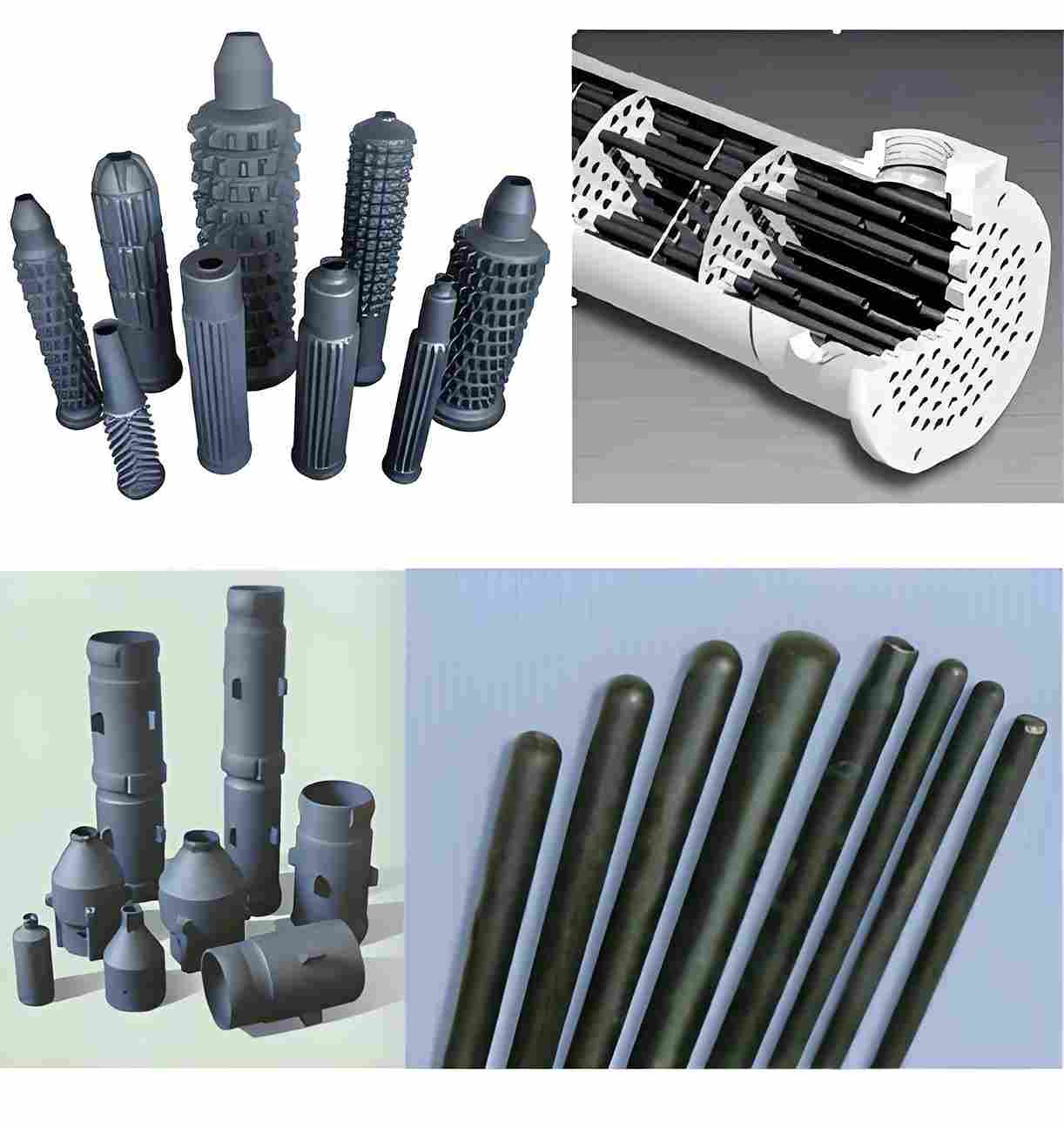
If you’re looking to source silicon carbide components, understanding the manufacturing steps is essential to avoid costly delays and quality issues.
Quick Summary (FAQ)
- What are the main steps? Raw material selection → powder synthesis → shaping → sintering → machining & finishing → inspection → shipping.
- How long does a custom order take? Sample 2‑4 weeks, bulk 4‑8 weeks (ZIRSEC can expedite to 24‑48 h for stocked standard sizes).
- Which specs matter most? Purity ≥ 98 %, sintered density > 3.1 g/cm³, shrinkage control ±0.2 %, flexural strength ≥ 130 MPa.
- Can I get a small batch? Yes, ZIRSEC accepts MOQ as low as 10‑20 pieces for custom drawings.
- What makes ZIRSEC reliable? Direct Chinese factory, in‑house engineering support, 20 years of SiC experience, 24 h stock for standard parts.
1. Raw Material Selection – The Foundation of Performance
The journey starts with high‑purity SiC powder. In our factory we source both domestic and imported grade SiC, typically 98‑99.5 % purity. The impurity profile (especially Al, Fe, and Ti) directly impacts high‑temperature oxidation resistance. For aerospace‑grade applications we even blend imported Ultra‑High‑Purity (UHP) SiC powder to stay below 0.01 % total metallic contaminants.
Why purity matters to buyers
Customers in chemical processing and metallurgy report up to 30 % longer service life when the SiC purity exceeds 98 %. Lower purity can cause micro‑cracks during rapid thermal cycling, leading to premature failure of furnace tubes or seal rings.
2. Powder Production – From Granules to Reactive Surface
Even with top‑grade raw material, the powder must be engineered for flowability and packability. ZIRSEC uses a two‑stage milling process:
- Coarse grinding: Attritor mills break down agglomerates to 5‑10 µm.
- Fine grinding & surface treatment: Planetary ball mills with SiC media reduce particles to 0.5‑2 µm and simultaneously coat the surface with a thin SiO₂ layer to improve sintering tack.
Particle‑size distribution (PSD) is measured with laser diffraction; a typical D50 of 1.2 µm and span < 1.5 is the target for high‑density parts.
3. Shaping – Turning Powder into Green Bodies
Different end‑uses dictate different shaping techniques. Below we outline the three most common methods we offer.
3.1 Dry Pressing (for simple tubes, plates, rings)
Powder is loaded into a steel die, compacted at 200‑300 MPa, and released as a “green” part. This method yields excellent dimensional control for standard sizes such as 20 mm × 200 mm SiC furnace tubes.
3.2 Slip Casting (complex shapes, thin walls)
A slurry of SiC powder (15‑20 wt% solids) is poured into plaster molds. The plaster absorbs water, leaving a uniform green body. Slip casting is our go‑to for intricate nozzles and ceramic liners where wall thickness can be below 1 mm.
3.3 Injection Molding (high‑volume, tight tolerances)
For parts like SiC roller bearings, we mix powder with a thermoplastic binder, inject it into stainless steel molds, and then debind. This route achieves ±0.1 mm tolerances and high repeatability.
4. Sintering – Densification Under Extreme Conditions
All green bodies undergo high‑temperature sintering in a controlled atmosphere. Key parameters:
- Temperature: 2000‑2200 °C (depending on part geometry)
- Atmosphere: Argon + 5 % H₂ to suppress SiC oxidation
- Dwell time: 1‑3 hours
- Heating rate: 5‑10 °C/min to avoid thermal shock
During sintering, SiC particles bond via solid‑state diffusion and a small amount of liquid Si phase forms, filling residual pores. The final density typically reaches 3.15‑3.20 g/cm³, which translates into the mechanical strength buyers demand (≥ 130 MPa flexural).
5. Machining & Finishing – From Rough to Ready‑to‑Install
Even after sintering, most components need post‑processing:
- Grinding: CNC diamond grinding achieves surface roughness Ra 0.8‑2 µm, essential for seal rings.
- Drilling & Reaming: High‑speed steel (HSS) or carbide tools with coolant are used to keep the SiC from cracking.
- Coating (optional): For ultra‑high‑temperature applications we apply a thin Al₂O₃ or TiC coating via plasma spraying.
Our in‑house CNC line can finish a 50 mm × 500 mm tube in under 4 hours, which is why many of our European clients see a 20 % reduction in lead time compared with overseas competitors.
6. Quality Control & Testing – Proof That the Part Will Perform
Every batch passes a rigorous inspection checklist:
- Visual defect inspection (cracks, chips)
- Dimensional audit with CMM (±0.1 mm for custom, ±0.5 mm for standard)
- Density measurement by Archimedes method
- Three‑point flexural strength test (ISO 2455)
- High‑temperature oxidation test (1200 °C, 100 h)
- Electrical resistivity check for insulating applications
All certificates (COA, MSDS) are uploaded to a secure client portal within 24 hours of shipment.
7. Packaging, Logistics & Export Compliance
SiC is chemically inert but brittle. We pack each component in double‑wall corrugated boxes with foam inserts, and for long shipments we add a desiccant pack to guard against moisture‑induced micro‑cracking.
Customs paperwork is pre‑filled for EU, US, and Japan markets. Our logistics team works with DHL, UPS and FedEx to offer DDP (Delivered Duty Paid) options, so you never face surprise fees on arrival.
8. How to Choose the Right Supplier – What ZIRSEC Brings to the Table
When the stakes are high—think 8‑day production shutdowns or multi‑million‑dollar furnace rebuilds—your supplier must prove three things: technical competence, delivery reliability, and transparent support.
Technical competence
With 20 years of SiC ceramic production, ZIRSEC operates both the powder‑making line and the sintering furnace. Our engineering team can read your CAD drawing, suggest design optimizations (e.g., adding a 0.2 mm fillet to reduce stress concentration), and return a 3‑D printable prototype within a week.
Delivery reliability
We keep a 5‑ton inventory of standard‑size SiC tubes, plates, and seal rings. For stocked items we ship within 24 hours. For custom orders, our average lead time is 4‑6 weeks, but we have a “rush‑lane” that cuts the time to 14 days for orders over 50 pieces.
Transparent support
Every client receives a dedicated account engineer. Whether you need a COA, a thermal‑shock test report, or assistance with installation, the engineer is a single email away (info@zirsec.com). Our after‑sales team also monitors field performance and can arrange on‑site inspections if a component shows unexpected wear.
For a concrete example, a German pump‑valve manufacturer faced an 8‑day line halt when their previous SiC seal ring supplier missed a batch. ZIRSEC delivered a qualified replacement within 48 hours, restoring production and saving the client an estimated $15,000 in downtime.
9. Pricing Overview – What Drives Cost and Where You Can Save
SiC components are priced by volume, complexity, and purity:
- Standard stock tube (Ø20 mm × 200 mm): $12‑$20 each.
- Custom‑shaped nozzle (high‑precision, < 0.1 mm tolerance): $80‑$150 per piece.
- Large furnace tube (Ø120 mm × 1500 mm, high‑density): $150‑$250 each.
Because ZIRSEC controls the entire supply chain—from raw SiC powder to final machining—we avoid the markup typical of resellers. Ordering larger batches (≥ 100 pieces) yields a 5‑10 % discount, and we can negotiate payment terms (30‑60 days) for repeat customers.
10. Take the Next Step
Understanding the manufacturing process equips you to ask the right questions, compare quotes objectively, and avoid hidden risks. If you’re ready to move from research to procurement, explore our Silicon Carbide Tubes catalog, request a free CAD‑to‑quote analysis, or simply drop us a line at info@zirsec.com. Our team will guide you through material selection, design validation, and a fast‑track order that gets your critical components into production on schedule.