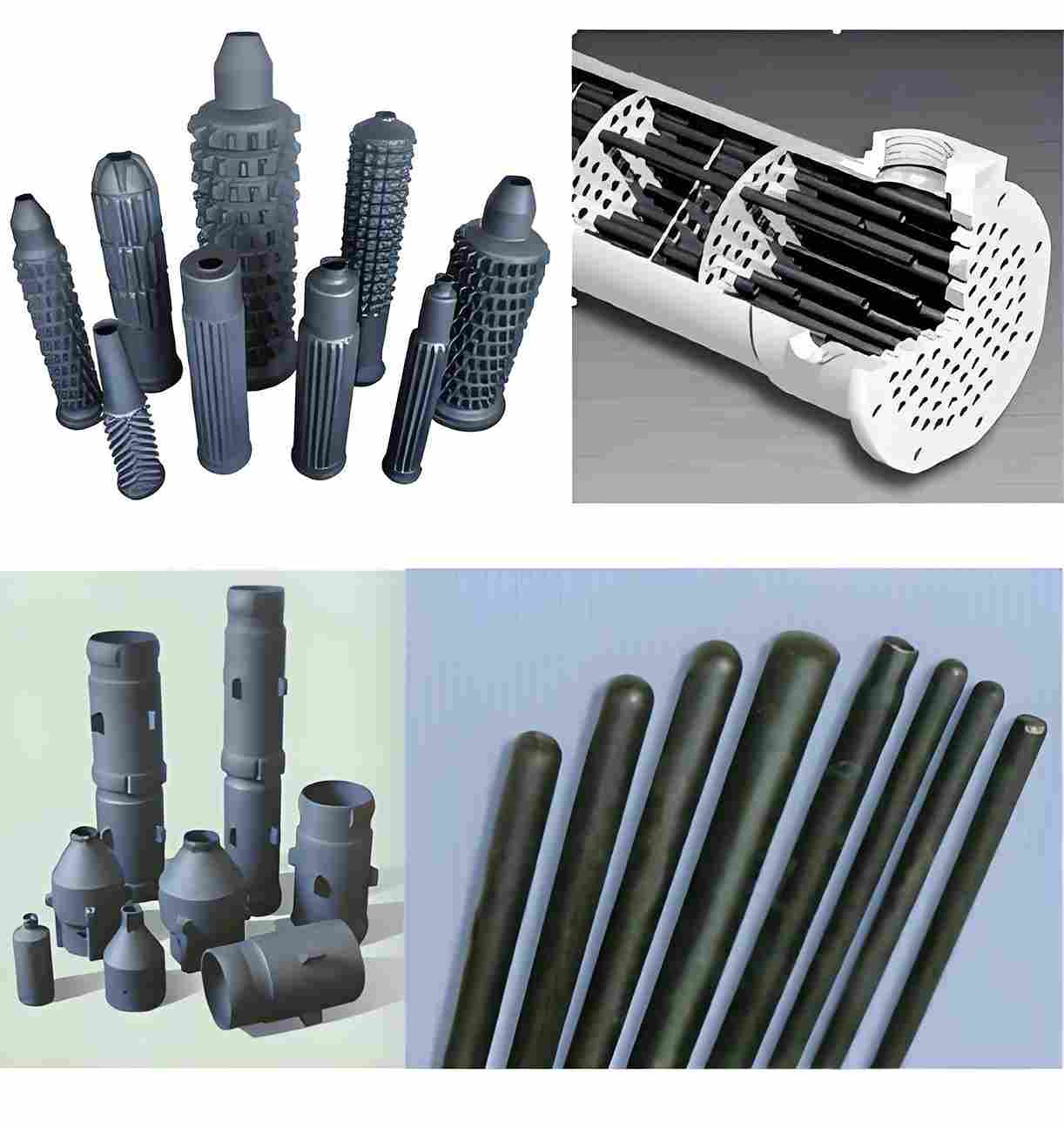
Pumps operating in acidic and alkaline media face continuous corrosion, erosion and temperature stress that directly impact reliability and maintenance cost. Stainless steel has long been the default material for pump components, but in aggressive chemical environments its limitations become evident. Silicon carbide (SiC) offers a fundamentally different performance profile that addresses many of these failure mechanisms. This article provides a practical comparison to help engineers decide when silicon carbide should replace stainless steel in acid and alkali pump service.
Why Acidic and Alkaline Pump Service Is So Demanding
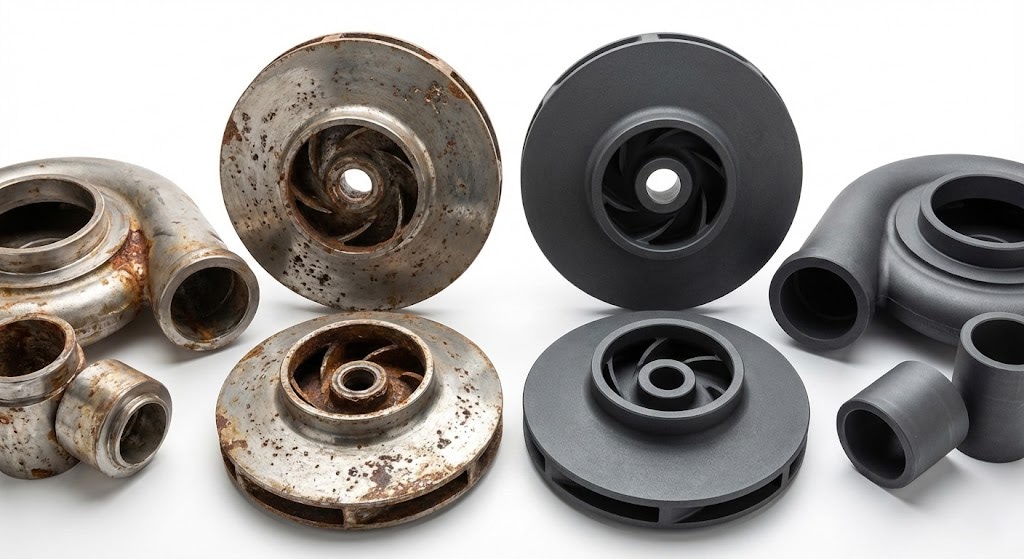
Acids and alkalis attack pump components through chemical corrosion, pitting and stress corrosion cracking. Elevated temperatures accelerate these reactions, while suspended solids introduce abrasive wear. Even corrosion-resistant stainless steel grades can suffer rapid material loss, surface roughening and dimensional change, leading to leakage, vibration and seal failure. Material selection therefore determines whether a pump runs reliably for years or fails repeatedly within months.
Silicon Carbide vs Stainless Steel: Key Engineering Differences
Although both materials are widely used in pump construction, their performance in corrosive environments differs fundamentally.
Corrosion Resistance
Silicon carbide is chemically inert to most acids and alkalis, maintaining structural stability across a wide pH range. Stainless steel relies on passive oxide films for corrosion resistance, which can break down in strong acids, hot alkalis or chloride-containing solutions. Once the passive layer is compromised, corrosion accelerates rapidly.
Wear and Erosion Resistance
SiC’s extreme hardness provides excellent resistance to erosive wear caused by solid particles in chemical fluids. Stainless steel surfaces wear quickly under similar conditions, increasing clearances and reducing pump efficiency. In slurry or crystallizing media, SiC components maintain dimensional accuracy far longer.
Thermal Stability
Silicon carbide remains stable at high operating temperatures without losing strength or shape. Stainless steel expands significantly with temperature, which can affect clearances, alignment and seal face flatness. Thermal cycling further accelerates fatigue and cracking in metallic components.
Surface Finish and Friction Behavior
SiC can be machined and lapped to extremely smooth surfaces, reducing friction and improving sealing performance. Stainless steel surfaces roughen over time due to corrosion and wear, increasing friction and accelerating seal degradation.
Lifecycle Cost
While stainless steel has a lower initial cost, frequent replacements and downtime significantly increase total ownership cost. Silicon carbide typically delivers a lower lifecycle cost in aggressive chemical service due to extended service intervals and improved operational stability.
How Zirsec Supports Pump Material Upgrades
Zirsec helps pump manufacturers and plant operators evaluate chemical composition, pH level, temperature range and abrasive content before recommending material upgrades. For acidic or alkaline service where corrosion and wear are primary failure modes, Zirsec typically supplies reaction-bonded or pressureless sintered silicon carbide components such as seal rings, sleeves, bushings and liners. Zirsec provides drawing-based customization, tight machining tolerances and fast sample turnaround to ensure smooth integration into existing pump designs.
Application Scenarios
Silicon carbide components are widely used in acid circulation pumps, caustic soda transfer systems, phosphoric acid production, chemical reactors, wastewater treatment pumps and FGD units. Stainless steel remains suitable for mild chemical service or low-temperature neutral fluids. In harsh acidic or alkaline environments, silicon carbide offers superior reliability and service life.
Case Example: Caustic Pump Failure Reduction
A chemical plant operating high-pH caustic circulation pumps experienced repeated shaft sleeve and seal failures using stainless steel components. Corrosion-induced surface roughening caused leakage and unplanned shutdowns. Zirsec supplied custom silicon carbide sleeves and seal rings designed for alkaline resistance and wear stability. After installation, pump maintenance intervals increased by more than three times, and leakage-related downtime was eliminated.
Typical Property Comparison
| Property | Silicon Carbide (SiC) | Stainless Steel |
|---|---|---|
| Chemical Resistance | Excellent across wide pH range | Limited in strong acids and alkalis |
| Wear Resistance | Excellent | Moderate |
| Thermal Stability | Excellent | Moderate |
| Surface Finish Retention | Very high | Degrades over time |
| Service Life in Harsh Media | Long | Short to moderate |
| Lifecycle Cost | Lower | Higher |
FAQs: SiC vs Stainless Steel in Chemical Pumps
Is silicon carbide suitable for both acidic and alkaline media?
Yes. SiC offers excellent resistance across most acids and alkalis.
Can SiC replace stainless steel components directly?
In many cases yes. Zirsec manufactures SiC parts to match existing dimensions.
Does stainless steel still have a role in chemical pumps?
Yes, for mild chemical service or low-temperature applications where corrosion risk is limited.
Which material reduces seal leakage risk?
Silicon carbide reduces leakage risk due to better surface stability and wear resistance.
Does Zirsec support small-batch customization?
Yes. Zirsec supports small batch orders with fast delivery for both prototypes and production.
Contact Zirsec for Corrosion-Resistant Pump Components
If your pumps operate in acidic or alkaline environments and suffer from corrosion or premature wear, Zirsec can help upgrade critical components using silicon carbide ceramics. Contact Zirsec for engineering consultation, drawing review and fast quotation support.