Every industry that lives above 800–1000°C is being pushed in the same direction: higher efficiency, longer life, lower emissions, and fewer unplanned shutdowns. That pressure naturally raises a question for engineers and buyers: what is the future of high-temperature materials – and is silicon carbide part of the answer?
This article looks at how silicon carbide (SiC) compares with traditional high-temperature materials, where it is already the default choice, and where it is likely to take more ground in the coming years.
1. The current landscape of high-temperature materials
Before asking whether silicon carbide will “take over,” it helps to understand what it is competing with. In high-temperature industrial environments, you mainly see:
- Heat-resistant steels and alloys – stainless steels and superalloys in furnace tubes, boiler components, and high-temperature piping.
- Traditional refractories – fireclay, alumina bricks, castables, and basic kiln furniture in furnaces, kilns, and incinerators.
- Oxide ceramics – alumina and zirconia components for wear, insulation, and some structural applications.
These materials built the current generation of furnaces, reactors, and process lines. They are well understood and widely available, but they also have limitations in wear resistance, corrosion resistance, and long-term dimensional stability at higher temperatures.
2. What makes silicon carbide different?
Silicon carbide is a non-oxide ceramic with a property combination that looks very different from steels and basic refractories:
- Extreme hardness and wear resistance – ideal for abrasive slurries and particle-laden flows.
- High strength and stiffness at elevated temperature – retains load-bearing capability where many alloys creep.
- Good thermal conductivity for a ceramic – helps spread heat and reduce local hot spots.
- Low thermal expansion – supports thermal shock resistance when the design and mounting are correct.
- Excellent corrosion resistance in many acidic and alkaline environments, especially in high-purity sintered grades.
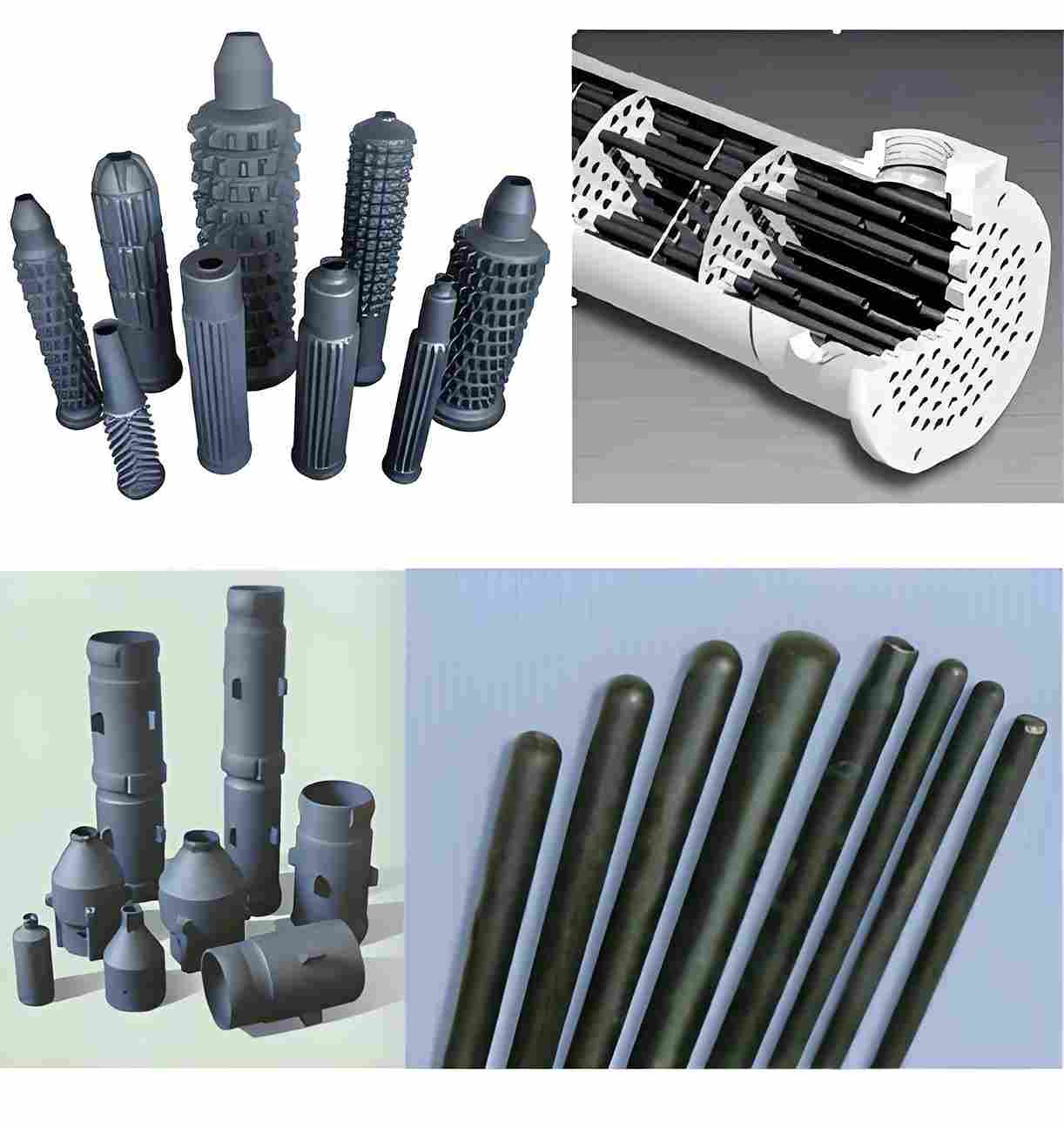
On the component level, that translates into tubes, plates, crucibles, beams, rollers, nozzles, and seal rings that can survive environments where metals and traditional ceramics fail repeatedly.
3. Where silicon carbide is already the “future” (because it’s standard now)
In several areas, silicon carbide is no longer a “future” material; it is already the practical choice.
High-temperature tubes and radiant components
In many furnaces and reactors, high-quality silicon carbide tubes have replaced metallic tubes in zones where:
- Temperatures push steels and alloys into creep.
- Oxidation and carburization reduce tube life.
- Repeated thermal cycling distorts or cracks metallic parts.
SiC tubes offer better dimensional stability, longer life, and more predictable behaviour in aggressive heat-treatment and process environments.
Furnace furniture, plates, and support structures
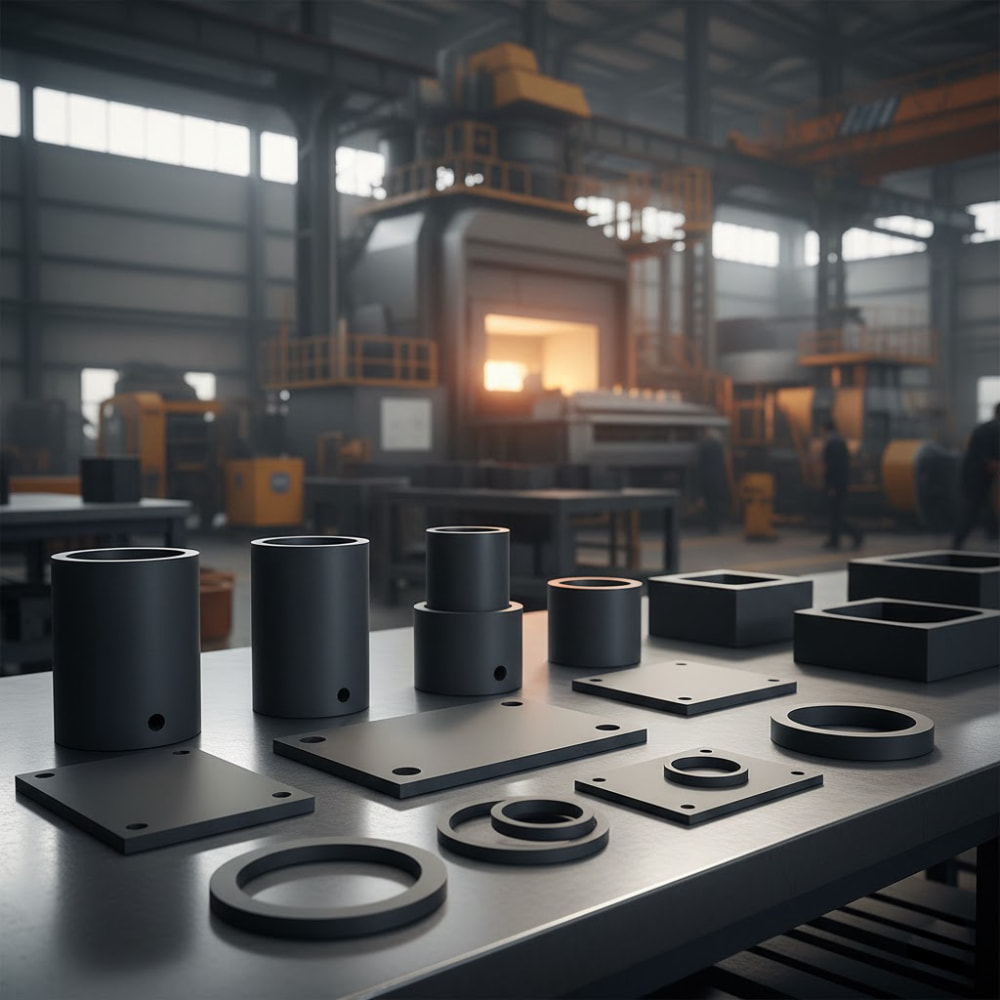
In kilns and high-temperature lines, silicon carbide plates and beams are widely used as structural elements and kiln furniture. Compared with traditional refractories, components such as silicon carbide plates provide:
- Higher load-bearing capacity at temperature.
- Better resistance to thermal shock during heating/cooling cycles.
- Thinner sections with similar or improved stiffness, which can improve thermal efficiency.
Mechanical seals and high-wear parts
In chemical, petrochemical, and slurry service, silicon carbide mechanical seal rings, sleeves, and nozzles are already standard options. Here, the future arrived years ago: SiC is chosen simply because it lasts longer and fails less often than the alternatives.
4. Where traditional materials still dominate (and why)
Despite its strengths, silicon carbide is not going to replace all high-temperature materials.
- Large-area linings: fireclay and alumina bricks remain economical for large furnace walls and low-stress zones where wear is moderate and temperatures are not extreme.
- Medium-temperature structures: steels and heat-resistant alloys are still attractive where operating temperatures and corrosion levels are manageable, and fabrication flexibility is important.
- Insulating layers: lightweight refractories and insulating bricks provide low thermal conductivity where insulation is critical.
In these areas, silicon carbide would be overkill from a cost standpoint, or its properties (for example, relatively higher thermal conductivity) may not align with the design goals.
5. The big drivers pushing silicon carbide forward
Several long-term trends favour wider use of SiC in high-temperature applications:
- Higher efficiency targets: plants are pushed to raise furnace temperatures, improve heat transfer, and reduce fuel usage; materials that creep or distort at these temperatures will be phased out.
- Stricter emissions and uptime requirements: unplanned shutdowns for tube or lining failures directly affect compliance and profitability, increasing interest in longer-lived components.
- More corrosive and demanding process chemistries: as industries move to new feedstocks and processes, combined corrosion–erosion becomes more common.
- Digital maintenance and lifecycle cost tracking: when downtime and maintenance are properly costed, “cheaper per piece” materials often lose to more durable options like SiC.
All of these trends make high-performance ceramics with better wear, temperature, and corrosion resistance more attractive, and silicon carbide is one of the most mature options in that category.
6. Where silicon carbide still has limits
Engineers need to be realistic: silicon carbide is powerful, not magical. Its main limitations are:
- Brittle behaviour: SiC has high compressive strength but low tolerance for tensile overload, impact, or severe misalignment.
- Design sensitivity: sharp corners, thin unsupported sections, and poor mounting can lead to cracking, especially during thermal cycling or mechanical shocks.
- Cost per unit: compared with standard steels or simple refractories, SiC components have higher piece prices and require more specialized manufacturing.
These limits mean silicon carbide is best used for engineered components that are critical to uptime or performance, rather than as a blanket replacement for every hot surface in a plant.
7. Likely future roles for silicon carbide in industry
Looking forward, the most realistic picture is not “SiC everywhere,” but an expanded, targeted use in several key areas.
Critical furnace and reactor internals
As process temperatures and cycling frequencies increase, SiC tubes, plates, and burners are likely to become standard choices in the hottest, most demanding sections of furnaces and reactors, while traditional refractories continue to handle bulk lining and insulation.
Next-generation heat exchangers and energy systems
High-temperature heat recovery, concentrated solar, and advanced energy systems all demand materials with high thermal conductivity, oxidation resistance, and structural stability. Here, silicon carbide tubes, plates, and blocks are strong candidates for long-life heat-transfer surfaces.
Wear and corrosion “hotspots” in existing plants
In brownfield sites, silicon carbide will increasingly be used to solve chronic problem areas: pump components that fail repeatedly, burner tips that erode, or furnace supports that distort. Each successful retrofit strengthens the business case for SiC in similar equipment.
8. How engineers should think about SiC vs other high-temperature options
A practical way to evaluate materials for high-temperature duty is to ask four questions:
- What is the dominant failure mode today? Wear, corrosion, thermal cracking, creep, or a combination.
- How critical is this component? Does its failure stop production, risk safety, or “just” require local repair.
- What temperature and environment are we really dealing with? Normal, peak, and upset conditions, plus flue gas or fluid chemistry.
- What is the cost of failure vs the cost of upgrade? Include downtime, labour, product losses, and quality impact, not just the price of the part.
Where the answer is “severe combined wear/temperature/corrosion” and “failure is expensive,” silicon carbide should be on the shortlist. That may mean upgrading to SiC tubes in the hottest zone, SiC plates in the most abused kiln level, or SiC seal rings in the most problematic pumps.
9. Integration with other advanced materials
The future of high-temperature materials is not a single material winning everything. It is more likely to be a layered, hybrid approach:
- Metallic structures and shells for overall support and fabrication flexibility.
- Insulating refractories where heat loss must be minimized.
- Silicon carbide ceramics at the points of highest wear, temperature, and chemical attack.
In that architecture, SiC plays the role of front-line, high-stress component, taking the worst of the environment while other materials provide structure and insulation behind it.
Conclusion: Is silicon carbide “the answer”?
Silicon carbide is not the single answer to all high-temperature problems, but it is a central part of the answer when you combine three conditions:
- Temperatures high enough to challenge metals and traditional refractories
- Significant wear or corrosion, not just heat alone
- High cost of downtime or failure
In those environments, silicon carbide ceramics have already proven they can deliver longer life, better stability, and lower lifecycle cost than many legacy materials. As efficiency and reliability pressures increase, it is reasonable to expect SiC to move from “special option” to “standard choice” in more high-temperature designs.
The future of high-temperature materials will be diversified, but silicon carbide is very likely to be one of the workhorses carrying the load.