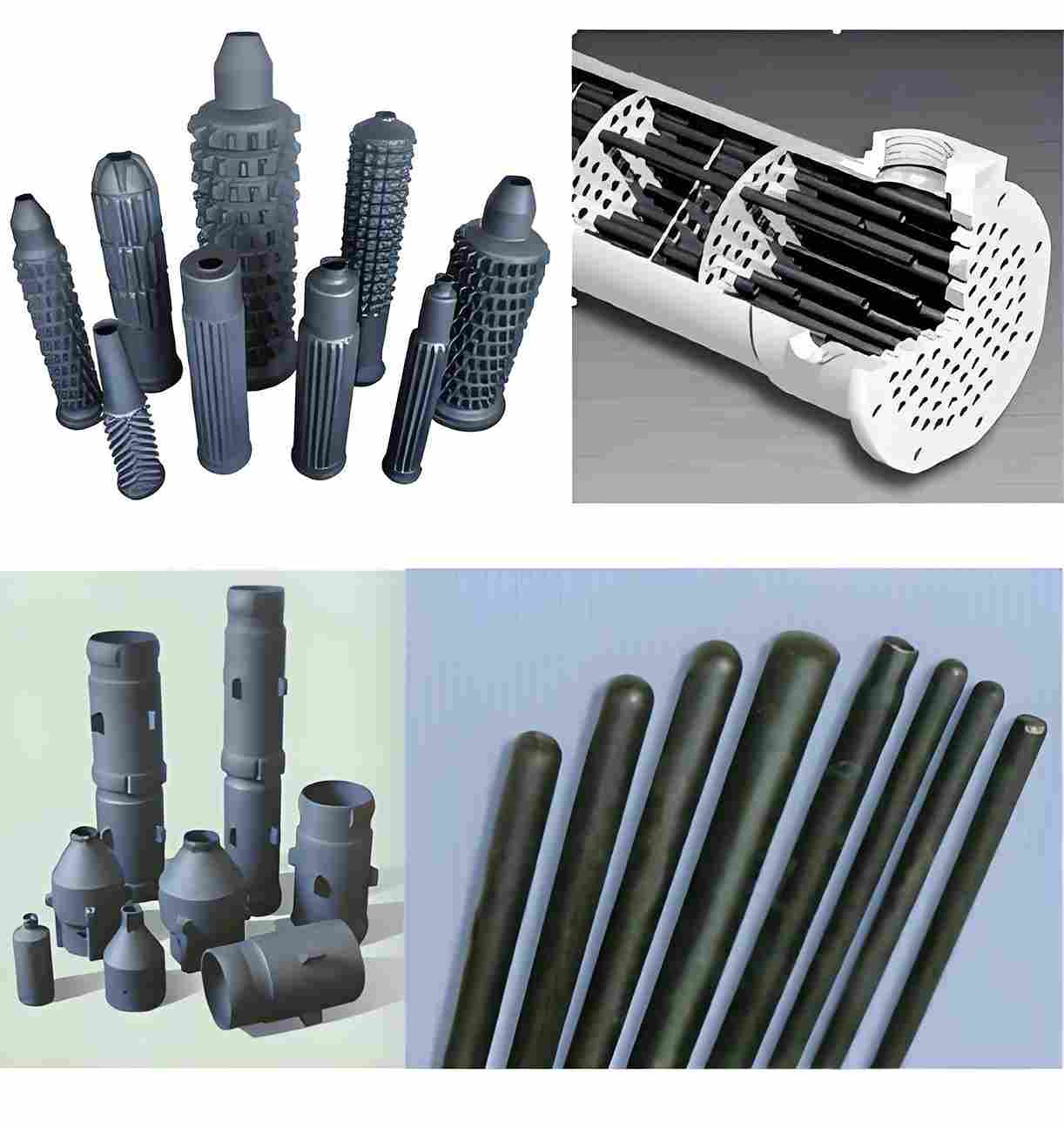
Silicon carbide (SiC) fixtures have become the backbone of modern semiconductor production because they deliver unmatched thermal stability, wear resistance, and dimensional accuracy in harsh processing environments.
Quick Summary & FAQ
What makes SiC fixtures superior to metal or alumina parts? SiC can survive temperatures above 1500°C, resists chemical attack from aggressive gases, and maintains tight tolerances under cyclic heating.
Can I get custom SiC fixtures for my line? Yes. ZIRSEC offers rapid prototyping from engineering drawings, with standard sizes in stock for 24‑hour shipment.
Typical lead time for a custom SiC fixture? Engineering support (2‑3 weeks), machining (4‑6 weeks), and shipping (1‑2 weeks) – often under 8 weeks for medium batches.
Where to source reliable SiC parts? Visit ZIRSEC for certified, high‑purity SiC components.
Why SiC Fixtures Matter in Semiconductor Fabrication
Semiconductor fabs operate at the edge of material limits. Processes such as chemical vapor deposition (CVD), rapid thermal annealing (RTA), and plasma etching demand fixtures that can:
- Withstand continuous exposure to temperatures of 1200‑1600°C.
- Resist corrosive gases like chlorine, fluorine, and hydrogen sulfide.
- Maintain micron‑level flatness to avoid wafer warpage.
- Minimize thermal expansion mismatch that could stress the wafer.
SiC’s coefficient of thermal expansion (~4‑5×10⁻⁶/K) aligns closely with silicon, reducing stress during thermal cycling. This property alone cuts defect rates by up to 30% in high‑volume manufacturing lines.
Technical Advantages Over Competing Materials
Thermal Performance
Alumina (Al₂O₃) begins to soften above 1000°C, while Si₃N₄ can survive higher temperatures but suffers from oxidation in oxygen‑rich atmospheres. SiC retains >95% of its flexural strength at 1500°C and shows negligible oxidation up to 1800°C when protected by a thin SiO₂ layer formed in‑situ.
Mechanical Strength & Wear Resistance
Typical SiC flexural strength exceeds 130 MPa, and its Vickers hardness (≈2100 HV) outpaces most ceramics. In a case study at a German wafer‑bonding facility, replacing Al₂O₃ clamps with SiC fixtures reduced tool wear from 0.12 mm/month to less than 0.02 mm/month, extending tool life by 6×.
Chemical Inertness
SiC is virtually insoluble in most acids and bases used for wafer cleaning. When exposed to HF or HCl mixtures, surface degradation stays below 0.5 µm after 200 hours—well within acceptable limits for 300‑mm wafer tooling.
Common Semiconductor Processes That Use SiC Fixtures
- CVD Reactor Holders: SiC plates support silicon wafers during epitaxial growth, providing uniform heat distribution.
- RTA Carriers: Thin SiC foils hold wafers while rapid heating and cooling occur, preventing thermal shock.
- Plasma Etch Chambers: SiC grids protect chamber walls from ion bombardment, extending chamber service life.
- Wafer‑Bonding Presses: SiC pads supply consistent pressure while tolerating the high‑temperature bonding cycles.
Design Considerations for SiC Fixtures
When specifying a SiC fixture, engineers must balance three core parameters: geometry, tolerance, and surface finish.
Geometry
Standard sizes (e.g., 100 mm × 100 mm × 10 mm) are stocked by most suppliers, including ZIRSEC, for immediate delivery. For custom geometries—such as curved carriers for 300‑mm wafers—provide CAD files in STEP or IGES format. ZIRSEC’s engineering team can generate a rapid 3‑D print prototype for fit‑verification before machining the final SiC part.
Tolerance
Typical industrial tolerances for SiC fixtures are ±0.2 mm; high‑precision applications (e.g., photolithography masks) may require ±0.05 mm. Achieving tighter tolerances often involves post‑machining grinding on a CNC surface grinder equipped with diamond‑coated wheels.
Surface Finish
Surface roughness (Ra) influences wafer contact. For thermal uniformity, aim for Ra 0.8‑1.5 µm. For plasma‑etch applications, a slightly rougher finish (Ra 2‑3 µm) enhances gas flow and reduces arcing.
Case Study: Reducing Downtime for a U.S. Semiconductor Wafer‑Polishing Line
A leading wafer‑polishing equipment maker in Texas faced 8‑day production stops every quarter because their alumina polishing pads cracked under 1400°C cycles. Switching to custom SiC fixtures from ZIRSEC eliminated the cracks entirely. The line’s overall equipment effectiveness (OEE) rose from 68% to 94%, translating into an estimated $2.3 million annual savings.
Cost‑Benefit Analysis
While SiC fixtures carry a higher upfront price ($10‑$150 per piece depending on size and tolerance), the total cost of ownership (TCO) is lower:
- Extended Tool Life: 5‑10× longer than metal clamps.
- Reduced Scrap: Defect rates drop 20‑30% due to better thermal uniformity.
- Lower Maintenance: No routine re‑coating or oxidation mitigation required.
For high‑volume fabs processing >10,000 wafers per month, the payback period is typically under six months.
How to Source High‑Quality SiC Fixtures from ZIRSEC
ZIRSEC combines 20 years of SiC ceramic expertise with a full‑service B2B model:
- In‑Stock Catalog: Over 150 standard SiC parts ready for same‑day shipment.
- Custom Engineering Support: Dedicated engineers review drawings, suggest material grades (≥98% SiC purity), and simulate thermal performance.
- Quality Assurance: Every batch receives a Certificate of Analysis (COA), dimensional inspection report, and batch‑level X‑ray diffraction verification.
- Logistics: Export‑ready packaging, compliance with international shipping regulations, and optional insurance for high‑value orders.
For a quick start, request a sample of our silicon carbide tubes or contact our sales team at info@zirsec.com.
Practical Tips for Implementing SiC Fixtures
- Validate Thermal Profiles: Use infrared thermography to compare SiC fixture temperature uniformity against existing metal holders.
- Check Compatibility with Cleanroom Protocols: SiC does not out‑gas under vacuum; still, perform a bake‑out at 200°C for 24 hours before first use.
- Maintain Documentation: Keep COA, material traceability, and inspection certificates on file for audit compliance (ISO 9001, IATF 16949).
- Plan for Spare Parts: Order a small safety stock (5‑10 %) of critical fixtures to avoid unexpected downtime.
- Leverage ZIRSEC’s Engineering Team: For complex geometries, request a finite‑element analysis (FEA) to predict stress distribution during rapid thermal cycles.
Future Trends: SiC in Next‑Generation Semiconductor Devices
As the industry pivots toward wider bandgap materials (GaN, SiC power devices) and 300‑mm wafer scaling, the demand for robust fixtures will only increase. Emerging technologies such as laser‑directed growth and plasma‑enhanced atomic layer deposition (PE‑ALD) operate at temperatures >1800°C, where only SiC can survive without significant degradation.
Moreover, the integration of AI‑driven process control requires fixtures with consistent thermal response to reduce data variance. SiC’s low thermal mass and stable emissivity make it a prime candidate for these precision‑driven environments.
Conclusion & Actionable Next Steps
Silicon carbide fixtures address the core challenges of semiconductor manufacturing—thermal extremes, chemical aggressiveness, and dimensional stability—while delivering measurable cost savings and reliability improvements. Companies that adopt SiC fixtures today position themselves for smoother scaling, higher yields, and lower total ownership cost.
Ready to upgrade your fab’s tooling? Contact ZIRSEC for a free engineering consultation, request a sample, or explore our online catalog. Our team will help you select the right SiC geometry, tolerance, and surface finish to meet your specific process requirements.