In many plants, “ceramic” used to mean alumina bricks, cordierite kiln furniture, or basic fireclay refractories. Today, more engineers are quietly replacing those traditional ceramics with silicon carbide (SiC) components in the places that hurt the most: pumps, furnaces, wear zones, and corrosive lines.
This shift is not a fashion trend. It is driven by performance and total cost. This article explains why silicon carbide is replacing traditional ceramics in many industries, where the upgrade makes sense, and where the old materials still have a place.
1. What do we mean by “traditional ceramics”?
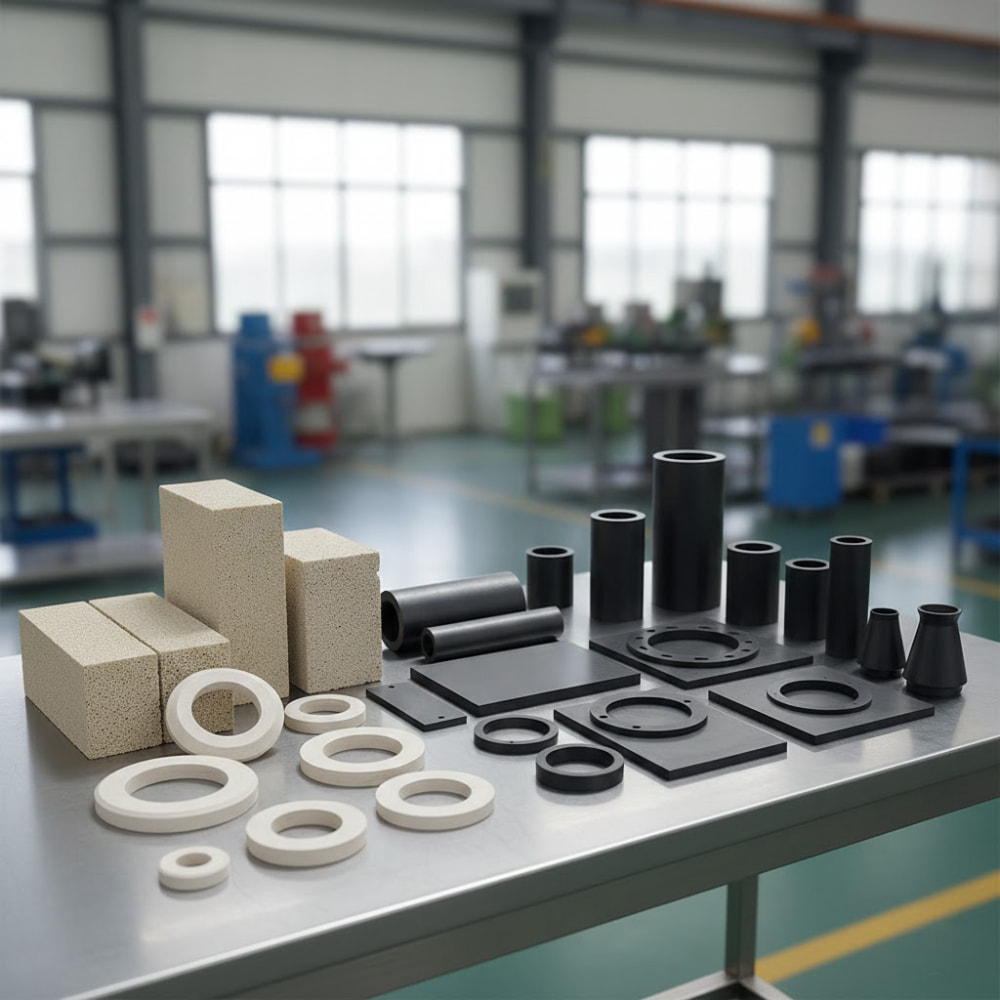
Before talking about silicon carbide, it helps to define what it is replacing. In industrial equipment, “traditional ceramics” usually refers to materials such as:
- Alumina (Al₂O₃): dense oxide ceramic widely used for wear parts, insulators, and refractory linings.
- Cordierite: ceramic used in kiln furniture and honeycomb structures, valued for low thermal expansion.
- Fireclay and basic refractories: bricks and castables used in furnaces, kilns, and boilers.
These materials built the modern thermal and process industries. They are mature, relatively affordable, and well understood. But they also have limitations in wear, temperature, corrosion, and precision that are hard to ignore in modern plants.
2. Silicon carbide’s different property profile
Silicon carbide is a non-oxide ceramic with a very different property set from traditional refractories and oxide ceramics:
- Extreme hardness and wear resistance against abrasive slurries and solids.
- High strength and stiffness retained at elevated temperatures.
- Higher thermal conductivity than most oxide ceramics.
- Low thermal expansion and good thermal shock resistance when correctly designed.
- Excellent chemical resistance in many acidic and alkaline environments.
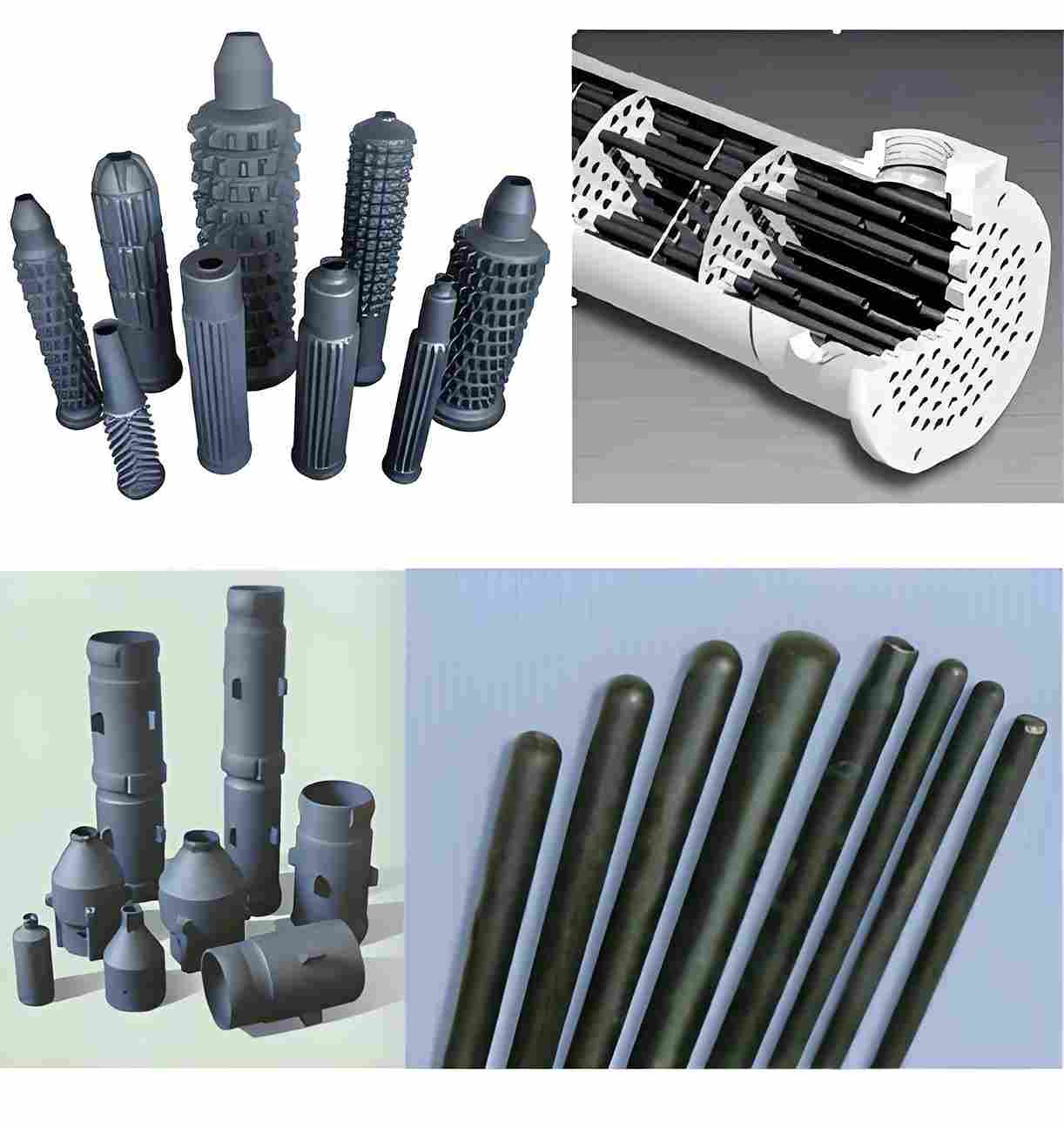
That combination means SiC behaves more like a precision structural material than a simple lining brick. It can be shaped into tubes, plates, seal rings, burners, rollers, and other complex components with tight tolerances.
3. Wear resistance: where SiC leaves traditional ceramics behind
Wear is one of the main reasons companies move away from traditional ceramics and metals.
- Alumina and fireclay refractories can handle temperature, but chip, groove, and erode under high-velocity particles.
- Cordierite is useful for thermal shock but not designed for severe abrasion.
- Hardfaced steels still struggle when fine, sharp particles act like grinding media.
Silicon carbide, by contrast, delivers:
- Much lower wear rates under sliding and erosive conditions.
- Stable surface geometry for seal faces, valve seats, and nozzles.
- Consistent performance in abrasive slurries and dry bulk handling.
This is why you increasingly see SiC in nozzles, plates, and liners where traditional materials had to be replaced so often that maintenance teams simply gave up on “ceramic solutions.”
4. High-temperature performance: more than just refractoriness
Traditional ceramics were chosen mainly for “not melting.” For modern processes, that is not enough.
- High-alumina bricks can survive temperature, but warp, crack, or spall under thermal shock or mechanical load.
- Cordierite kiln furniture can be light and thermally stable, but limited in strength and maximum service temperature.
Engineers now care about:
- Dimensional stability under continuous or cyclic high temperature.
- Load-bearing capacity of plates, beams, and supports over thousands of cycles.
- Temperature uniformity and heat transfer efficiency.
High-quality silicon carbide tubes, beams, and plates can maintain geometry and strength at temperatures where traditional ceramics either deform or crack. That directly affects furnace uptime and product quality.
5. Corrosion and erosion: where “refractory” is not enough
Many processes combine hot gases or liquids with corrosive chemistry and solids. Traditional ceramics may handle temperature but gradually react, glaze, or erode, especially in mixed-phase media.
Silicon carbide offers:
- Excellent chemical resistance in many acids and alkalis, especially in high-purity sintered grades.
- Better performance in erosion–corrosion environments, where particles and corrosive fluids attack together.
- Cleaner, more stable surfaces that contribute less contamination back into the process.
In chemical processing, power, and environmental systems, that means fewer leaks, fewer lining failures, and more predictable maintenance intervals.
6. Precision and tolerances: from bricks to components
Traditional ceramics are typically supplied as bricks, tiles, or blocks. This is fine for lining a furnace wall but not enough for:
- Mechanical seal rings with precise run-out and flatness requirements.
- Tight-tolerance sleeves and bearings inside pumps or mixers.
- Thin-walled tubes and plates that must fit into compact assemblies.
Silicon carbide ceramics can be processed, sintered, and diamond-finished to tight tolerances and fine surface finishes suitable for engineered components. Examples include mechanical seal rings, sleeves, and silicon carbide plates used as kiln furniture or wear surfaces.
This level of precision is one of the reasons SiC is common in pumps, valves, and high-temperature process equipment where traditional bricks and castables simply cannot be used.
7. Thermal shock and cycling: surviving real operating conditions
On paper, many traditional ceramics show good maximum temperature. In reality, daily operations involve:
- Cold starts and hot shutdowns.
- Process upsets and flame impingement.
- Local cooling from air, water, or process gas changes.
Silicon carbide’s combination of low thermal expansion and relatively high thermal conductivity gives it strong thermal shock resistance when components are properly designed and supported. That means:
- Fewer cracked tiles or plates after unplanned cool-downs.
- Longer life for tubes, beams, and burners in cycling furnaces and kilns.
Traditional ceramics can be optimized for thermal shock (for example, certain cordierite kiln furniture), but they generally lack the wear resistance and mechanical strength to handle multi-factor stress profiles as well as SiC.
8. Lifetime and downtime: where the economics flip
In many upgrade projects, the decision to move from traditional ceramics to silicon carbide is not made on lab data; it is made on plant economics.
- Traditional ceramics: lower upfront cost per piece, but high replacement frequency and more unplanned shutdowns.
- Silicon carbide ceramics: higher initial price, but significantly longer life and more predictable maintenance.
When you include:
- Labour for replacement and inspection.
- Lost production during stoppages.
- Scrap and rework from out-of-spec operation.
… the “expensive” silicon carbide component often provides a lower total cost per operating hour than traditional ceramics. This is particularly true for critical equipment in chemical, mining, cement, and high-temperature processing lines.
9. Typical upgrade scenarios
Common situations where plants move from traditional ceramics to SiC include:
Pump and seal upgrades
- Replacing alumina or metal seal faces with SiC mechanical seal rings to extend life in corrosive or abrasive fluids.
- Upgrading sleeves and bearings to SiC in pumps handling slurries or chemically aggressive media.
Furnace and kiln modernizations
- Replacing dense bricks and cordierite furniture with SiC tubes, beams, and plates to improve life and energy efficiency.
- Using SiC burner components and radiant tubes for tighter temperature control and longer campaigns.
Wear and flow control improvements
- Installing SiC wear plates and liners in high-impact and high-velocity chutes.
- Replacing traditional ceramic or metallic nozzles with SiC nozzles in spray and desulfurization systems.
10. Where traditional ceramics still make sense
Silicon carbide is not replacing traditional ceramics everywhere, and it shouldn’t. There are still many appropriate uses for alumina, cordierite, and fireclay:
- Large, low-stress linings where cost per square meter dominates and wear is moderate.
- Low-to-medium temperature kilns where cordierite furniture already delivers acceptable life.
- Applications where parts are not critical to uptime and can be replaced easily during routine maintenance.
In those contexts, traditional ceramics remain perfectly rational choices. Silicon carbide is best reserved for places where failure is expensive and process conditions are severe.
How to evaluate a switch from traditional ceramics to SiC
If you are wondering whether silicon carbide is worth considering in your plant, a simple evaluation path helps:
- List problem components where traditional ceramics (or metals) fail due to wear, corrosion, cracking, or distortion.
- Quantify the pain: cost of replacements, downtime hours, and impact on throughput or quality.
- Capture operating conditions: temperature, medium, solids content, pH, and mechanical loads.
- Identify candidate geometries: tubes, plates, seal rings, burners, liners, etc., that can be manufactured in SiC.
- Start with a pilot: upgrade one or two components, monitor performance, and compare total cost over one maintenance cycle.
In many cases, once the first SiC upgrade proves itself, the same approach can be extended to similar equipment across the plant.
Conclusion
Silicon carbide is replacing traditional ceramics in many industries for one simple reason: it solves problems that older materials cannot handle economically. Its advantages are most visible when processes combine:
- Severe abrasion and erosion
- High temperatures and thermal cycling
- Aggressive chemical environments
- Strict reliability and uptime requirements
Traditional ceramics still have their place for basic lining and low-risk applications. But when downtime is expensive and conditions are harsh, silicon carbide is increasingly becoming the default choice for engineered ceramic components rather than the exotic exception.