In heavy-duty industrial environments, flat surfaces suffer the most: chutes, hoppers, cyclones, transfer points and tanks are constantly attacked by abrasion, impact and corrosion. If the wear plate material fails, you get leaks, unplanned shutdowns and expensive repairs.
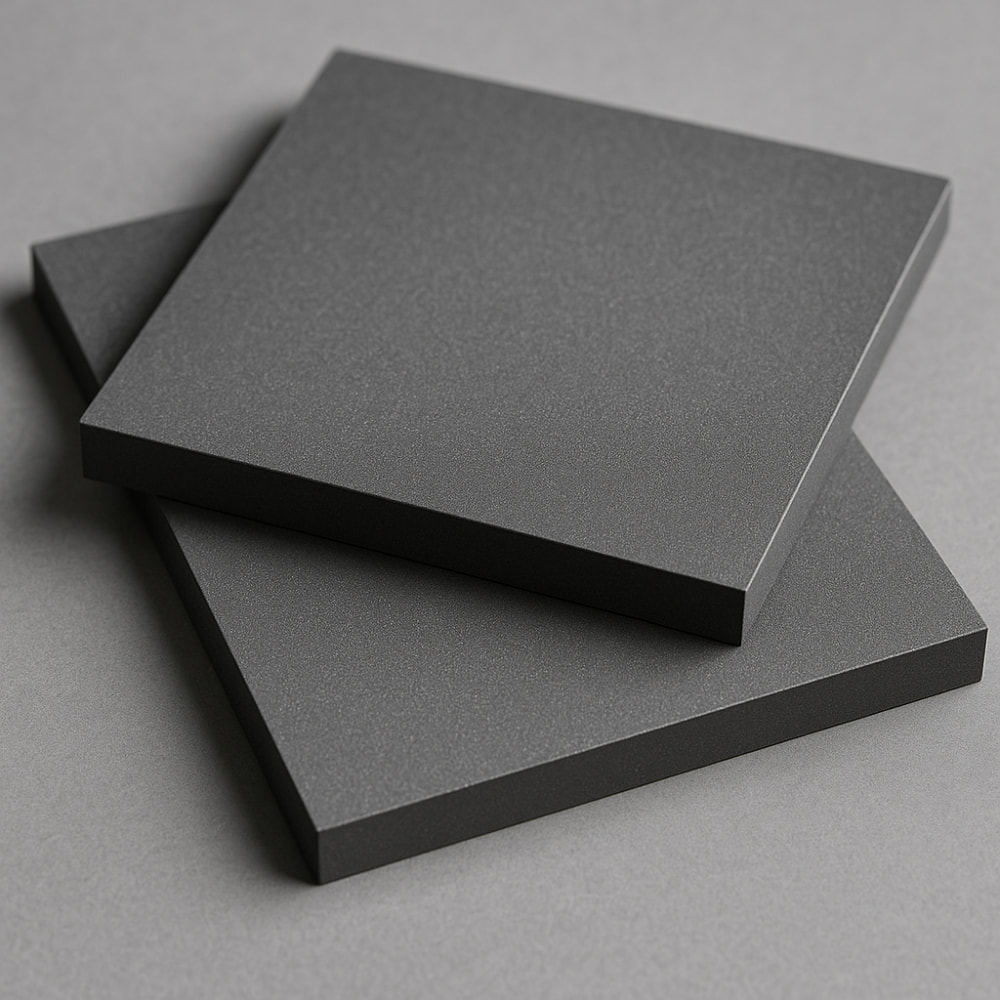
Silicon carbide plates are designed to survive exactly these conditions. Thanks to the extreme hardness and chemical stability of silicon carbide, well-designed SiC plates can deliver several times the lifetime of steel or even alumina ceramic in demanding wear applications.
This guide explains how to select the right silicon carbide plate grade and size for heavy-duty wear applications, so you can reduce downtime and stabilise operating costs.
Typical Problems with Conventional Wear Plates
If your current lining solution looks like this, you are leaving money on the table:
- Steel liners wearing through in months under high-speed particle flow
- Local holes or grooves forming in impact zones, leading to leakage
- Frequent shutdowns to replace tiles or weld new plates
- Production rate limited by fear of damaging the equipment
- Operators constantly patching surfaces with temporary solutions
In many cases, the base problem is not the process itself, but the fact that the plate material and thickness are not matched to the real wear mechanism and operating conditions.
Key Parameters Before Selecting Silicon Carbide Plates
1. Wear mechanism
First, identify how the surface is being attacked:
- Sliding abrasion – fine particles sliding over the plate at high speed
- Impact abrasion – larger lumps hitting the surface at an angle
- Erosion – gas or liquid flows carrying abrasive particles
- Corrosion + wear – chemical attack plus mechanical abrasion
Silicon carbide plates are especially effective in sliding and erosive wear situations, where hardness and chemical stability drive lifetime.
2. Process conditions
- Operating temperature and possible temperature cycling
- Type of media: ores, powders, slurries, chemically aggressive liquids or gases
- Particle size distribution and velocity
- Presence of impact points (e.g. free-falling material zones)
For high-temperature or corrosive environments, SiC plates typically outperform steel and many other ceramics, especially where both heat and abrasion are present.
3. Equipment geometry
- Flat panels, curved surfaces, cones or transitions
- Available fastening methods: mechanical fastening, mortars, adhesives, welding studs, or casting-in-place
- Accessibility for installation and replacement
Geometry strongly influences plate size and thickness decisions. Larger tiles reduce joint count but require better support and handling. Smaller tiles are easier to install in tight spaces.
Silicon Carbide Plate Grades for Wear Applications
The most common grades used for silicon carbide wear plates are:
- SSiC – Pressureless Sintered Silicon Carbide
- RBSiC / SiSiC – Reaction-bonded silicon carbide
- RSiC – Recrystallized Silicon Carbide
Each grade offers a different balance of hardness, strength, thermal shock resistance and cost.
Grade comparison for wear plates
| Aspect | SSiC Plate | RBSiC / SiSiC Plate | RSiC Plate |
|---|---|---|---|
| Hardness | Very high, excellent for severe abrasion | High, good for most industrial wear | High, with good thermal shock behaviour |
| Max service temperature | Up to approx. 1600 °C (atmosphere dependent) | Typically up to approx. 1350–1380 °C | Up to approx. 1600 °C with good cycling resistance |
| Thermal shock resistance | Very good | Good | Excellent, suitable for frequent temperature swings |
| Porosity | Very low, dense structure | Low, slightly residual silicon phase | Higher open porosity, good for certain kiln applications |
| Typical use | High-end wear liners, chemical and high-temperature zones | Cost-effective wear plates, structural kiln and furnace parts | Plates in kilns or furnaces with strong thermal cycling |
| Relative cost | Highest | Medium | Medium to high |
In many heavy-duty wear applications, RBSiC / SiSiC plates offer an excellent balance of performance and cost. SSiC plates are selected where maximum hardness, high-temperature strength or chemical resistance are critical.
Selecting Plate Thickness and Size
1. Plate thickness
Plate thickness is a compromise between strength, lifetime and weight:
- Thinner plates (8–15 mm) – good for fine particle flows and moderate wear rates, where weight and installation space are limited.
- Medium thickness (15–25 mm) – typical choice for most chutes, hoppers and cyclones with continuous abrasion.
- Thick plates (> 25 mm) – suitable for high-impact zones, transfer points and regions with very aggressive particle flow.
The real decision should be based on expected wear rate, downtime cost and equipment accessibility. In high-value processes, overspecifying thickness is often cheaper than frequent shutdowns.
2. Plate size and layout
- Large plates reduce the number of joints but require good support and precise installation.
- Smaller plates adapt better to curved surfaces and make local replacement easier.
- Consider modular designs where standard-sized SiC tiles can be replaced without dismantling large sections.
For complex surfaces, a combination of standard rectangular plates and smaller “filler tiles” around edges and openings usually gives the best compromise.
Typical Applications for Silicon Carbide Wear Plates
- Chutes and hoppers – lining for ore, mineral and bulk powder handling systems.
- Cyclones and separators – internal wear plates in high-velocity gas/particle flows.
- Pipe elbows and transitions – wear tiles bonded onto high-erosion areas.
- Scrubber and reactor linings – where chemical corrosion and erosion act together.
- High-temperature zones – kiln feed areas, burner zones and hot gas ducts.
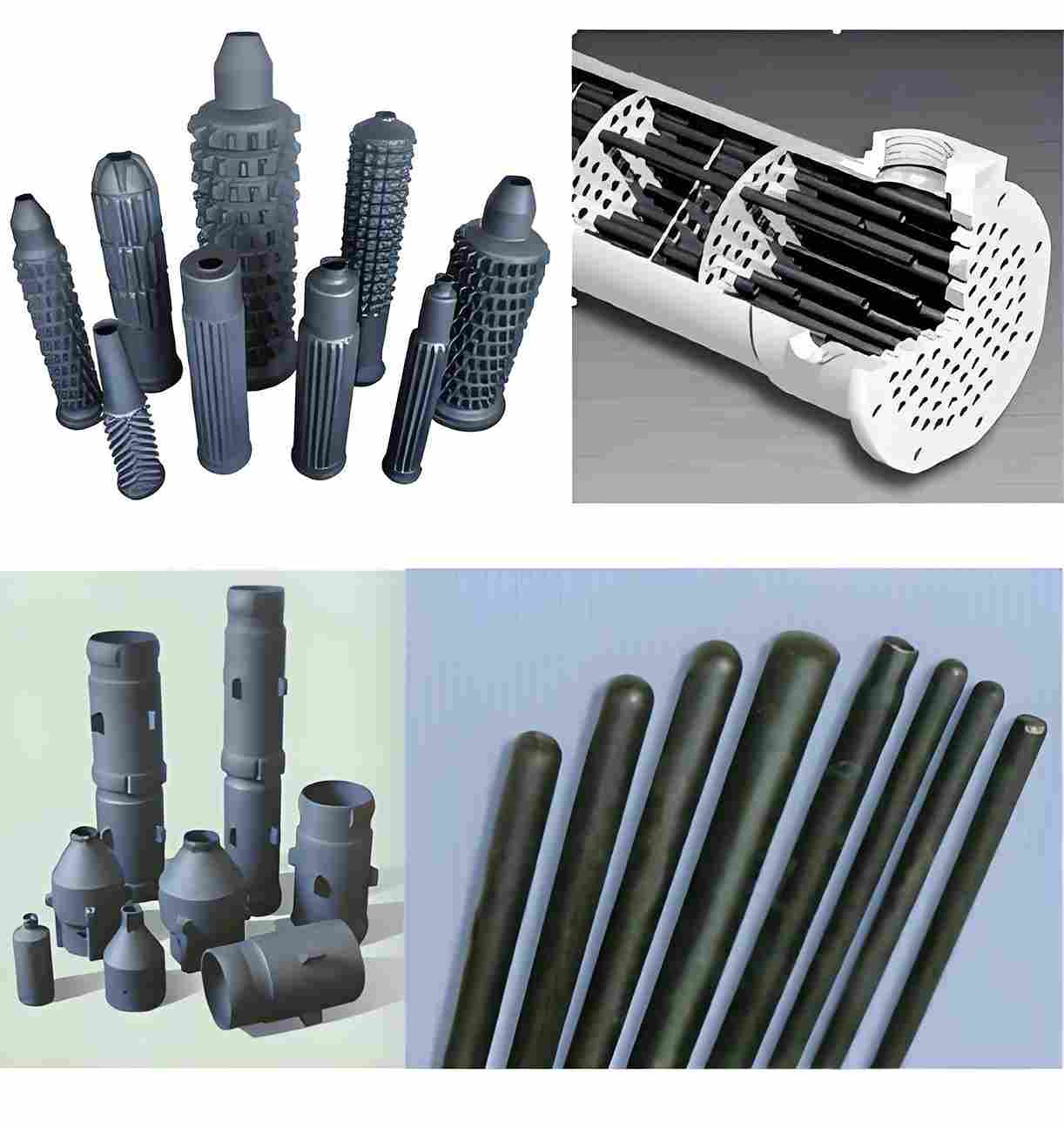
In systems where elevated temperature and wear coexist, you can also combine SiC plates with other silicon carbide components, such as silicon carbide tubes used for high-temperature gas channels or heat transfer elements.
Selection Checklist for Engineers
Before sending drawings and RFQs, prepare the following data:
- Process temperature range and maximum peak temperature
- Media type, particle size and velocity
- Dominant wear mechanism (sliding, impact, erosion, corrosion + wear)
- Equipment geometry and available space for plates
- Preferred fastening method (mechanical, bonded, cast-in, etc.)
- Target lifetime and acceptable downtime frequency
- Any known failure modes of the current lining system
With this information, a competent SiC supplier can propose a combination of grade, thickness and plate size that matches your real operating conditions instead of generic “one-size-fits-all” solutions.
How Zirsec Supports Heavy-Duty Wear Applications
Zirsec focuses on industrial-grade silicon carbide ceramics produced under controlled sintering and machining processes. For wear plates, this translates into:
- Grade selection: RBSiC, SSiC or RSiC matched to your temperature, media and lifetime requirements.
- Custom dimensions: Plates and tiles produced to drawing, with precision grinding where required for tight fit.
- Small-batch flexibility: Support for trials and pilot projects, starting from low quantities.
- Engineering support: Assistance with plate layout, fastening concept and interface design with steel structures.
The goal is simple: reduce unplanned wear failures, stabilise maintenance intervals and improve the total cost per tonne of material handled.
Case Example: Upgrading Steel Liners to SiC Plates in a Transfer Chute
Background
A mineral processing plant used thick steel liners in a high-speed transfer chute. At high throughput, liners wore through every few months, causing leaks and unplanned shutdowns.
Findings
- Main wear mechanism: sliding abrasion from fine, sharp particles at high velocity.
- Temperature: 120–200 °C, well within SiC capability.
- Access for maintenance was limited; replacing liners required significant downtime.
Solution
- Replace steel liners with RBSiC wear plates of optimised thickness.
- Use a modular layout of rectangular tiles with mechanical fastening behind the plate.
- Introduce a defined inspection interval to change only the most exposed tiles.
Result
- Wear life improved by a factor of 3–5 compared with steel liners.
- Shutdown frequency for liner replacement was significantly reduced.
- Total lining cost per tonne of material handled decreased, despite a higher initial plate cost.
FAQ – Silicon Carbide Plates for Heavy-Duty Wear Applications
Q1. Where do silicon carbide plates make the biggest difference compared to steel liners?
Silicon carbide plates provide the most benefit in high-velocity sliding or erosive wear conditions, especially where fine or sharp particles attack the surface continuously. In these environments, steel liners wear quickly, while SiC maintains its hardness and surface integrity for much longer periods.
Q2. How do I choose between SSiC and RBSiC plates?
RBSiC plates are usually the first choice for industrial wear applications because they offer a strong balance of performance and cost. SSiC is selected when you need maximum hardness, higher temperature capability or very low porosity in especially aggressive chemical or high-temperature zones.
Q3. Can silicon carbide plates handle impact, or are they only for sliding wear?
Silicon carbide is a hard ceramic, so it excels in sliding and erosion wear. It can handle moderate impact loads when properly supported and when plate thickness is selected correctly. For very high impact zones, a layered design (for example, a steel backing with SiC plates on the surface) is often used to combine toughness and wear resistance.
Q4. What is the typical thickness range for SiC wear plates?
Common thicknesses range from about 8 mm to over 30 mm. Thinner plates are used where space is limited and wear is moderate, while thicker plates are applied in heavy-duty or impact-prone zones. The best thickness should be defined based on expected wear rate and downtime cost.
Q5. How are silicon carbide plates fixed to the equipment?
Typical fixing methods include high-strength adhesives, mortars, mechanical fastening systems with studs or clamps, and cast-in-place solutions. The right method depends on temperature, geometry and maintenance practices. In high-temperature or critical applications, mechanical or cast-in solutions are often preferred.
Q6. Can I replace only part of my existing lining system with SiC plates?
Yes. Many plants start by upgrading only the worst wear zones (for example, high-velocity corners or impact points) to silicon carbide plates, while keeping existing linings in less critical areas. This targeted approach allows you to see performance gains without a full system redesign.
Q7. What information should I send to Zirsec when asking for a quotation for wear plates?
Provide process temperature, media type and particle size, equipment drawings or sketches, current lining material and lifetime, and your target lifetime or maintenance interval. With these details, Zirsec can recommend suitable SiC grades, plate thickness, size and layout for your specific application.
Need to design a silicon carbide plate solution for your wear-critical equipment? Share your operating data and drawings with Zirsec, and our engineering team will help you define a plate grade and size that matches your process, not just a generic catalogue part.