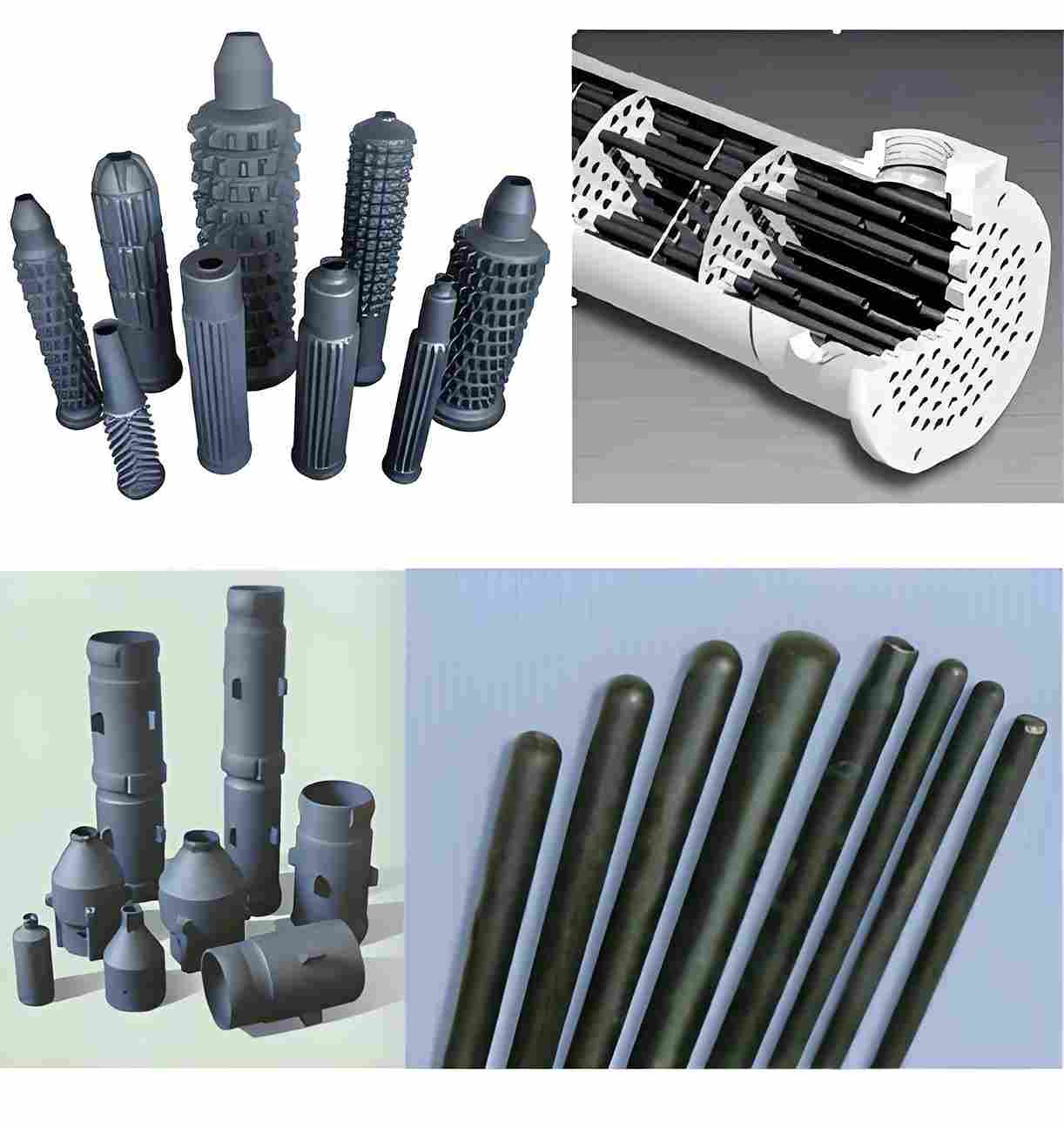
When standard catalog parts are not enough, custom silicon carbide components become the only realistic option. The problem: customised parts mean more engineering decisions, longer discussions and higher risk if you choose the wrong design or supplier.
Whether you need a special tube, plate, seal ring, burner nozzle or complex shaped insert, this guide explains what to consider before you order custom silicon carbide components, so you can avoid surprises and keep your project under control.
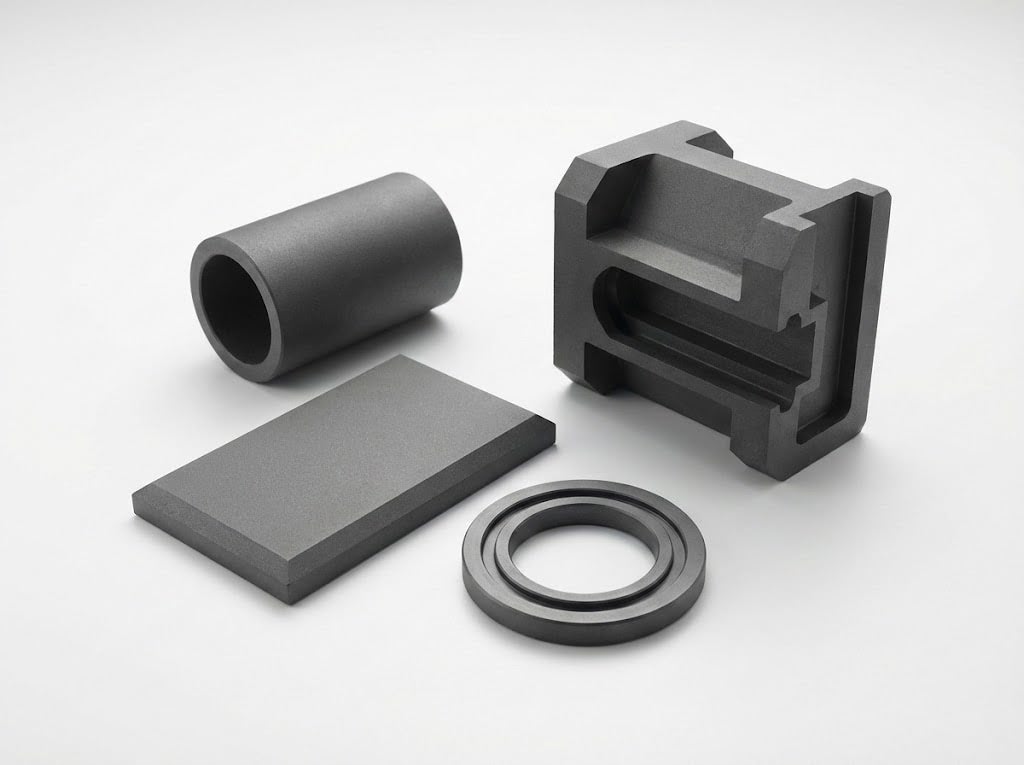
When Does It Make Sense to Go Custom?
Custom silicon carbide components usually make sense in the following situations:
- Standard sizes do not fit – you need special diameters, lengths or shapes that are not in normal stock.
- Operating conditions are too harsh – temperature, wear or chemistry destroy standard parts too quickly.
- System-level optimisation – you want to redesign a pump, kiln, furnace or reactor around silicon carbide for higher performance.
- Retrofitting or reverse engineering – you must replace an existing component from another supplier, often with limited documentation.
Custom parts bring more flexibility, but also more responsibility. A structured approach saves time and money.
Understand Your Application First
Before discussing drawings and tolerances, clarify the real job of the component.
1. Function in the system
- Is it carrying load, sealing, guiding, insulating, transferring heat or protecting something?
- Is failure safety-critical, or mainly a maintenance and cost issue?
For example, silicon carbide tubes may act as radiant tubes, thermocouple protection tubes or process tubes. Each role has different design priorities.
2. Operating conditions
- Temperature range and maximum peak (normal and abnormal)
- Atmosphere: oxidising, reducing, inert, vacuum, corrosive gases or liquids
- Mechanical loads: pressure, bending, vibration, impact, rotation
- Wear mechanism: sliding abrasion, erosion, impact, corrosion + wear
These parameters drive material grade selection and geometry limits more than anything else.
Choose the Right Silicon Carbide Grade
For custom components, the most common silicon carbide families are:
- SSiC – Sintered Silicon Carbide (dense, high-purity, very high strength and corrosion resistance)
- RBSiC / SiSiC – Reaction-Bonded Silicon Carbide (excellent strength and good cost–performance balance)
- RSiC – Recrystallized Silicon Carbide (good high-temperature and thermal shock behaviour, often used in kiln furniture)
Grade selection guidelines
- Choose SSiC for aggressive chemicals, high pressure, high temperature and where leakage or breakage is critical.
- Choose RBSiC / SiSiC when you need large, structural parts (beams, rollers, burner nozzles) with strong cost–performance balance.
- Choose RSiC when thermal cycling is extreme, such as in certain kiln and furnace applications.
General background on silicon carbide as a material is covered in silicon carbide, but practical selection should be done together with your supplier’s engineers, based on real furnace or process data.
Design for Manufacturability
Custom silicon carbide components are produced by shaping a green body, then firing/sintering and machining. Some shapes are straightforward; others are difficult, slow or risky.
1. Wall thickness and cross-section
- Avoid very thin walls over long spans unless absolutely necessary.
- Keep thickness transitions smooth rather than abrupt; large jumps in thickness can cause stress concentrations.
- For tubes, choose sensible OD/ID ratios that balance strength and flow requirements.
2. Holes, slots and sharp corners
- Allow reasonable minimum hole diameters and slot widths for the selected manufacturing process.
- Round internal corners where possible instead of using sharp 90-degree corners.
- Consider machining certain features after sintering only if tolerances really require it.
3. Part size and handling
- Very large plates or beams need special support and handling; sometimes splitting one big part into modules is more robust.
- Check furnace size limitations for sintering when designing very long tubes or wide plates.
Good design for manufacturability typically results in lower scrap rates, shorter lead times and more stable prices.
Be Precise with Tolerances and Surface Finish
Unclear tolerances waste money. Overly tight tolerances drive cost without adding value, while missing tolerances create assembly problems.
1. Dimensional tolerances
- Define which dimensions are critical for fit or function, and which can be general.
- Use realistic tolerance bands for ceramics. For example, ±0.2 mm may be standard; tighter values require more grinding and inspection.
- Where applicable, reference recognised standards for engineering tolerances.
2. Flatness and straightness
- Specify flatness only where necessary, for example on sealing faces or support surfaces.
- For long tubes or beams, define acceptable straightness over full length.
3. Surface roughness
- Specify roughness for surfaces that interface with seals, bearings or sliding components.
- Accept standard “as-fired” surfaces for non-critical areas to keep cost under control.
Sharing a clear drawing package with marked critical dimensions makes the RFQ and production process faster and less error-prone.
Document the Operating and Testing Requirements
Custom silicon carbide components often support critical equipment, so testing and documentation should be defined upfront.
- Material certification: required chemical composition and property ranges.
- Dimensional inspection: which parts need 100% inspection and which can be sampled.
- NDT or leak tests: for gas-tight tubes or pressure-bearing parts.
- Traceability: lot and batch numbers for long-term tracking.
Not every project needs heavy documentation, but if your customer expects it, your supplier must know early.
MOQ, Lead Time and Cost Reality
Custom silicon carbide components are not “one-click” items. However, a supplier with flexible production can reduce friction dramatically.
- Prototypes and small batches: check minimum order quantities for new designs and prototypes.
- Tooling or mould costs: some geometries require dedicated tooling; clarify whether these are one-time or amortised.
- Lead time: include engineering review, tooling, forming, sintering, machining and inspection in your planning.
- Repeat orders: confirm typical lead time once the design is stable.
Zirsec is structured to support low minimum order quantities and small-batch customisation. That includes trial batches and flexible production for parts such as custom silicon carbide plates, tubes, seal rings and other ceramic components.
Evaluate the Supplier, Not Just the Quote
Price matters, but the cheapest quote is not helpful if parts fail in service. When evaluating suppliers, look at:
- Engineering support: ability to review your drawings and make practical suggestions.
- Manufacturing depth: whether they control forming, sintering and machining in-house.
- Experience: track record in your industry (chemical, metallurgy, furnaces, etc.).
- Quality system: process control, inspection standards and consistency between batches.
- Communication: clarity on risks, limitations and realistic commitments.
A responsive supplier will often highlight potential design risks early instead of quietly quoting and hoping for the best.
How Zirsec Approaches Custom Silicon Carbide Projects
Zirsec focuses on industrial-grade silicon carbide ceramics and provides a structured customisation workflow:
- Pre-design discussion: applications, operating conditions and failure history of existing parts.
- Drawing review: checking geometry, critical dimensions and manufacturability.
- Material and process selection: choosing SSiC, RBSiC or RSiC and appropriate forming and machining routes.
- Sample and small-batch production: producing prototypes or pilot batches with documented inspection.
- Scale-up: moving to stable batch production after field validation.
For buyers who need multiple custom parts in the same project, the Zirsec customisation service helps coordinate tubes, plates, seal rings and other components as a single engineering package instead of many disconnected RFQs.
Case Example: Custom SiC Insert for a Corrosive Mixing Reactor
Background
A chemical producer used a steel-lined reactor with high wear and corrosion in a specific mixing zone. Maintenance intervals were short, and unplanned stoppages were frequent.
Solution
- Design a custom silicon carbide insert to line the most exposed area.
- Use reaction-bonded SiC for a balance of strength and manufacturability.
- Optimise plate thickness and joint layout for easy installation and replacement.
Result
- Wear and corrosion in the critical zone were drastically reduced.
- Shutdown frequency dropped, and the reactor could run longer between planned inspections.
- The total cost impact of the custom SiC insert was positive despite higher part cost.
FAQ – Buying Custom Silicon Carbide Components
Q1. What minimum order quantity should I expect for custom SiC parts?
It depends on geometry, but for many components Zirsec can support small trial quantities, starting from low double-digit piece counts or even single-piece samples for certain parts. Once the design is stabilised, batch sizes can be scaled according to your demand.
Q2. How detailed do my drawings need to be?
Ideally, provide full 2D drawings with all critical dimensions, tolerances and surface requirements. If you only have 3D models or samples, Zirsec can help create or refine the drawing package, but this should be considered as part of the project scope.
Q3. Can you reverse engineer an existing silicon carbide component?
In many cases, yes. With physical samples and basic operating data, Zirsec can measure dimensions, analyse geometry and propose a compatible or improved design. For critical parts, additional application information is necessary to avoid repeating previous weaknesses.
Q4. How long does it take to get custom silicon carbide components?
Lead time depends on complexity, tooling needs and batch size. Typical ranges go from a few weeks for simple shapes using existing tooling to several weeks for complex new designs. Early discussion and clear specifications are the best way to avoid delays.
Q5. Can different custom parts share the same material and sintering process?
Often yes. Grouping parts that use the same silicon carbide grade and similar processing routes can reduce cost and simplify logistics. Zirsec can help organise your components into families with shared material and process setups.
Q6. What information should I include in a first RFQ for custom SiC components?
At minimum: application description, operating conditions (temperature, media, pressure, loads), target lifetime, existing problems, drawings or sketches, quantity expectations and any special testing or documentation requirements. This allows a realistic technical and commercial response.
Planning to move from standard parts to custom silicon carbide components? Share your drawings and operating conditions with Zirsec, and our engineering team will help you design a solution that fits your process instead of forcing your process to fit a catalogue part.