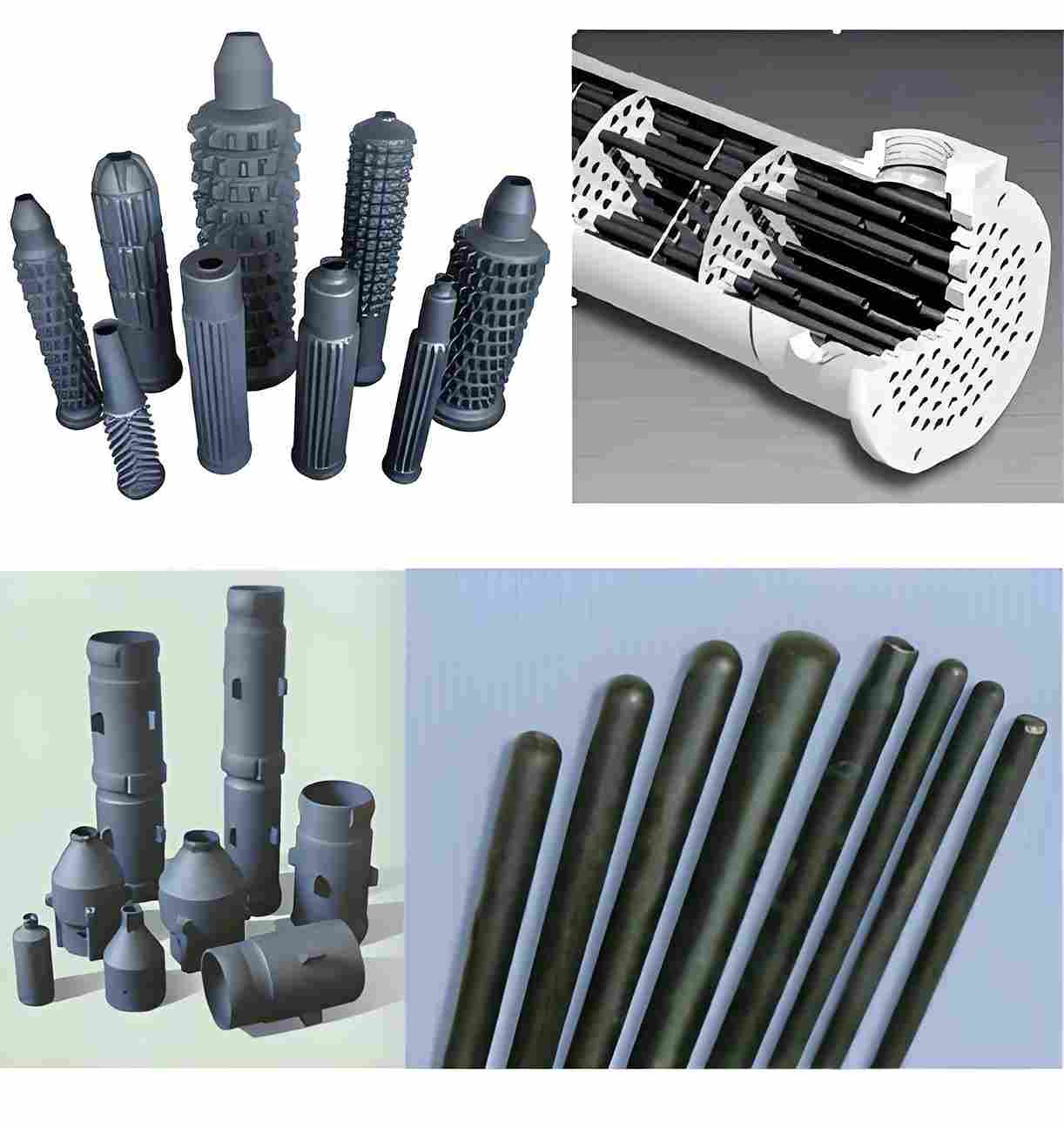
When you design or upgrade high-temperature furnaces, choosing the right silicon carbide (SiC) material is not just a “materials” question – it’s a lifetime, downtime, and safety question. Two of the most common options for structural and lining components are nitride-bonded silicon carbide (NB-SiC) and pressureless sintered silicon carbide (SSiC). Both are SiC-based, but their performance in real furnace conditions can be very different.
This guide explains how nitride-bonded and sintered SiC compare in strength, temperature capability, corrosion resistance, and cost, and how to choose the right grade for beams, plates, rollers, and tubes in industrial furnaces.
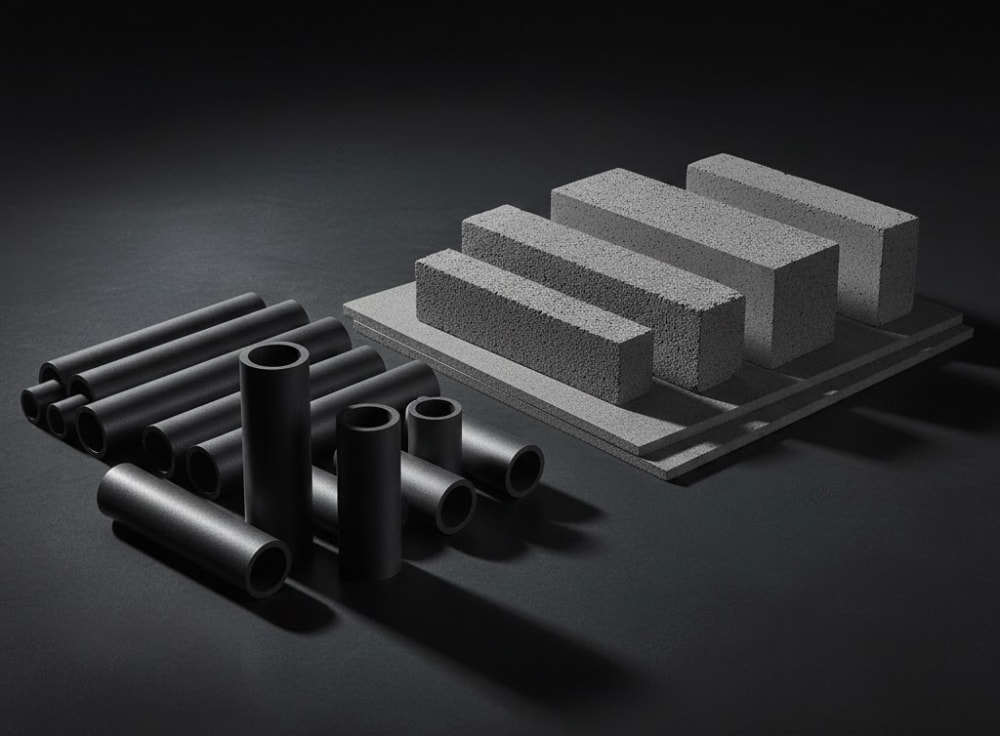
Why compare nitride-bonded and sintered SiC for furnace parts?
At a quick glance, both materials are “silicon carbide” and share many of the same core advantages described in general silicon carbide references: high hardness, high-temperature strength, and good thermal conductivity. The difference is in the details:
- SSiC is ultra-dense, almost gas-tight, with very high mechanical strength and excellent chemical resistance.
- Nitride-bonded SiC has a silicon nitride bond phase, slightly lower density and strength, but very good thermal shock resistance and a more attractive cost level for large kiln furniture.
For furnace engineers, the choice usually comes down to three questions:
- What is the maximum service temperature and atmosphere?
- How important are gas-tightness and corrosion resistance versus cost?
- Are the parts mainly load-bearing structures (beams, rollers, plates) or critical sealing/flow-control components?
What is nitride-bonded silicon carbide?
Nitride-bonded silicon carbide (often referred to as NB-SiC) is produced by bonding SiC grains with a silicon nitride (Si3N4) phase. The result is a composite ceramic with high strength and good thermal shock performance, commonly used for:
- Furnace and kiln furniture (beams, plates, posts)
- Refractory linings and tiles
- Components exposed to repeated heating and cooling cycles
Typical characteristics of nitride-bonded SiC (values are indicative and depend on formulation):
- Bulk density: ~2.6–2.8 g/cm³
- Open porosity: 15–18%
- Flexural strength (RT): ~200–300 MPa
- Max service temperature: ~1350–1450 °C in air (higher in controlled atmospheres)
- Thermal shock resistance: very good due to microstructure and porosity
What is pressureless sintered silicon carbide (SSiC)?
Pressureless sintered silicon carbide (SSiC) is a high-density, near-zero-porosity material made from fine SiC powder sintered without any metallic phase. Zirsec’s Sintered Silicon Carbide is designed for applications that demand maximum strength, corrosion resistance, and leak-tightness.
Typical characteristics of SSiC in furnace-related components:
- Bulk density: ~3.10–3.15 g/cm³
- Open porosity: < 0.1%
- Flexural strength (RT): 380–450 MPa or higher
- Max service temperature: up to ~1600 °C in air (higher in inert atmospheres)
- Thermal conductivity: 90–120 W/m·K (grade-dependent)
- Corrosion resistance: excellent against most acids, alkalis, and oxidizing environments
Because of these properties, SSiC is widely used in:
- Furnace tubes and radiant tubes
- Rollers and beams in severe atmospheres
- Seals, bearings, and other precision mechanical parts
Nitride-bonded vs sintered SiC: side-by-side comparison
| Property | Nitride-Bonded SiC | Sintered SiC (SSiC) | Impact on Furnace Parts |
|---|---|---|---|
| Bulk density | ~2.6–2.8 g/cm³ | ~3.10–3.15 g/cm³ | Higher density SSiC supports higher loads and better gas-tightness. |
| Open porosity | Typically 15–18% | < 0.1% | SSiC is preferred for atmospheres where gas-tightness and low penetration are critical. |
| Flexural strength (RT) | ~200–300 MPa | ~380–450 MPa | SSiC offers higher safety margins for heavily loaded beams and rollers. |
| Max service temperature in air | ~1350–1450 °C | Up to ~1600 °C | For ultra-high-temperature or aggressive atmospheres, SSiC is safer. |
| Thermal shock resistance | Very good | Good to very good (grade-dependent) | NB-SiC is attractive where frequent cycling is more critical than ultimate strength. |
| Chemical resistance | Good | Excellent | SSiC is recommended for corrosive gases, vapor, and process atmospheres. |
| Gas-tightness | Moderate (porous) | High (near gas-tight) | For radiant tubes, heat exchanger tubes, or protective tubes, SSiC is preferred. |
| Component size & complexity | Very good for large kiln furniture | Excellent for medium-sized precision parts | NB-SiC is often used for very large beams/plates; SSiC for tubes, rollers, and seals. |
| Typical cost level | Lower | Higher | NB-SiC is a cost-effective choice for standard kiln furniture; SSiC is used where failure is extremely costly. |
Where nitride-bonded SiC makes sense in furnaces
In many kiln and furnace builds, nitride-bonded SiC is the most economical choice for large structural parts where:
- The atmosphere is relatively clean and not extremely corrosive.
- Service temperature stays within the safe range of NB-SiC.
- You need good thermal shock resistance for frequent cycling.
- Component size is large and weight/cost become important factors.
Typical uses include support beams, kiln plates, and refractory tiles in continuous and intermittent furnaces where structural stability and cost balance are the main drivers.
Where sintered SiC gives you an advantage
Pressureless sintered SiC becomes the clear choice when performance and reliability are more important than minimum cost. For example:
- High-temperature furnace rollers: In roller kilns, SSiC rollers with high strength and low creep help keep deflection under control at 1400–1600 °C. See Zirsec’s silicon carbide rollers for RBSiC/SSiC options.
- Radiant and process tubes: Dense SSiC tubes support high gas velocities and aggressive atmospheres with minimal oxidation and corrosion. For tube-based designs, refer to silicon carbide tubes.
- Critical support plates: Where plate flatness, creep resistance, and chemical stability are vital, high-density plates based on SSiC or high-grade RBSiC are preferred.
In these cases, the higher initial material cost is usually offset by fewer shutdowns, longer component life, and better process stability.
How to choose for your furnace project
When you compare nitride-bonded and sintered SiC, use a simple decision logic:
- Step 1 – Define atmosphere: oxidizing, reducing, neutral, or corrosive (alkali, chlorine, sulfur, etc.).
- Step 2 – Confirm temperature profile: maximum continuous temperature, peak temperature, heating/cooling rate, and cycle frequency.
- Step 3 – Identify critical failure modes: bending, creep, fracture, corrosion, or thermal shock.
- Step 4 – Evaluate downtime cost: what happens if one beam or roller fails during operation?
- Step 5 – Match grade to risk: use SSiC where failure is extremely expensive, NB-SiC where the risk and environment are moderate.
Example: upgrading a roller hearth kiln
Consider a roller hearth kiln running at 1400–1500 °C for technical ceramics. The main targets are reduced roller sag, stable line tracking, and longer maintenance intervals.
- Existing setup: mixed materials, including lower-grade ceramic rollers and plates that show creep deformation every 12–18 months.
- Upgrade option: specify high-strength SSiC rollers (or high-grade RBSiC where suitable) plus optimized support geometry.
- Result: higher stiffness at temperature, more consistent product path, and longer service life, with a relatively small increase in total furnace cost.
In contrast, large roof or sidewall tiles in the same furnace might remain nitride-bonded SiC, where the mechanical load is lower and cost per square meter matters more than gas-tightness.
Practical checklist before you decide
- Operating temperature range and atmosphere (including start-up and shutdown conditions)
- Required service life and acceptable failure risk
- Component geometry (span, wall thickness, and load distribution)
- Need for gas-tightness or very low permeability
- Maintenance access and cost of unplanned downtime
- Available budget vs. total cost of ownership
If you share these details with the Zirsec engineering team, we can recommend a specific SiC grade and component design that balances performance and budget.
FAQ: nitride-bonded vs sintered SiC for furnace parts
1. Is nitride-bonded SiC strong enough for furnace beams?
For many kilns running below ~1400 °C in relatively clean atmospheres, high-quality nitride-bonded SiC beams provide sufficient strength and thermal shock resistance. When spans are long, loads are high, or temperatures are close to the material limit, moving to SSiC or high-grade RBSiC becomes safer.
2. When is SSiC overkill?
If parts run at moderate temperatures, see limited chemical attack, and are not critical to furnace safety or uptime, full-density SSiC may be more than you need. In those cases, nitride-bonded SiC can deliver a good balance of performance and cost.
3. Can I mix nitride-bonded and sintered SiC in the same furnace?
Yes. Many modern furnace designs use SSiC for the most critical components (such as rollers, tubes, or highly loaded plates) and nitride-bonded SiC for larger, less critical structural parts. The key is to consider thermal expansion, support design, and load paths in the overall structure.
4. How do I know if corrosion is a serious risk?
Check fuel type, process atmosphere, and any volatile species released from the load (alkali vapors, chlorides, sulfates, etc.). If you expect chemical attack at high temperatures, SSiC or high-grade RBSiC will generally provide better long-term stability than nitride-bonded SiC.
5. Can Zirsec help with material selection and design?
Yes. Zirsec provides material selection support, FEM-informed design suggestions, and fully custom SiC component customization. Share your drawings, operating conditions, and target service life, and our engineers will recommend a suitable SiC grade and structure for your furnace.
Need help choosing between nitride-bonded and sintered SiC for your furnace? Contact Zirsec with your operating data, and we’ll help you build a safer, more efficient, and longer-lasting furnace structure.