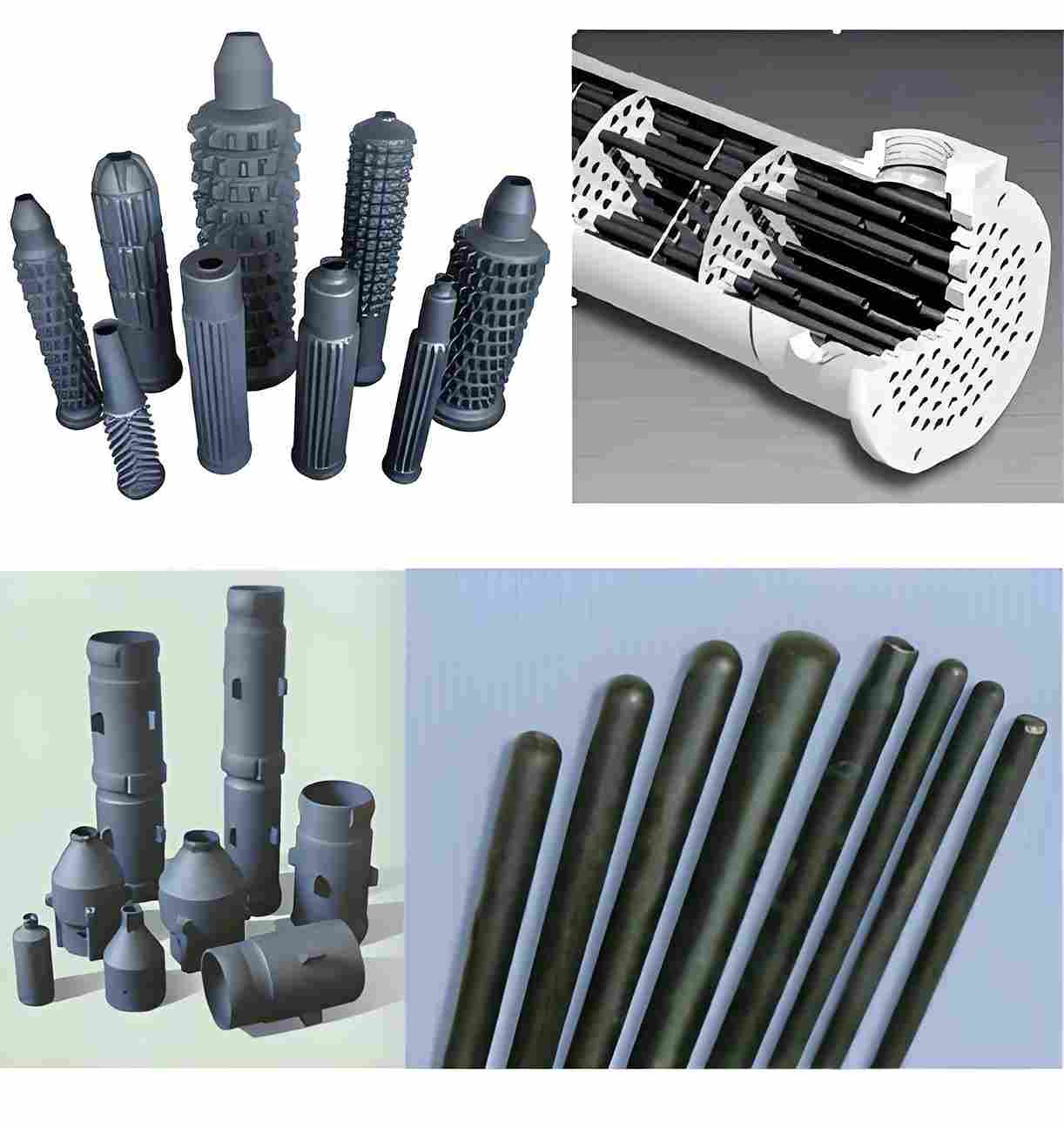
In many plants, silicon carbide ceramics only appear after years of frustration with corroded metals, warped furnace tubes, or pumps that chew through seals every few months. Once they are installed, one question comes up repeatedly: why didn’t we do this earlier?
This article explains the main advantages of silicon carbide (SiC) ceramics in industrial settings and how those benefits translate into longer life, higher reliability, and lower total cost of ownership for pumps, furnaces, and process equipment.
1. Extreme wear resistance in abrasive environments
If your process involves slurry, solid particles, or high-velocity flow, wear is probably your enemy. Silicon carbide ceramics are among the hardest structural materials commonly used in industry, which gives them an immediate advantage in abrasive duty.
- High hardness: SiC resists scratches and cutting from hard particles that quickly damage metals and polymers.
- Low wear rate: sliding and erosive wear are significantly slower compared with alloy steels, bronzes, or graphite.
- Stable surfaces: seal faces and valve seats maintain their geometry, which improves sealing performance over time.
That is why silicon carbide is widely used in mechanical seal rings, nozzles, and wear plates. For example, silicon carbide nozzles are chosen in sandblasting, desulfurization, and spray systems specifically because they survive where metallic nozzles erode too quickly.
2. High-temperature strength and dimensional stability
Many industrial failures are not about chemistry, but about temperature. Metals soften, creep, or distort when exposed to long-term high heat. Silicon carbide ceramics behave differently.
- Retains strength at elevated temperatures: SiC keeps its stiffness and load-bearing capacity in temperature ranges where many alloys start to creep.
- Low thermal expansion: dimensional changes with temperature are smaller than most metals, helping maintain tight clearances and flatness.
- Stability in cyclic service: properly designed SiC parts tolerate repeated heating and cooling far better than many refractory bricks or castings.
This makes SiC a natural choice for furnace tubes, beams, plates, and kiln furniture. In applications such as radiant tubes or process tubes, high-quality silicon carbide tubes can run for long periods without the bowing and wall thinning that often limit metal components.
3. Corrosion resistance in aggressive chemicals
When equipment faces aggressive acids, alkalis, or mixed-phase fluids, traditional “corrosion-resistant” materials still degrade through a mix of corrosion, erosion, and cavitation. Silicon carbide ceramics offer a different approach:
- Chemical inertness: high-purity SiC grades resist many acids and alkalis across a wide pH range.
- Combined resistance: SiC handles both corrosion and abrasion at the same time, something many metals struggle with.
- Clean surfaces: stable, non-reactive surfaces help maintain sealing performance and reduce contamination risks.
For chemical pumps, scrubber systems, and corrosive circulation loops, SiC mechanical seal rings, sleeves, and bearings can significantly extend service life compared with traditional hard faces and metallic internals.
4. Thermal shock resistance for real-world operating conditions
On paper, many materials look acceptable “at temperature.” In reality, start-ups, shutdowns, and process upsets create rapid temperature changes that break brittle materials and distort metallic ones.
- Low thermal expansion: reduces internal stresses when the surface heats or cools faster than the core.
- Good thermal conductivity for a ceramic: spreads heat more evenly, limiting thermal gradients.
- Proven in cycling duty: properly designed SiC tubes, plates, and beams are used in equipment that cycles daily or even multiple times per shift.
This combination is especially valuable in kilns, high-temperature furnaces, and burner systems, where repeated cycles are the norm and unexpected thermal shocks can occur.
5. Longer service life and fewer unplanned shutdowns
The main practical advantage of silicon carbide in industrial settings is simple: parts last longer. That has several direct consequences:
- Fewer component replacements: reduced need for frequent seal changes, liner replacements, or tube swaps.
- Less emergency maintenance: failures shift from sudden breakages and leaks to predictable, planned interventions.
- Higher equipment availability: more operating hours per year and fewer production interruptions.
In many plants, converting a problematic component to silicon carbide transforms a “maintenance headache” into a normal, scheduled task aligned with major shutdowns.
6. Improved process reliability and performance
Stable materials don’t just reduce maintenance; they also stabilize the process itself.
- Stable clearances and alignments: SiC components maintain geometry better, which improves pump efficiency, sealing performance, and flow control.
- Consistent heat transfer: in furnaces and kilns, SiC tubes and plates provide predictable heat distribution over many cycles.
- Reduced drift over time: less distortion means fewer “mystery changes” in performance as parts age.
For example, in heat-treatment or process furnaces, moving from warped metallic tubes to stable SiC components can tighten temperature uniformity and reduce scrap or rework.
7. Lower total cost of ownership, not just higher part price
Silicon carbide ceramics almost never win if you only compare unit price. They win when you look at total cost of ownership:
- Longer service life reduces annual replacement spend.
- Fewer unplanned stoppages avoid lost production and overtime labour.
- Stable performance reduces scrap, rework, and energy waste.
The economics are especially compelling in critical equipment where downtime costs exceed the price of spare parts by a wide margin. In such cases, paying more for an SiC component to eliminate even a small number of failures per year is usually an easy decision.
8. Design flexibility for both standard and custom components
Despite being a ceramic, silicon carbide is not limited to one or two shapes. Modern manufacturing supports a wide range of standard and custom components:
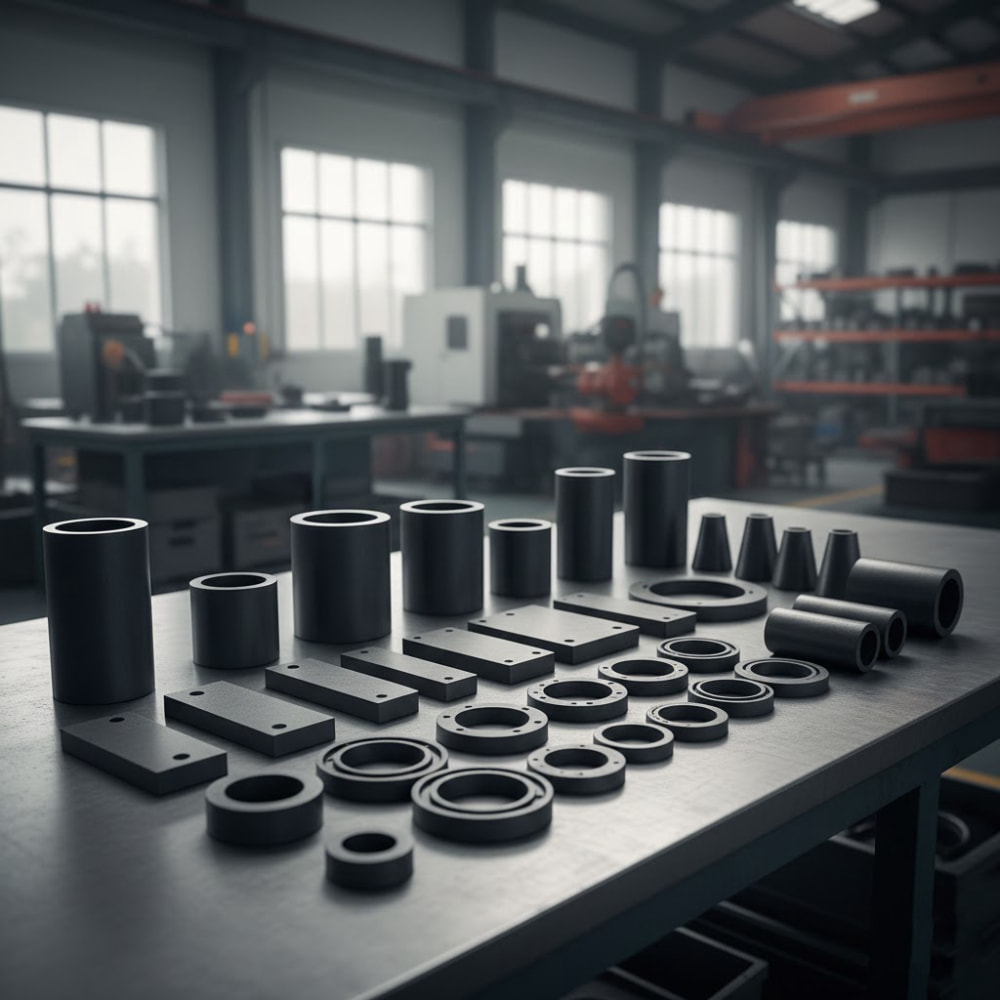
- Standard products: tubes, plates, crucibles, rollers, and seal rings in common sizes.
- Custom parts: tailored geometries, wall thicknesses, and tolerances based on your drawings or samples.
- Different grades: pressureless sintered SiC (SSiC), reaction-bonded SiC (RBSiC / SiSiC), or recrystallized SiC (RSIC), depending on duty.
For example, some plants start with catalog items such as silicon carbide plates for kiln furniture or wear surfaces, then move to fully custom parts once they see the performance benefits.
9. Cleaner operation and better product quality in critical industries
In industries such as chemicals, power, environmental systems, and high-purity manufacturing, “clean operation” is more than a slogan.
- Reduced contamination: SiC generates fewer metallic or oxide wear particles compared with many alloys.
- Stable surfaces: less scaling and flaking, especially in high-temperature oxidizing environments.
- Material purity: high-grade SiC is compatible with strict cleanliness requirements in demanding processes.
This is particularly important in applications where product contamination or fouling of downstream equipment translates directly into lost product and additional cleaning cost.
10. When silicon carbide ceramics make the most sense
Silicon carbide is not the right answer for every component. It becomes compelling when you face one or more of these conditions:
- Chronic wear problems from abrasive solids or slurries
- High operating temperatures where metals distort or creep
- Corrosive fluids that attack traditional alloys and linings
- Frequent unplanned shutdowns due to leaks, cracks, or erosion
- Critical equipment where downtime is far more expensive than the part itself
If your application ticks several of these boxes, it is worth evaluating whether a silicon carbide solution – such as upgraded tubes, plates, crucibles, or seal rings – can deliver a step change in reliability.
Conclusion
The advantages of silicon carbide ceramics in industrial settings are not theoretical. In real plants, they show up as:
- Longer component life under harsh wear and corrosion
- Higher temperature capability and better thermal shock resistance
- Improved process stability and fewer “mystery” failures
- Lower total cost of ownership for critical equipment
For engineers and buyers, the key shift is to stop comparing SiC to other materials purely on unit price and start comparing on uptime, reliability, and lifecycle cost. When you do that, silicon carbide often moves from “too expensive” to “hard to ignore.”