Winning an overseas order for silicon carbide components is only half the battle. The other half is proving to the customer – and sometimes to their auditors and regulators – that your products and processes meet the standards they rely on.
This guide walks through the main international standards, certifications, and documents that matter when exporting silicon carbide (SiC) tubes, plates, seals, and custom parts, and how to build a system that passes checks without constant firefighting.
1. Why standards and certifications matter in SiC exports
For industrial buyers, especially in Europe, North America, and other mature markets, standards and certifications are not “nice-to-haves.” They are shorthand for:
- How stable your process is.
- How traceable your materials and batches are.
- How easy it will be to integrate you into their own quality system.
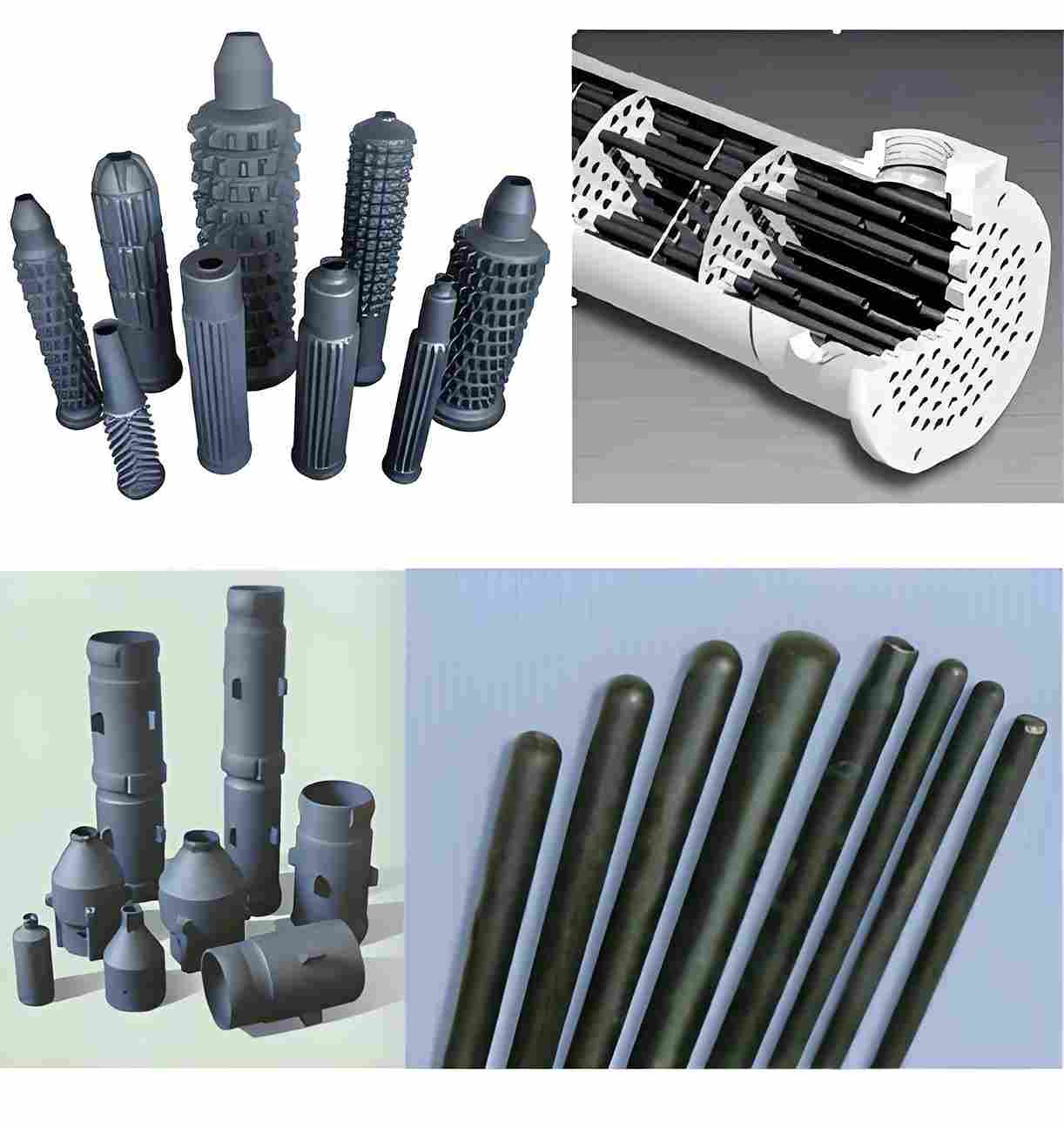
When your silicon carbide products – such as silicon carbide tubes or silicon carbide plates – are used inside pressure systems, furnaces, pumps, or chemical equipment, the customer’s risk is obvious. Standards and certifications are their way of reducing that risk.
2. Core system certifications: the baseline for serious buyers
Most international customers will start by asking if you have a few basic system certifications. The most common include:
- ISO 9001 (Quality Management System) – demonstrates that you control your processes, document changes, handle non-conformities, and pursue continual improvement.
- ISO 14001 (Environmental Management) – increasingly important for customers with ESG targets; shows you manage environmental impact.
- ISO 45001 (Occupational Health and Safety) – relevant for large industrial clients who care about supplier safety culture.
You can export without these, but you will face more questions, more audits, and often be excluded from larger or higher-risk projects.
3. Product and material-related standards for silicon carbide
Silicon carbide components are often referenced against material and test standards. While exact references vary by customer and industry, you should be familiar with:
- Material and property standards for advanced ceramics (flexural strength, hardness, density, porosity, thermal expansion, etc.).
- ASTM and EN test methods commonly used for flexural strength, fracture toughness, and water absorption/porosity.
- Customer-specific specifications that define minimum properties for SiC grades used in seals, tubes, plates, or crucibles.
Even if your local standard is different, you should be prepared to map your internal specifications and test methods to the international standards your customers use.
4. Regulatory frameworks for export applications
Depending on where and how your SiC components are used, the final equipment may fall under specific regulatory frameworks. Typical examples include:
- Pressure equipment directives and boiler codes – your customer may need traceable material certificates and test reports for parts in pressure boundary or high-temperature zones.
- Electrical and electronic equipment regulations – if your parts go into systems covered by RoHS or similar directives, you may be asked to confirm restricted substance content.
- Environmental and chemical regulations – such as REACH declarations for substances of very high concern, especially for European customers.
In many cases, silicon carbide ceramics themselves are not the regulated product, but your documentation will support the customer’s compliance for their finished equipment.
5. Documentation package: what international customers expect
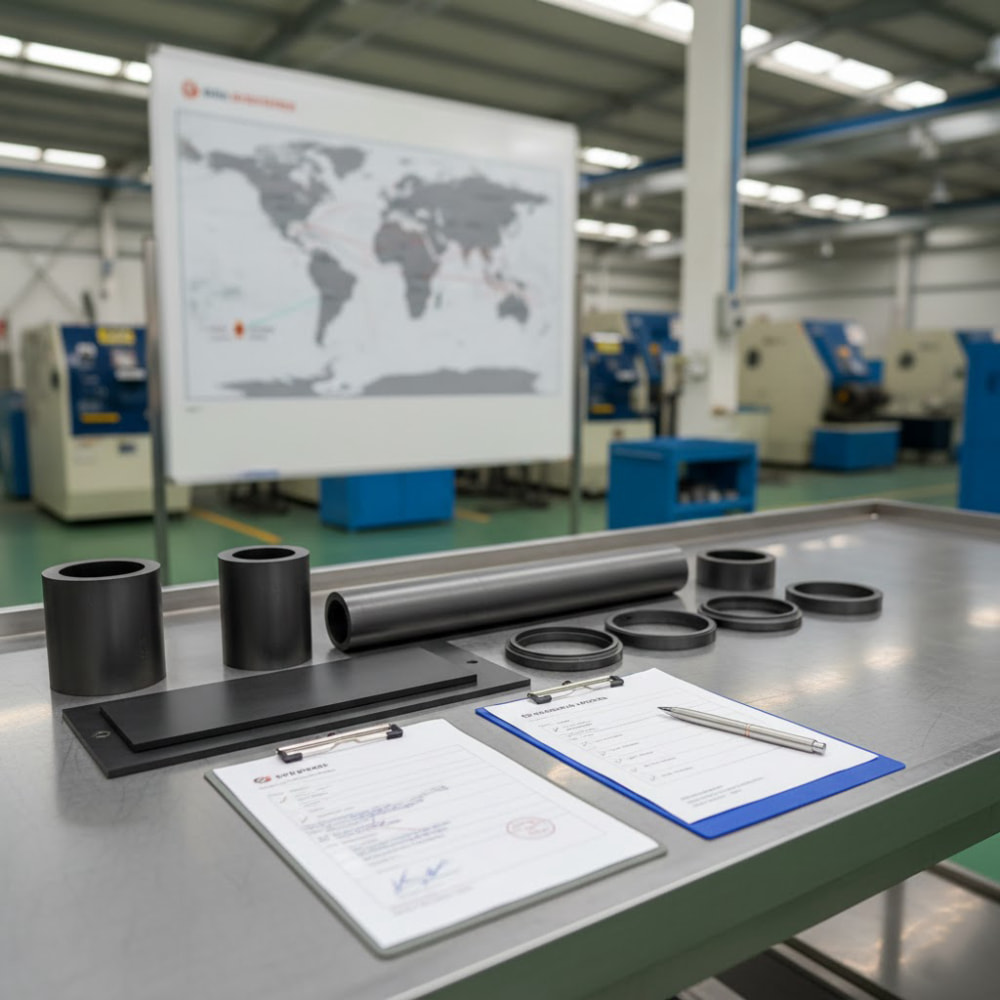
For exported silicon carbide components, a solid documentation package is almost as important as the parts. Common expectations include:
- Inspection report – listing measured critical dimensions, tolerances, and pass/fail status.
- Material certificate – describing SiC grade, density, porosity range, and key mechanical and thermal properties.
- Certificate of Conformance (CoC) – confirming that the parts meet the agreed drawings and specifications.
- MSDS/SDS – safety data, even for stable ceramics, to support customer HSE systems.
- Test reports – such as pressure, leak, thermal cycling, or corrosion tests where agreed.
- Traceability information – batch numbers linking the parts to production records and tests.
Having these documents available and consistent across shipments builds trust and reduces the time your customer spends checking every order.
6. Quality control practices that support export-level requirements
To consistently meet international expectations, your internal QC must be stronger than “inspect at the end and hope.” Key practices include:
- Incoming inspection of raw materials – SiC powder, binders, and additives checked and documented.
- In-process checks – dimensions and density after forming and sintering, not just after final grinding.
- 100% inspection of critical dimensions and visual quality for precision parts (seal rings, sleeves, tight-tolerance tubes).
- Sampling plans for mechanical and thermal properties – regular verification of strength, density, porosity, and sometimes thermal properties on each batch.
- Clear non-conformity handling – defined rules for rework, scrap, and customer notification.
These practices are what auditors look for when they visit a silicon carbide plant supplying higher-risk industrial customers.
7. Packaging, labelling, and logistics for export
Even perfectly made parts can arrive as scrap if packaging and logistics are weak. For brittle ceramics like SiC, export-ready packaging usually includes:
- Individual protection for precision parts (foam slots, sleeves, or separated compartments).
- Shock-absorbing outer packaging designed for long transport and handling.
- Clear labelling with part numbers, quantities, batch IDs, and “fragile / handle with care” indicators.
- Export documentation – commercial invoice, packing list, HS codes, country of origin, and any certificates required for customs or customer acceptance.
For repeat orders, standardizing packaging and labelling formats reduces errors and speeds up the customer’s incoming inspection.
8. Audits and supplier evaluations: how to pass without drama
Large customers often conduct on-site or remote audits before approving a new SiC supplier. Typical focus areas are:
- Quality system implementation (ISO 9001 or equivalent in real daily use, not only on paper).
- Process flow – how raw materials move through forming, sintering, machining, inspection, and packing.
- Calibration and equipment control – records for measuring devices and critical process equipment.
- Document control and traceability – how drawings, specifications, and batch records are kept and updated.
- Training and responsibility – who is accountable for quality decisions and how operators are trained.
Being able to show stable workflows, real records, and clear responsibilities makes audits far easier and often shortens the approval period.
9. Practical checklist for export-ready silicon carbide components
When preparing to export SiC components or approach a new international customer, run through this checklist:
- System certifications: Is your ISO 9001 (and other relevant systems) up to date and actually implemented?
- Material specs: Are your internal SiC grade specifications mapped to common international test methods?
- Documentation set: Can you provide inspection reports, material certificates, and CoCs without “special requests” each time?
- Traceability: Can you trace each shipment back to raw materials, furnace runs, and inspection records?
- QC plans: Are critical dimensions and properties checked with consistent methods and frequencies?
- Packaging and labelling: Are fragile parts protected and clearly identified for long-distance transport?
- Customer-specific requirements: Have you integrated their specifications, formats, and documentation needs into your internal system?
10. Turning compliance into a competitive advantage
Meeting international standards and certifications might feel like extra work, but done correctly it becomes a competitive advantage:
- You are easier to approve as a supplier for new projects.
- You spend less time firefighting quality and documentation issues.
- You can support customers in regulated industries with confidence.
For silicon carbide exporters, strong quality systems and clear documentation are not just “paperwork.” They are one of the main reasons why a customer will choose your tubes, plates, seals, and custom parts – and stay with you as their volumes and technical demands grow.