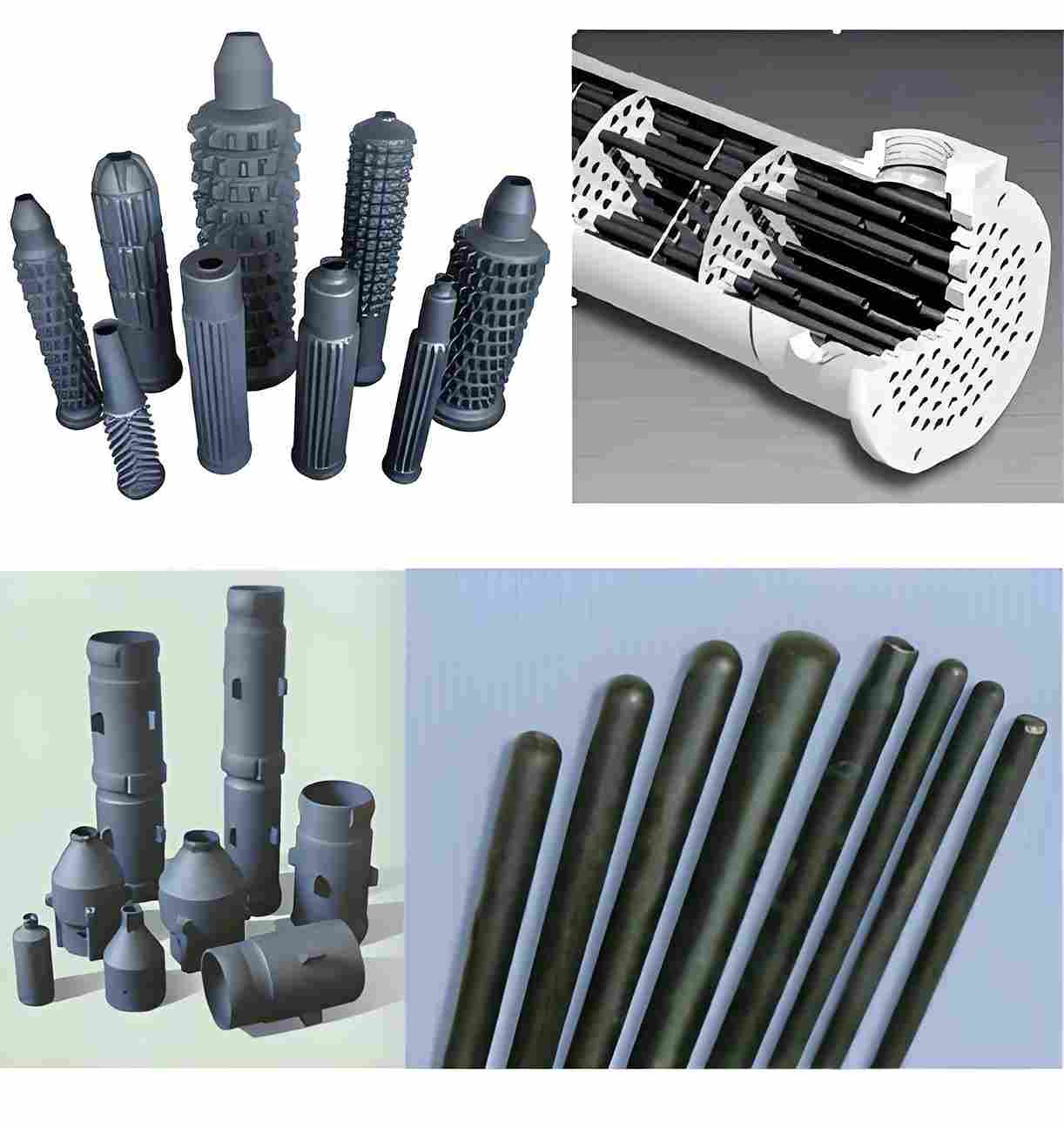
Scaling up production is not just about adding more machines or increasing line speed. If your critical components cannot handle higher loads, higher temperatures, or longer campaigns, the result is simple: more breakdowns and more unplanned stops.
In many industries, silicon carbide (SiC) components are one of the quiet enablers of growth. By improving reliability in the harshest parts of the process, they allow plants to run hotter, longer, and with fewer interruptions.
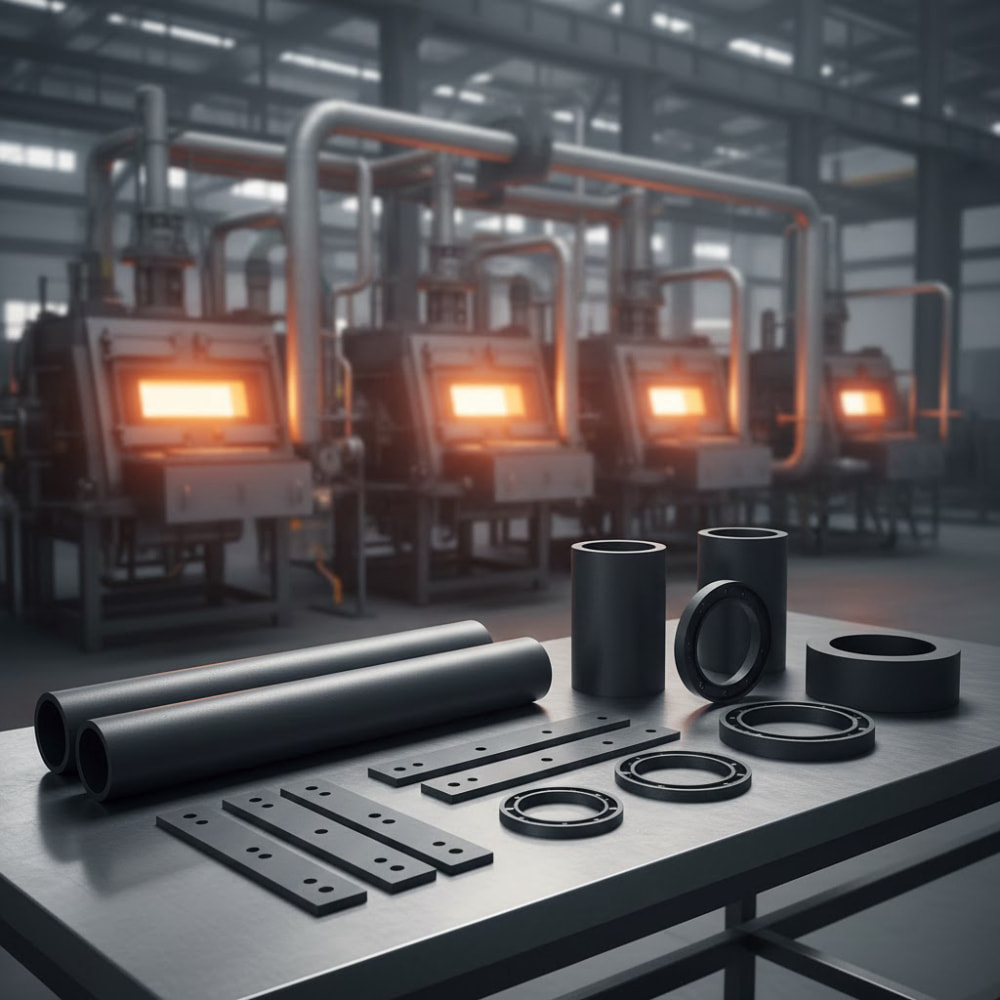
1. Why materials matter when you scale up
When a plant moves from “stable operation” to “growth mode,” several things usually happen at the same time:
- Furnaces and kilns are pushed closer to their maximum temperature.
- Lines run more hours per year, with fewer opportunities for maintenance.
- Flow rates and throughput are increased, raising wear and erosion.
- New products or chemistries introduce more corrosive conditions.
If the materials in tubes, plates, seals, crucibles, and nozzles cannot handle this new reality, scaling up turns into a cycle of failures, emergency repairs, and lost capacity. That is where silicon carbide’s properties become strategically important.
2. What silicon carbide brings to high-output operations
Silicon carbide is not just a “hard ceramic.” For factories trying to increase output, several features are especially valuable:
- High-temperature strength: components keep their shape and load-bearing ability at temperatures where many metals creep.
- Excellent wear resistance: essential when higher throughput means more abrasion and particle impact.
- Good thermal conductivity: improves heat transfer and reduces hotspots in tubes and plates.
- Low thermal expansion: supports better thermal shock resistance when combined with proper geometry and mounting.
- Strong chemical resistance: critical when scaling involves more aggressive process conditions.
In short: silicon carbide parts help you run harder without breaking things as often.
3. Higher throughput with fewer shutdowns
Industrial growth often fails not because demand is missing, but because equipment cannot reliably sustain higher duty. Silicon carbide components directly influence uptime in several ways.
SiC tubes and high-temperature lines
As furnace and process temperatures increase, metallic tubes and basic refractories often become the weak link. Upgrading critical zones to silicon carbide tubes can provide:
- Better dimensional stability at elevated temperature.
- Reduced risk of creep deformation and sagging.
- Improved resistance to thermal cycling during start-up and shutdown.
This is particularly important in heat-treatment lines, radiant tubes, burner systems, and aggressive flue gas paths where failures stop production instantly.
SiC plates and kiln furniture
When kilns or furnaces run more frequently or with heavier loads, supports and plates are stressed harder. Using engineered silicon carbide plates and kiln furniture can:
- Reduce warping and cracking over many cycles.
- Enable thinner, lighter designs that heat up and cool down faster.
- Increase loading density per firing, supporting higher throughput per cycle.
That translates directly into more product per unit time, without proportionally increasing downtime from furniture replacement.
Wear parts and seals in pumps and valves
Scaling up often means more hours and higher flow rates in pumps and valves. This accelerates wear in traditional materials. Silicon carbide seal rings, sleeves, and wear inserts help by:
- Extending time between overhauls through superior wear resistance.
- Maintaining sealing performance over longer campaigns.
- Reducing emergency stops caused by leaks or catastrophic seal failures.
4. Supporting energy efficiency at higher output
Industrial growth is increasingly tied to energy efficiency and emissions targets. Here, silicon carbide components play another role: more stable, efficient heat transfer.
- High thermal conductivity helps move heat effectively in tubes and plates, improving uniformity and reducing local overheating.
- Better geometric stability keeps gaps and clearances stable, supporting more precise temperature control.
- Longer component life means fewer replacements and less energy wasted on unplanned cooling, opening, and reheating.
All of this supports higher overall equipment effectiveness (OEE) at the plant level.
5. Standardization: turning growth into a repeatable system
Scaling up is much easier when plants are not reinventing components for each line or project. Silicon carbide helps when it is used in a standardized way across similar equipment.
- Define standard SiC component families (tubes, plates, nozzles, seal rings) with agreed dimensions and grades.
- Use the same SiC designs and specifications across multiple lines or sites where conditions are comparable.
- Align spare parts and inventory around these standard SiC units to simplify maintenance and supply chain.
This reduces engineering workload for each expansion and makes procurement easier as capacity grows.
6. Working with an SiC supplier that can grow with you
To support industrial growth, a silicon carbide supplier has to scale as well. When evaluating partners, consider whether they can:
- Handle both small-batch custom development and larger repeat orders without quality drift.
- Offer multiple SiC grades (sintered, reaction-bonded, recrystallized) for different parts of your plant.
- Maintain consistent quality and delivery times as your order volume increases.
- Support engineering changes when growth exposes new failure modes or capacity bottlenecks.
Scaling with a weak supply base multiplies risk; scaling with a capable SiC partner multiplies capacity.
7. Economic impact: beyond the unit price of a component
On a spreadsheet, silicon carbide parts often look “expensive” compared with steels or simple refractories. In a growth context, the more relevant question is:
How much additional stable output does a better component unlock?
- If SiC tubes extend furnace uptime by a month per year, how much extra product does that represent?
- If SiC plates reduce kiln rebuild frequency, how many extra firing cycles do you gain annually?
- If SiC seals cut emergency pump failures in half, how much unscheduled downtime disappears from the maintenance log?
When output, uptime, and maintenance are costed properly, silicon carbide often becomes one of the cheapest ways to support growth per additional ton, batch, or unit produced.
8. Practical checklist: using SiC strategically in a scale-up plan
When you plan to increase capacity, use this checklist to identify where silicon carbide can help most:
- Map current bottlenecks: Which furnaces, kilns, pumps, or lines limit total output today?
- Identify failure hotspots: Where do tubes, plates, seals, liners, or burners fail most often?
- Classify conditions: For each hotspot, list temperature, media, solids, and cycle conditions.
- Shortlist SiC upgrades: Consider SiC tubes, plates, nozzles, crucibles, or seals where conditions are most severe.
- Run targeted trials: Upgrade a limited number of critical components to SiC and track uptime, wear, and maintenance impact.
- Standardize wins: When a trial works, standardize the SiC solution across similar lines or locations.
Conclusion
Scaling up production is as much a materials challenge as it is a capacity or automation problem. Silicon carbide components help industrial plants grow by:
- Reducing failures in high-temperature and high-wear zones.
- Enabling higher operating temperatures and longer campaigns.
- Supporting better energy efficiency and process stability.
- Turning successful upgrades into standardized building blocks for further growth.
When you treat silicon carbide as a strategic tool for reliability and uptime, not just a special material, it becomes one of the most effective levers for sustainable industrial expansion.